
Tiffany Strelitz Haber
Author of The Monster Who Lost His Mean
Works by Tiffany Strelitz Haber
More Cheese Please 1 copy
Tagged
Common Knowledge
There is no Common Knowledge data for this author yet. You can help.
Members
Reviews
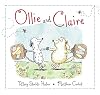
Ollie and Claire by Tiffany Strelitz Haber is about two dear friends who have their routine and love each other and the things they do together. Except Claire wants to expand her horizons and go on a trip. She desperately wants to take Ollie along except she's convinced herself that he won't want to go, so she tries to find a traveling companion, to hilarious and charming results.
After my daughter and I read this book together our conversation about the story evolved into a recollection of show more what it was like in the early days of dating her father. Ultimately this book isn't so much about the dangers of routine as it is the dangers of assuming you know what your nearest and dearest is always thinking.
Interlude whilst I wander down memory lane and get sentimental about mushy stuff. If you don't want to read it, you can stop here and know that I loved the book. Cute story. Cute illustrations.
Before I met the person who would ultimately become my spouse, I had the romantic, albeit naive, notion that whomever I met would be able to read me like a book and just know what I wanted. We would just be on the same page. Oh silly, silly me. People don't work that way.
After a very frustrating walk to the cliffs to watch the sunset my boyfriend of all of about two months — maybe — rightfully snapped, "I can't read minds!" And while that's not exactly what Claire learns in this book, it's close. Her lesson is more like, don't assume Ollie doesn't like to travel just because you've never seen him go anywhere. Or perhaps, ask before you assume. show less
After my daughter and I read this book together our conversation about the story evolved into a recollection of show more what it was like in the early days of dating her father. Ultimately this book isn't so much about the dangers of routine as it is the dangers of assuming you know what your nearest and dearest is always thinking.
Interlude whilst I wander down memory lane and get sentimental about mushy stuff. If you don't want to read it, you can stop here and know that I loved the book. Cute story. Cute illustrations.
Before I met the person who would ultimately become my spouse, I had the romantic, albeit naive, notion that whomever I met would be able to read me like a book and just know what I wanted. We would just be on the same page. Oh silly, silly me. People don't work that way.
After a very frustrating walk to the cliffs to watch the sunset my boyfriend of all of about two months — maybe — rightfully snapped, "I can't read minds!" And while that's not exactly what Claire learns in this book, it's close. Her lesson is more like, don't assume Ollie doesn't like to travel just because you've never seen him go anywhere. Or perhaps, ask before you assume. show less
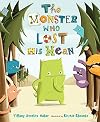
I though this book was very clever. It’s about a monster losing his mean. However, not in the way you think. I originally thought he was just going to wake up and decide to be nice but, that’s not the case. The beginning of the book starts with an anagram for the word “monster” where the m means mean. The =n the monster literally loses his m and becomes as Onster. I thought that was a very clever use of language and writing style. It was also a clever way to set up the plot. I also show more liked the character development of the Onster. At first he’s sad he can’t be mean like the other monsters but discovers that being nice in enjoyable and makes you very easy to befriend. I also enjoyed the language because it had a lot of onomatopoeia like “BOOM BOOM! CRUNCH CRUNCH!” and “BOO HOO! SIGH SIGH!” the message of the story is to not let classifications define who you are or want to be. show less
In this tale, MONSTER is an acrostic, and M stands for Mean - so when a monster loses his M and becomes an Onster, he experiences an identity crisis. He doesn't belong with the monsters anymore, so he tries making friends elsewhere, and discovers that life without meanness is actually pretty nice!
I had mixed feelings about this book after reading it. The main message of “The Monster Who Lost His Mean” is that doing the right thing is not always the popular thing to do. Eventually, you will find true friendships, rather than pretending to be something you are not. The message of the book is what I enjoyed most. I feel that it is an essential and important value for children to know. I also delighted in the illustrations of the book. Although the characters are monsters, they are show more cute and approachable. The pictures in the story helps readers see what kind of bullying the main character goes through and the emotions involved. Images such as the other monsters pointing and angrily looking at the main character are shown with the text, “So now he's just The Onster and the teasing never ends.” During those parts of the book, the main character clearly depicts a distressed face. As the story progresses towards the end where the main character comes to self-acceptance, the happiness on his face is shown. There is also a great writing pattern going on between what the Onster wants to do to be a true monster, but on the next page he ends up doing a nice deed. One example of this is when the text says, “The Onster thinks, I'll throw some eggs at Mr. Lander's van.” Then, on the next page the book says, “But winds up cooking brunch for the entire Lander clan.” There was a part of me that did not like the conclusion of the book. I hoped that the other monsters would come to realize that they were being bullies, accepted the main character, and became kind as well. However, the book ends with the bullies not changing. show less
Awards

You May Also Like


Statistics
- Works
- 4
- Members
- 625
- Popularity
- #40,301
- Rating
- 3.7
- Reviews
- 25
- ISBNs
- 8