
Douglas E. Richards
Author of Wired
About the Author
Douglas E. Richards is the New York Times and USA Today Bestselling author of Wired, its sequel Amped, The Cure, Mind's Eye, Quantum Lens and six other middle grade adventures. He incorporates action, suspense, and science into his novels. He earned a BS in microbiology from Ohio State university, show more a master's degree in genetic engineering from the University of Wisconsin and an MBA from the University of Chicago. He put all that knowledge to work as a biotech executive. He soon began writing science fiction. In recognition of his work, Douglas was selected to be a "special guest" at San Diego Comic-Con International, along with such icons as Stan Lee and Ray Bradbury. He has written numerous feature articles for the award-winning magazine, National Geographic KIDS. His title Split Second made the Self-Published Best Seller List in 2017. (Bowker Author Biography) show less
Series
Works by Douglas E. Richards
Unidentified 17 copies
The Rift 8 copies
The Rift 2 5 copies
The Rift: A Science-Fiction Thriller 5 copies
Nexus: A Science-Fiction Thriller 4 copies
Frequency 4 copies
Echoes of Time 3 copies
Frequency 2 3 copies
Das galaktische Orakel 1 copy
Echoes of Deceit 1 copy
Echoes of the Fall 1 copy
The Breakthrough Effect 1 copy
Visions of the Future 1 copy
Tagged
Common Knowledge
- Legal name
- Richards, Douglas Elliot
- Birthdate
- 1962-05-07
- Gender
- male
- Education
- University of Chicago (MBA)
University of Wisconsin-Madison (MS - Molecular Biology)
Ohio State University (BS- Microbiology) - Occupations
- science fiction writer
biotechnology executive - Short biography
- Douglas is an ex-biotechnology executive who has written extensively for National Geographic KIDS magazine and American Fencing Magazine. He has a wife of 18 years, a boy and a girl, and two dogs.
Douglas is the author of The Prometheus Project Series, TRAPPED, CAPTURED, and STRANDED. The books were reissued with new covers (and in the case of CAPTURED, a bonus chapter) in May of 2010.Douglas E. Richards (born May 7, 1962) is an American writer, primarily of science fiction and both nonfiction and fiction for children.
Richards grew up in Cincinnati, Ohio. He graduated from Finneytown High School, in Ohio, in 1980. He obtained a B.S. in microbiology from Ohio State University before getting a master's degree in molecular biology from the University of Wisconsin and an MBA from the University of Chicago. He currently lives in San Diego, California, with his wife and two children.
George Noory wrote, "Douglas E. Richards has been widely praised for his ability to weave action, suspense, and science into riveting novels that brilliantly straddle the thriller and science fiction genres." - Nationality
- USA
- Places of residence
- California, USA
- Associated Place (for map)
- California, USA
Members
Reviews
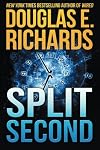
Einstein had a Theory but not the Time
Nathan Wexler is a physics mastermind, on parallel with Newton, Einstein and Faraday. He's just completed a unique mathematical proof that will change the course of humankind.
Jenna Morrison is a top-notch geneticist who happens to be madly in love with Wexler. Although incredibly bright herself, she feels as if she pales in comparison to the light of Wexler's genius.
Wexler and Morrison receive a mysterious phone call after he published an outline of his show more theory on the internet. Approached by what they think is a very aggressive potential investor, they soon find themselves kidnapped.
In the ensuing struggles, Jenna manages to escape but witnesses Wexler's brutal assassination. Heartbroken, and determined to get to the bottom of the cesspool of criminals after her, Jenna hires ex-military P.I. Mike Blake.
The reminder of the book is an astonishing look at a new way to perceive space time and how Governments and people without ethics would handle this new technology.
It is also a hold your breath, close your eyes, muffle the shrieks and try not to allow your dinner to come back up most tension filled story I've read in ages. Douglas Richards knows his science but, man, can he write a thriller! show less
Nathan Wexler is a physics mastermind, on parallel with Newton, Einstein and Faraday. He's just completed a unique mathematical proof that will change the course of humankind.
Jenna Morrison is a top-notch geneticist who happens to be madly in love with Wexler. Although incredibly bright herself, she feels as if she pales in comparison to the light of Wexler's genius.
Wexler and Morrison receive a mysterious phone call after he published an outline of his show more theory on the internet. Approached by what they think is a very aggressive potential investor, they soon find themselves kidnapped.
In the ensuing struggles, Jenna manages to escape but witnesses Wexler's brutal assassination. Heartbroken, and determined to get to the bottom of the cesspool of criminals after her, Jenna hires ex-military P.I. Mike Blake.
The reminder of the book is an astonishing look at a new way to perceive space time and how Governments and people without ethics would handle this new technology.
It is also a hold your breath, close your eyes, muffle the shrieks and try not to allow your dinner to come back up most tension filled story I've read in ages. Douglas Richards knows his science but, man, can he write a thriller! show less
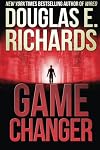
The new trite in technothrillers?
Game Changer is a near-future science thriller, as brilliant neuroscientist Rachel Howard and Secret Service agent Kevin Quinn rush to stop a madman intent on using a game-changing technology to his own evil ends.
The book is well-paced, filled with narrow escapes and numerous twists. While the general theme – the good and bad of messing with people’s memory – comes through from the very beginning, Richards provides an early twist that caught me show more off-guard and sets the tone for the rest of the book. If there is a downside on pacing and plot flow, it’s that these general reversals of position become a bit repetitious, i.e., the good guys think they have everything in hand until we find that the villain is still a step ahead, over and over. One or two fewer reversals would have worked for me.
Douglas Richards is a master at blurring the line between cutting-edge scientific research and suspenseful fiction, which is always a winner with me. Nothing increases the pucker factor like not knowing whether I need to be on guard now…or if I can sleep tonight. But I was also reminded that this technique achieves its full impact only if the reader knows something of the relevant science, and in this case, I was not aware of some of the specific neuroscience developments he was building upon. So, as strange as this may sound, I got an even greater appreciation for the book by reading the author’s note at the end and checking some of the references. If you are a techno-geek like me, I recommend it.
Perhaps I am reading too much in this genre, however, as I am becoming somewhat tired of heroes who are so atypical as to be more unreal than the technology that is supposed to be at the center of the suspense. Take neuroscientist Rachel Howard. Being a neuroscientist is somewhat distinctive by itself. Then take the fact that she is so brilliant that she is by all accounts years ahead of her peers – yes, years – but is still humble and personable. I realize that no one wants to read about the exploits of their neighborhood tax accountant, but a story with a few characters that weren’t super-geniuses or beyond world-class athletes or super-secret spooks might be nice. Six-sigma personalities have become the new trite of technothrillers.
Even taking into account these minor peeves, which are probably mostly unique to me, I still found Game Changer a completely fascinating read, making me wonder anew which of the many variants of this game-changing technology we will see in our future. Because, it will be one of them. show less
Game Changer is a near-future science thriller, as brilliant neuroscientist Rachel Howard and Secret Service agent Kevin Quinn rush to stop a madman intent on using a game-changing technology to his own evil ends.
The book is well-paced, filled with narrow escapes and numerous twists. While the general theme – the good and bad of messing with people’s memory – comes through from the very beginning, Richards provides an early twist that caught me show more off-guard and sets the tone for the rest of the book. If there is a downside on pacing and plot flow, it’s that these general reversals of position become a bit repetitious, i.e., the good guys think they have everything in hand until we find that the villain is still a step ahead, over and over. One or two fewer reversals would have worked for me.
Douglas Richards is a master at blurring the line between cutting-edge scientific research and suspenseful fiction, which is always a winner with me. Nothing increases the pucker factor like not knowing whether I need to be on guard now…or if I can sleep tonight. But I was also reminded that this technique achieves its full impact only if the reader knows something of the relevant science, and in this case, I was not aware of some of the specific neuroscience developments he was building upon. So, as strange as this may sound, I got an even greater appreciation for the book by reading the author’s note at the end and checking some of the references. If you are a techno-geek like me, I recommend it.
Perhaps I am reading too much in this genre, however, as I am becoming somewhat tired of heroes who are so atypical as to be more unreal than the technology that is supposed to be at the center of the suspense. Take neuroscientist Rachel Howard. Being a neuroscientist is somewhat distinctive by itself. Then take the fact that she is so brilliant that she is by all accounts years ahead of her peers – yes, years – but is still humble and personable. I realize that no one wants to read about the exploits of their neighborhood tax accountant, but a story with a few characters that weren’t super-geniuses or beyond world-class athletes or super-secret spooks might be nice. Six-sigma personalities have become the new trite of technothrillers.
Even taking into account these minor peeves, which are probably mostly unique to me, I still found Game Changer a completely fascinating read, making me wonder anew which of the many variants of this game-changing technology we will see in our future. Because, it will be one of them. show less
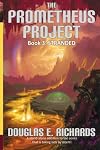
Where was Mr Richards and this series when I was in school? Though the series is targeted at readers age 10 to about 16, I really enjoyed this book. He is the Asimov or Bradbury of a younger generation. It was a very exciting sci-fi story with informative bits of real scientific theory inserted to not just entertain, but teach the reader. It is no wonder that The Prometheus Project is also gaining such high marks by parents and educators. In this time of disposable, diluted, and wasteful show more child entertainment (Hannah, Jonas, Raven, blah blah), this series would be wonderful for a young science-oriented mind. For the children in my life, I will be collecting the entire set myself. show less
This review was written for LibraryThing Member Giveaways.
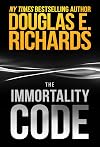
Eternal Transcendance
Douglas Richards could have invented the"Speculative" in speculative fiction. The questions of immortality, Alien prescence and artificial intelligence are handled with a deft touch.
When associate professor Allison Keane publishes an overview of her theoretical work in quantum physics and computing, Sioux Falls, South Dakota becomes an extremely dangerous place for her.
After Keane is abducted by a front person who actually represents the Chinese Communist Party, Tech Ops show more agent, Zachary Reed, is called in to retrieve her and the precious technology she holds in her mind.
Reed tracks Keane to an abandoned underground factory just outside of Utah. Using his smart contact lenses and link to the NSA's AI, Reed manages to barely get her out before the entire place is blown sky high.
As Reed and Keane meet their benefactor, Tom Hoyer, they are alternately fascinated and horrified by what they learn. Technology, beyond the grasp of anything humankind has ever seen, is revealed to them.
The remainder of the book is one giant reveal after another, mixed with deep philosophical and spiritual questions about how this Alien technology will ultimately change humankind.
As well, this tense, twisted story gallops along at break-neck speed right to the finish. I turned the last page and found my jaw dropped open. A masterpiece of a Technothriller, I highly recommend it. show less
Douglas Richards could have invented the"Speculative" in speculative fiction. The questions of immortality, Alien prescence and artificial intelligence are handled with a deft touch.
When associate professor Allison Keane publishes an overview of her theoretical work in quantum physics and computing, Sioux Falls, South Dakota becomes an extremely dangerous place for her.
After Keane is abducted by a front person who actually represents the Chinese Communist Party, Tech Ops show more agent, Zachary Reed, is called in to retrieve her and the precious technology she holds in her mind.
Reed tracks Keane to an abandoned underground factory just outside of Utah. Using his smart contact lenses and link to the NSA's AI, Reed manages to barely get her out before the entire place is blown sky high.
As Reed and Keane meet their benefactor, Tom Hoyer, they are alternately fascinated and horrified by what they learn. Technology, beyond the grasp of anything humankind has ever seen, is revealed to them.
The remainder of the book is one giant reveal after another, mixed with deep philosophical and spiritual questions about how this Alien technology will ultimately change humankind.
As well, this tense, twisted story gallops along at break-neck speed right to the finish. I turned the last page and found my jaw dropped open. A masterpiece of a Technothriller, I highly recommend it. show less
Awards

You May Also Like


Associated Authors
Statistics
- Works
- 44
- Members
- 2,555
- Popularity
- #10,048
- Rating
- 3.7
- Reviews
- 240
- ISBNs
- 66
- Languages
- 1
- Favorited
- 5
