

Allan Scott (1) (1952–)
Author of A Spell of Empire
For other authors named Allan Scott, see the disambiguation page.
About the Author
Image credit: Allan Scott
Works by Allan Scott
Associated Works
Tagged
Common Knowledge
- Legal name
- Scott, Allan James Julius
- Birthdate
- 1952
- Gender
- male
Members
Reviews

An enjoyable picaresque romp that is reminiscent of Avram Davidson's Peregrine series. Very whimsical in style. A half-elf apprentice mage is at a loose end when his master attempts to summon a demon and it all goes horribly wrong. Leaving town before the Inquisition start asking pointed questions (or questions accompanied by sharp pointy things), he is hired by a merchant to escort a caravan from Germany to Sicily to recover a demonic artifact. Except the merchant is assassinated before the show more caravan gets going.
A fun story set in a fantastic Europe where other races abound. The grim-dark aspects reminded me of Tim Powers' The Drawing of the Dark.
Recommended show less
A fun story set in a fantastic Europe where other races abound. The grim-dark aspects reminded me of Tim Powers' The Drawing of the Dark.
Recommended show less
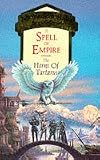
This adventure may be nothing to take seriously (the cover features the words "A Fantasy Romp", openly acknowledging its pedigree), but it's a fun one. There's a touch of music in the plot, a Seven Samurai style of recruitment for the questing party, plenty of wit and humour, heroes casually brilliant at combat, regularly scheduled action scenes, grim and powerful villains. Descriptive passages are wonderfully crafted, among them the kobolds' impressive canalworks that are bound to stick in show more memory. This fantastical version of medieval continental Europe may feel especially familiar to fans of the Warhammer line, since it was originally intended for that market.
There's some minor stumbles: the goofy opening "History Lesson" may trip you up but it's non-essential so you can skip to the prologue for the start of clean, clear writing. The lead character (Volker) initially feels like a non-factor until he gets his feet under him, and the party's token female is precisely that although she does get a few good shots in. The pace is absolutely headlong and it could have used more pauses for breath, but it's very visual and action-oriented. If this was the lead-in to a series I would definitely keep reading (and resolve the mystery: which is the series title, which the novel's?) Pick this up for a bit of light fantasy fun if these flaws aren't show-stoppers for you.
A number of us on LT were pleased to have MSR drop by a few years ago and update us on his activities: https://www.librarything.com/topic/93107 show less
There's some minor stumbles: the goofy opening "History Lesson" may trip you up but it's non-essential so you can skip to the prologue for the start of clean, clear writing. The lead character (Volker) initially feels like a non-factor until he gets his feet under him, and the party's token female is precisely that although she does get a few good shots in. The pace is absolutely headlong and it could have used more pauses for breath, but it's very visual and action-oriented. If this was the lead-in to a series I would definitely keep reading (and resolve the mystery: which is the series title, which the novel's?) Pick this up for a bit of light fantasy fun if these flaws aren't show-stoppers for you.
A number of us on LT were pleased to have MSR drop by a few years ago and update us on his activities: https://www.librarything.com/topic/93107 show less

This slender but readable book deals with Viking history from the viewpoint of the story of the conversion of the Norse lands to Christianity. But this is no theological work. Instead, it is a concise summary of Viking history, told in a way that uses the best sources available at the time - ecclesiastical ones.
This book is in the mainstream of Guizot's thinking on history and civilization, which highlights the role of Christianity, not as a moral force but as an organizing one. In the first show more millennium, religion was as much about politics as it was about belief, and this book shows exactly how that worked in the Viking world. show less
This book is in the mainstream of Guizot's thinking on history and civilization, which highlights the role of Christianity, not as a moral force but as an organizing one. In the first show more millennium, religion was as much about politics as it was about belief, and this book shows exactly how that worked in the Viking world. show less

This was ok.....the first half of the book is the best.....the second half gets a bit slow, with rambling scenes. All said and done, you walk away feeling like not much happened. I think this would be most appreciated by those with a deep interest in Vikings and Norse mythology.
You May Also Like


Associated Authors
Statistics
- Works
- 5
- Also by
- 1
- Members
- 208
- Popularity
- #106,481
- Rating
- 3.6
- Reviews
- 6
- ISBNs
- 87
- Languages
- 3