
John Schoenherr (1935–2010)
Author of Owl Moon
About the Author
John Schoenherr was born in New York City on July 5, 1935. He received a B.F.A. from the Pratt Institute in 1956. During his lifetime, he illustrated numerous books for children and adults including The Wolfling and Rascal by Sterling North, Gentle Ben by Walt Morey, The Fox and the Hound by Daniel show more P. Mannix, Incident at Hawk's Hill by Allan W. Eckert, Julie of the Wolves by Jean Craighead George, and The Illustrated Dune by Frank Herbert. He won a Caldecott Medal in 1988 for Owl Moon by Jane Yolen and a Hugo award in 1965 for his science fiction artwork. He died of chronic obstructive pulmonary disease on April 8, 2010 at the age of 74. (Bowker Author Biography) show less
Image credit: John Schoenherr, Children’s Book Illustrator, Dies at 74
Works by John Schoenherr
Space Viking 4 copies
The Plague 2 copies
Novice 1 copy
Lion Loose 1 copy
The Green Beret 1 copy
The Trouble with Telstar 1 copy
Subversive 1 copy
Associated Works
From Sea to Shining Sea: A Treasury of American Folklore and Folk Songs (1993) — Illustrator — 814 copies, 2 reviews
Space Viking (1963) — Illustrator, some editions; Cover artist, some editions — 715 copies, 17 reviews
War with the robots : science fiction stories (1956) — Cover artist, some editions — 310 copies, 5 reviews
Bring Back Yesterday / The Trouble With Tycho (Classic Ace Double, D-517) (1960) — Cover artist, some editions — 59 copies, 2 reviews
Analog Science Fiction/Science Fact: Vol. XCVI, No. 1 (January 1976) (1976) — Cover artist — 39 copies
Analog Science Fiction/Science Fact: Vol. LXXXVIII, No. 3 (November 1971) (1971) — Cover artist; Illustrator — 37 copies
Analog Science Fiction/Science Fact: Vol. XCVII, No. 6 (June 1977) (1977) — Cover artist — 36 copies, 1 review
Analog Science Fiction/Science Fact: Vol. XCVI, No. 2 (February 1976) (1976) — Illustrator — 33 copies, 1 review
Analog Science Fiction/Science Fact: Vol. XCVII, No. 2 (February 1977) (1977) — Illustrator — 33 copies
Analog Science Fiction/Science Fact: Vol. XCVI, No. 10 (October 1976) (1976) — Illustrator — 30 copies
Analog Science Fiction/Science Fact: Vol. XCVI, No. 9 (September 1976) (1976) — Illustrator — 30 copies
Analog Science Fiction/Science Fact: Vol. XCIII, No. 6 (August 1974) (1974) — Cover artist — 29 copies
Analog Science Fiction/Science Fact: Vol. XCVII, No. 3 (March 1977) (1977) — Cover artist — 29 copies
Analog Science Fiction/Science Fact: Vol. XCVI, No. 8 (August 1976) (1976) — Cover artist — 29 copies, 2 reviews
Analog Science Fiction/Science Fact: Vol. XCI, No. 6 (August 1973) (1973) — Cover artist — 28 copies
Analog Science Fiction/Science Fact: Vol. XCV, No. 3 (March 1975) (1975) — Illustrator — 28 copies, 1 review
Analog Science Fiction/Science Fact: Vol. XC, No. 3 (November 1972) (1972) — Cover artist — 27 copies
Analog Science Fiction/Science Fact: Vol. XC, No. 1 (September 1972) (1972) — Illustrator — 27 copies
Analog Science Fiction/Science Fact: Vol. XCIV, No. 5 (January 1975) (1975) — Cover artist — 27 copies
Analog Science Fiction/Science Fact: Vol. XCV, No. 5 (May 1975) (1975) — Illustrator — 27 copies, 1 review
Analog Science Fiction/Science Fact: Vol. XCVI, No. 3 (March 1976) (1976) — Illustrator — 26 copies, 1 review
Analog Science Fiction/Science Fact: Vol. LXXXVIII, No. 2 (October 1971) (1971) — Illustrator; Cover artist — 26 copies
Analog Science Fiction/Science Fact: Vol. XC, No. 4 (December 1972) (1972) — Illustrator — 26 copies
Analog Science Fiction/Science Fact: Vol. XCIV, No. 3 (November 1974) (1974) — Illustrator — 26 copies
Analog Science Fiction/Science Fact: Vol. XCIII, No. 2 (April 1974) (1974) — Cover artist — 25 copies
Analog Science Fiction/Science Fact: Vol. XC, No. 5 (January 1973) (1973) — Cover artist — 24 copies
Analog Science Fiction/Science Fact: Vol. LXXXIX, No. 6 (August 1972) (1972) — Illustrator — 24 copies
Analog Science Fiction/Science Fact: Vol. XCII, No. 6 (February 1974) (1974) — Illustrator — 24 copies
Analog Science Fiction/Science Fact: Vol. XCIV, No. 1 (September 1974) (1974) — Illustrator — 24 copies
Analog Science Fiction/Science Fact: Vol. XCV, No. 2 (February 1975) (1975) — Illustrator — 24 copies, 1 review
Analog Science Fiction/Science Fact: Vol. LXXX, No. 2 (October 1967) (1967) — Cover artist, some editions; Illustrator — 24 copies
Analog Science Fiction/Science Fact: Vol. XCII, No. 2 (October 1973) (1973) — Illustrator — 24 copies
Analog Science Fiction/Science Fact: Vol. XCV, No. 7 (July 1975) (1975) — Cover artist — 24 copies, 1 review
Analog Science Fiction/Science Fact: Vol. XCV, No. 9 (September 1975) (1975) — Illustrator — 24 copies, 1 review
Analog Science Fiction/Science Fact: Vol. XCV, No. 12 (December 1975) (1975) — Illustrator — 24 copies
Analog Science Fiction/Science Fact: Vol. LXXXIX, No. 5 (July 1972) (1972) — Cover artist — 23 copies
Analog Science Fiction/Science Fact: Vol. XC, No. 6 (February 1973) (1973) — Illustrator — 23 copies
Analog Science Fiction/Science Fact: Vol. LXXXIX, No. 4 (June 1972) (1972) — Illustrator — 22 copies
Analog Science Fiction/Science Fact: Vol. XCII, No. 1 (September 1973) (1973) — Illustrator — 22 copies
Analog Science Fiction/Science Fact: Vol. XCV, No. 6 (June 1975) (1975) — Cover artist; Illustrator — 22 copies, 1 review
Analog Science Fiction/Science Fact: Vol. XCII, No. 4 (December 1973) (1973) — Cover artist — 22 copies
Analog Science Fiction/Science Fact: Vol. LXXXIX, No. 1 (March 1972) (1972) — Cover artist — 21 copies
Analog Science Fiction/Science Fact: Vol. LXXXIX, No. 2 (April 1972) (1972) — Illustrator — 19 copies, 1 review
Analog Science Fiction/Science Fact: Vol. LXXXVIII, No. 6 (February 1972) (1972) — Cover artist — 19 copies
Analog Science Fact/Science Fiction: Vol. LXX, No. 3 (November 1962) (1962) — Cover artist; Illustrator — 14 copies
Analog Science Fact/Science Fiction: Vol. LXXIII, No. 2 (April 1964) (1964) — Illustrator — 13 copies
Analog Science Fact/Science Fiction: Vol. LXVIII, No. 2 (October 1961) (1961) — Cover artist — 12 copies
Analog Science Fact/Science Fiction: Vol. LXX, No. 4 (December 1962) (1962) — Cover artist; Illustrator — 12 copies
Analog Science Fact/Science Fiction: Vol. LXVII, No. 4 (June 1961) (1961) — Cover artist — 12 copies
Analog Science Fact/Science Fiction: Vol. LXVIII, No. 6 (February 1962) (1962) — Illustrator — 12 copies
Analog Science Fact/Science Fiction: Vol. LXXII, No. 3 (November 1963) (1963) — Cover artist, some editions — 11 copies
Analog Science Fact/Science Fiction: Vol. LXXIV, No. 5 (January 1965) (1965) — Cover artist — 11 copies
Analog Science Fact/Science Fiction: Vol. LXXIII, No. 3 (May 1964) (1964) — Cover artist — 10 copies
Analog Science Fact/Science Fiction: Vol. LXXI, No. 6 (August 1963) (1963) — Cover artist — 10 copies
Analog Science Fact/Science Fiction: Vol. LXXIV, No. 1 (September 1964) (1964) — Cover artist; Illustrator — 9 copies
Analog Science Fact/Science Fiction: Vol. LXX, No. 5 (January 1963) (1963) — Cover artist — 8 copies
Analog Science Fact/Science Fiction 1962 September (British Edition) (1962) — Cover artist — 5 copies
Cricket Magazine, Vol. 6, No. 4, December 1978 — Illustrator — 1 copy
Tagged
Common Knowledge
- Legal name
- Schoenherr, John Carl
- Birthdate
- 1935-07-05
- Date of death
- 2010-04-08
- Gender
- male
- Occupations
- illustrator
- Organizations
- Analog Science Fiction and Fact
- Awards and honors
- Hugo (Professional Artist ∙ 1965)
- Relationships
- Schoenherr, Ian (son)
- Nationality
- USA
- Birthplace
- New York, New York, USA
- Place of death
- Easton, Pennsylvania, USA
- Associated Place (for map)
- USA
Members
Reviews

A young girl and her father set out for the woods one snowy night, in this lovely, contemplative picture-book, the Caldecott Medal winner for 1988. Aware that she must be very quiet, the girl narrator struggles to keep up with her father, and - when they enter the darkness of the woods themselves - to be brave. Both are necessary, she informs the reader, when one is going owling, something she has been waiting a very long time to be allowed to do. Finally, in a moonlit clearing, with snow show more whiter than milk, the pair see what they have come for - a Great Horned Owl. After a moment (or one hundred) of magical connection, the owl flies on, and the tired pair head home...
Owl Moon is yet another of those classic picture-books that have long been "on my radar," but that I'd somehow never read, so I'm glad it was chosen as one of our "Winter Themed" selections, over in the Picture-Book Club to which I belong. I loved so many things about the book, from Jane Yolen's simple but evocative text, to John Schoenherr's beautiful watercolor artwork. The idea that sometimes the best and most magical experiences in life require effort and discipline, is worked seamlessly into the story, as is the notion that long awaited "treats" are especially delightful. The enchantment of the winter landscape is perfectly captured by both word and image here, and I particularly appreciated the fact that, even before they have seen the owl, the girl and her father are not alone, as a variety of woodland creatures observe their journey. The two-page spread in which the owl is depicted is simply breathtaking, allowing the reader to feel, with the two in the story, that sense of joyous culmination.
All in all, a delightful winter picture-book, one I highly recommend to all young nature and owl lovers, and to anyone who loves the cold enchantment of this season! show less
Owl Moon is yet another of those classic picture-books that have long been "on my radar," but that I'd somehow never read, so I'm glad it was chosen as one of our "Winter Themed" selections, over in the Picture-Book Club to which I belong. I loved so many things about the book, from Jane Yolen's simple but evocative text, to John Schoenherr's beautiful watercolor artwork. The idea that sometimes the best and most magical experiences in life require effort and discipline, is worked seamlessly into the story, as is the notion that long awaited "treats" are especially delightful. The enchantment of the winter landscape is perfectly captured by both word and image here, and I particularly appreciated the fact that, even before they have seen the owl, the girl and her father are not alone, as a variety of woodland creatures observe their journey. The two-page spread in which the owl is depicted is simply breathtaking, allowing the reader to feel, with the two in the story, that sense of joyous culmination.
All in all, a delightful winter picture-book, one I highly recommend to all young nature and owl lovers, and to anyone who loves the cold enchantment of this season! show less

Owl Moon offers a reading experience that reflects the quiet story it’s telling and makes you want to read it aloud in a hushed voice. Yolen’s descriptions are tactile and atmospheric, and coupled with Schoenherr’s illustrations both show and tell you what the characters are seeing and feeling. I love that the story doesn’t have capture or conquest as a goal, but instead observation and appreciation of a fleeting experience with the natural world. C clearly feels the anticipation of show more the story and eagerly waits to come face to face with an owl. show less
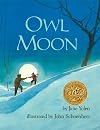
I had mixed feelings about this book after reading it. I enjoyed the book mainly because of the detailed illustrations. The illustrator really told the story with pictures that perfectly matched the author's text. For example, for the line: “Our feet crunched over the crisp snow and little gray footprints followed us,” the illustration shows the child and her father leaving footprints in the snow as they walk through the forest. Even if a child cannot read this story, he or she could show more still follow what is happening simply by looking at the illustrations. The one reason I was not so fond of the book was that it was supposed to be told in the point of view of the young child who is going owling with her father. However, I did not feel as though the text matched how a young child would talk. I felt as if the voice of the child was very monotone for a majority of the story, and fell flat of how I would want the child to talk about her great owling experience. The big idea that I saw presented in this story was the relationships between people: father and child; owls and owl seekers. Experiences shared between people are important and children of young ages will enjoy this book. show less
Owl Moon is a story in which a little boy and his father go “owling” one winter night. I enjoyed this book for three reasons. The first thing I noticed and really liked was Yolen’s ability to use imagery to create a setting. Even on the first page of the book Yolen writes “There was no wind. / The trees stood still /as giant statues. / And the moon was so bright / the sky seemed to shine.” The author’s words paint just as much of a picture in the reader’s head then the big show more beautiful illustrations do. Secondly, I really enjoyed the free verse writing style and the way Yolen chose to break up certain words by line to put emphasis on certain words. For example, she writes “we watched the line / of pine trees / black and pointy / against the sky.” Her style of writing helps compliment the aspect of being able to easily create a setting and help the audience picture the scene in their heads. Finally, I enjoyed that I could relate to the boy even though I had never been owling because the writing was so well done, it felt like I was in the story. Phrases like “I could feel the cold, / as if someone’s icy hand / was palm-down on my back” as well as the buildup; walking in the cold, standing in the cold, and calling without any calls back, we can understand the boy’s excitement when he finally gets to the see the owl. I really enjoyed this book! show less
Lists
Awards


You May Also Like


Associated Authors
Statistics
- Works
- 14
- Also by
- 159
- Members
- 11,397
- Popularity
- #2,061
- Rating
- 4.0
- Reviews
- 384
- ISBNs
- 57
- Languages
- 4
- Favorited
- 1