
Charles W. Colson (1931–2012)
Author of How Now Shall We Live?
About the Author
Charles Colson was a popular and widely known author, speaker, and radio commentator. A former presidential aide to Richard Nixon and founder of the international ministry Prison Fellowship, he wrote several books that have shaped Christian thinking on a variety of subjects, including Born Again, show more Loving God, How Now Shall We Live?, The Good Life, and The Faith. His radio broadcast, BreakPoint, at one point aired to two million listeners. Chuck Colson donated all of his royalties, awards, and speaking fees to Prison Fellowship Ministries. show less
Series
Works by Charles W. Colson
The Faith: What Christians Believe, Why They Believe It, and Why It Matters (2008) 783 copies, 6 reviews
Chuck Colson Speaks: Twelve Key Speeches by America's Foremost Christian Thinker (2000) 239 copies, 1 review
The Christian in Today's Culture: Developing A Christian Worldview (How Now Shall We Live?) (2001) 154 copies
Human Dignity in the Biotech Century: A Christian Vision for Public Policy (2004) — Editor — 101 copies
Six Million Angels: Stories from 20 Years of Angel Tree's Ministry to the Children of Prisoners (2003) 57 copies
Doing the Right Thing Participant's Guide: Making Moral Choices in a World Full of Options (2011) 14 copies
1993 Templeton Address 3 copies
Biblical Perspectives on Business Ethics: How the Christian Worldview Has Shaped Our Economic Foundations (2012) 3 copies
The Trellis And The Vine 2 copies
THE GRACE AWAKENING 2 copies
Kingdoms In Conlict 2 copies
Under Whose Authority 2 copies
The Epistle To The Thessalonians 2 copies
Thy Will Be Done 1 copy
Postmodern Power Grab 1 copy
Empty at Easter 1 copy
Where Did our Conscience Go? 1 copy
The Faith Notes 1 copy
Hope 1 copy
The Disney Credo [article] 1 copy
Criminals Are Made, Not Born 1 copy
Lies That Go Unchallenged 1 copy
Justice : a Bible study 1 copy
The Problem of Ethics 1 copy
God and Governmnet 1 copy
Being in the Body 1 copy
Can We Be Good Without God? 1 copy
When Majoirty Rule Is Wrong 1 copy
Welcome to McChurch 1 copy
The Benefits of the Kingdom 1 copy
當代基督教與政治 1 copy
The Problem of Evil 1 copy
The Life Sentence 1 copy
Body,The 1 copy
Chuck Colson Speaks 1 copy
Doing the Right Thing 1 copy
Rewired (leader guide) 1 copy
Associated Works
Chicken Soup for the Christian Soul: Stories to Open the Heart and Rekindle the Spirit (Chicken Soup for the Soul) (1997) — Contributor, some editions — 1,378 copies, 4 reviews
The Moral Life: An Introductory Reader in Ethics and Literature (1999) — Contributor — 202 copies, 2 reviews
On the Firing Line: The Public Life of Our Public Figures (1989) — Contributor — 127 copies, 1 review
Radical Gratitude: Discovering Joy through Everyday Thankfulness (2005) — Foreword — 65 copies, 1 review
Radical Redemption: The Real Story of Manny Mill (2003) — Foreword, some editions — 42 copies, 1 review
Rogue Angel: The Spiritual Journey of One of the FBI's Ten Most Wanted (2005) — Foreword — 37 copies
Tagged
Common Knowledge
- Legal name
- Colson, Charles Wendell
- Other names
- Colson, Chuck
- Birthdate
- 1931-10-16
- Date of death
- 2012-04-21
- Gender
- male
- Education
- Brown University
George Washington University - Occupations
- lawyer
Counselor to the President of the United States - Organizations
- United States Marine Corps
Prison Fellowship (founder) - Awards and honors
- Templeton Prize (1993)
- Relationships
- Colson, Emily (daughter)
- Nationality
- USA
- Birthplace
- Boston, Massachusetts, USA
- Places of residence
- Leesburg, Virginia, USA
- Place of death
- Falls Church, Virginia, USA
- Associated Place (for map)
- Virginia, USA
Members
Reviews

I thought it might be good to open this with a little statement regarding good old Chuck Colson. He worked for the Nixon administration during the Watergate Scandal, and when it broke, he was one who did gaol time because of it. The story is, though, that while he was in gaol he became a Christian, and since his release he has been working in the prison system sharing the gospel with the inmates. However, there is a but: when Deep Throat finally revealed himself, Colson was one of those who show more then began to criticise Deep Throat for what he did. I question then whether Colson has truly understood what he actually spent time in gaol for, or whether it was one of those 'God ordained' things to set him on a road of fruitful ministries.
That is not to say that Colson's prison fellowship is without criticism, but the criticism usually comes from the rabidly anti-Christian corner and they accuse his organisation of creating a favoured class of inmates who are involved in the fellowship. This I think is somewhat over the top, and while I was very disappointed to hear Colson's attack against Deep Throat, it does not mean that his work with inmates is unhelpful. I actually believe that it is very beneficial for society.
However, on to his book. This book is pretty much a diatribe on how immoral and bad society has become, and if we don't turn back to God, then it is only going to get worse. Now, don't get me wrong, I do believe society has lost its way, but the fact of the matter is that it had never found it in the first place. The counter-cultural revolution in the 60s was not so much people suddenly deciding not to be Christians and to embrace a life of sin, no, much of the things that happened during the 60s (such as free sex, drugs, homosexuality just to name a few) were happening already and had been happening for quite a while beforehand. However, what the 60s did was that it brought it out into the open and forced society to accept that these things were going on. Some people have suggested that homosexuality did not exist before 1975 (the year it became legal in Australia) and all I can say to that statement is that it is rubbish. All I need to do is point the reader to C.S. Lewis' Surprised by Joy where he writes about homosexuality in a boy's school in England around 1905, and that is just to name one of many sources that evidence its practice prior to 1975 (though there are only a handful that tend to take that belief anyway).
However, what we also need remember is that this is a product of the Reformation. We wanted freedom to worship how we liked, and we wanted freedom from a dictatorial church. In fact one of the reasons that the Americans rebelled against British Colonial rule was on this very point. The constitution guarantees freedom of religion. However, the catch is that while we have freedom to worship god, others have freedom not to. We can't have it both ways, demanding our right to worship God while denying others the right not to. If you travel to many of the very liberal states in Europe (such as Germany and Holland) you will discover that these places was where the reformation was born. France is different, namely because they killed all of the protestants in the 16th century, and then pretty much broke up the church during the French Revolution. Once again it was a demand for freedom, freedom to worship how we chose to.
While I will not condemn a book pointing out to us society's permissiveness (and it is true that a permissive society is a society on the road to self destruction, as is clear in the book of Judges), we need to remember that things have been this way for centuries, it is just that it has now come out of the closet. What we as Christians need to do is to not rant and rave against society for its sins, but to demonstrate to society that there is a better way to live, and to be there to pick up the shattered lives of those who have been destroyed by such a permissive culture. show less
That is not to say that Colson's prison fellowship is without criticism, but the criticism usually comes from the rabidly anti-Christian corner and they accuse his organisation of creating a favoured class of inmates who are involved in the fellowship. This I think is somewhat over the top, and while I was very disappointed to hear Colson's attack against Deep Throat, it does not mean that his work with inmates is unhelpful. I actually believe that it is very beneficial for society.
However, on to his book. This book is pretty much a diatribe on how immoral and bad society has become, and if we don't turn back to God, then it is only going to get worse. Now, don't get me wrong, I do believe society has lost its way, but the fact of the matter is that it had never found it in the first place. The counter-cultural revolution in the 60s was not so much people suddenly deciding not to be Christians and to embrace a life of sin, no, much of the things that happened during the 60s (such as free sex, drugs, homosexuality just to name a few) were happening already and had been happening for quite a while beforehand. However, what the 60s did was that it brought it out into the open and forced society to accept that these things were going on. Some people have suggested that homosexuality did not exist before 1975 (the year it became legal in Australia) and all I can say to that statement is that it is rubbish. All I need to do is point the reader to C.S. Lewis' Surprised by Joy where he writes about homosexuality in a boy's school in England around 1905, and that is just to name one of many sources that evidence its practice prior to 1975 (though there are only a handful that tend to take that belief anyway).
However, what we also need remember is that this is a product of the Reformation. We wanted freedom to worship how we liked, and we wanted freedom from a dictatorial church. In fact one of the reasons that the Americans rebelled against British Colonial rule was on this very point. The constitution guarantees freedom of religion. However, the catch is that while we have freedom to worship god, others have freedom not to. We can't have it both ways, demanding our right to worship God while denying others the right not to. If you travel to many of the very liberal states in Europe (such as Germany and Holland) you will discover that these places was where the reformation was born. France is different, namely because they killed all of the protestants in the 16th century, and then pretty much broke up the church during the French Revolution. Once again it was a demand for freedom, freedom to worship how we chose to.
While I will not condemn a book pointing out to us society's permissiveness (and it is true that a permissive society is a society on the road to self destruction, as is clear in the book of Judges), we need to remember that things have been this way for centuries, it is just that it has now come out of the closet. What we as Christians need to do is to not rant and rave against society for its sins, but to demonstrate to society that there is a better way to live, and to be there to pick up the shattered lives of those who have been destroyed by such a permissive culture. show less
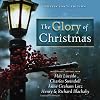
This short collection of scripture and vignettes are comforting and inspirational. Christmas is the center of these stories, but they go beyond the Christmas story itself. Taken from a variety of writings by Max Lucado and Charles Swindoll, these short offerings will enlighten your life and encourage your heart. Recommended to everyone, at any time of the year.
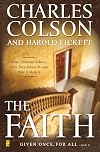
The last chapter, The Great Proposal sums up a lot and challenges the current tendency of Christians to keep their beliefs to themselves. Christianity has contributed to democracy and law, and capitalism. Also art, science and education. Christianity started the first universities and pushed for public education. The author offers this as argument to Christopher Hitchens claim that Christianity has only contributed negatively to history. Christians nursed the plague victims in Ancient Rome show more and Catholic charities has led in caring for AID victims. The book concludes with the killing of Theo Van Gogh by Mohammed Bouyeri. Because we cover up our Christian foundations the east sees the west as purely secular and intolerable. They see the west eliminating moral behavior, denying truth and comic pornographers like Van Gogh as representative of the best we have to offer. Reason without faith leads to chaos; in Islam faith alone leads to tyranny. The tragedy is that the two sides can never find common ground. Pope Benedict said, "a reason which is deaf to the Devine and which relegates religion into the realm of subcultures is incapable of entering into the dialogue of cultures," Christianity does not seek to impose, it proposes.
I find reviewing works of nonfiction to be extremely difficult because every chapter is a piece of the whole. I enjoyed this book. I liked that Colson worked so hard on unity among Christians. I think those that choose to not believe in God, like Dawkins, would not be swayed by this book. Those that might like to find ways to explain their belief might find this book of value. The book really is a challenge to the Christian to be more intentional. show less
I find reviewing works of nonfiction to be extremely difficult because every chapter is a piece of the whole. I enjoyed this book. I liked that Colson worked so hard on unity among Christians. I think those that choose to not believe in God, like Dawkins, would not be swayed by this book. Those that might like to find ways to explain their belief might find this book of value. The book really is a challenge to the Christian to be more intentional. show less
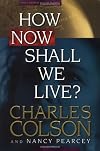
This book is a radical challenge to the Church and to all Christians to go beyond salvation - to understand Biblical faith as an entire worldview, a perspective on all of life.
Lists
Awards


You May Also Like


Associated Authors
Statistics
- Works
- 202
- Also by
- 15
- Members
- 20,005
- Popularity
- #1,083
- Rating
- 3.8
- Reviews
- 111
- ISBNs
- 298
- Languages
- 14
- Favorited
- 9
