

Jerry Bridges (1929–2016)
Author of The Pursuit of Holiness
About the Author
Jerry Bridges was a well-known Christian writer and speaker. His numerous books have sold over 3.5 million copies. He served on the staff of The Navigators for more than sixty years before his death in 2016. Jerry leaves behind his wife, Jane; two children; and seven grandchildren.
Works by Jerry Bridges
The Discipline of Grace: God's Role and Our Role in the Pursuit of Holiness (1994) 2,683 copies, 13 reviews
The Gospel for Real Life: Turn to the Liberating Power of the Cross...Every Day (Now Includes Study Guide) (2002) 1,077 copies, 12 reviews
Holiness Day by Day: Transformational Thoughts for Your Spiritual Journey Devotional (2008) 270 copies, 1 review
The Pursuit of Holiness/The Pursuit of Holiness Bible Study/The Practice of Godliness (2004) 217 copies, 1 review
The Holiness of God: R.C. Sproul- Study Guide (For Video or Audio Series) (2002) 116 copies, 1 review
I Give You Glory, O God: Honoring His Righteousness in Your Private Worship (2002) 88 copies, 1 review
Respectable Sins Student Edition: The Truth About Anger, Jealousy, Worry, and Other Stuff We Accept (Th1nk) (2013) 69 copies
How Great Is Our God: Timeless Daily Readings on the Nature of God (NavPress Devotional Readers) (2011) 41 copies
Transforming Grace Small-Group Curriculum: Living Confidently in God's Unfailing Love (2010) 17 copies
Confiando em Deus 11 copies
The Unsearchable Riches of Christ 3 copies
Peccati rispettabili: faccia a faccia con i peccati che abbiamo imparato a tollerare (2018) 3 copies
Kutsallığa Doğru 3 copies
Disciplina Harului 2 copies
Standing on the rock 2 copies
Experiencing God 2 copies
The Hidden Value of A Man 2 copies
THE HARMONY OF THE GOSPEL 2 copies
Who Am I Audio Book 2 copies
Knowing God 2 copies
The Place Called Heaven 2 copies
Trasformati dalla Grazia 1 copy
Into The Lair 1 copy
Puis-je Lui faire confiance ? (Trusting God): Même dans MES épreuves ? (French Edition) (2016) 1 copy
Fidarsi di Dio 1 copy
Gracia transformadora 1 copy
Urmariti Sfantenia 1 copy
BERSERAH KEPADA TUHAN 1 copy
DAY BY DAY 1 copy
A disciplina da graça 1 copy
敬虔的操练 1 copy
Is God regtig in beheer? 1 copy
Törekvés a szentségre 1 copy
Fruitful life 1 copy
Bem-aventuranças, as 1 copy
The Joy of serving God 1 copy
Associated Works
John Calvin: A Heart for Devotion, Doctrine, Doxology (2008) — Contributor, some editions — 989 copies, 2 reviews
The Good News We Almost Forgot: Rediscovering the Gospel in a 16th Century Catechism (2010) — Foreword — 695 copies, 2 reviews
Tagged
Common Knowledge
- Legal name
- Bridges, Gerald Dean
- Other names
- 畢哲思
- Birthdate
- 1929-12-04
- Date of death
- 2016-03-06
- Gender
- male
- Education
- University of Oklahoma (BS, Engineering)
- Occupations
- evangelist
author - Organizations
- The Navigators
U.S. Navy - Nationality
- USA
- Birthplace
- Tyler, Texas, USA
- Place of death
- Colorado Springs, Colorado, USA
- Burial location
- Evergreen Cemetery, Colorado Springs, Colorado, USA
- Associated Place (for map)
- Colorado, USA
Members
Reviews
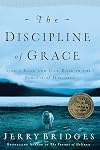
Highly recommended. Jerry Bridges thoroughly explores the application of the gospel to the Christian believer. Pursuing holiness is neither a matter of passivity nor of gritting one's teeth and trying harder, but of daily preaching the gospel to oneself and, from the gracious knowledge of acceptance and of sin's broken dominion, pressing on in the joyful duty of discipleship. Bridges offers a number of practical helps for doing this.
I definitely had some "ouch" moments of realizing I do not show more take God's holiness, or my own conforming to Christ, anywhere near as seriously as I should. Convicting in the best way. Yet, it's wonderful to read a book like this that leaves me feeling energized and hungry rather than laden with guilt. show less
I definitely had some "ouch" moments of realizing I do not show more take God's holiness, or my own conforming to Christ, anywhere near as seriously as I should. Convicting in the best way. Yet, it's wonderful to read a book like this that leaves me feeling energized and hungry rather than laden with guilt. show less
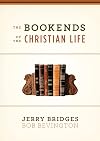
First sentence: Most of us have experienced the difficulty of putting books on a bookshelf without having a set of bookends to keep them in place. You know what happens.
The Bookends of the Christian Life is one of my favorite books. I've read it three times now: once in 2010, once in 2013, and once in 2024. The bookends of the Christian life are justification and sanctification. These two fundamental, essential doctrines are incredibly helpful when understanding and applying the gospel. One show more can understand these doctrines without knowing the doctrine's name. It's not the fancy theological terms that make the doctrine wonderful. Some may be unfamiliar with these essential doctrines, however. Sometimes gospel presentations are more on the shallow end. Sometimes one thinks, well, I've heard the gospel once...I'm saved...I don't need to spend any more time thinking or studying the gospel. But the gospel is something that we need to live in, grow in, saturate ourselves with. The gospel is relevant and timely every single day of our lives. The authors encourage readers to preach the gospel to themselves daily. The book is in some ways a thorough going over the gospel--in all its wonderful glory, both simple and complex.
From my previous review(s):
The Bookends of the Christian Life is a) short b) straightforward c) relevant. It is written to be understood and applied. Though the subject is theological in nature, it is PRACTICAL theology. It introduces a way of thinking about your life by introducing the notion of bookends. If you don't want your faith to be a complete mess, you need bookends for your faith. One of the bookends is the righteousness of Christ; the second bookend is the power of the Holy Spirit. The book never assumes that readers know what "the righteousness of Christ" is. Or that readers understand what "the power of the Holy Spirit" is. It does not assume that readers have a working understanding of the doctrines of justification, imputation, or sanctification. It explains essential doctrines in a friendly non-condescending way. It is very refreshing.
The book is ALL about the gospel. But it also spends some time addressing three serious gospel enemies: self-righteousness, persistent guilt, and self-reliance. How can believers fight against these three enemies? By preaching the gospel to themselves every day. By leaning on the bookends of the faith. By relying on Christ's righteousness and the POWER of the Holy Spirit. This book is all about TRUSTING the promises of God.
Favorite quotes:
What is the righteousness of Christ, and why do we need it as the first bookend? The word righteous in the Bible basically means perfect obedience; a righteous person is one who always does what is right. This statement assumes that there's an external, objective standard of right and wrong. That standard is the universal moral will of God as given to us throughout the Bible. It's the law of God written on every human heart. It's the standard by which each person will ultimately be judged. Our problem is that we're not righteous. (19)
We know we need a Savior, so we trust in Christ to redeem us from the curse of God's law. But though we believe we're saved as far as our eternal destiny is concerned, we may not be sure about our day-to-day standing with God. Many of us embrace a vague but very real notion that God's approval has to be earned by our conduct. We know we're saved by grace, but we believe God blesses us according to our level of perfect obedience. Consequently, our confidence that we abide in God's favor ebbs and flows according to how we gauge our performance. And since we sin every single day, this approach is ultimately discouraging and even devastating. This is exactly why we need the first bookend. (21-2)
At the cross, Jesus paid the penalty we should have paid, by enduring the wrath of God we should have endured. And this required him to do something unprecedented. It required him to provide the ultimate level of obedience--one that we'll never be asked to emulate. It required him to give up his relationship with the Father so that we could have one instead. The very thought of being torn away from the Father caused him to sweat great drops of blood. (Luke 22:44). And at the crescendo of his obedience, he screamed: "My God, my God, why have you forsaken me?" (Mark 15:34). The physical pain he endured was nothing compared to the agony of being separated from the Father. In all of history, Jesus is the only human being who was truly righteous in every way; and he was righteous in ways that are truly beyond our comprehension. (23-4)
Even though in ourselves we're completely unrighteous, God counts us as righteous because he has appointed Christ to be our representative and substitute. Therefore when Christ lived a perfect life, in God's sight we lived a perfect life. When Christ died on the cross to pay for our sins, we died on the cross. All that Christ did in his sinless life and his sin-bearing death, he did as our representative, so that we receive the credit for it. It's in this representative union with Christ that he presents us before the Father, "holy and blameless and above reproach." (Colossians 1:22) There's an old play on the word justified: "just-as-if-I'd never sinned." But here's another way of saying it: "just-as-if-I'd always obeyed". Both are true. The first refers to the transfer of our moral debt to Christ so we're left with a "clean" ledger, just as if we'd never sinned. The second tells us our ledger is now filled with the perfect righteousness of Christ, so it's just as if we'd always obeyed.... The news of this righteousness IS the gospel. (26)
Faith involves both a renunciation and a reliance. First, we must renounce any trust in our own performance as the basis of our acceptance before God. We trust in our own performance when we believe we've earned God's acceptance by our good works. But we also trust in our own performance when we believe we've lost God's acceptance by our bad works--by our sin. So we must renounce any consideration of either our bad works or our good works as the means of our relating to God. Second, we must place our reliance entirely on the perfect obedience and sin-bearing death of Christ as the sole basis of our standing before God--on our best days as well as our worst. (28)
Every day we must re-acknowledge the fact that there's nothing we can do to make ourselves either more acceptable to God or less acceptable. Regardless of how much we grow in our Christian lives, we're accepted for Christ's sake or not accepted at all. (29)
There's an important lesson here for all of us. Genuine love for Christ comes through 1) an ever-growing consciousness of our own sinfulness and unworthiness, coupled with 2) the assurance that our sins, however great, have been forgiven through his death on the cross. Only love that's founded on both of these foundations can be authentic and permanent. (34)
We need to intentionally bathe our minds and hearts in the gospel every day. (40)
Self-righteousness turns grace on its head because it views the sinner as deserving God's blessings rather than as undeserving. (43)
To the very end John Newton remembered both his sin and the gospel. On his deathbed at age eighty-two, he said, "My memory is nearly gone, but I remember two things: that I am a great sinner and that Christ is a great Savior." (59)
Thomas Wilcox put it like this: "The gospel is for sinners, and only for sinners." (68)
But it's not enough to merely see the righteousness of Christ as all-sufficient; we must see it as all-sufficient for us. Jesus was perfectly obedient in our place, as our substitute. Have we lacked purity? Jesus was pure in our place. Have we lacked patience? Jesus was patient in our place. In every area we see failure and sin, Jesus was successful at providing a perfect obedience that's credited to us. Whenever we see Christ's righteousness as all-sufficient for us, shifting our dependence to it should be almost irresistible. (70)
Although all of God's blessings are in Christ, they're distributed and applied to us by the Holy Spirit. (83)
As we look to the Spirit to work in us and enable us to work, we should realize that he uses various spiritual instruments, often called the "means of grace." They're the means by which we're "strengthened by the grace that is in Christ Jesus."... We have a responsibility to respond to each means of grace the Spirit provides. We're to participate in using them to our spiritual advantage. The term spiritual disciplines is used to describe this process and to emphasize our responsibility. Through practicing the spiritual disciplines, we avail ourselves of the means of grace.... the disciplines themselves are not the source of spiritual power. Only the Holy Spirit is. The disciplines are his instruments to transmit his power. (99)
The Holy Spirit uses our growing appetite for enjoying our relationship with God as a powerful encouragement in our battle against sin... When we enjoy God more than sin, we give him an even deeper level of glorifying love, a level he alone deserves. (117)
Just as by nature we assume we earn our salvation by our good works, so by nature we assume we grow spiritually by our own effort and willpower. What's wrong with this kind of self-reliance? Everything. (125)
John Stott described the best place to find the basis for such humility: "Nothing in history or in the universe cuts us down to size like the cross. All of us have inflated views of ourselves...until we have visited a place called Calvary. It is there at the foot of the cross that we shrink to our true size. (143) show less
The Bookends of the Christian Life is one of my favorite books. I've read it three times now: once in 2010, once in 2013, and once in 2024. The bookends of the Christian life are justification and sanctification. These two fundamental, essential doctrines are incredibly helpful when understanding and applying the gospel. One show more can understand these doctrines without knowing the doctrine's name. It's not the fancy theological terms that make the doctrine wonderful. Some may be unfamiliar with these essential doctrines, however. Sometimes gospel presentations are more on the shallow end. Sometimes one thinks, well, I've heard the gospel once...I'm saved...I don't need to spend any more time thinking or studying the gospel. But the gospel is something that we need to live in, grow in, saturate ourselves with. The gospel is relevant and timely every single day of our lives. The authors encourage readers to preach the gospel to themselves daily. The book is in some ways a thorough going over the gospel--in all its wonderful glory, both simple and complex.
From my previous review(s):
The Bookends of the Christian Life is a) short b) straightforward c) relevant. It is written to be understood and applied. Though the subject is theological in nature, it is PRACTICAL theology. It introduces a way of thinking about your life by introducing the notion of bookends. If you don't want your faith to be a complete mess, you need bookends for your faith. One of the bookends is the righteousness of Christ; the second bookend is the power of the Holy Spirit. The book never assumes that readers know what "the righteousness of Christ" is. Or that readers understand what "the power of the Holy Spirit" is. It does not assume that readers have a working understanding of the doctrines of justification, imputation, or sanctification. It explains essential doctrines in a friendly non-condescending way. It is very refreshing.
The book is ALL about the gospel. But it also spends some time addressing three serious gospel enemies: self-righteousness, persistent guilt, and self-reliance. How can believers fight against these three enemies? By preaching the gospel to themselves every day. By leaning on the bookends of the faith. By relying on Christ's righteousness and the POWER of the Holy Spirit. This book is all about TRUSTING the promises of God.
Favorite quotes:
What is the righteousness of Christ, and why do we need it as the first bookend? The word righteous in the Bible basically means perfect obedience; a righteous person is one who always does what is right. This statement assumes that there's an external, objective standard of right and wrong. That standard is the universal moral will of God as given to us throughout the Bible. It's the law of God written on every human heart. It's the standard by which each person will ultimately be judged. Our problem is that we're not righteous. (19)
We know we need a Savior, so we trust in Christ to redeem us from the curse of God's law. But though we believe we're saved as far as our eternal destiny is concerned, we may not be sure about our day-to-day standing with God. Many of us embrace a vague but very real notion that God's approval has to be earned by our conduct. We know we're saved by grace, but we believe God blesses us according to our level of perfect obedience. Consequently, our confidence that we abide in God's favor ebbs and flows according to how we gauge our performance. And since we sin every single day, this approach is ultimately discouraging and even devastating. This is exactly why we need the first bookend. (21-2)
At the cross, Jesus paid the penalty we should have paid, by enduring the wrath of God we should have endured. And this required him to do something unprecedented. It required him to provide the ultimate level of obedience--one that we'll never be asked to emulate. It required him to give up his relationship with the Father so that we could have one instead. The very thought of being torn away from the Father caused him to sweat great drops of blood. (Luke 22:44). And at the crescendo of his obedience, he screamed: "My God, my God, why have you forsaken me?" (Mark 15:34). The physical pain he endured was nothing compared to the agony of being separated from the Father. In all of history, Jesus is the only human being who was truly righteous in every way; and he was righteous in ways that are truly beyond our comprehension. (23-4)
Even though in ourselves we're completely unrighteous, God counts us as righteous because he has appointed Christ to be our representative and substitute. Therefore when Christ lived a perfect life, in God's sight we lived a perfect life. When Christ died on the cross to pay for our sins, we died on the cross. All that Christ did in his sinless life and his sin-bearing death, he did as our representative, so that we receive the credit for it. It's in this representative union with Christ that he presents us before the Father, "holy and blameless and above reproach." (Colossians 1:22) There's an old play on the word justified: "just-as-if-I'd never sinned." But here's another way of saying it: "just-as-if-I'd always obeyed". Both are true. The first refers to the transfer of our moral debt to Christ so we're left with a "clean" ledger, just as if we'd never sinned. The second tells us our ledger is now filled with the perfect righteousness of Christ, so it's just as if we'd always obeyed.... The news of this righteousness IS the gospel. (26)
Faith involves both a renunciation and a reliance. First, we must renounce any trust in our own performance as the basis of our acceptance before God. We trust in our own performance when we believe we've earned God's acceptance by our good works. But we also trust in our own performance when we believe we've lost God's acceptance by our bad works--by our sin. So we must renounce any consideration of either our bad works or our good works as the means of our relating to God. Second, we must place our reliance entirely on the perfect obedience and sin-bearing death of Christ as the sole basis of our standing before God--on our best days as well as our worst. (28)
Every day we must re-acknowledge the fact that there's nothing we can do to make ourselves either more acceptable to God or less acceptable. Regardless of how much we grow in our Christian lives, we're accepted for Christ's sake or not accepted at all. (29)
There's an important lesson here for all of us. Genuine love for Christ comes through 1) an ever-growing consciousness of our own sinfulness and unworthiness, coupled with 2) the assurance that our sins, however great, have been forgiven through his death on the cross. Only love that's founded on both of these foundations can be authentic and permanent. (34)
We need to intentionally bathe our minds and hearts in the gospel every day. (40)
Self-righteousness turns grace on its head because it views the sinner as deserving God's blessings rather than as undeserving. (43)
To the very end John Newton remembered both his sin and the gospel. On his deathbed at age eighty-two, he said, "My memory is nearly gone, but I remember two things: that I am a great sinner and that Christ is a great Savior." (59)
Thomas Wilcox put it like this: "The gospel is for sinners, and only for sinners." (68)
But it's not enough to merely see the righteousness of Christ as all-sufficient; we must see it as all-sufficient for us. Jesus was perfectly obedient in our place, as our substitute. Have we lacked purity? Jesus was pure in our place. Have we lacked patience? Jesus was patient in our place. In every area we see failure and sin, Jesus was successful at providing a perfect obedience that's credited to us. Whenever we see Christ's righteousness as all-sufficient for us, shifting our dependence to it should be almost irresistible. (70)
Although all of God's blessings are in Christ, they're distributed and applied to us by the Holy Spirit. (83)
As we look to the Spirit to work in us and enable us to work, we should realize that he uses various spiritual instruments, often called the "means of grace." They're the means by which we're "strengthened by the grace that is in Christ Jesus."... We have a responsibility to respond to each means of grace the Spirit provides. We're to participate in using them to our spiritual advantage. The term spiritual disciplines is used to describe this process and to emphasize our responsibility. Through practicing the spiritual disciplines, we avail ourselves of the means of grace.... the disciplines themselves are not the source of spiritual power. Only the Holy Spirit is. The disciplines are his instruments to transmit his power. (99)
The Holy Spirit uses our growing appetite for enjoying our relationship with God as a powerful encouragement in our battle against sin... When we enjoy God more than sin, we give him an even deeper level of glorifying love, a level he alone deserves. (117)
Just as by nature we assume we earn our salvation by our good works, so by nature we assume we grow spiritually by our own effort and willpower. What's wrong with this kind of self-reliance? Everything. (125)
John Stott described the best place to find the basis for such humility: "Nothing in history or in the universe cuts us down to size like the cross. All of us have inflated views of ourselves...until we have visited a place called Calvary. It is there at the foot of the cross that we shrink to our true size. (143) show less
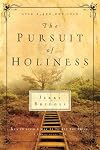
Jerry Bridges's slim little book is an eminently practical, biblical examination of the issue of holiness in the Christian life. The back cover calls holiness "the Christian's joint venture with God," and the tension between what God does and what the Christian is responsible for keeps this from being a legalistic recital of why we should be holy. Most Christians would agree that we should, but mental assent is not the same as obedience.
Bridges, a former U. S. Navy officer, is an engaging show more author who doesn't hesitate to talk about some of his own struggles, like his craving for ice cream, his temptations to "shade the truth" and cover up small offenses, his sweet tooth, his experiences in the service, etc. He writes well and clearly and his style is very readable. As I typed out the quotes below, I realized he, like me, has a great fondness for the m dash. (Long may it connect our thoughts and provide dramatic pauses—just where we want them!)
In the introduction, Bridges admits that the book is weighted more toward our responsibility to be holy than God's to make us so. But he states unequivocally that the Christian's holiness is not what saves him or makes him acceptable to God; rather, it is part of what comes with salvation. Christ's righteousness is imputed to us, as if we had lived His perfect life, and God accepts us on the basis of His Son. And yet it is undeniable that the New Testament places responsibility for personal holiness directly on the Christian; we are constantly exhorted to be holy, to control our sinful desires, to flee temptation, to throw off the sin that entangles us and run the race with perseverance... all active verbs. The book's title is fitting; it is all about our pursuit, our active work toward the goal set before us.
One chapter I really appreciated was the one titled "Holiness in Body." Bridges rightly points out that in Western Christianity, we have come to view excesses of gluttony and laziness as weakness of the will rather than sin (93). He talks about the importance of physical discipline, demonstrating that whatever gives our body and physical appetites ascendancy over our minds is "sin to you" (Susannah Wesley, 94).
I also appreciated how he highlights meditation as an essential part of Bible study. When we think of learning God's Word, we think of hearing it preached, reading it in our quiet time, and memorizing verses. What we often miss is the practice of meditating on—thinking about and turning over in our minds—God's Word. It isn't enough for me to study my daily passage, quote it, and then dismiss it from my mind. I need to think about it throughout my day, and that won't happen without discipline.
I liked, too, how Bridges emphasizes that holiness is not just abstaining from evil, but actively pursuing good. Christianity is not a vacuum, a list of do's and don'ts (mostly don'ts); it is a pursuit of God and the thoughts and actions that please Him.
One thing that made me a little uncomfortable was how Bridges often says God spoke to him. He never claims new revelation or anything crazy like that, but he will say "God spoke to my heart" or some similar phrase. Coming from a background in which God is often misquoted in subjective stories of personal spiritual revelations, I am extremely cautious of such claims. And yet at the same time, the Bible does say that the Holy Spirit will bring things to our remembrance (John 14:26), and that is basically what Bridges describes (usually it's an instance of him realizing that he needs to apply a biblical principle to a certain situation). So maybe it's just the way he phrases it that bothers me slightly.
There are so many excellent quotes in this book. Here are just a few:
Our first problem is that our attitude toward sin is more self-centered than God-centered. We are more concerned about our "victory" over sin than we are about the fact that our sins grieve the heart of God. (p. 17–18)
God wants us to walk in obedience—not victory. Obedience is oriented toward God; victory is oriented toward self... This is not to say that God doesn't want us to experience victory, but rather to emphasize that victory is a byproduct of obedience. (p. 18)
As we grow in holiness, we grow in hatred of sin; and God, being infinitely holy, has an infinite hatred of sin... We need to cultivate in our own hearts the same hatred of sin God has. Hatred of sin as sin, not just as something disquieting or defeating to ourselves, but as displeasing to God, lies at the root of all true holiness. (p. 29)
If there is not, then, at least a yearning in our hearts to live a holy life pleasing to God, we need to seriously question whether our faith in Christ in genuine. (p. 33)
To persist in disobedience is to increase our necessity for discipline. (p. 35)
The more we grow in holiness, the more we need assurance that the perfect righteousness of Christ is credited to us. (p. 41)
It is hypocritical to pray for victory over our sins yet be careless in our intake of the Word of God. (p. 66)
The Christian should never complain of want of ability or power. If we sin, it is because we choose to sin, not because we lack the ability to say no to sin. (p. 71–72)
Discipline toward holiness begins then with the Scriptures—with a disciplined plan for regular intake of the Scriptures and a disciplined plan for applying them to our daily lives. (p. 84)
We must avoid general commitments to holiness and instead aim for specific obedience in specific instances. (p. 88)
Any training—physical, mental, or spiritual—is characterized first by failure. We fail more often than we succeed. (p. 89)
[Paul] knew well that physical softness inevitably leads to spiritual softenss. (p. 96)
Every sin we commit reinforces the habit of sinning and makes it easier to sin. (p. 113)
The battle for holiness must be fought on two fronts—within and without. Only then will we see progress toward holiness. (p. 116)
Our reaction to the sinful world around us, however, must be more than just defensive. We must be concerned not only for our own purity of mind and heart, but also for the eternal destiny of those who would pollute us. (p. 128)
God intends the Christian life to be a life of joy—not drudgery... Only those who are obedient—who are pursuing holiness as a way of life—will know the joy that comes from God. (p. 131)
I will certainly revisit this book. Highly recommended. show less
Bridges, a former U. S. Navy officer, is an engaging show more author who doesn't hesitate to talk about some of his own struggles, like his craving for ice cream, his temptations to "shade the truth" and cover up small offenses, his sweet tooth, his experiences in the service, etc. He writes well and clearly and his style is very readable. As I typed out the quotes below, I realized he, like me, has a great fondness for the m dash. (Long may it connect our thoughts and provide dramatic pauses—just where we want them!)
In the introduction, Bridges admits that the book is weighted more toward our responsibility to be holy than God's to make us so. But he states unequivocally that the Christian's holiness is not what saves him or makes him acceptable to God; rather, it is part of what comes with salvation. Christ's righteousness is imputed to us, as if we had lived His perfect life, and God accepts us on the basis of His Son. And yet it is undeniable that the New Testament places responsibility for personal holiness directly on the Christian; we are constantly exhorted to be holy, to control our sinful desires, to flee temptation, to throw off the sin that entangles us and run the race with perseverance... all active verbs. The book's title is fitting; it is all about our pursuit, our active work toward the goal set before us.
One chapter I really appreciated was the one titled "Holiness in Body." Bridges rightly points out that in Western Christianity, we have come to view excesses of gluttony and laziness as weakness of the will rather than sin (93). He talks about the importance of physical discipline, demonstrating that whatever gives our body and physical appetites ascendancy over our minds is "sin to you" (Susannah Wesley, 94).
I also appreciated how he highlights meditation as an essential part of Bible study. When we think of learning God's Word, we think of hearing it preached, reading it in our quiet time, and memorizing verses. What we often miss is the practice of meditating on—thinking about and turning over in our minds—God's Word. It isn't enough for me to study my daily passage, quote it, and then dismiss it from my mind. I need to think about it throughout my day, and that won't happen without discipline.
I liked, too, how Bridges emphasizes that holiness is not just abstaining from evil, but actively pursuing good. Christianity is not a vacuum, a list of do's and don'ts (mostly don'ts); it is a pursuit of God and the thoughts and actions that please Him.
One thing that made me a little uncomfortable was how Bridges often says God spoke to him. He never claims new revelation or anything crazy like that, but he will say "God spoke to my heart" or some similar phrase. Coming from a background in which God is often misquoted in subjective stories of personal spiritual revelations, I am extremely cautious of such claims. And yet at the same time, the Bible does say that the Holy Spirit will bring things to our remembrance (John 14:26), and that is basically what Bridges describes (usually it's an instance of him realizing that he needs to apply a biblical principle to a certain situation). So maybe it's just the way he phrases it that bothers me slightly.
There are so many excellent quotes in this book. Here are just a few:
Our first problem is that our attitude toward sin is more self-centered than God-centered. We are more concerned about our "victory" over sin than we are about the fact that our sins grieve the heart of God. (p. 17–18)
God wants us to walk in obedience—not victory. Obedience is oriented toward God; victory is oriented toward self... This is not to say that God doesn't want us to experience victory, but rather to emphasize that victory is a byproduct of obedience. (p. 18)
As we grow in holiness, we grow in hatred of sin; and God, being infinitely holy, has an infinite hatred of sin... We need to cultivate in our own hearts the same hatred of sin God has. Hatred of sin as sin, not just as something disquieting or defeating to ourselves, but as displeasing to God, lies at the root of all true holiness. (p. 29)
If there is not, then, at least a yearning in our hearts to live a holy life pleasing to God, we need to seriously question whether our faith in Christ in genuine. (p. 33)
To persist in disobedience is to increase our necessity for discipline. (p. 35)
The more we grow in holiness, the more we need assurance that the perfect righteousness of Christ is credited to us. (p. 41)
It is hypocritical to pray for victory over our sins yet be careless in our intake of the Word of God. (p. 66)
The Christian should never complain of want of ability or power. If we sin, it is because we choose to sin, not because we lack the ability to say no to sin. (p. 71–72)
Discipline toward holiness begins then with the Scriptures—with a disciplined plan for regular intake of the Scriptures and a disciplined plan for applying them to our daily lives. (p. 84)
We must avoid general commitments to holiness and instead aim for specific obedience in specific instances. (p. 88)
Any training—physical, mental, or spiritual—is characterized first by failure. We fail more often than we succeed. (p. 89)
[Paul] knew well that physical softness inevitably leads to spiritual softenss. (p. 96)
Every sin we commit reinforces the habit of sinning and makes it easier to sin. (p. 113)
The battle for holiness must be fought on two fronts—within and without. Only then will we see progress toward holiness. (p. 116)
Our reaction to the sinful world around us, however, must be more than just defensive. We must be concerned not only for our own purity of mind and heart, but also for the eternal destiny of those who would pollute us. (p. 128)
God intends the Christian life to be a life of joy—not drudgery... Only those who are obedient—who are pursuing holiness as a way of life—will know the joy that comes from God. (p. 131)
I will certainly revisit this book. Highly recommended. show less
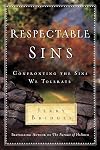
In Respectable Sins: Confronting the Sins We Tolerate, Jerry Bridges gently focuses our attention on widespread sins in the church. Not only are they common, but they also go unchecked.
1) Bridges’ confession
Before expanding on these sins, though, he makes a confession to his readers: He’s not perfect, he has committed many of these sins over the years and he doesn’t pretend to be any better or holier than the rest of us.
He makes this confession right at the start, helping readers to show more understand his humble attitude while writing this book, which ultimately helps us to accept what he has to say about these sins.
2) Seasoned Christians still have room to grow
Next, Bridges walks us through those familiar Bible verses about sin, salvation and grace. He knows he’s talking to people who’ve heard these things a million times, but he reframes them to help us see ourselves—that is, lifelong Christians who think we’ve got this faith thing all worked out—in the centre of God’s plan of salvation.
Even now, as seasoned believers, with years of Sunday services under our belts, countless worship songs sung, who knows how many prayers said, devotions read and volunteer hours logged, we're still sinners in need of God’s grace who have lots of room left to grow.
3) Down to the nitty-gritty: Sins Christians tolerate
Bridges covers everything from anger, judgmentalism, anxiety and impatience to worldliness, pride, selfishness and lack of self-control.
Sometimes we Christians purposely ignore these 'respectable' sins. Sometimes we just don't take them seriously. Gossip and materialism are a couple examples of this.
Other times these sins are winked at or they’re the subject of jokes. I can think of a few, but I’m curious which sins you (reading this review) would file under this category?
4) Bridges hits the mark
I’ve grown up in the church and consider myself to have been a believer most of my life, (You know, the ‘asked Jesus into my heart at age 6’ story), and I’ve seen each and every one of these sins in myself and in most ‘mature’ Christians around me.
Some of them, like materialism and selfishness, are shied away from in sermons, Bible studies, devotionals and especially in conversation with one another. We’re so hardwired from birth to practically idolize individualism, privacy and a citizen’s ‘rights’ to do whatever he wants with his money that we hardly distinguish them from the true sins of materialism and selfishness that God’s Word tries to guide us away from.
Other sins, like anger, are sometimes wrongly interpreted. I’ve been angered by serious sin in the church (e.g. putting personal comfort over helping a neighbor in need), and for that I have been accused of the ‘sin’ of anger. We Christians don’t know the difference between good anger (e.g. at cruel injustice) and sinful anger.
5) Bridges also missed a few biggies
Bridges really does justice to most sins that we Christians often let slide. He invites the reader, after reviewing each issue, to consider instances in our own lives where we have committed those sins and how we can return to a belief and a lifestyle more reflective of God’s desire for us, His Bride.
There are a few sins, though, I wish he had mentioned.
- Love your neighbor: We don’t do it
The second commandment, to love our neighbor as we love ourselves, seems like a biggie in Scripture. And yet, growing up I’ve witnessed countless times when Christians have refused to help a fellow Christian in need.
Not helping one’s neighbor is often made to seem acceptable with the false teaching that people must suffer in silence, without asking for help, in order to prove that they’re trusting God. Scripture, on the other hand, is full of commands and examples of Christians tangibly helping one another and that this is linked to proof of our salvation. (See John Piper’s sermon on this.)
- Church: The old boys’ club
I’ve gotta be honest. Sometimes the church resembles an old boys’ club more than a family of mature, caring believers who actually live by integrity. I’ve seen ‘mature’ Christians cover up fellow Christians’ sins and paving the way for that sin to continue. They also attacked anyone who brought those sins into the light.
Take the sexual abuse of children by clergy and other church leaders, for example. Consider the lengths to which ‘mature’ Christians have gone to cover up those sins, regardless of the fact that known pedophiles were free to continue abusing children because of the community’s collective will to keep it all quiet.
- Accountability: Who's it for anyway?
Often the church patriarchs and matriarchs consider themselves above accountability. Their age and status in the community gives them a kind of immunity from it.
Jesus and Paul’s clear instructions to deal with sin and conflict in the church (Matt. 5:23-24; Matt. 18:15-17, 1 Cor. 5: 11-13) are only applied to hot button sins (e.g. divorce, premarital sex, challenging ‘authority,’ etc.). These sins are loudly preached against and the people who committ them are publicly disciplined, cast out, or otherwise raked over the coals.
What about extreme sins, like when missionaries and elders and pastors rape children? No, we’re told, we must pray for those leaders and do nothing more. If we break the code of silence, we’re accused of the sin of judgmentalism, vengeance, anger and so forth.
You know in some ways, the Church is seriously screwed up. That’s why these are some of the very deep and dangerous sins I wish Bridges had covered in his otherwise stellar work.
6) 4.5 out of 5
Overall, the book was a huge encouragement to me, in that Bridges’ gentle treatment of these common sins paints a bright, uplifting picture of what the Church can become if we simply want to. All we need is to humble ourselves—I mean totally forget our privilege, status and years of service—and decide that our lives will not be a breeding ground for these sins anymore.
No sin is respectable.
Speaking of respect, it isn’t easy taking on the attitudes of overly comfortable Christians. I respect Jerry Bridges for the courage to share this unpopular yet urgently needed message with us.
--- Disclosure of Material Connection: I received this book free from NavPress Publishers as part of their Blogger Review Program. I was not required to write a positive review. The opinions I have expressed are my own. I am disclosing this in accordance with the Federal Trade Commision's 16 CFR, Part 255: "Guides Concerning the Use of Endorsements and Testimonials in Advertising." show less
1) Bridges’ confession
Before expanding on these sins, though, he makes a confession to his readers: He’s not perfect, he has committed many of these sins over the years and he doesn’t pretend to be any better or holier than the rest of us.
He makes this confession right at the start, helping readers to show more understand his humble attitude while writing this book, which ultimately helps us to accept what he has to say about these sins.
2) Seasoned Christians still have room to grow
Next, Bridges walks us through those familiar Bible verses about sin, salvation and grace. He knows he’s talking to people who’ve heard these things a million times, but he reframes them to help us see ourselves—that is, lifelong Christians who think we’ve got this faith thing all worked out—in the centre of God’s plan of salvation.
Even now, as seasoned believers, with years of Sunday services under our belts, countless worship songs sung, who knows how many prayers said, devotions read and volunteer hours logged, we're still sinners in need of God’s grace who have lots of room left to grow.
3) Down to the nitty-gritty: Sins Christians tolerate
Bridges covers everything from anger, judgmentalism, anxiety and impatience to worldliness, pride, selfishness and lack of self-control.
Sometimes we Christians purposely ignore these 'respectable' sins. Sometimes we just don't take them seriously. Gossip and materialism are a couple examples of this.
Other times these sins are winked at or they’re the subject of jokes. I can think of a few, but I’m curious which sins you (reading this review) would file under this category?
4) Bridges hits the mark
I’ve grown up in the church and consider myself to have been a believer most of my life, (You know, the ‘asked Jesus into my heart at age 6’ story), and I’ve seen each and every one of these sins in myself and in most ‘mature’ Christians around me.
Some of them, like materialism and selfishness, are shied away from in sermons, Bible studies, devotionals and especially in conversation with one another. We’re so hardwired from birth to practically idolize individualism, privacy and a citizen’s ‘rights’ to do whatever he wants with his money that we hardly distinguish them from the true sins of materialism and selfishness that God’s Word tries to guide us away from.
Other sins, like anger, are sometimes wrongly interpreted. I’ve been angered by serious sin in the church (e.g. putting personal comfort over helping a neighbor in need), and for that I have been accused of the ‘sin’ of anger. We Christians don’t know the difference between good anger (e.g. at cruel injustice) and sinful anger.
5) Bridges also missed a few biggies
Bridges really does justice to most sins that we Christians often let slide. He invites the reader, after reviewing each issue, to consider instances in our own lives where we have committed those sins and how we can return to a belief and a lifestyle more reflective of God’s desire for us, His Bride.
There are a few sins, though, I wish he had mentioned.
- Love your neighbor: We don’t do it
The second commandment, to love our neighbor as we love ourselves, seems like a biggie in Scripture. And yet, growing up I’ve witnessed countless times when Christians have refused to help a fellow Christian in need.
Not helping one’s neighbor is often made to seem acceptable with the false teaching that people must suffer in silence, without asking for help, in order to prove that they’re trusting God. Scripture, on the other hand, is full of commands and examples of Christians tangibly helping one another and that this is linked to proof of our salvation. (See John Piper’s sermon on this.)
- Church: The old boys’ club
I’ve gotta be honest. Sometimes the church resembles an old boys’ club more than a family of mature, caring believers who actually live by integrity. I’ve seen ‘mature’ Christians cover up fellow Christians’ sins and paving the way for that sin to continue. They also attacked anyone who brought those sins into the light.
Take the sexual abuse of children by clergy and other church leaders, for example. Consider the lengths to which ‘mature’ Christians have gone to cover up those sins, regardless of the fact that known pedophiles were free to continue abusing children because of the community’s collective will to keep it all quiet.
- Accountability: Who's it for anyway?
Often the church patriarchs and matriarchs consider themselves above accountability. Their age and status in the community gives them a kind of immunity from it.
Jesus and Paul’s clear instructions to deal with sin and conflict in the church (Matt. 5:23-24; Matt. 18:15-17, 1 Cor. 5: 11-13) are only applied to hot button sins (e.g. divorce, premarital sex, challenging ‘authority,’ etc.). These sins are loudly preached against and the people who committ them are publicly disciplined, cast out, or otherwise raked over the coals.
What about extreme sins, like when missionaries and elders and pastors rape children? No, we’re told, we must pray for those leaders and do nothing more. If we break the code of silence, we’re accused of the sin of judgmentalism, vengeance, anger and so forth.
You know in some ways, the Church is seriously screwed up. That’s why these are some of the very deep and dangerous sins I wish Bridges had covered in his otherwise stellar work.
6) 4.5 out of 5
Overall, the book was a huge encouragement to me, in that Bridges’ gentle treatment of these common sins paints a bright, uplifting picture of what the Church can become if we simply want to. All we need is to humble ourselves—I mean totally forget our privilege, status and years of service—and decide that our lives will not be a breeding ground for these sins anymore.
No sin is respectable.
Speaking of respect, it isn’t easy taking on the attitudes of overly comfortable Christians. I respect Jerry Bridges for the courage to share this unpopular yet urgently needed message with us.
--- Disclosure of Material Connection: I received this book free from NavPress Publishers as part of their Blogger Review Program. I was not required to write a positive review. The opinions I have expressed are my own. I am disclosing this in accordance with the Federal Trade Commision's 16 CFR, Part 255: "Guides Concerning the Use of Endorsements and Testimonials in Advertising." show less
Lists
Awards

You May Also Like


Associated Authors
Statistics
- Works
- 128
- Also by
- 3
- Members
- 27,410
- Popularity
- #748
- Rating
- 4.2
- Reviews
- 132
- ISBNs
- 265
- Languages
- 14
- Favorited
- 28
