
Mervyn LeRoy (1900–1987)
Author of The Wizard of Oz [1939 film]
About the Author
Works by Mervyn LeRoy
4 Film Favorites: Classic Holiday Collection Vol. 2 (All Mine to Give / Holiday Affair / It Happened on Fifth Avenue / Blossoms in the Dust) (2011) — Director — 24 copies
Controversial Classics Collection (Advise and Consent / The Americanization of Emily / Bad Day at Black Rock / Blackboard Jungle / A Face in the Crowd / Fury / I Am a Fugitive… (2005) — Director — 6 copies
Silver Screen Icons: Stars & Stripes Comedy: Mister Roberts / No Time for Sergeants (2014) — Director — 4 copies
livro fisico com dvd coleco folha grandes biografias no cinema volume 25 madame curie insp 2 copies, 1 review
Home Before Dark (1958) 1 copy
Gold Diggers Of 1933 1 copy
Associated Works
The Marx Brothers Collection (A Night at the Opera / A Day at the Races/ A Night In Casablanca / Room Service / At the Circus / Go West / The Big Store) (2004) — Producer — 59 copies
The Busby Berkeley Collection: Footlight Parade / Gold Diggers of 1933 / Dames / Gold Diggers of 1935 / 42nd Street (2006) — Director — 17 copies
Tagged
Common Knowledge
- Canonical name
- LeRoy, Mervyn
- Birthdate
- 1900-10-15
- Date of death
- 1987-09-13
- Gender
- male
- Occupations
- film director
- Awards and honors
- Hollywood Walk of Fame
- Nationality
- USA
- Birthplace
- San Francisco, California, USA
- Place of death
- Beverly Hills, California, USA
- Burial location
- Forest Lawn Memorial Park Cemetery, Glendale, California, USA
- Associated Place (for map)
- California, USA
Members
Reviews
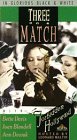
“Some people get all the luck.” — Ruth to Mary
“I wonder.” — Mary as she and Ruth watch Vivian's driver take her away
For those interested in the frankness of Hollywood films during the early 1930s in dealing with subjects that would become taboo just a few years later, Three On a Match is required viewing. Thanks to director Mervyn LeRoy and a marvelous cast, some who were not yet big, but would be, this is much more than just a pre-code curio. It is a very good film which manages show more to cover decades in the lives of three women in just over a single jam-packed hour. It is frank, sometimes raw, yet tender and involving. In the end it is tragic. Ann Dvorak is wonderful and Joan Blondell memorable, as is a young Ann Shirley, billed here in 1932 as Dawn O’Day.
LeRoy had a knack for making you care about his characters and their plight, which was also in evidence in the other memorable film he helmed in 1932, I Am a Fugitive from a Chain Gang. By showing the girls in school, their personalities and vulnerabilities on full display as they grow up, we both better understand and have empathy for their actions, especially Dvorak’s Vivian. As the young Vivian, Ann Shirley is marvelous, and strikingly pretty just as Dvorak was, capturing the inner restlessness despite her privileged upbringing. Virginia Davis is also quite lovely as the free-spirited Mary, and seems as though she really is the younger version of Joan Blondell. Betty Carse is sweet and subdued as the poor Ruth, and makes for a perfect transition to a young and blonde Betty Davis. The Davis persona did not yet exist, and I find that quite refreshing in this film.
The director used newspaper headlines to mark the passage of time and it works wonders, cramming decades into minutes, making the viewer feel like they are actually following every moment as the three girls mature and go their separate ways. In a good way, it sort of gives the impression to the viewer they’ve watched a two-hour film rather than one which barely clocks in over an hour. The story begins in 1919 and hinges on a superstition borne from the trenches of the Great War, that if you left a match lit long enough to light three cigarettes, the third was marked for death. When the three schoolmates have a reunion of sorts, catching up on their lives since school, it is the rich but unhappy Vivian who gets the last flaming ember, and starts her decent.
Blondell is simply terrific as the vivacious member of the trio, having spent time in the pen and working as a showgirl. In a smaller role, Davis is quite nice as the regular girl working her way into respectability. It is Dvorak's nervous energy as Vivian which drives this film, however. Alive but not living, bored with her rich husband and empty existence, her inner desires will be unleashed by Lyle Talbot. He is no good, and her decent into the rough world of addiction and crime becomes so complete that only Mary’s concern for her child saves him from the same fate. It is here that a romance develops between Mary and Vivian's ex, Robert Kirkwood (Warren William), with her friend Ruth acting as nanny to Vivian’s son.
These are the days of gangsters and depravity, and the story begins to bear this out. Talbot is appropriately weak and slimy as Vivian's connection. It is a very young Humphrey Bogart who impresses, however, as boss Edward Arnold’s unfeeling henchman. A strung out Dvorak shines in a stark and shattering climax when she attempts to redeem her lost soul. One of the finest of the early 1930s pre-code films, Three On a Match has bite with substance, and not one, but two terrific performances. Blondell and Dvorak are incredible here, and fans of this genre and time period in American cinema would do themselves a great favor viewing this one. show less
“I wonder.” — Mary as she and Ruth watch Vivian's driver take her away
For those interested in the frankness of Hollywood films during the early 1930s in dealing with subjects that would become taboo just a few years later, Three On a Match is required viewing. Thanks to director Mervyn LeRoy and a marvelous cast, some who were not yet big, but would be, this is much more than just a pre-code curio. It is a very good film which manages show more to cover decades in the lives of three women in just over a single jam-packed hour. It is frank, sometimes raw, yet tender and involving. In the end it is tragic. Ann Dvorak is wonderful and Joan Blondell memorable, as is a young Ann Shirley, billed here in 1932 as Dawn O’Day.
LeRoy had a knack for making you care about his characters and their plight, which was also in evidence in the other memorable film he helmed in 1932, I Am a Fugitive from a Chain Gang. By showing the girls in school, their personalities and vulnerabilities on full display as they grow up, we both better understand and have empathy for their actions, especially Dvorak’s Vivian. As the young Vivian, Ann Shirley is marvelous, and strikingly pretty just as Dvorak was, capturing the inner restlessness despite her privileged upbringing. Virginia Davis is also quite lovely as the free-spirited Mary, and seems as though she really is the younger version of Joan Blondell. Betty Carse is sweet and subdued as the poor Ruth, and makes for a perfect transition to a young and blonde Betty Davis. The Davis persona did not yet exist, and I find that quite refreshing in this film.
The director used newspaper headlines to mark the passage of time and it works wonders, cramming decades into minutes, making the viewer feel like they are actually following every moment as the three girls mature and go their separate ways. In a good way, it sort of gives the impression to the viewer they’ve watched a two-hour film rather than one which barely clocks in over an hour. The story begins in 1919 and hinges on a superstition borne from the trenches of the Great War, that if you left a match lit long enough to light three cigarettes, the third was marked for death. When the three schoolmates have a reunion of sorts, catching up on their lives since school, it is the rich but unhappy Vivian who gets the last flaming ember, and starts her decent.
Blondell is simply terrific as the vivacious member of the trio, having spent time in the pen and working as a showgirl. In a smaller role, Davis is quite nice as the regular girl working her way into respectability. It is Dvorak's nervous energy as Vivian which drives this film, however. Alive but not living, bored with her rich husband and empty existence, her inner desires will be unleashed by Lyle Talbot. He is no good, and her decent into the rough world of addiction and crime becomes so complete that only Mary’s concern for her child saves him from the same fate. It is here that a romance develops between Mary and Vivian's ex, Robert Kirkwood (Warren William), with her friend Ruth acting as nanny to Vivian’s son.
These are the days of gangsters and depravity, and the story begins to bear this out. Talbot is appropriately weak and slimy as Vivian's connection. It is a very young Humphrey Bogart who impresses, however, as boss Edward Arnold’s unfeeling henchman. A strung out Dvorak shines in a stark and shattering climax when she attempts to redeem her lost soul. One of the finest of the early 1930s pre-code films, Three On a Match has bite with substance, and not one, but two terrific performances. Blondell and Dvorak are incredible here, and fans of this genre and time period in American cinema would do themselves a great favor viewing this one. show less
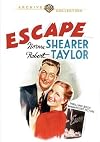
This beautiful rendering of Ethel Vance’s runaway bestseller has sensitive performances from Robert Taylor and Norma Shearer, and restrained direction from Mervyn LeRoy. Old-time radio fans will be surprised to see Arch Oboler’s name among the writing credits, as the man who took over “Lights Out” and thrilled radio audiences for years helped Marguerite Roberts retool Vance’s tense and exciting melodrama into Norma Shearer’s last great film. The role of Countess Ruby von Trek was show more beefed up by MGM, and while this remains overall Robert Taylor’s film, it is Shearer’s sacrifice for love the viewer will always remember. Having seen this many times over the years, it remains my favorite of the lovely Shearer’s films, sans her husband, Irving Thalberg. Legend has it she went around incoherently asking people if they were Irving when she was relegated to being cared for in her old age.
Robert Taylor is excellent as the American who travels to Germany to discover what has become of his mother, who had gone there to sell the family home. Silent film star Alla Nazimova hams it up a bit at times, but is effective nonetheless as his mother, Emily Ritter. Mark’s mother had helped refugees escape and would have been wiser to remain in America. Mark isn’t sure what has happened to his mother, and has only a letter and postmark to go by. Shearer is regal and luminous in fur from the very first frame, a glorious flower fronting the beautiful alps in the background. Ruby is an American by birth, a widow who remained in her adopted country when her German husband of title passed on. More worldly than the innocent Mark, she at first refuses to help him, urging him to return to the United States where it is safe.
But Taylor won’t give up, and once his questions have reached the ears of the Gestapo, he’s in real danger. A desperate and exciting plan to get his mother out once he locate her is hatched. Philip Dorn as a doctor and Felix Bressart as the old family friend lend help in a terribly dangerous scheme. In a kind gesture to her own silent screen past, Shearer afforded Nazimova a meaty role here, and she makes the most of her screen time after a long absence from the silver screen.
Norma Shearer is marvelous in her portrayal of a woman with conflicting loyalties. The mistress of General Kolb (Conrad Veidt), a man who has protected her from harm thus far, has developed true feelings are for Mark. A daring plan to escape with them so she and Mark can have their happiness plays out with tension and excitement in this glossy MGM melodrama. The ending might come as a great surprise to many viewers.
Tense and exciting at times, with restrained performances and a fine adaptation of Vance’s novel, this glossy production is MGM at their finest. This is the gorgeous and luminous Norma Shearer the way we’d like to remember her. Bonita Granville also gives a noteworthy performance as the nosy and misguided Ursula. This film released in 1940 offers classic film fans some glossy A+ entertainment. show less
Robert Taylor is excellent as the American who travels to Germany to discover what has become of his mother, who had gone there to sell the family home. Silent film star Alla Nazimova hams it up a bit at times, but is effective nonetheless as his mother, Emily Ritter. Mark’s mother had helped refugees escape and would have been wiser to remain in America. Mark isn’t sure what has happened to his mother, and has only a letter and postmark to go by. Shearer is regal and luminous in fur from the very first frame, a glorious flower fronting the beautiful alps in the background. Ruby is an American by birth, a widow who remained in her adopted country when her German husband of title passed on. More worldly than the innocent Mark, she at first refuses to help him, urging him to return to the United States where it is safe.
But Taylor won’t give up, and once his questions have reached the ears of the Gestapo, he’s in real danger. A desperate and exciting plan to get his mother out once he locate her is hatched. Philip Dorn as a doctor and Felix Bressart as the old family friend lend help in a terribly dangerous scheme. In a kind gesture to her own silent screen past, Shearer afforded Nazimova a meaty role here, and she makes the most of her screen time after a long absence from the silver screen.
Norma Shearer is marvelous in her portrayal of a woman with conflicting loyalties. The mistress of General Kolb (Conrad Veidt), a man who has protected her from harm thus far, has developed true feelings are for Mark. A daring plan to escape with them so she and Mark can have their happiness plays out with tension and excitement in this glossy MGM melodrama. The ending might come as a great surprise to many viewers.
Tense and exciting at times, with restrained performances and a fine adaptation of Vance’s novel, this glossy production is MGM at their finest. This is the gorgeous and luminous Norma Shearer the way we’d like to remember her. Bonita Granville also gives a noteworthy performance as the nosy and misguided Ursula. This film released in 1940 offers classic film fans some glossy A+ entertainment. show less

“My life began with you. I can't imagine a future without you.” — Smithy
This gentle spring blossom to true love is one of the most beautifully rendered romances ever filmed. It is pure and untarnished, a reminder that love begins in the heart, eclipsing all other things, and is all in life that truly matters. Mervyn LeRoy was a fine studio director who made some memorable films, many now considered screen classics. The romanticist fingerprints of Sidney Franklin, however, give strong show more evidence that as producer, he and LeRoy worked closely to make this film one of the loveliest of any decade. Having directed Smilin’ Through in 1932, starring Norma Shearer and Leslie Howard, he is in fact responsible for two of the most exquisite love stories spanning two decades.
James Hilton’s tale of a shell-shocked WWI veteran unable to remember and the years of ghost-ridden love that follow is touchingly realized by Ronald Colman and Greer Garson. They make a story that spans years so terribly involving that this film becomes a part of the viewer carried in their hearts long after the final credits. The kind of old-fashioned love between Colman and Garson is so rare in our time it has a nostalgic quality, a reminder of how love used to be, and still is, for a lucky few. Colman is magnificent, small gestures and haunted looks capturing the efforts of an anguished man trying to somehow put together the voices and whispers of memories as they drift like snowflakes though his mind and heart, only to have them dissolve into nothingness as he reaches out to catch them.
Greer Garson is remarkable in one of her finest performances. Her devotion and tender caring, trying to hang around just on the chance someone might one day remember her, is so utterly real it tugs at the heartstrings. She is lovely and wistful, alluring and charming, and makes anyone viewing Random Harvest wish for such love and devotion, or be thankful if they are among the rare few who possess something so valuable. A lovely score from Herbert Stothart and the lush photography of Joseph Ruttenberg frame Colman and Garson against a background full of small but perfect details; a romantic refrain or snow falling outside a windowpane during a tender moment making magic in the darknesss. There are great classic films as lovely, many of which I've seen and commented on, but none which surpass this one. It is a long and beautiful love letter to love and devotion.
Hilton’s story, adapted to the screen by Claudine West, George Froeschel and Arthur Wimperis begins in the autumn of 1919 at an asylum with a military wing for shattered minds of the war to end all wars. Colman is the traumatized soldier who barely speaks, an amnesiac longing just to belong to someone, and knowing he doesn't belong there. In the excitement and wild frenzy created by the armistice, he simply walks out one night and escapes. It is in a tobacco shop that he first meets the kind and sweet Paula, who helps him dodge those out to take him back as she falls in love with her Smithy. He also falls in love with the music-hall angel, and when her friends don’t understand, wanting to send him back too, she runs away with her Smithy and they start a new life.
It is a beautiful display of faith and love, her tender devotion healing his broken and lost spirit as they find their own happiness. He begins to write, and proposes once he feels useful again. A key to the cottage where their happiness abounded is the only tangible item connecting him to that world, however, after a car accident causes him to remember who he was, and forget his Paula. Charles Ranier has a good life, but knows something is missing, if only he could remember…
Garson is simply wonderful here, deciding to accept on the chance that even if he doesn’t remember, he will fall in love with her all over again. Young Susan Peters is also enchanting as Kitty, a young woman who adores Charles but begs off their marriage when she realizes he is haunted by a ghost of which she only reminds him. It is tender and touching, and you realize what a great film this is by the emotional depth of it. There are no wasted scenes or feelings in this film; it is all part of a beautiful mosaic to be seen with the eyes but also felt by the heart.
When it becomes too much for Paula to pretend anymore, to hang onto that slender hope, she goes on a long vacation, revisiting the old places where they were once so happy. The ending rewards our hearts with a lasting memory of love shared by all who watch this loveliest of films.
A fabulous supporting cast inculdes Philip Dorn, Henry Travers, Reginald Owen and Una O’Conner. But it is Ronald Colman and Greer Garson who are unforgettable as Smithy and Paula. Truly one of the great films of all time, with a warmth and tenderness rarely captured on film. show less
This gentle spring blossom to true love is one of the most beautifully rendered romances ever filmed. It is pure and untarnished, a reminder that love begins in the heart, eclipsing all other things, and is all in life that truly matters. Mervyn LeRoy was a fine studio director who made some memorable films, many now considered screen classics. The romanticist fingerprints of Sidney Franklin, however, give strong show more evidence that as producer, he and LeRoy worked closely to make this film one of the loveliest of any decade. Having directed Smilin’ Through in 1932, starring Norma Shearer and Leslie Howard, he is in fact responsible for two of the most exquisite love stories spanning two decades.
James Hilton’s tale of a shell-shocked WWI veteran unable to remember and the years of ghost-ridden love that follow is touchingly realized by Ronald Colman and Greer Garson. They make a story that spans years so terribly involving that this film becomes a part of the viewer carried in their hearts long after the final credits. The kind of old-fashioned love between Colman and Garson is so rare in our time it has a nostalgic quality, a reminder of how love used to be, and still is, for a lucky few. Colman is magnificent, small gestures and haunted looks capturing the efforts of an anguished man trying to somehow put together the voices and whispers of memories as they drift like snowflakes though his mind and heart, only to have them dissolve into nothingness as he reaches out to catch them.
Greer Garson is remarkable in one of her finest performances. Her devotion and tender caring, trying to hang around just on the chance someone might one day remember her, is so utterly real it tugs at the heartstrings. She is lovely and wistful, alluring and charming, and makes anyone viewing Random Harvest wish for such love and devotion, or be thankful if they are among the rare few who possess something so valuable. A lovely score from Herbert Stothart and the lush photography of Joseph Ruttenberg frame Colman and Garson against a background full of small but perfect details; a romantic refrain or snow falling outside a windowpane during a tender moment making magic in the darknesss. There are great classic films as lovely, many of which I've seen and commented on, but none which surpass this one. It is a long and beautiful love letter to love and devotion.
Hilton’s story, adapted to the screen by Claudine West, George Froeschel and Arthur Wimperis begins in the autumn of 1919 at an asylum with a military wing for shattered minds of the war to end all wars. Colman is the traumatized soldier who barely speaks, an amnesiac longing just to belong to someone, and knowing he doesn't belong there. In the excitement and wild frenzy created by the armistice, he simply walks out one night and escapes. It is in a tobacco shop that he first meets the kind and sweet Paula, who helps him dodge those out to take him back as she falls in love with her Smithy. He also falls in love with the music-hall angel, and when her friends don’t understand, wanting to send him back too, she runs away with her Smithy and they start a new life.
It is a beautiful display of faith and love, her tender devotion healing his broken and lost spirit as they find their own happiness. He begins to write, and proposes once he feels useful again. A key to the cottage where their happiness abounded is the only tangible item connecting him to that world, however, after a car accident causes him to remember who he was, and forget his Paula. Charles Ranier has a good life, but knows something is missing, if only he could remember…
Garson is simply wonderful here, deciding to accept on the chance that even if he doesn’t remember, he will fall in love with her all over again. Young Susan Peters is also enchanting as Kitty, a young woman who adores Charles but begs off their marriage when she realizes he is haunted by a ghost of which she only reminds him. It is tender and touching, and you realize what a great film this is by the emotional depth of it. There are no wasted scenes or feelings in this film; it is all part of a beautiful mosaic to be seen with the eyes but also felt by the heart.
When it becomes too much for Paula to pretend anymore, to hang onto that slender hope, she goes on a long vacation, revisiting the old places where they were once so happy. The ending rewards our hearts with a lasting memory of love shared by all who watch this loveliest of films.
A fabulous supporting cast inculdes Philip Dorn, Henry Travers, Reginald Owen and Una O’Conner. But it is Ronald Colman and Greer Garson who are unforgettable as Smithy and Paula. Truly one of the great films of all time, with a warmth and tenderness rarely captured on film. show less

Rhoda (Patty McCormick) is a child who is very adult in her ways – she’s prim and proper and seeks to be the best in everything she does. When one of her classmates wins a pin in a school competition Rhoda becomes enraged and when, shortly afterwards, the classmate drowns in an inexplicable accident Rhoda falls under suspicion. Timid mother Christine (Nancy Kelly) becomes increasingly concerned about Rhoda’s apparently sociopathic behaviour and becomes more-and-more desperate as she show more convinces herself that Rhoda is a murderous “bad seed”. Written by John Lee Mahon (from Maxwell Anderson’s play and William March’s novel), “The Bad Seed” is a slow-burn, classy, nihilistic horror film that deals with some challenging subject matter, not least being an apparently evil, conscience-free child. The screenplay is a strange psychological meditation focused on the classic nature versus nurture debate – all of which is negated by a mind-blowing final shot that suggests a godlike supreme being overseeing everything. The film presents every character as suffering from some sort of mental disfunction. Rhoda is manipulative, emotionless and psychopathic; Christine seems to have some form of imposter syndrome that leads her to be overly contentious before she reaches a final breaking point; husband and father, Kenneth (William Hopper) is absent and unavailable; housekeeper Monica (Evelyn Varde) is obsessed with psychoanalysis; handyman Leroy Jessup (Henry Jones) is cruelly manipulative; Rhoda’s school headmistress Claudia Fern (Joan Croydon) is stressed and strung-out and Hortense Daigle (Eileen Heckart), the mother of the drowned boy, is a raging alcoholic. All this adds to a surface confection of correctness and manners under which seethes a boiling stew of seething madness. Director Mervin LeRoy does well in corralling all these characters and their conflicting emotions into a narratively satisfying film. There is very little explicitness with most of the “action” implied. LeRoy keeps the film deliberately stage bound – there are very few sets, which allows the focus to be kept squarely on the performers and the cleverness and nuances of their performances. Performance wise Patty McCormick steals the show with an amazing take on Rhoda that moves from curtsying sweetness and light to screaming viciousness in the blink of an eye. “The Bad Seed” is quite a radical film for its time, both in its subject matter and its treatment of that subject. It is nicely paced, and understated despite being full of drama and delivers an incredibly left field, out-of-the-blue ending that will leave you mouth agape. show less
Lists
Awards


You May Also Like


Associated Authors
Statistics
- Works
- 74
- Also by
- 8
- Members
- 2,865
- Popularity
- #8,948
- Rating
- 3.9
- Reviews
- 43
- ISBNs
- 140
- Languages
- 3