

Albert Payson Terhune (1872–1942)
Author of Lad: A Dog
About the Author
Image credit: (Library of Congress Prints and Photography Division LC-USZ62-123046)
Series
Works by Albert Payson Terhune
Associated Works
The Illustrated Treasury of Children's Literature, Volumes 1-2 (1955) — Contributor — 523 copies, 4 reviews
Tagged
Common Knowledge
- Legal name
- Terhune, Albert Payson
- Other names
- Dircks, Stephen
- Birthdate
- 1872-12-21
- Date of death
- 1942-02-18
- Gender
- male
- Education
- Columbia University (BA, 1893)
- Occupations
- reporter (Evening World)
editor
dog breeder
journalist - Organizations
- Sunnybank Kennels (owner)
- Relationships
- Harland, Marion (mother)
Herrick, Christine Terhune (sister)
Van De Water, Virginia (sister)
Van De Water, Frederic (nephew) - Short biography
- Although he had other careers, Albert Payson Terhune is best remembered today for his novels and magazine stories on his beloved collies and other dogs, and as a dog breeder. Many of today's Rough Collies are descended from the collies he bred and raised at his Sunnybank Kennels in New Jersey. Several of his family members, including his mother, were also prolific writers. Irving Litvag wrote his biography, The Master of Sunnybank (1977, Harper & Row).
- Cause of death
- hit by a car
- Nationality
- USA
- Birthplace
- Newark, New Jersey, USA
- Places of residence
- Newark, New Jersey, USA
Wayne, New Jersey, USA
Pompton Lakes, New Jersey, USA - Place of death
- Pompton Lakes, New Jersey, USA
- Burial location
- Pompton Reformed Church, Pompton Lakes, New Jersey, USA
- Map Location
- USA
Members
Reviews

This was a favorite of mine many years ago, and it hasn’t lost much by its age. I didn’t realize back then, but it’s based on some true stories about the author’s dog, a purebred collie. I might be biased due to nostalgia, but I thought the stories really well-told, with great characters some noble and sensible, other foolish or rough around the edges. Lad the collie dog has pretty much free run of a large estate on the edge of a lake. He pays close attention to his master’s show more commands and has his duties as guard dog, but also a sense of mischief and likes to chase squirrels. Suffers the attention visitors give him (because he’s so beautiful) only because his master orders him too, attacks tresspassers without pause, and loves little children no matter how much they mishandle him. He’s just an overall fantastic dog. Well, some of the stories seem rather over the top- the dog is just a bit too perfect- even when he’s accused of some wrongdoing it always turns out to be a mistake- but I greatly enjoyed them regardless. Lad shows his intelligence, grit and sense of honor at every turn. Among the adventures he is taken to a dog show (and hates it), gets lost in the city and finds his way home again, saves a crippled child from a snake, rescues a puppy from drowning, rounds up a visitor’s straying sheep without any training (but then doesn’t know what to do with them), defends a stranger from a bull at a livestock show, and in the end (getting old) has to defend himself against other dogs on the estate who suddenly decide to overthrow his dominance.
There’s more detail and complexity to these stories than you might expect, quite a few have surprising turns and are just as much about the people Lad adores and serves, as they are about the dog himself. It’s really a glimpse into the past. Looking at other views on Goodreads reminded me how some of the attitudes in this book will be problematic to modern readers- especially children- the dogs often bite people (”slashed to the bone” is a common phrase), and are beaten by their loving masters to teach them. Although the author gives them limitations, they still understand more than is really possible, (though it doesn’t go so far as to make them speak). The attitudes towards uneducated people, those of lower economic standing, and women, is less than stellar. Any child younger than five is referred to as a Baby. It’s pretty obvious what the author’s attitude about certain aspects of ”modern life” in the early 1900’s was! And yet, I was glad to read it again. show less
There’s more detail and complexity to these stories than you might expect, quite a few have surprising turns and are just as much about the people Lad adores and serves, as they are about the dog himself. It’s really a glimpse into the past. Looking at other views on Goodreads reminded me how some of the attitudes in this book will be problematic to modern readers- especially children- the dogs often bite people (”slashed to the bone” is a common phrase), and are beaten by their loving masters to teach them. Although the author gives them limitations, they still understand more than is really possible, (though it doesn’t go so far as to make them speak). The attitudes towards uneducated people, those of lower economic standing, and women, is less than stellar. Any child younger than five is referred to as a Baby. It’s pretty obvious what the author’s attitude about certain aspects of ”modern life” in the early 1900’s was! And yet, I was glad to read it again. show less
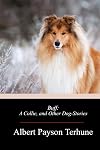
A little more than a third of this book is about Buff, the titular collie dog. The other short stories mostly feature collies, a few have some other type of dog. They’re darn good stories, well-told and interesting, in spite of being old fashioned in language and stereotypes. Some racism and some exaggerated, untrue statements. Just like in the other books, the author goes on a few rants about motor cars, the evils of vivisection, and the irrationality of mad-dog scares. The dogs in his show more stories don’t talk or have abilities beyond their nature, but they do some incredible things sometimes- one stops to randomly herd sheep and cows that a stranger is having difficulty controlling. Dogs in other stories go on incredible journeys, help track down criminals, save children from falling through the ice in winter, lead the household to a person lost and injured in the woods, and perform other feats of bravery, usually showing high intelligence.
One of my favorite stories was about a poor “hillbilly” family that owned a collie mix. When the mistress fell ill and was taking a long time to recover, the doctor encouraged the husband to find something to cheer her up. Knowing she was inordinately proud of the dog, he took it into town and entered it in a dog show. He was irate and insulted when the dog was dismissed from the class for “not being a collie.” So he stormed out and bought a trophy cup from a silversmith, had it inscribed, and brought it back to the show to display to his dog and then take them home. Some reporters who came through, not knowing anything about dogs or dog shows, saw him with the silver cup, assumed he’d won it properly, and put a picture of them in the paper! I was cracking up at that one.
Another story featured a boxer who wasn’t the greatest fighter but had been taught lots of tricks to pull fake fouls on his opponents, and thus win against men he really had no chance otherwise. He obtained a collie dog, and at some point witnessed it fight against a larger, tougher, more experienced dog. He was impressed that his dog wouldn’t “play foul” – it beat the bigger dog when something turned to its advantage, but then didn’t attack and let it the other dog run off without chasing it. So now the owner determined not to let a dog be better than him, and follow its example and win his next fight fairly! To the utter dismay of his manager. In spite of all the descriptions of fighting (men and dogs), I liked this one.
Yet another story was about a kid who ran away after loosing some money he’d been entrusted with to put in the bank for his parents. He was ashamed to go back home and decided the best course of action was to find a job in the city until he’d saved up enough to replace the money. But he couldn’t get an actual job, ended up carrying luggage for people at the train station to earn tips. He slept in a crate a ways off the roadside, and was befriended by two stray dogs. Shared his meager food with them, taught them some little tricks, and took comfort in their company. He thought he could still make things work out, until his dogs were picked up by the pound. What an awful story of how this pound was managed! The boy was heartbroken to find his dogs locked up, and desperate to get them out, except he could barely save a few pennies a week. Then his father showed up . . . a good ending, with lots of forgiveness, and the dogs saved just in the nick of time.
More stories of course, but I will not write them all here so I have something to surprise myself with when years from now I read this book again. show less
One of my favorite stories was about a poor “hillbilly” family that owned a collie mix. When the mistress fell ill and was taking a long time to recover, the doctor encouraged the husband to find something to cheer her up. Knowing she was inordinately proud of the dog, he took it into town and entered it in a dog show. He was irate and insulted when the dog was dismissed from the class for “not being a collie.” So he stormed out and bought a trophy cup from a silversmith, had it inscribed, and brought it back to the show to display to his dog and then take them home. Some reporters who came through, not knowing anything about dogs or dog shows, saw him with the silver cup, assumed he’d won it properly, and put a picture of them in the paper! I was cracking up at that one.
Another story featured a boxer who wasn’t the greatest fighter but had been taught lots of tricks to pull fake fouls on his opponents, and thus win against men he really had no chance otherwise. He obtained a collie dog, and at some point witnessed it fight against a larger, tougher, more experienced dog. He was impressed that his dog wouldn’t “play foul” – it beat the bigger dog when something turned to its advantage, but then didn’t attack and let it the other dog run off without chasing it. So now the owner determined not to let a dog be better than him, and follow its example and win his next fight fairly! To the utter dismay of his manager. In spite of all the descriptions of fighting (men and dogs), I liked this one.
Yet another story was about a kid who ran away after loosing some money he’d been entrusted with to put in the bank for his parents. He was ashamed to go back home and decided the best course of action was to find a job in the city until he’d saved up enough to replace the money. But he couldn’t get an actual job, ended up carrying luggage for people at the train station to earn tips. He slept in a crate a ways off the roadside, and was befriended by two stray dogs. Shared his meager food with them, taught them some little tricks, and took comfort in their company. He thought he could still make things work out, until his dogs were picked up by the pound. What an awful story of how this pound was managed! The boy was heartbroken to find his dogs locked up, and desperate to get them out, except he could barely save a few pennies a week. Then his father showed up . . . a good ending, with lots of forgiveness, and the dogs saved just in the nick of time.
More stories of course, but I will not write them all here so I have something to surprise myself with when years from now I read this book again. show less

Ewwww. Terhune's definition of a super-woman, in its entirety, is a woman who is wildly attractive to men. He does a prologue in which he explains that that's the only trait they have in common, they vary in every other respect - but there's an invisible set of expectations that Terhune has and doesn't explicate. He thinks that the ideal super-woman is also stupid, entirely selfish, and very beautiful - every time (frequently) one of his examples breaks that model he is volubly surprised. show more She was charitable! She helped another woman! She showed any financial, or political, acumen - he spends paragraphs on how unlikely these traits are in the women he's applied this label to. Ugh. Oh, and long discussions of any woman who wasn't beautiful (or conventionally beautiful) - how they could possibly have been attractive. I was learning interesting things about interesting (at least some of them) women (from Helen of Troy to Ninion de l'Enclos to George Sands), but it was in spite of Terhune's opinionated writing, not because of it. And the cherry on top - he wrote with glee about the downfall of his super-women, and was visibly disappointed in the ones who actually managed to have a happy life at the end. I love Terhune's dog books, but I'm not reading anything else he wrote from now on. UGH. show less

A slim book with stories about a collie dog. Unlike most of the collies at Sunnybank (or "The Place" in this narrative), Bruce starts out without much promise. He's an unattractive puppy with some physical faults. He's scorned at dog shows (in the puppy class) and the Master doesn't want to keep him. But by odd circumstances he ends up staying at The Place. The first chapter isn't about Bruce at all, but about his mother- a young collie sold for next to nothing from a breeder's kennels, show more because for some reason nobody wants to own a female dog as a pet. There was some very strong prejudice against them for some reason, which I found kind of baffling. A boy from a poor family desires to use his birthday money to get a pet dog, and is upset when his mother protests and wants the dog sent back or destroyed, just because she found out it was a female. The father refuses in front of the kid, but then sneaks the dog out and tells the boy it ran away. What he did was take it to the railway tracks and shove it into an empty boxcar. Apparently people used to get rid of unwanted animals (and even babies!) this way in the past, hoping the animal would not be found until it was too very away. Someone else's problem now.
Well, Lass (the dog's name) gets out of the rail car, and gets accidentally swapped with another collie dog in the railway yard. She ends up shipped to Sunnybank, where the people immediately know they got the wrong dog, but the Mistress is taken with her sweet temperament, and wants to keep her. She has her first litter- just one puppy, Bruce- who grows up at The Place, from an awkward, poorly-conformed pup into a magnificent large dark collie. He becomes a cherished part of the household. But then is offered up in service to his country, sent away to war. He is trained as a courier dog, to take messages when ordinary communication lines are down. He learns the names of people and places he would go between. The rest of the book is stories about his exploits in war. Missing getting shot miraculously, and saving his regiment. Leading men in the dark fog through dangerous areas back to their home base. Sniffing out a spy in a village where they are encamped, when everyone else was fooled by the man's disguise. And in the end, being so injured they were holding a burial for him, when he revived on the spot, having been just stunned unconscious by the bullet that grazed his skull. He was brave, took his duties and training seriously, and loved and admired by all the men, who saved little tidbits for him, and took comfort in petting him. (Except one time when everyone was so stressed they ignored him, so he wandered out and sat with a man on sentry duty, and ended up saving the day because he was there to give warning, as well).
At the very end he returns home proclaimed a hero dog, a bit stiff from some healed injuries, but welcomed back with open arms and taking his place at Sunnybank again. I really didn't expect this book to be mostly war stories, and I was a bit lost sometimes at the dialect of the servicemen, the terms and slang they used, and descriptions of what happened. But was able to follow it well enough to appreciate the role the dog played. Not my favorite Terhune so far, but interesting enough and a good read. show less
Well, Lass (the dog's name) gets out of the rail car, and gets accidentally swapped with another collie dog in the railway yard. She ends up shipped to Sunnybank, where the people immediately know they got the wrong dog, but the Mistress is taken with her sweet temperament, and wants to keep her. She has her first litter- just one puppy, Bruce- who grows up at The Place, from an awkward, poorly-conformed pup into a magnificent large dark collie. He becomes a cherished part of the household. But then is offered up in service to his country, sent away to war. He is trained as a courier dog, to take messages when ordinary communication lines are down. He learns the names of people and places he would go between. The rest of the book is stories about his exploits in war. Missing getting shot miraculously, and saving his regiment. Leading men in the dark fog through dangerous areas back to their home base. Sniffing out a spy in a village where they are encamped, when everyone else was fooled by the man's disguise. And in the end, being so injured they were holding a burial for him, when he revived on the spot, having been just stunned unconscious by the bullet that grazed his skull. He was brave, took his duties and training seriously, and loved and admired by all the men, who saved little tidbits for him, and took comfort in petting him. (Except one time when everyone was so stressed they ignored him, so he wandered out and sat with a man on sentry duty, and ended up saving the day because he was there to give warning, as well).
At the very end he returns home proclaimed a hero dog, a bit stiff from some healed injuries, but welcomed back with open arms and taking his place at Sunnybank again. I really didn't expect this book to be mostly war stories, and I was a bit lost sometimes at the dialect of the servicemen, the terms and slang they used, and descriptions of what happened. But was able to follow it well enough to appreciate the role the dog played. Not my favorite Terhune so far, but interesting enough and a good read. show less
Lists
Ambleside Year 5 (1)
Ambleside Books (1)
Awards

You May Also Like


Associated Authors
Statistics
- Works
- 82
- Also by
- 22
- Members
- 3,625
- Popularity
- #6,985
- Rating
- 4.0
- Reviews
- 98
- ISBNs
- 303
- Languages
- 2
- Favorited
- 5