
Elisabeth Gifford
Author of Secrets of the Sea House
Works by Elisabeth Gifford
The Last Families on St Kilda 3 copies
O Bom Doutor De Varsóvia 1 copy
Tagged
Common Knowledge
- Gender
- female
Members
Reviews
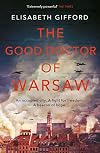
It is very hard to read about people in the Warsaw ghetto in 1942 hoping to survive until the end of the war. You so want a happy ending, but you know that even if a few survive, the ending cannot be both happy and believable.
This is very well written, and makes you want to keep reading, even during the hardest bits.
This is very well written, and makes you want to keep reading, even during the hardest bits.
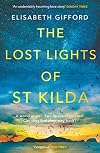
I have for a long time been fascinated by this tiny group of islands far off the coast of Scotland, the furthest flung inhabited part of the British Isles until the final small population of 36 souls were evacuated in 1930. Their survival had become increasingly precarious due to their economy of bird products and tweed being unable to keep up with the changing world in the late 19th and early 20th century, and the population having diminished as young people and whole families left the show more island to seek a future elsewhere.
This story concerns the visit of two eager young Cambridge archaeology students - Archie Macleod, son of the island's owner, and his friend Fred Lawson - to the island in summer 1927 and how they interact with the locals, particularly with young Chrissie Gillies. We are also presented with Fred Lawson being a prisoner of war in France in 1941 and through jumps between time zones, the novel traces the course of events between 1927 and 1941, and the happy ending that results for our leading characters. For once in a novel set partly in the Second World War, the War is not the main focus, the islands of St Kilda are the real hero of the story - a beautiful and terrifying set of rocks essentially in the open Atlantic and subject to that ocean's raw power and fury.
Birds were the very essence of the islanders' lives, the source of protein and one of the main economic strengths of the islanders: "the sky is alive with bird wings.. The black-tipped bent spikes of the great gannets’ wings, the flutter of scissorbeaked kittiwakes, fulmars, skewars, puffins, petrels – the same birds that supply most of the islander’s primitive diet." Even now, when St Kilda is a World Heritage site, it is "home to a tenth of the British Isles’ seabird population". Its inhabitants understandably saw it as the centre of their universe and its way of life against the encroachment of the outside world. As Chrissie says, "I believed in my heart that there was no better place or family that a child might have than this island, this jewel that had fallen from the pocket of God and where all men feel Him near and find the blessed solace of being welcome at every hearth along the strand of lighted bothies, be it even in the greatest and the darkest of storms." show less
This story concerns the visit of two eager young Cambridge archaeology students - Archie Macleod, son of the island's owner, and his friend Fred Lawson - to the island in summer 1927 and how they interact with the locals, particularly with young Chrissie Gillies. We are also presented with Fred Lawson being a prisoner of war in France in 1941 and through jumps between time zones, the novel traces the course of events between 1927 and 1941, and the happy ending that results for our leading characters. For once in a novel set partly in the Second World War, the War is not the main focus, the islands of St Kilda are the real hero of the story - a beautiful and terrifying set of rocks essentially in the open Atlantic and subject to that ocean's raw power and fury.
Birds were the very essence of the islanders' lives, the source of protein and one of the main economic strengths of the islanders: "the sky is alive with bird wings.. The black-tipped bent spikes of the great gannets’ wings, the flutter of scissorbeaked kittiwakes, fulmars, skewars, puffins, petrels – the same birds that supply most of the islander’s primitive diet." Even now, when St Kilda is a World Heritage site, it is "home to a tenth of the British Isles’ seabird population". Its inhabitants understandably saw it as the centre of their universe and its way of life against the encroachment of the outside world. As Chrissie says, "I believed in my heart that there was no better place or family that a child might have than this island, this jewel that had fallen from the pocket of God and where all men feel Him near and find the blessed solace of being welcome at every hearth along the strand of lighted bothies, be it even in the greatest and the darkest of storms." show less
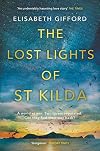
I have very fond memories of Elisabeth Gifford's first book, Secrets of the Sea House. That was a dual timeframe story with a similar setting to The Lost Lights of St Kilda, that being the islands of Scotland.
In The Lost Lights… the two aspects of the story take place quite close together, in 1927 and 1940. The earlier story is set on St Kilda, a very isolated island where the villagers are far from thriving. They are largely forgotten, even the mail ship doesn't stop there. Fred Lawson show more and Archie Macleod visit one summer and Fred is captivated by Chrissie, a young islander. But the path of love does not run smoothly for them. We see events from Fred's point of view and from Chrissie's.
Then in 1940 Fred is in France during WWII, one of the Cameron Highlanders. We witness his daring attempts at escape but what it also gives him is a reason to live and to try and return to Chrissie.
This is a beautifully written, lyrical and lilting novel. I'm always so drawn to island stories, especially Scottish islands. I think there's a romantic feel to the windswept, stark nature of them, although in reality it's far from perfect and is often such a difficult life. Elisabeth Gifford puts across perfectly the difficulties that the St Kildans faced and she's obviously done a lot of research into the island and the people who called it their home. Their plight in having to leave is plain to see.
This is not a quick or fast paced read and I didn't always find it the easiest of reads as it's quite intense, but it's full of atmosphere and is such a moving story. It's a book to savour as the setting draws the reader in and the sparse but poetic writing put me right there, whether it be on St Kilda or in France. It's ultimately the unfolding of a love story over a number of years but it's just as much a love letter to St Kilda too. show less
In The Lost Lights… the two aspects of the story take place quite close together, in 1927 and 1940. The earlier story is set on St Kilda, a very isolated island where the villagers are far from thriving. They are largely forgotten, even the mail ship doesn't stop there. Fred Lawson show more and Archie Macleod visit one summer and Fred is captivated by Chrissie, a young islander. But the path of love does not run smoothly for them. We see events from Fred's point of view and from Chrissie's.
Then in 1940 Fred is in France during WWII, one of the Cameron Highlanders. We witness his daring attempts at escape but what it also gives him is a reason to live and to try and return to Chrissie.
This is a beautifully written, lyrical and lilting novel. I'm always so drawn to island stories, especially Scottish islands. I think there's a romantic feel to the windswept, stark nature of them, although in reality it's far from perfect and is often such a difficult life. Elisabeth Gifford puts across perfectly the difficulties that the St Kildans faced and she's obviously done a lot of research into the island and the people who called it their home. Their plight in having to leave is plain to see.
This is not a quick or fast paced read and I didn't always find it the easiest of reads as it's quite intense, but it's full of atmosphere and is such a moving story. It's a book to savour as the setting draws the reader in and the sparse but poetic writing put me right there, whether it be on St Kilda or in France. It's ultimately the unfolding of a love story over a number of years but it's just as much a love letter to St Kilda too. show less
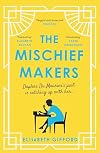
The Mischief Makers appealed to me as soon as I read the blurb and I thought it was absolutely fantastic. I love a book that fictionalises a real person's life…as long as it is done well, and this book most definitely is.
It focuses on Daphne du Maurier and covers much of her life from childhood through to her sixties. We witness her move to, and fascination with, Cornwall, her marriage, children and of course, the creation of her collection of enduring books: Rebecca, Frenchman's Creek, show more Jamaica Inn et al. However, this is not just Daphne's tale. Her family has always been indelibly linked with J.M. Barrie, creator of Peter Pan. Her five boy cousins, the Llewelyn Davies, were the original lost boys, adopted by Barrie when their parents died. Throughout her life, Daphne considers the effect of Barrie's influence on them all.
The Mischief Makers does focus mainly on Daphne with the Barrie thread running all the way through as well, and the way Elisabeth Gifford has written this book works so well. To be honest, I was completely and utterly mesmerised by the whole thing, drinking in the lives of two authors who I didn't really know very much about at all. There's so much charm in the characters and their families and yet somewhere just beneath the surface something unsettling lurks. Barrie's influence?
The writing is incredibly appealing and absorbing. Gifford has done a wonderful job at bringing Daphne du Maurier to life and telling her story in this way. The Mischief Makers is exactly my kind of read - the life of a prolific writer, with beautifully described settings, researched and depicted perfectly. I completely adored this book and it's easily one of my favourites of the year. show less
It focuses on Daphne du Maurier and covers much of her life from childhood through to her sixties. We witness her move to, and fascination with, Cornwall, her marriage, children and of course, the creation of her collection of enduring books: Rebecca, Frenchman's Creek, show more Jamaica Inn et al. However, this is not just Daphne's tale. Her family has always been indelibly linked with J.M. Barrie, creator of Peter Pan. Her five boy cousins, the Llewelyn Davies, were the original lost boys, adopted by Barrie when their parents died. Throughout her life, Daphne considers the effect of Barrie's influence on them all.
The Mischief Makers does focus mainly on Daphne with the Barrie thread running all the way through as well, and the way Elisabeth Gifford has written this book works so well. To be honest, I was completely and utterly mesmerised by the whole thing, drinking in the lives of two authors who I didn't really know very much about at all. There's so much charm in the characters and their families and yet somewhere just beneath the surface something unsettling lurks. Barrie's influence?
The writing is incredibly appealing and absorbing. Gifford has done a wonderful job at bringing Daphne du Maurier to life and telling her story in this way. The Mischief Makers is exactly my kind of read - the life of a prolific writer, with beautifully described settings, researched and depicted perfectly. I completely adored this book and it's easily one of my favourites of the year. show less
Lists
Awards


You May Also Like


Associated Authors
Statistics
- Works
- 11
- Members
- 447
- Popularity
- #54,864
- Rating
- 3.7
- Reviews
- 33
- ISBNs
- 68
- Languages
- 4