
John Blackburn (1) (1923–1993)
Author of A Scent of New-Mown Hay
For other authors named John Blackburn, see the disambiguation page.
Series
Works by John Blackburn
Associated Works
Chamber of Horrors: Great Tales of Terror and the Supernatural (1984) — Contributor — 70 copies, 1 review
Nothing But the Night [1973 film] (1973) — Based On His Novel "Nothing But The Night" (1968) — 8 copies
Tagged
Common Knowledge
- Legal name
- Blackburn, John Fenwick Anderson
- Birthdate
- 1923-06-26
- Date of death
- 1993
- Gender
- male
- Education
- Durham University
- Occupations
- schoolmaster
bookseller - Organizations
- British Merchant Navy (World War II)
- Relationships
- Blackburn, Thomas (poet)(brother)
- Nationality
- UK
- Birthplace
- Corbridge on Tyne, Northumberland, England, UK
- Places of residence
- Berlin, Germany
London, England, UK - Place of death
- Richmond, Surrey, England, UK
- Associated Place (for map)
- England, UK
Members
Reviews

Blackburn is fast becoming a favourite of mine and somewhat of a guilty pleasure. This is my fourth of his and the second mixed-genre Cold War era thriller led by General Kirk, following pretty much the same formula that Scent of New Mown Hay set down, albeit with entirely separate story.
Whilst previously Kirk set his clandestine department up against a secret Nazi super weapon which was unleashing a fungal zombie plague, this one is only slightly less outlandish; a Nazi super weapon to show more unleash a plague of insanity, but with a pulp science fiction twist to it. Once again Kirk mostly drives the investigation from his office, whilst his colleagues are sent to various dangerous or exotic locations - asylums, post-War East Germany and even a sunken U-Boat off the Scottish coast. Each set piece slowly piecing together the clues which crank up to a satisfying final act.
I have to say, despite very little action, the story is still pretty good fun. The characters remain as two dimensional as before, but that's fairly typical thriller stuff where the emphasis is on plot, set pieces and using characters to functionally get things done and connect related backstories together. I will add that modern sensibilities (and the Scottish!) will be rightfully offended by many of the archetypal Officer characters and their politically incorrect views, so approach with an eye on the times.
Straddling the line of pulp and authenticity, this isn't going to compare on a literary level to perhaps a le Carre espionage novel, but it's fast paced, genre story driven escapism from a different era, seamlessly blending the genres of spy, crime, SF and horror in such a way that I can just sit back and relax to. show less
Whilst previously Kirk set his clandestine department up against a secret Nazi super weapon which was unleashing a fungal zombie plague, this one is only slightly less outlandish; a Nazi super weapon to show more unleash a plague of insanity, but with a pulp science fiction twist to it. Once again Kirk mostly drives the investigation from his office, whilst his colleagues are sent to various dangerous or exotic locations - asylums, post-War East Germany and even a sunken U-Boat off the Scottish coast. Each set piece slowly piecing together the clues which crank up to a satisfying final act.
I have to say, despite very little action, the story is still pretty good fun. The characters remain as two dimensional as before, but that's fairly typical thriller stuff where the emphasis is on plot, set pieces and using characters to functionally get things done and connect related backstories together. I will add that modern sensibilities (and the Scottish!) will be rightfully offended by many of the archetypal Officer characters and their politically incorrect views, so approach with an eye on the times.
Straddling the line of pulp and authenticity, this isn't going to compare on a literary level to perhaps a le Carre espionage novel, but it's fast paced, genre story driven escapism from a different era, seamlessly blending the genres of spy, crime, SF and horror in such a way that I can just sit back and relax to. show less
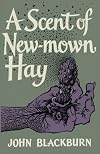
This is Blackburn's debut and sets the template for much of his subsequent work - Cold War era thrillers which combine spy fiction with horror, mystery and a bit of science as well. And he does it seamlessly and more effectively than almost anyone else.
This story of a Nazi bio-super weapon unleashed in the years after WWII, veers towards pulp storytelling, but if you are looking for action there is very little of it. In fact Blackburn's skill is not in action, deep character work or rich show more ambience, but in the spareness of his writing that conjures up a greater level of horror than the need to be explicitly graphic or descriptive. That will jar with modern readers who will likely crave more gore, more violence and more horrific imagery. I, however prefer this way. The horror exists in the reactions and the fear of the characters in what they see and is much more effective. Partly it's because this was written in the 1950's, but the best weird horror is often implied rather than shown.
The main narrative of the book focuses on an investigation as several people under the command of dominating presence of recurring character General Kirk, seek out the missing scientist who unleashed the plague. We move from rural Russia, to post-War Germany slums and back to rural -often gothic - England. Most of the characters aren't too deep and the attitudes towards women are as dated as you expect for the '50s, but the avoidance of too many stereotypes - especially with the Russians - works pretty well (until the end anyway). The spy fiction side of things keeps more to desk work investigation than field work and the latter is only employed as the final means to trigger the final unravelling of the plot which is satisfactory.
There's not a lot of twists most modern readers wont see coming, but it's a fun pulpish read and a great introduction to the works of a sadly neglected British writer who was allowed to go out of print for far too long. show less
This story of a Nazi bio-super weapon unleashed in the years after WWII, veers towards pulp storytelling, but if you are looking for action there is very little of it. In fact Blackburn's skill is not in action, deep character work or rich show more ambience, but in the spareness of his writing that conjures up a greater level of horror than the need to be explicitly graphic or descriptive. That will jar with modern readers who will likely crave more gore, more violence and more horrific imagery. I, however prefer this way. The horror exists in the reactions and the fear of the characters in what they see and is much more effective. Partly it's because this was written in the 1950's, but the best weird horror is often implied rather than shown.
The main narrative of the book focuses on an investigation as several people under the command of dominating presence of recurring character General Kirk, seek out the missing scientist who unleashed the plague. We move from rural Russia, to post-War Germany slums and back to rural -often gothic - England. Most of the characters aren't too deep and the attitudes towards women are as dated as you expect for the '50s, but the avoidance of too many stereotypes - especially with the Russians - works pretty well (until the end anyway). The spy fiction side of things keeps more to desk work investigation than field work and the latter is only employed as the final means to trigger the final unravelling of the plot which is satisfactory.
There's not a lot of twists most modern readers wont see coming, but it's a fun pulpish read and a great introduction to the works of a sadly neglected British writer who was allowed to go out of print for far too long. show less
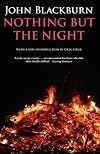
What can I say? Halloween Bingo made me do it. Normally, I don't read horror from the 1960s. I was put off by all those smug, seedy, in-it-for-the-naughty-bits Denis Wheatley books that were everywhere when I started reading horror in the 1970s. I picked up 'Nothing But The Night' as a strongly recommended example of 1960s British horror. I knew it had been made into a movie and I was intrigued to see a horror book with a title that referenced Houseman's 'A Shropshire Lad'.
The story follows show more a pattern of apparently accidental deaths that might be murders that befall the members of a charity run by a bunch of millionaire philanthropists. Is it a series of bizarre coincidences or an evil plot or the act of one mentally disturbed woman who believes she has the sight? And are the children at the luxury orphanage that the charity runs in danger or are they dangerous? These questions are asked and answered by two men with no official authority but who are both prominent establishment figures. One holds the rank of General and is an approaching-retirement overwatch-only leader in British Intelligence. The other is a Nobel Prize-winning scientist, specialising in creating new antibodies, a Knight of the Realm, and a survivor of the Warsaw Ghetto and Belsen.
It took me a while to settle into the story, partly because of the slightly sparse storytelling style but mostly because I kept getting distracted by how much I disliked 1960s Britain. John Blackburn did a good job of pressing my prejudice buttons. I'm glad I was still a child in the 1960s if this is what the adults were like.
Initially, I felt that none of the male characters was worth knowing. It took me a little longer to realise that Blackburn's two male heroes are from the survived-the-war-and-am-a-little-surprised-to-be-here generation and were both deeply damaged men who had gone on to excel at what they did. I found I needed to revise the media-generated Swinging London image of the 1960s when I thought about what it meant when all the people in power had been through six years of a brutal war.
The way the men talked about women was also distracting. The women who prepare the data for the computer are referred to as girls and not one of them is given a line. A Sister at a hospital anticipates our heroes need for a fresh slide showing a cross-section of brain tissue and receives a 'good girl' comment, meant as praise and thanks.
The language on race was also annoying. I'd always assumed that the term Mulatto had fallen out of use in England before the First World War, but Blackburn uses it as common parlance to describe a mixed-race woman. This usage woke my Inner Pedant who, after harrumphing at the derogative language, pointed out that the correct offensive terminology for a woman of her ancestry would have been Mulatta. She was the only non-white character in the book and, by sheer co-incidence, was also a prostitute, a convicted murderer and a suspected terrorist.
In what was probably seen as a progressive move at the time, the heroes wife, a Russian woman who used to work as an analyst for Russian Intelligence, plays an active part in solving the mystery. This is even more remarkable as she's seven months pregnant. Yet, instead of admiring this, I got distracted by the fact that she smoked cigarettes and drank gin, even though I know my mother would have done the same.
Perhaps the most distracting scene was when the British secret service guy used a computer to analyse the data on several cases to see if they were related. We have a male boffin doing the jargon chat and 'girls' producing the punch cards (remember those? I do.).The description of the technology sounded OK up to the point the output arrived and it turned out to be a computer-generated report in plain English that a modern AI would struggle to produce and which would have been sheer sorcery in the 1960s And not one character thought it was odd.
Despite all the distractions, I found the first three quarters of the book quietly entertaining in an ahead-of-it's-time techno-thriller way but I couldn't see the horror part. Then Blackburn turned up the heat and delivered a really big and very creepy finish. There's a clever idea sitting at the heart of the plot that you can read as science or sorcery or both. Whichever you pick, the idea is an evil, corrupting, fundamentally repugnant one and Blackburn managed to blindside me with it.
I won't be seeking out 1960s horror for my TBR pile but I'm glad to have sampled a good quality example of the vintage.
John Blackburn (1923 - 1993) was a British novelist who wrote more than thirty horror and thriller novels. He published his first book in 1958 and his last in 1985.
Many of his books, including Nothing But The Night feature General Charles Kirk of British Intelligence, the scientist Sir Marcus Levin and his Russian wife Tania.
In 1973, Nothing But The Night was made into a film starring Christopher Lee and Peter Cushing. show less

This is a prefectly fine espionage / crime thriller for its time. There is - in spades - deception, espionage, betrayal, murder, gunfights, fisty-cuffs, plots, escapes, captures, chases. Yes, some of the action beggars belief, but quite honestly, who cares, it was fun read.
"Sensitive" readers may be offended - tough - pull up your big-person pants and suck it up!
"Sensitive" readers may be offended - tough - pull up your big-person pants and suck it up!
Lists
Awards


You May Also Like


Associated Authors
Statistics
- Works
- 28
- Also by
- 6
- Members
- 613
- Popularity
- #41,001
- Rating
- 3.8
- Reviews
- 18
- ISBNs
- 87
- Languages
- 2