
Lindsay Barrett George
Author of Inside Mouse, Outside Mouse
About the Author
Image credit: via Amazon.com
Series
Works by Lindsay Barrett George
Tagged
Common Knowledge
- Gender
- female
Members
Reviews
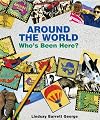
Around the World: Who’s Been Here? is an attractive, informative, and well-organized nonfiction picture book, apparently part of a series by author-illustrator Lindsay Barrett George. The double-spread gouache paintings of select animals throughout are vivid and stunning.
George’s narrative focuses on an elementary school teacher, Miss Lewis, who embarks on a nine-month trip around the world, visiting various nature preserves/reserves/animal sanctuaries on all but one of Earth’s show more continents. She sends back letters, drawings, and maps to her students, focusing on some representative animals in each region. From an author’s note at the end, it appears that the text may be based on the travels of a real-life educator in Pennsylvania, Elizabeth Lewis.
The author doesn’t talk down to her young readers. There’s some sophisticated vocabulary here (e.g., “circumnavigation,” “climes,” “sesamoid,” “neutralize,” “breaches,” and “cartilage”); geographical and directional terms are used, and in Miss Lewis’s letters to her students, some expressions in the native language of each region are used: “Adiós, amigas y amigos,” “Kwaheri,” [Swahili: goodbye], “Sayonara,” and “Zaigian pengyou” [Mandarin: Goodbye/See you later, friends].
The “who’s been here?” part of the book’s title is the question Miss Lewis regularly asks her students in her letters after she has described a strange feature of the landscape, a sign left by a certain animal. Suspecting the kids won’t know which animal left that trace, the teacher always provides the answer in a double-page painting. Near the Tambopata Research Center in Peru, for example, Miss Lewis observes rounded gouges in the clay banks along a river, while in the mountains north of the city of Tokyo, she notices large snowballs near the hot springs. Notes at the end of the book explain that the depressions in the Peruvian riverbank are made by Macaws. They consume the clay to neutralize toxins in the seeds they consume. The mud also provides them with essential salts and minerals. The snowballs in the Japanese mountains are formed by macaque monkeys, who are known to play with and nibble on the white stuff but apparently do not throw it.
For a short picture book, George communicates a remarkable amount of information. I’d purchased the text sight unseen several years ago when I was required to teach primary school social studies—specifically, the major continents and oceans. Unfortunately, I found the vocabulary and the content a little too advanced for most in the age group I was dealing with. I think the book is best suited for eight to ten year olds (grades 3 to 5).
A glossary would have been a useful addition, and if George’s work is in fact based on an actual teacher’s travels, information about the real Miss Lewis would have been welcome. Still, this is a nice nonfiction piece, and I’m glad to recommend it. show less
George’s narrative focuses on an elementary school teacher, Miss Lewis, who embarks on a nine-month trip around the world, visiting various nature preserves/reserves/animal sanctuaries on all but one of Earth’s show more continents. She sends back letters, drawings, and maps to her students, focusing on some representative animals in each region. From an author’s note at the end, it appears that the text may be based on the travels of a real-life educator in Pennsylvania, Elizabeth Lewis.
The author doesn’t talk down to her young readers. There’s some sophisticated vocabulary here (e.g., “circumnavigation,” “climes,” “sesamoid,” “neutralize,” “breaches,” and “cartilage”); geographical and directional terms are used, and in Miss Lewis’s letters to her students, some expressions in the native language of each region are used: “Adiós, amigas y amigos,” “Kwaheri,” [Swahili: goodbye], “Sayonara,” and “Zaigian pengyou” [Mandarin: Goodbye/See you later, friends].
The “who’s been here?” part of the book’s title is the question Miss Lewis regularly asks her students in her letters after she has described a strange feature of the landscape, a sign left by a certain animal. Suspecting the kids won’t know which animal left that trace, the teacher always provides the answer in a double-page painting. Near the Tambopata Research Center in Peru, for example, Miss Lewis observes rounded gouges in the clay banks along a river, while in the mountains north of the city of Tokyo, she notices large snowballs near the hot springs. Notes at the end of the book explain that the depressions in the Peruvian riverbank are made by Macaws. They consume the clay to neutralize toxins in the seeds they consume. The mud also provides them with essential salts and minerals. The snowballs in the Japanese mountains are formed by macaque monkeys, who are known to play with and nibble on the white stuff but apparently do not throw it.
For a short picture book, George communicates a remarkable amount of information. I’d purchased the text sight unseen several years ago when I was required to teach primary school social studies—specifically, the major continents and oceans. Unfortunately, I found the vocabulary and the content a little too advanced for most in the age group I was dealing with. I think the book is best suited for eight to ten year olds (grades 3 to 5).
A glossary would have been a useful addition, and if George’s work is in fact based on an actual teacher’s travels, information about the real Miss Lewis would have been welcome. Still, this is a nice nonfiction piece, and I’m glad to recommend it. show less
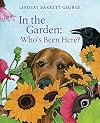
Summary: Christina and Jeremy are sent into the garden to gather vegetables for their mother. While they investigate the many things they find that don’t appear to belong in the garden such as nibbled greens, slimy streaks on the leaves, and holes in the ground; they try to figure out who might have been in the garden to make such marks. Surprisingly enough the animals that had been in the garden are not always what you would expect.
Personal Reaction: The illustrations in this book were show more incredible and the most impressive was the hair on both the characters and the animals. I was also surprised by the animals that the author chose to use to identify who had been in the garden. Many of the animals were not what I would have expected and would increase the children’s exposure to a variety of animals while also expanding their vocabulary to include a wider variety of animals found in the garden. My favorite part about this book is the way it left the question hanging allowing the students the opportunity to actually guess who had been in the garden. This was a fun book to read to the class.
Classroom extension:
1. This book could be used to introduce garden habitats.
2. This book could be an introduction to life in the garden and children could add to the story drawing pictures of what they found in the garden and identifying and drawing the animal that left the mark. show less
Personal Reaction: The illustrations in this book were show more incredible and the most impressive was the hair on both the characters and the animals. I was also surprised by the animals that the author chose to use to identify who had been in the garden. Many of the animals were not what I would have expected and would increase the children’s exposure to a variety of animals while also expanding their vocabulary to include a wider variety of animals found in the garden. My favorite part about this book is the way it left the question hanging allowing the students the opportunity to actually guess who had been in the garden. This was a fun book to read to the class.
Classroom extension:
1. This book could be used to introduce garden habitats.
2. This book could be an introduction to life in the garden and children could add to the story drawing pictures of what they found in the garden and identifying and drawing the animal that left the mark. show less
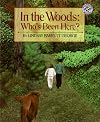
I really enjoyed this book for multiple reasons. First, the plot encourages readers to love and learn about nature. Each page presents a new creature and a fact about them. For example, the children find milkweed in the tree and ask, "Who's been here?" The author then presents the monarch butterfly to the readers on the next page. Second, the language is repetitive and descriptive in order to enhance the story. For example, on one page the children describe what they have seen and the next show more the author gives the reader the name of the animal. This allows for readers to make predictions, and be more inclined to follow along in the story. Third, the illustrates are capturing. For example, the image of the orioles nest have the children pointing up to the small, sagging nest. The children and their dog are in each picture. This allows for readers to really see the details about the animals and make predictions. The main idea of this story is learning different creatures in the woods. show less
This is a cute book about two siblings walking in the woods and discovering plants and animals. Reading this book would be great before going on a nature walk to see what kids discover. The book does include a picture of a bird with a dead bird with some blood on it. While it is not very graphic, it is something to be mindful of while reading. I think this book is at a primary reading level.
Awards


You May Also Like


Statistics
- Works
- 16
- Members
- 2,448
- Popularity
- #10,473
- Rating
- 3.7
- Reviews
- 49
- ISBNs
- 62
- Languages
- 1