

Alan Carter (6) (1959–)
Author of Prime Cut
For other authors named Alan Carter, see the disambiguation page.
Series
Works by Alan Carter
Tagged
Common Knowledge
- Birthdate
- 1959
- Gender
- male
- Nationality
- Australia
- Birthplace
- Sunderland, Durham, England, UK
- Places of residence
- Fremantle, Western Australia, Australia
- Associated Place (for map)
- Australia
Members
Reviews
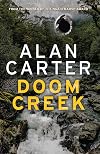
In this current political climate, the rise of the ugly, radicalised individual is all too real, and the reflection of this in quiet, idyllic New Zealand somehow more shocking. Drafted originally before the appalling Christchurch mosque shootings in 2019, Alan Carter has chosen to (in his words from the acknowledgement) foreshadow the the inevitable consequences of toxic ideology and the ready availability of military style weapons. Likewise for the rural Australian location that I live in, show more he comments that you can't help but be aware that guns are everywhere, but luckily for us and New Zealand, there doesn't seem to be the fetish about them. Again in his words, they are tools, plain and simple. A necessary requirement for farmers, but always available for anybody who is prepared to take advantage of that. It's an issue that needs constant awareness and consideration.
Given the sub-text and the issues that are addressed in DOOM CREEK, readers will find that there is nothing preachy, heavy-handed or overt about the messaging. With his normal careful hand, clever pacing, and nicely pitched combination of personal and professional, Carter is the sort of author who can deliver a well-timed reminder without having to resort to lecturing. Built into the nastiness of the ideology and idiocy, there's a compassionate family story of a couple with a disabled son, and a man in law-enforcement for all the right reasons. There's what appears to be run of the mill murder and mayhem, disappearance and random acts of vandalism. There's also an undercurrent of something really peculiar going on, something very threatening and disturbing. Nick Chester is fond of the quiet life, but not enough to step away when wrongs are committed or being planned. He's a person that's trying to do right by his family and his community, occasionally blundering his way into a heap of pain that he probably could have avoided. This time there's something a bit more going on with him as well, something that really does make you wonder sometimes if author's hate their central protagonists, or just want to give them the rounds of the kitchen every now again to remind them who is in charge.
Nick's life, his family, the crew he works with, his neighbours and the beautiful place that he works in were introduced to readers in the first book in the series, MARLBOROUGH MAN and it would definitely help if readers had read that book. Chester's got a complicated backstory, and the reasons why he is in New Zealand, and what happened to him and his family once he arrived is useful to know about (and it's an excellent book).
Having said that, you don't need to worry too much though, DOOM CREEK will mostly stand on its own. There's plenty of issues to chew over when reading this book, and there's enough hints about the backstory and recent past to keep new readers from getting lost. Having said that, if you're new to any of Alan Carter's books then you're in for a treat. Start with this Nick Chester series and then track down the Cato Kwong series. Then you can join the rest of us, standing by for wherever he takes us next.
https://www.austcrimefiction.org/review/doom-creek-alan-carter show less
Given the sub-text and the issues that are addressed in DOOM CREEK, readers will find that there is nothing preachy, heavy-handed or overt about the messaging. With his normal careful hand, clever pacing, and nicely pitched combination of personal and professional, Carter is the sort of author who can deliver a well-timed reminder without having to resort to lecturing. Built into the nastiness of the ideology and idiocy, there's a compassionate family story of a couple with a disabled son, and a man in law-enforcement for all the right reasons. There's what appears to be run of the mill murder and mayhem, disappearance and random acts of vandalism. There's also an undercurrent of something really peculiar going on, something very threatening and disturbing. Nick Chester is fond of the quiet life, but not enough to step away when wrongs are committed or being planned. He's a person that's trying to do right by his family and his community, occasionally blundering his way into a heap of pain that he probably could have avoided. This time there's something a bit more going on with him as well, something that really does make you wonder sometimes if author's hate their central protagonists, or just want to give them the rounds of the kitchen every now again to remind them who is in charge.
Nick's life, his family, the crew he works with, his neighbours and the beautiful place that he works in were introduced to readers in the first book in the series, MARLBOROUGH MAN and it would definitely help if readers had read that book. Chester's got a complicated backstory, and the reasons why he is in New Zealand, and what happened to him and his family once he arrived is useful to know about (and it's an excellent book).
Having said that, you don't need to worry too much though, DOOM CREEK will mostly stand on its own. There's plenty of issues to chew over when reading this book, and there's enough hints about the backstory and recent past to keep new readers from getting lost. Having said that, if you're new to any of Alan Carter's books then you're in for a treat. Start with this Nick Chester series and then track down the Cato Kwong series. Then you can join the rest of us, standing by for wherever he takes us next.
https://www.austcrimefiction.org/review/doom-creek-alan-carter show less
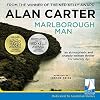
'Marlborough Man' is all about people and place. The place is beautiful in an austere, "I dare you to survive here" kind of way. The people are complicated and sometimes hard to like but always easy to believe in.
'Marlborough Man' is not a Location Thriller, selling local colour in lieu of a plot or an "I wonder what the cunning solution will be?" puzzle, it's a "waiting for the bad thing(s) to happen and see who will survive" kind of thing. There's a constant threat of violence and a show more strong sense of isolation that combine into a "You'll either take care of this yourself or you won't be around to worry about it" attitude which reflects the New Zealander "number 8 wire" problem-solving mindset. Add in the main character's blunt Geordie cynicism and some local politics and the story feels muscular and sad.
I didn't find 'Marlborough Man' entertaining, it was too hard-edged for that, but I could see why it won the Ngaio Marsh Award for Best Crime Novel in 2018. It's a couple of weeks since I finished the book and it sits in my memory like a brooding landscape painting.
The main character, Nick Chester, is an English policeman from Sunderland who, as part of a Witness Protection program following two years undercover trying to bring down a Geordie gangster, has been assigned as a Sergeant in a sleepy police station at the top New Zealand's South Island.
The plot is driven by two sets of issues: the threat posed to Chester's life when the gangster he informed on is released from prison and the investigation that Chester kicks off into the deaths of boys who, after being missing for a few days have been found dead.
Most of the story is the present-day narrative in New Zealand but we also get flashbacks into Chester's time undercover.
For me, one of the strengths of the book is that Nick Chester is a deeply flawed man whose time undercover has shown him what his worst self looks like. He is a man who has a hard time liking himself but still tries to do the right thing, at least most of the time.
The two threads of the plot, the investigation into the deaths and the threat from the gangster, run mostly parallelt to one another but both place stress on Nick Chester and on his relationships with the people around him. Sometimes that stress is destructive, Sometimes it strengthens allegiances. There's no sugar-coating here just a bleakly plausible account of a man facing mounting problems. show less
'Marlborough Man' is not a Location Thriller, selling local colour in lieu of a plot or an "I wonder what the cunning solution will be?" puzzle, it's a "waiting for the bad thing(s) to happen and see who will survive" kind of thing. There's a constant threat of violence and a show more strong sense of isolation that combine into a "You'll either take care of this yourself or you won't be around to worry about it" attitude which reflects the New Zealander "number 8 wire" problem-solving mindset. Add in the main character's blunt Geordie cynicism and some local politics and the story feels muscular and sad.
I didn't find 'Marlborough Man' entertaining, it was too hard-edged for that, but I could see why it won the Ngaio Marsh Award for Best Crime Novel in 2018. It's a couple of weeks since I finished the book and it sits in my memory like a brooding landscape painting.
The main character, Nick Chester, is an English policeman from Sunderland who, as part of a Witness Protection program following two years undercover trying to bring down a Geordie gangster, has been assigned as a Sergeant in a sleepy police station at the top New Zealand's South Island.
The plot is driven by two sets of issues: the threat posed to Chester's life when the gangster he informed on is released from prison and the investigation that Chester kicks off into the deaths of boys who, after being missing for a few days have been found dead.
Most of the story is the present-day narrative in New Zealand but we also get flashbacks into Chester's time undercover.
For me, one of the strengths of the book is that Nick Chester is a deeply flawed man whose time undercover has shown him what his worst self looks like. He is a man who has a hard time liking himself but still tries to do the right thing, at least most of the time.
The two threads of the plot, the investigation into the deaths and the threat from the gangster, run mostly parallelt to one another but both place stress on Nick Chester and on his relationships with the people around him. Sometimes that stress is destructive, Sometimes it strengthens allegiances. There's no sugar-coating here just a bleakly plausible account of a man facing mounting problems. show less
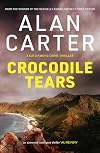
CROCODILE TEARS takes Philip 'Cato' Kwong a long way away from his origins in the Stock Squad in the middle of nowhere. Instead, in this final novel in the series, we start out with Kwong investigating the death of a retiree found hacked to pieces in suburban Perth, ending up in Timor-Leste and deep in the world of spies, dodgy business dealings, more death, torture, attacks and extreme violence. Plus he's a father to a "terrible two" now, and his wife, Sharon, has career aspirations of her show more own.
Flawed, fallible and endearingly human, Kwong has always been an engaging central protagonist. A cop with a seemingly limitless capacity to endure physical attacks (and there are plenty of those in this novel), he's doubtful, hesitant, willing to take risks without being a superhero type, and very real. His relationship with his work colleagues, and with Sharon is really well executed, with plenty of dry, Australian humour built in. There are also sufficient hat-tips to his ethnicity to make the reader aware that being Chinese-Australian isn't always the easiest thing.
CROCODILE TEARS combines police procedural and spy thriller elements, told in a series of short-sharp viewpoints, switching between Cato and spook Rory Driscoll, who, as the blurb puts it "has always occupied a hazy moral terrain". Driscoll starts out in this novel babysitting three witnesses due to give evidence to a Hague trial into issues around Timor-Leste's independence, and the subsequent arguments over oil rights etc, and that has him ferrying three very different individuals around Australia, eventually getting them to Darwin, in one piece, just in time for the trial. There are rival spooks, sinister threats, and always Driscoll's boss - the ever present Aunty - who, at points in this novel, might make you wonder which side she's on. Meanwhile there are more murders happening locally, Sharon ends up involved, there are local cops courtesy of multiple crime scenes, odd connections to Christmas Island and then to Timor-Leste, and Kwong and Driscoll find themselves in that country, trying to navigate a world occupied by some seriously dangerous people.
As the saying goes "it's complicated". Boy oh boy is it complicated here - especially for followers of this series who are used to Kwong in a lot of scrapes, but never up to his elbows in international terrorism, dodgy business dealings, millionaire's, shady characters and threats to home and family. You will need to be paying very very close attention as the viewpoints switch around, the pace remains pretty high throughout this novel, and there is a. lot. going. on.
It's definitely an unusual way to end a series, with family circumstances playing a role, cases that veer away from the norm such a lot, all of which might leave the reader feeling a bit puffed out (nice way to get some empathy with Kwong going) but definitely ending up feeling like he deserved some time out.
Different from the rest of the series, but highly entertaining, rip-roaring fun nonetheless, it was interesting to see such a mash up of styles (procedural spy thriller's could be a thing?). It was hard to come away from it, after finishing way too late last night, without the feeling Philip 'Cato' Kwong will be sorely missed.
https://www.austcrimefiction.org/review/crocodile-tears-alan-carter show less
Flawed, fallible and endearingly human, Kwong has always been an engaging central protagonist. A cop with a seemingly limitless capacity to endure physical attacks (and there are plenty of those in this novel), he's doubtful, hesitant, willing to take risks without being a superhero type, and very real. His relationship with his work colleagues, and with Sharon is really well executed, with plenty of dry, Australian humour built in. There are also sufficient hat-tips to his ethnicity to make the reader aware that being Chinese-Australian isn't always the easiest thing.
CROCODILE TEARS combines police procedural and spy thriller elements, told in a series of short-sharp viewpoints, switching between Cato and spook Rory Driscoll, who, as the blurb puts it "has always occupied a hazy moral terrain". Driscoll starts out in this novel babysitting three witnesses due to give evidence to a Hague trial into issues around Timor-Leste's independence, and the subsequent arguments over oil rights etc, and that has him ferrying three very different individuals around Australia, eventually getting them to Darwin, in one piece, just in time for the trial. There are rival spooks, sinister threats, and always Driscoll's boss - the ever present Aunty - who, at points in this novel, might make you wonder which side she's on. Meanwhile there are more murders happening locally, Sharon ends up involved, there are local cops courtesy of multiple crime scenes, odd connections to Christmas Island and then to Timor-Leste, and Kwong and Driscoll find themselves in that country, trying to navigate a world occupied by some seriously dangerous people.
As the saying goes "it's complicated". Boy oh boy is it complicated here - especially for followers of this series who are used to Kwong in a lot of scrapes, but never up to his elbows in international terrorism, dodgy business dealings, millionaire's, shady characters and threats to home and family. You will need to be paying very very close attention as the viewpoints switch around, the pace remains pretty high throughout this novel, and there is a. lot. going. on.
It's definitely an unusual way to end a series, with family circumstances playing a role, cases that veer away from the norm such a lot, all of which might leave the reader feeling a bit puffed out (nice way to get some empathy with Kwong going) but definitely ending up feeling like he deserved some time out.
Different from the rest of the series, but highly entertaining, rip-roaring fun nonetheless, it was interesting to see such a mash up of styles (procedural spy thriller's could be a thing?). It was hard to come away from it, after finishing way too late last night, without the feeling Philip 'Cato' Kwong will be sorely missed.
https://www.austcrimefiction.org/review/crocodile-tears-alan-carter show less

Sometimes you start reading a series book about a favourite character, and really start to wonder if the author is annoyed with them, subconsciously punishing them for being too popular, or just enjoying applying the thumb screws for a change. Whatever is going on, Alan Carter isn't making it easy for the popular, easy-going, and seemingly content Philip 'Cato' Kwong in HEAVEN SENT.
Settled in his personal life with a new wife, new daughter and a tricky but improving relationship with his show more teenage son, Kwong's professional life is relatively stable as well - at least he's not serving his time in the remote reaches of WA on the "stock squad". He's back in Fremantle, and seconded to major crime when a series of murders of homeless people escalates. Whilst Kwong is dealing with the more traditional elements of a serial killer investigation, journalist Norman Lip is taking a more dangerous path - flirting online with the killer. Especially as it starts to look like this killer has thought this through much more carefully than Lip and has a very personal grudge against Cato Kwong.
For readers new to this series, you'll find plenty here to give you hints and tips about Cato Kwong's background - including the acquiring of his nickname. You'll find out enough about his policing past to fill in the gaps, and more than enough about his personal life to explain his satisfaction with his current circumstances, and his almost wilful blindness to some of the struggles his wife Sharon is experiencing with new motherhood. If it's any consolation his domestic blindspot also includes his teenage son who is struggling with two parents who have moved onto other partners, other kids, and other lives. There's plenty there to make the reader really want to give Kwong a good shouting at in places. Which is the great part of this series - Kwong feels like a real person, he's a good cop, who is capable of making good, inspired and profoundly daft decisions. He's a good bloke who loves his family and totally and utterly doesn't get what's happening around him all at the same time. He's caring, concerned, blithely ignorant and utterly interconnected. In other words he's real, and annoying and endearing all at the same time.
The plot here is also something that readers who are new to the series will be able to go with also, as will welded on fans (HEAVEN SENT is book number 4). As always there's a social issue at the core - in this case homelessness in a society that's seemingly well off and privileged. The sense of community is strong, with homeless support services, police and local government all too aware of the people who live rough in the place. The fact that the killer is also able to tap into that local knowledge creates a claustrophobic overlay, reminding you that few people are ever really truly under the radar.
Dotted throughout, as always, are perfect little observations, Sharon Wang in her struggles with new motherhood and isolation, is still able to summons a bit of fierce when required. Kwong's old love interest and colleague Tess, reminds us of the never-ending problem of toxic male violence that many women live with. Naomi Lip, journalist Norman's sister, wheelchair bound and physically restricted reminds us that mental acuity, wit and ability are often less visible, but much stronger.
HEAVEN SENT has been much anticipated, as it's been a bit of a gap since the last outing with Cato Kwong. Let's hope there's plenty more to come.
https://www.austcrimefiction.org/review/heaven-sent-alan-carter show less
Settled in his personal life with a new wife, new daughter and a tricky but improving relationship with his show more teenage son, Kwong's professional life is relatively stable as well - at least he's not serving his time in the remote reaches of WA on the "stock squad". He's back in Fremantle, and seconded to major crime when a series of murders of homeless people escalates. Whilst Kwong is dealing with the more traditional elements of a serial killer investigation, journalist Norman Lip is taking a more dangerous path - flirting online with the killer. Especially as it starts to look like this killer has thought this through much more carefully than Lip and has a very personal grudge against Cato Kwong.
For readers new to this series, you'll find plenty here to give you hints and tips about Cato Kwong's background - including the acquiring of his nickname. You'll find out enough about his policing past to fill in the gaps, and more than enough about his personal life to explain his satisfaction with his current circumstances, and his almost wilful blindness to some of the struggles his wife Sharon is experiencing with new motherhood. If it's any consolation his domestic blindspot also includes his teenage son who is struggling with two parents who have moved onto other partners, other kids, and other lives. There's plenty there to make the reader really want to give Kwong a good shouting at in places. Which is the great part of this series - Kwong feels like a real person, he's a good cop, who is capable of making good, inspired and profoundly daft decisions. He's a good bloke who loves his family and totally and utterly doesn't get what's happening around him all at the same time. He's caring, concerned, blithely ignorant and utterly interconnected. In other words he's real, and annoying and endearing all at the same time.
The plot here is also something that readers who are new to the series will be able to go with also, as will welded on fans (HEAVEN SENT is book number 4). As always there's a social issue at the core - in this case homelessness in a society that's seemingly well off and privileged. The sense of community is strong, with homeless support services, police and local government all too aware of the people who live rough in the place. The fact that the killer is also able to tap into that local knowledge creates a claustrophobic overlay, reminding you that few people are ever really truly under the radar.
Dotted throughout, as always, are perfect little observations, Sharon Wang in her struggles with new motherhood and isolation, is still able to summons a bit of fierce when required. Kwong's old love interest and colleague Tess, reminds us of the never-ending problem of toxic male violence that many women live with. Naomi Lip, journalist Norman's sister, wheelchair bound and physically restricted reminds us that mental acuity, wit and ability are often less visible, but much stronger.
HEAVEN SENT has been much anticipated, as it's been a bit of a gap since the last outing with Cato Kwong. Let's hope there's plenty more to come.
https://www.austcrimefiction.org/review/heaven-sent-alan-carter show less
Awards


You May Also Like


Statistics
- Works
- 8
- Members
- 236
- Popularity
- #95,934
- Rating
- 4.0
- Reviews
- 29
- ISBNs
- 112
- Languages
- 1