
Peter Corris (1942–2018)
Author of The Dying Trade
About the Author
Peter Corris was born in Stawell, Victoria, Australia on May 8, 1942. He received a bachelor's degree from the University of Melbourne, a master's degree in history from Monash University, and a PhD in history from the Australian National University. He worked as a professor until 1975 when he show more decided to become a journalist. He was as literary editor of The National Times from 1979 to 1980. He decided to become a full-time writer in 1982. His first book, The Dying Trade, was published in 1980. He was best known for the Cliff Hardy series. He also wrote collaborative biographies with Philip Nitschke, Fred Hollows, John Sinclair, and Ray Barrett. His autobiography, Sweet and Sour: A Diabetic Life, was published in 2000. He received the Ned Kelly Award for lifetime achievement in 1999, the Ned Kelly Award for best novel in 2009 for Deep Water, and the Bad Sydney Crime Writers Festival's inaugural Danger Lifetime Achievement Award in 2018. He died on August 30, 2018 at the age of 76. (Bowker Author Biography) show less
Image credit: Courtesy of Allen and Unwin
Series
Works by Peter Corris
The Journal of Fletcher Christian. Together with the history of Henry Corkhill. (2005) 22 copies, 1 review
Passage, port and plantation; a history of Solomon Islands labour migration, 1870-1914 (1973) 5 copies
Ringside: A Knockout Collection of Fights and Fighters: The Winners, The Losers, The Legends (1996) 2 copies
AAAAA Book list 1 copy
Hard Labour 1 copy
Naismith's Daughter 1 copy
What Would You Do 1 copy
Byron Kelly's Big Mistake 1 copy
The Mae West Scam 1 copy
Box On 1 copy
Bit Parts 1 copy
Arizona Dawn 1 copy
Blood Is Thicker 1 copy
California Dreamland 1 copy
Maltese Falcon 1 copy
Marriages Are Made In Heaven 1 copy
Silverman 1 copy
Stockyards At Jerilderie 1 copy
The Arms Of The Law 1 copy
The Big Pinch 1 copy
The Luck Of Clem Carter 1 copy
The Mongol Scroll 1 copy
Airwaves 1 copy
Cadigal Country 1 copy
The House Of Ruby 1 copy
Cloudburst 1 copy
Eye Doctor 1 copy
Ghost Writer 1 copy
High Integrity 1 copy
Kill Me Someone 1 copy
Lost And Found 1 copy
Mother's Boy 1 copy
Norman Mailer's Christmas 1 copy
P.i. Blues 1 copy
Rhythm Track 1 copy
Tearaway 1 copy
The Big Lie 1 copy
The Deserter 1 copy
Associated Works
Tagged
Common Knowledge
- Legal name
- Corris, Peter Robert
- Birthdate
- 1942-05-08
- Date of death
- 2018-08-30
- Gender
- male
- Education
- University of Melbourne
Monash University (MA ∙ History)
Australian National University (PhD ∙ History) - Occupations
- journalist
crime novelist
short story writer
lecturer - Awards and honors
- Ned Kelly Awards for Crime Writing (Lifetime Achievement, 1999)
- Relationships
- Bedford, Jean (wife)
- Nationality
- Australia
- Birthplace
- Stawell, Victoria, Australia
- Places of residence
- Melbourne, Victoria, Australia
Ilawarra, New South Wales, Australia - Place of death
- Sydney, New South Wales, Australia
- Associated Place (for map)
- Australia
Members
Reviews
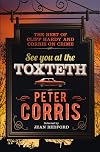
It is more than fitting that the final word from Peter Corris would be curated by his wife, and long-time editor, Jean Bedford. The chosen short stories are perfect examples of his work, and the 'ABC Of Crime Writing' is every bit as insightful, acerbic, funny and thought-provoking as you'd want it to be. The columns from Newtown Review of Books are the icing on the very satisfying cake that is SEE YOU AT THE TOXTETH.
Those of us who were lucky enough to be around when Corris first started show more writing the Cliff Hardy novels will remember many of the original collections from which the stories in this compendium come - collections such as Heroin Annie (first published in 1984) to The Big Score (published 2007), the stories that Bedford has selected are Corris writing Cliff Hardy at the height of his powers. They show little gems of ideas, perfectly formed into an arc that's punchy and precise, and, as always ended when it should. Never an unnecessary word, never a backwards step, never a flinch. Cliff Hardy in written form.
Right back in 1984 there was something incredibly powerful about the Heroin Annie collection. It wasn't just that we had our own hard-boiled PI by that stage (this was the 5th outing), rather it was something in the assuredness of Cliff Hardy's place in our fictional world. We were offered a series of crisply written, nicely paced, elegantly structured short stories, at just the right time in the evolution of the Hardy character. At that stage they offered new readers a way into a series that would go on to 42 novels in total. They gave reader's a sure fire way of knowing what Cliff stood for, who he was, and why this series would continue to grow. They were perfectly pitched from a publishing point of view, and from a reader's point of view. This current collection starts out (quite rightly) with Man's Best Friend and Silverman (Heroine Annie 1984) moves to The Arms of the Law and Tearaway (The Big Drop 1985), then The Deserter (Man in the Shadows 1988), The Big Lie and The House of Ruby (Burn, and other Stories 1993), Meeting at Mascot (Forget Me If You Can 1997), Black Andy and Death Threats (Taking Care of Business 2004) to finally Last Will and Testament and Break Point (The Big Score 2007). A comprehensive meander through an incredibly long career, in which the deftness of the writing and the standard of the storytelling never wavered. I'd kind of forgotten what a master short story writer Peter Corris was until this collection reminded me.
Then into the ABC of Crime Writing and there were points I cried with laughter, there were points I agreed furiously and points I would have liked to have had an dreamed about opportunity to nitpick over for a while, and there were points were I actually felt a bit like crying. Because then I got to the columns from the Newtown Review of Books and realised that even when his health was failing Peter Corris could knock out words that made you stop and think.
Thanks to Allen & Unwin, Jean Beford and everybody involved in this wonderful collection. show less
Those of us who were lucky enough to be around when Corris first started show more writing the Cliff Hardy novels will remember many of the original collections from which the stories in this compendium come - collections such as Heroin Annie (first published in 1984) to The Big Score (published 2007), the stories that Bedford has selected are Corris writing Cliff Hardy at the height of his powers. They show little gems of ideas, perfectly formed into an arc that's punchy and precise, and, as always ended when it should. Never an unnecessary word, never a backwards step, never a flinch. Cliff Hardy in written form.
Right back in 1984 there was something incredibly powerful about the Heroin Annie collection. It wasn't just that we had our own hard-boiled PI by that stage (this was the 5th outing), rather it was something in the assuredness of Cliff Hardy's place in our fictional world. We were offered a series of crisply written, nicely paced, elegantly structured short stories, at just the right time in the evolution of the Hardy character. At that stage they offered new readers a way into a series that would go on to 42 novels in total. They gave reader's a sure fire way of knowing what Cliff stood for, who he was, and why this series would continue to grow. They were perfectly pitched from a publishing point of view, and from a reader's point of view. This current collection starts out (quite rightly) with Man's Best Friend and Silverman (Heroine Annie 1984) moves to The Arms of the Law and Tearaway (The Big Drop 1985), then The Deserter (Man in the Shadows 1988), The Big Lie and The House of Ruby (Burn, and other Stories 1993), Meeting at Mascot (Forget Me If You Can 1997), Black Andy and Death Threats (Taking Care of Business 2004) to finally Last Will and Testament and Break Point (The Big Score 2007). A comprehensive meander through an incredibly long career, in which the deftness of the writing and the standard of the storytelling never wavered. I'd kind of forgotten what a master short story writer Peter Corris was until this collection reminded me.
Then into the ABC of Crime Writing and there were points I cried with laughter, there were points I agreed furiously and points I would have liked to have had an dreamed about opportunity to nitpick over for a while, and there were points were I actually felt a bit like crying. Because then I got to the columns from the Newtown Review of Books and realised that even when his health was failing Peter Corris could knock out words that made you stop and think.
Thanks to Allen & Unwin, Jean Beford and everybody involved in this wonderful collection. show less

Cliff's back - Lazarus with a quadruple bypass no less. He's resigned to never getting his licence back and his agency is now in the hands of his daughter Megan and her PI boyfriend. He still misses Lily, and he's still driving "a" trusty Falcon, and he's no longer so pressed for money.
More importantly, he's lucky to be alive.
Recovering from a quadruple bypass has it's own challenges - the exercise requirements, the pills that have to be taken for the rest of your life, the limitations that show more the awareness of mortality places on you, and there are glimpses, possibly for the first time ever, of Hardy's mortality in DEEP WATER. Mind you, the reader can't help but pause to consider the author's own brush with heart problems (Corris has also not so long ago undergone a quadruple bypass). In DEEP WATER Cliff returns as one of those perennial fictional heroes, sure if you paid close attention to his life's history, he's "in theory" well into his seventies by now, but if you don't look too closely then you're never going to know. There is more than just some signs of physical frailty about Cliff in this book, there's something obviously reflective about him as well - he isn't going to forget the death of Lily, he looks back at the death of his ex-wife Cynthia, and then there is his relationship building with Megan, the daughter who, for so many years, he didn't know existed. But this is Cliff we're talking about and there is only so much reflection and physical care that you can take, and he's not above a beeline for the closest cold beer, a seriously good meal and a fragile woman, destined to love and leave him, alone again.
Investigating the disappearance of Henry McKinley is the perfect vehicle for Cliff's return - whilst Megan and her boyfriend Hank are the official component, Cliff is able to dig around into the background of McKinley, whose better than good persona rapidly slips away. Working unofficially does have its downside, and there is a corrupt cop who has been waiting for a chance to have a go at Cliff for many years. As the investigation gets closer to the mark corruption, greed, money and sex all line up as possible motivations.
Then right at the end, despite all of Cliff's health problems, Corris cannot resist one more bit of personal jeopardy and one more personal disappointment just to give Cliff something to chew on for the future.
DEEP WATER is the 34th Cliff Hardy book, the last few really have dealt with a major transition in Cliff's life as he loses his lover, his licence and this time - very nearly his life. Mind you, Cliff dying of a heart attack on the pier in San Diego would have been profoundly distressing - if he has to go, he has to go in the back streets of Glebe, preferably with a beer in hand (not that there's any particular hint that he's on his way I might add). But there is definitely a feeling of further transition in DEEP WATER. Let's hope Cliff isn't going to slip quietly into the role of the voice of experience and wisdom. Here's hoping for a bit more kicking and screaming along the way. show less
More importantly, he's lucky to be alive.
Recovering from a quadruple bypass has it's own challenges - the exercise requirements, the pills that have to be taken for the rest of your life, the limitations that show more the awareness of mortality places on you, and there are glimpses, possibly for the first time ever, of Hardy's mortality in DEEP WATER. Mind you, the reader can't help but pause to consider the author's own brush with heart problems (Corris has also not so long ago undergone a quadruple bypass). In DEEP WATER Cliff returns as one of those perennial fictional heroes, sure if you paid close attention to his life's history, he's "in theory" well into his seventies by now, but if you don't look too closely then you're never going to know. There is more than just some signs of physical frailty about Cliff in this book, there's something obviously reflective about him as well - he isn't going to forget the death of Lily, he looks back at the death of his ex-wife Cynthia, and then there is his relationship building with Megan, the daughter who, for so many years, he didn't know existed. But this is Cliff we're talking about and there is only so much reflection and physical care that you can take, and he's not above a beeline for the closest cold beer, a seriously good meal and a fragile woman, destined to love and leave him, alone again.
Investigating the disappearance of Henry McKinley is the perfect vehicle for Cliff's return - whilst Megan and her boyfriend Hank are the official component, Cliff is able to dig around into the background of McKinley, whose better than good persona rapidly slips away. Working unofficially does have its downside, and there is a corrupt cop who has been waiting for a chance to have a go at Cliff for many years. As the investigation gets closer to the mark corruption, greed, money and sex all line up as possible motivations.
Then right at the end, despite all of Cliff's health problems, Corris cannot resist one more bit of personal jeopardy and one more personal disappointment just to give Cliff something to chew on for the future.
DEEP WATER is the 34th Cliff Hardy book, the last few really have dealt with a major transition in Cliff's life as he loses his lover, his licence and this time - very nearly his life. Mind you, Cliff dying of a heart attack on the pier in San Diego would have been profoundly distressing - if he has to go, he has to go in the back streets of Glebe, preferably with a beer in hand (not that there's any particular hint that he's on his way I might add). But there is definitely a feeling of further transition in DEEP WATER. Let's hope Cliff isn't going to slip quietly into the role of the voice of experience and wisdom. Here's hoping for a bit more kicking and screaming along the way. show less
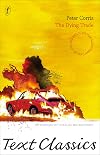
The end of the Cliff Hardy series was announced when WIN, LOSE OR DRAW was released in 2017, and then with the subsequent death of Peter Corris, I made a promise to myself to re-read this excellent series, every year, during the Boxing Day Test, as I'd been doing with every new release.
The problem is I can't count and simple arithmetic defeats me, but even I've now managed to work out that 2020+41 = 2061. As I'm unlikely to still be alive in 2061, I'd better get a move on because I'm show more determined that I will re-read the Cliff Hardy series from start to finish before I too die. So, with fingers crossed on at least a few years left, that means a minimum of 2 books a year. Might make that 4 just in case.
In 1982 the Commodore 64 8-bit computer was released; Malcolm Fraser was PM and Bill Hayden was Opposition Leader; autobiographer Albert Facey died; the movies Monkey Grip and Running on Empty, as well as Far East were released (starring Bryan Brown who was also in the movie THE EMPTY BEACH, based on the Cliff Hardy novel of the same name); athlete Ian Thorpe was born and THE DYING TRADE was first published.
When Text Publishing re-released THE DYING TRADE in 2012 as part of their "Text Classics" series, they included a quotation from The Age:
‘A quintessentially Australian literary icon.’
That quote sums up the entire Cliff Hardy experience to a tee. Succinct and pointed, as all these novels are, Cliff Hardy is quintessentially Australian. From the Ford he drives, to the city he lives in, the pubs he drinks in, his propensity to wade in where others may have feared to tread, his dry, acerbic wit and laid back style, a propensity (in the early novels) to drink and smoke way too much, and his absolute refusal to age (gracefully or disgracefully). Cliff Hardy was always our Australian lone wolf, and over the 42 books in this series, he indeed became a literary icon.
THE DYING TRADE is an introductory novel. Right from the start it sets a standard that readers came to expect. It's pointed, it's dry, it's observational and it gets on with "it". Whatever "it" is, there are always some givens. Hardy will take a case that he probably shouldn't, he will care, he'll get a thumping along the way, he'll solve the case, he might even get the girl, but he'll lose her again, and he'll return to his small terrace house, park his Ford out the front, open a bottle of wine, stare at the walls and spend a few moments wondering about what could have been. Never long, never drawn out, never overly reflective.
Early 1980's Sydney is a world away from current day Sydney and yet in many ways it's not, and the Hardy series is a testament to the similarities and changes. Hardy is a product of this place, and he inhabits a world that Peter Corris seemed to love, understand and despair of. The descriptive elements of the novels are beautifully done, crisp, pointed, short, sharp, Corris was a master at the art of the precise and the pithy.
It's comforting to go back to the start of such a long series and see that right from the start there's the pattern, the style and the structure that carried forward for so many years. You can also see very clearly, after a long, drawn out battle to get publishers to take note and realise that we needed to hear stories in our own voices, set in our own locations, that they were bloody lucky to get the Cliff Hardy series.
https://www.austcrimefiction.org/review/dying-trade-peter-corris show less
The problem is I can't count and simple arithmetic defeats me, but even I've now managed to work out that 2020+41 = 2061. As I'm unlikely to still be alive in 2061, I'd better get a move on because I'm show more determined that I will re-read the Cliff Hardy series from start to finish before I too die. So, with fingers crossed on at least a few years left, that means a minimum of 2 books a year. Might make that 4 just in case.
In 1982 the Commodore 64 8-bit computer was released; Malcolm Fraser was PM and Bill Hayden was Opposition Leader; autobiographer Albert Facey died; the movies Monkey Grip and Running on Empty, as well as Far East were released (starring Bryan Brown who was also in the movie THE EMPTY BEACH, based on the Cliff Hardy novel of the same name); athlete Ian Thorpe was born and THE DYING TRADE was first published.
When Text Publishing re-released THE DYING TRADE in 2012 as part of their "Text Classics" series, they included a quotation from The Age:
‘A quintessentially Australian literary icon.’
That quote sums up the entire Cliff Hardy experience to a tee. Succinct and pointed, as all these novels are, Cliff Hardy is quintessentially Australian. From the Ford he drives, to the city he lives in, the pubs he drinks in, his propensity to wade in where others may have feared to tread, his dry, acerbic wit and laid back style, a propensity (in the early novels) to drink and smoke way too much, and his absolute refusal to age (gracefully or disgracefully). Cliff Hardy was always our Australian lone wolf, and over the 42 books in this series, he indeed became a literary icon.
THE DYING TRADE is an introductory novel. Right from the start it sets a standard that readers came to expect. It's pointed, it's dry, it's observational and it gets on with "it". Whatever "it" is, there are always some givens. Hardy will take a case that he probably shouldn't, he will care, he'll get a thumping along the way, he'll solve the case, he might even get the girl, but he'll lose her again, and he'll return to his small terrace house, park his Ford out the front, open a bottle of wine, stare at the walls and spend a few moments wondering about what could have been. Never long, never drawn out, never overly reflective.
Early 1980's Sydney is a world away from current day Sydney and yet in many ways it's not, and the Hardy series is a testament to the similarities and changes. Hardy is a product of this place, and he inhabits a world that Peter Corris seemed to love, understand and despair of. The descriptive elements of the novels are beautifully done, crisp, pointed, short, sharp, Corris was a master at the art of the precise and the pithy.
It's comforting to go back to the start of such a long series and see that right from the start there's the pattern, the style and the structure that carried forward for so many years. You can also see very clearly, after a long, drawn out battle to get publishers to take note and realise that we needed to hear stories in our own voices, set in our own locations, that they were bloody lucky to get the Cliff Hardy series.
https://www.austcrimefiction.org/review/dying-trade-peter-corris show less
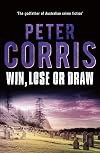
Many years ago there was a specialist bookshop tucked away in Auburn Road, Hawthorn run by a crime fiction expert and massive enabler (I think his name was Malcolm Campbell). He was one of those real-life people that made me thankful I'd made the trek from the bush to the big city, and Peter Corris was another. Sure I probably would have eventually found his books, but arriving in the city, finding that shop, and eventually being introduced to Cliff Hardy, kind of reinforced at that time it show more had been a good move all round.
From the opening book in the Cliff Hardy series, here was something that was familiar, and yet slightly different about them. They are, as further study eventually revealed, straight out of the lone-wolf, private eye rule book, and yet quintessentially Australian. They are also very Sydney - with the mean streets that Hardy lived on never that far from the Harbour, yet there is something in the quick-fire delivery, and the quiet determination that reeks of the laconic Australian character. Put a hat on him, push it back on his head and roll up his sleeves and Hardy could have been a man from the bush. Stick him in a Ford, hand him a glass of wine, and have him haunt a few coffee shops and bars and he was city through and through. Part of the appeal of Cliff Hardy is that he has always been as hard to pin down - age / background / look and feel, as he has been instantly recognisable.
But forty-two books later, Cliff is flagging a little, but game as always, and Peter Corris has pulled the plug, battling a few health problems of his own. So reading WIN, LOSE OR DRAW is one of those jarring moments no matter how you look at it. It's the last ever book of a series that's become as part of all fans January's as has a food hangover or the Test Cricket. It's certainly always been my Boxing Day Test tradition - flat out on a couch, test on in the background, Cliff Hardy book in hand. Glass of white wine beside me.
It also appears that the decision to call it quits on the series happened after the book had been written - so there's no maudlin fare-the-well's, no tying up of any long-standing questions (not that there really are that many, expect maybe how bloody old is Cliff really!). What we have in WIN, LOSE OR DRAW is classic Hardy, hired by a wealthy businessman, Gerard Fonteyn, to find his teenage daughter. Julianna has been missing for over a year and despite a number of other granted half-hearted attempts there's never been a hint that she's dead or alive. Initially Hardy is inclined to agree with this assessment, but a photograph that eventually comes to light is just enough for him to get out, kick some rocks and see what crawls out.
A nicely complicated plot is elegantly executed with plenty of opportunity for even a slightly cricket distracted reader to keep up, but as always at the heart of these books is the tough-guy, lone-wolf, rough-around-the-edges, good-bloke Cliff Hardy. Even exiting this way, on a high, solving the unsolvable, never looking back, never saying goodbye, no regrets, no apologies, kind of makes sense. It won't make fans feel any better come next January, but then there are 42 of these books that you can always re-read. That's a lot of January's.
http://www.austcrimefiction.org/review/review-win-lose-or-draw-peter-corris-0 show less
From the opening book in the Cliff Hardy series, here was something that was familiar, and yet slightly different about them. They are, as further study eventually revealed, straight out of the lone-wolf, private eye rule book, and yet quintessentially Australian. They are also very Sydney - with the mean streets that Hardy lived on never that far from the Harbour, yet there is something in the quick-fire delivery, and the quiet determination that reeks of the laconic Australian character. Put a hat on him, push it back on his head and roll up his sleeves and Hardy could have been a man from the bush. Stick him in a Ford, hand him a glass of wine, and have him haunt a few coffee shops and bars and he was city through and through. Part of the appeal of Cliff Hardy is that he has always been as hard to pin down - age / background / look and feel, as he has been instantly recognisable.
But forty-two books later, Cliff is flagging a little, but game as always, and Peter Corris has pulled the plug, battling a few health problems of his own. So reading WIN, LOSE OR DRAW is one of those jarring moments no matter how you look at it. It's the last ever book of a series that's become as part of all fans January's as has a food hangover or the Test Cricket. It's certainly always been my Boxing Day Test tradition - flat out on a couch, test on in the background, Cliff Hardy book in hand. Glass of white wine beside me.
It also appears that the decision to call it quits on the series happened after the book had been written - so there's no maudlin fare-the-well's, no tying up of any long-standing questions (not that there really are that many, expect maybe how bloody old is Cliff really!). What we have in WIN, LOSE OR DRAW is classic Hardy, hired by a wealthy businessman, Gerard Fonteyn, to find his teenage daughter. Julianna has been missing for over a year and despite a number of other granted half-hearted attempts there's never been a hint that she's dead or alive. Initially Hardy is inclined to agree with this assessment, but a photograph that eventually comes to light is just enough for him to get out, kick some rocks and see what crawls out.
A nicely complicated plot is elegantly executed with plenty of opportunity for even a slightly cricket distracted reader to keep up, but as always at the heart of these books is the tough-guy, lone-wolf, rough-around-the-edges, good-bloke Cliff Hardy. Even exiting this way, on a high, solving the unsolvable, never looking back, never saying goodbye, no regrets, no apologies, kind of makes sense. It won't make fans feel any better come next January, but then there are 42 of these books that you can always re-read. That's a lot of January's.
http://www.austcrimefiction.org/review/review-win-lose-or-draw-peter-corris-0 show less
Lists
Awards

You May Also Like


Associated Authors
Statistics
- Works
- 127
- Also by
- 4
- Members
- 2,199
- Popularity
- #11,669
- Rating
- 3.4
- Reviews
- 80
- ISBNs
- 427
- Languages
- 2
- Favorited
- 4