
Marele Day
Author of Lambs of God
About the Author
Image credit: Courtesy of Allen and Unwin
Series
Works by Marele Day
Associated Works
Tagged
Common Knowledge
- Birthdate
- 1947
- Gender
- female
- Awards and honors
- Ned Kelly Award (Lifetime Achievement Award, 2008)
- Nationality
- Australia
- Associated Place (for map)
- Australia
Members
Reviews

In the first book a four book series Claudia Valentine is a private investigator in Sydney, Australia, in the late 1980’s. She’s called upon by an old acquaintance to investigate the death of her brother, Mark Bannister, who supposedly died from a heart attack. Claudia soon discovers a number of unsettling facts including the fact Mark had heroin in his system when he died and was writing a book before his death but had kept the content secret from everyone he knew. Her investigation show more takes into the seamier side of life in the harbour city and she’s soon rubbing shoulders with some nasty characters including the shadowy Harry Lavendar of the title.
I was surprised, a few months ago, to learn that in addition to the much loved female private eye series I have followed for years, Sara Paretsky’s V I Warshawski and Sue Grafton’s Kinsey Millhone, there was an Australian-based series featuring a similar character. Despite being a fan of the genre for many years I’d never heard a peep this series which says something about my lack of investigative powers but says more about the paucity of publicity for Australian authors in their home country. On the basis that it is better to have discovered these late than never I thought I’d take a look.
The most noticeable thing about this book when judged by today’s standards is it’s length: 169 pages! Is it only 20 years ago that books didn’t have to be the size and weight of house bricks in order to be published? Amazingly within those few pages an entire story with a beginning, a middle and an end, manages to be told. And it’s a pretty good story too. The plot is logical and has the requisite twists, turns and surprises and Claudia’s investigation is depicted quite realistically. As is often the case with private eyes she uses a combination of friends in the right places and gut instinct to puzzle out whether or not Mark Bannister was murdered and who might have done such a thing and she gets into, and out of, some scrapes along the way. I was bemused by the fact that Claudia’s client never made an appearance after she initially hired Claudia (no worried phone calls were made nor any updates given) but that was the only ‘hole’ I noticed in the plot.
While the story was good, if fairly familiar for the genre, the writing of this book is in a separate class. I can’t think of a word to encapsulate it but it’s very, very good. It evokes a very strong sense of the location. I lived in Sydney at the time the book was set and I was transported back to that time and place by the words. At one point, Claudia is walking through the city noticing the changing nature of the landscape and she reflects
I always marvel when someone can sum up the depth of a feeling so eloquently and so perfectly and there is a lot more of this throughout the book.
It saddens me a little to think I’m not the only Aussie more familiar with US and UK authors than I am with my own country’s literary heritage but I’m rather chuffed to have discovered this author even if it is long after she stopped writing crime fiction (she has written general fiction since this series ended though). If you like private eyes with a lot of guts and a sense of humour you could do a lot worse than track down this book.
My rating is actually 3.5 show less
I was surprised, a few months ago, to learn that in addition to the much loved female private eye series I have followed for years, Sara Paretsky’s V I Warshawski and Sue Grafton’s Kinsey Millhone, there was an Australian-based series featuring a similar character. Despite being a fan of the genre for many years I’d never heard a peep this series which says something about my lack of investigative powers but says more about the paucity of publicity for Australian authors in their home country. On the basis that it is better to have discovered these late than never I thought I’d take a look.
The most noticeable thing about this book when judged by today’s standards is it’s length: 169 pages! Is it only 20 years ago that books didn’t have to be the size and weight of house bricks in order to be published? Amazingly within those few pages an entire story with a beginning, a middle and an end, manages to be told. And it’s a pretty good story too. The plot is logical and has the requisite twists, turns and surprises and Claudia’s investigation is depicted quite realistically. As is often the case with private eyes she uses a combination of friends in the right places and gut instinct to puzzle out whether or not Mark Bannister was murdered and who might have done such a thing and she gets into, and out of, some scrapes along the way. I was bemused by the fact that Claudia’s client never made an appearance after she initially hired Claudia (no worried phone calls were made nor any updates given) but that was the only ‘hole’ I noticed in the plot.
While the story was good, if fairly familiar for the genre, the writing of this book is in a separate class. I can’t think of a word to encapsulate it but it’s very, very good. It evokes a very strong sense of the location. I lived in Sydney at the time the book was set and I was transported back to that time and place by the words. At one point, Claudia is walking through the city noticing the changing nature of the landscape and she reflects
I tried to picture what all this had looked like a few short years ago but couldn’t. Like everyone else, I would accept it once it was a fait accompli, vaguely aware that the signposts of the city’s history and my own were being effaced, as if someone had gone through my photo album and replaced the photos of me with those of another child, more modern, better dressed.
I always marvel when someone can sum up the depth of a feeling so eloquently and so perfectly and there is a lot more of this throughout the book.
It saddens me a little to think I’m not the only Aussie more familiar with US and UK authors than I am with my own country’s literary heritage but I’m rather chuffed to have discovered this author even if it is long after she stopped writing crime fiction (she has written general fiction since this series ended though). If you like private eyes with a lot of guts and a sense of humour you could do a lot worse than track down this book.
My rating is actually 3.5 show less

Mrs Cook: the Real and Imagined Life of the Captain’s Wife is the eighth novel by Australian author, Marele Day. Day takes existing Cook artefacts: letters, medallions, monuments, furniture, crockery, portraits and more, and builds a backstory for them, using her meticulous research into the life of Mrs Cook. A wealth of facts presented in an interesting and easily digestible form. We learn about things like the change of calendar in 1752, life in 18th century London, docks, ale houses, show more war, country fairs, charting coastlines, estimating longitude, and preparation for long sea voyages. Above all, we learn of the deep love the Cooks had for each other, and the heartache that Elizabeth Cook endured as her husband was gone for sometimes years without word. This novel is quite a departure from Day’s usual style, and is reminiscent of Geraldine Brooks’ technique of taking a few historical facts and embroidering them with a story. Two passages stood out or me: “Elizabeth had two husbands – the one who spent months at a time with her, with whom she had come to Yorkshire; and the imagined husband, the one who was by her side when the one in the next room was away. The one who was there every breath she took, who inhabited her body as much as she did herself. The husband made of air, and memories and yearning, who nestled into the bed beside her at night.” From this passage comes the title. And “What decision would Elizabeth have made if the Almighty had revealed His plan for her? I will send you a great man and you will love each other profoundly. But he will die, and so will all of your children. Your well of grief will be so immense you’ll think you can’t bear it, but you will survive, living out the missing years of your loved ones’ lives.” An interesting and excellent read. show less
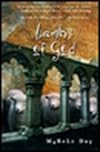
The story is a little unlikely at the start: three nuns in a forgotten, overgrown, crumbling monastery who are happy in a life of seclusion, living their simple lives, tending and living with the sheep that give them clothing and food. Two of the nuns, Iphigenia and Margarita have lived in the outside world, in their youth, and retain pleasant (for the former) and painful (for the latter) memories of it. The third, Carla, was a foundling, left at the door of the monastery raised entirely by show more the nuns, and has never known the outside world. The three of them have a well-ordered, structured existence: regular prayers and the continual work of gardening, shearing, cleaning the wool, making yarn, knitting, bread-making, meals. They have a harmony among themselves and very much with nature; the work they do is not extraneous to them; it is the pattern and cycle of their lives; they do not tend the sheep as much as they have become part of the nature's natural rhythms of birth, life, sustenance, and death.
This self-contained, self-sustaining world is upset by the appearance of a priest: Father Ignatius, secretary to the Bishop, a "high flyer", an ambitious young man, and one with an idea of turning the monastery into a high-priced retirement complex complete with swimming pools, condos, golf courses. He gets lost trying to find the monastery, which he has only learned about from old documents, and he is astonished to find it inhabited by the three lost nuns.
The nuns do not welcome the instrusion, and hope they can simply get beyond it with a brief visit, but they become alarmed when they discover the priest's real intentions. And so the conflict is set. The nuns conspire to keep him in the monestary, and after he tries to escape one night, they take the more drastic step of immoblizing the priest, first by drugging him with a herbal tea that knocks him out, and when he awakes it is to find himself incased in plaster from the hips down with his hands tied. The nuns go out of the monestary grounds, find the priest's abandoned vehicle which had run slightly off the road, take whatever is valuable in in it, and destroy the evidence by pushing it over a cliff into the sea. So the priest, who didn't really tell anyone where he was going, is quite alone. The nuns begin to try to bring him into their world, and he plays at the game while continuing to scheme on how to get out. Physically it is impossible, so he begins to play mind-games with Carla, in particular, in the hope that she will give him his cell phone so that he can call for help and rescue.
But Iphigenia, the eldest and the leader of the nuns, realizes that the situation cannot continue indefinitely, and uses the cell phone (after the priest shows her how to use it, and some humorous attempts at telephone conversations) to re-establish long lost contact with a group of solicitors who served her grandmother. This is where the deus ex machina enters: it turns out the Iphigenia is a wealthy woman from a trust set up by her wealthy grandmother that has been maturing and growing over many years. She uses this to purchase the monestary and all its land, thus preserving their way of life, and allowing them to set the priest free. Father Ignatius, by this time, has come to appreciate the simplicity and honesty of their lives and has no desire to disrupt it, and so concotes a story about an accident and being nursed back to health in an isolated fishing district.
This bare-bones summary does not do justice to the book. It is well-written, with well-drawn characters, and a searching by each of them that leads to new understandings of themselves, their pasts, and their relationships with the world. It sets up the fundamental conflict between the trappings of the material world and harmony with nature and belief in something larger, recognizing that the fomer may be a fact of life in the modern world, but also recognizing that it is at a certain cost.
More broadly the story of the life of the nuns is about how lives fit together like pieces in a puzzle where each life has crooked, uneven edges but the pieces fit because the sharpness of the edges that might not allow an interlocking have become blunted through accomodation and custom. In fact, these accommodations are essential if there is to be a harmony between or among any number of people (such as the three nuns), to smooth over differences and potential clashes so that while individuality remains (as it does in the private worlds of each of the nuns), on another level, that individuality is subsumed into the broader picture that the puzzle presents. This is all very well until the pieces are jarred, as if someone bumped the table and set the pieces out of kilter. This is the role of the priest. The jarring does not completely disrupt the picture, but it creates spaces, openings, differences, and (to use an electrical metaphor) disrupts the current of harmony that flowed across the individual pieces. What emerges is discordance and a pushing foward of personalities, or individual wants, dislikes, needs, and fears. This is the underlying tension in the book which Day brings out well. I honestly thought the solution might be the death and disappearance of the priest, and it is a tribute to Day's writing that she leads the reader to that, but also makes the alternative plausible. Margarita is the most damaged by her early experience in the world and for a while it seemed that she would transfer that fear and hatred and action to the priest. But, in the end, it is Iphigenia's strength of character and resourcefulness, plus the strength of Margarita's faith that leads them to a solution. The effect is not a simple restoration of what was before: it is a new harmony, based on a wider understanding and a more conscious choosing. And even the priest, who may never return to see them again, is now part of that harmony or pattern, just as the nuns are always weaving patterns and different elements of their lives into the cloaks and garments that they knit. The book is rich in imagery. A good read and one to be recommended. show less
This self-contained, self-sustaining world is upset by the appearance of a priest: Father Ignatius, secretary to the Bishop, a "high flyer", an ambitious young man, and one with an idea of turning the monastery into a high-priced retirement complex complete with swimming pools, condos, golf courses. He gets lost trying to find the monastery, which he has only learned about from old documents, and he is astonished to find it inhabited by the three lost nuns.
The nuns do not welcome the instrusion, and hope they can simply get beyond it with a brief visit, but they become alarmed when they discover the priest's real intentions. And so the conflict is set. The nuns conspire to keep him in the monestary, and after he tries to escape one night, they take the more drastic step of immoblizing the priest, first by drugging him with a herbal tea that knocks him out, and when he awakes it is to find himself incased in plaster from the hips down with his hands tied. The nuns go out of the monestary grounds, find the priest's abandoned vehicle which had run slightly off the road, take whatever is valuable in in it, and destroy the evidence by pushing it over a cliff into the sea. So the priest, who didn't really tell anyone where he was going, is quite alone. The nuns begin to try to bring him into their world, and he plays at the game while continuing to scheme on how to get out. Physically it is impossible, so he begins to play mind-games with Carla, in particular, in the hope that she will give him his cell phone so that he can call for help and rescue.
But Iphigenia, the eldest and the leader of the nuns, realizes that the situation cannot continue indefinitely, and uses the cell phone (after the priest shows her how to use it, and some humorous attempts at telephone conversations) to re-establish long lost contact with a group of solicitors who served her grandmother. This is where the deus ex machina enters: it turns out the Iphigenia is a wealthy woman from a trust set up by her wealthy grandmother that has been maturing and growing over many years. She uses this to purchase the monestary and all its land, thus preserving their way of life, and allowing them to set the priest free. Father Ignatius, by this time, has come to appreciate the simplicity and honesty of their lives and has no desire to disrupt it, and so concotes a story about an accident and being nursed back to health in an isolated fishing district.
This bare-bones summary does not do justice to the book. It is well-written, with well-drawn characters, and a searching by each of them that leads to new understandings of themselves, their pasts, and their relationships with the world. It sets up the fundamental conflict between the trappings of the material world and harmony with nature and belief in something larger, recognizing that the fomer may be a fact of life in the modern world, but also recognizing that it is at a certain cost.
More broadly the story of the life of the nuns is about how lives fit together like pieces in a puzzle where each life has crooked, uneven edges but the pieces fit because the sharpness of the edges that might not allow an interlocking have become blunted through accomodation and custom. In fact, these accommodations are essential if there is to be a harmony between or among any number of people (such as the three nuns), to smooth over differences and potential clashes so that while individuality remains (as it does in the private worlds of each of the nuns), on another level, that individuality is subsumed into the broader picture that the puzzle presents. This is all very well until the pieces are jarred, as if someone bumped the table and set the pieces out of kilter. This is the role of the priest. The jarring does not completely disrupt the picture, but it creates spaces, openings, differences, and (to use an electrical metaphor) disrupts the current of harmony that flowed across the individual pieces. What emerges is discordance and a pushing foward of personalities, or individual wants, dislikes, needs, and fears. This is the underlying tension in the book which Day brings out well. I honestly thought the solution might be the death and disappearance of the priest, and it is a tribute to Day's writing that she leads the reader to that, but also makes the alternative plausible. Margarita is the most damaged by her early experience in the world and for a while it seemed that she would transfer that fear and hatred and action to the priest. But, in the end, it is Iphigenia's strength of character and resourcefulness, plus the strength of Margarita's faith that leads them to a solution. The effect is not a simple restoration of what was before: it is a new harmony, based on a wider understanding and a more conscious choosing. And even the priest, who may never return to see them again, is now part of that harmony or pattern, just as the nuns are always weaving patterns and different elements of their lives into the cloaks and garments that they knit. The book is rich in imagery. A good read and one to be recommended. show less

Lambs of God gifts its readers with lush imagery, memorable characters, and a pervading undercurrent of myth and magic.
It wasn't a story I was expecting to like, not only because of its religious setting, but because once I started, it took about 50 pages before I was fully settled into its world. It's slow-paced, full of vivid descriptions, slightly contrived...yet Iphigenia, Margarita, Carla, and even Father Ignatius (who I found hypocritical and didn't like much at all) were too strange show more to ignore, too different to dismiss outright. I'm glad I kept reading.
Recommended if you want a story about three nuns, a priest and a dilapidated monastery, tempered with magical realism.
3.5 stars show less
It wasn't a story I was expecting to like, not only because of its religious setting, but because once I started, it took about 50 pages before I was fully settled into its world. It's slow-paced, full of vivid descriptions, slightly contrived...yet Iphigenia, Margarita, Carla, and even Father Ignatius (who I found hypocritical and didn't like much at all) were too strange show more to ignore, too different to dismiss outright. I'm glad I kept reading.
Recommended if you want a story about three nuns, a priest and a dilapidated monastery, tempered with magical realism.
3.5 stars show less
Lists
Awards


You May Also Like


Associated Authors
Statistics
- Works
- 19
- Also by
- 5
- Members
- 630
- Popularity
- #39,983
- Rating
- 3.5
- Reviews
- 14
- ISBNs
- 91
- Languages
- 4