
March Hastings
Author of Three Women
About the Author
Disambiguation Notice:
March Hastings was a pseudonym which was used by both:
Sally M. Singer 1930- and
Gordon Davis 1935-
If you can identify the works by each author, please split the page.
Works by March Hastings
Banned!: Three "Indecent" Novels That Sent Booksellers to Jail and to the U.S. Supreme Court (2021) 3 copies
Fear of Incest 2 copies
Veil of Torment 2 copies
The Untamed 1 copy
Design for Debauchery 1 copy
Circle of Sin 1 copy
Pilow Tramp / Lash of Desire 1 copy
By Flesh Alone 1 copy
Savage surrender 1 copy
Obsessed 1 copy
The Unashamed No. 53 1 copy
Private sessions 1 copy
Associated Works
Lesbian Pulp Fiction: The Sexually Intrepid World of Lesbian Paperback Novels 1950-1965 (2005) — Contributor — 188 copies, 3 reviews
Tagged
Common Knowledge
- Gender
- n/a
- Disambiguation notice
- March Hastings was a pseudonym which was used by both:
Sally M. Singer 1930- and
Gordon Davis 1935-
If you can identify the works by each author, please split the page.
Members
Reviews
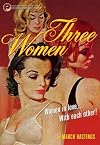
It is amazing (to me, at least) how so much pulp fiction of the 50s and 60s is well-written, especially the kind by women like March Hastings.
Though definitely a sign of their times (often failing to have a happy ending because popular culture, and even the postal office, demanded it), novels like Three Women can still have value today. Society has certainly progressed these past five decades, but very few gays and lesbians manage to escape their lives untouched by hatred, whether from the show more world in general or their own family members.
Also amazing is how once you peel away the contributing factors to what sets up the major conflict in Three Women, you are actually addressing an age-old question both straight and gay people face in relationships no matter the era: What do you when your partner's ex is always in the background, even when she isn't physically there?
Two of the three women in the title definitely and tragically fall victim to a society that tells them being gay is not only "wrong," but "sinful" as well. The third woman, Paula, falls victim not so much to homophobia as she falls victim to her own impatience and lack of faith in the woman she loves. The reader wonders if things would end differently if Paula just didn't push so much.
No doubt about it...Three Women does not have the happy ending anyone who believes in true love would like it to have. Refreshingly, though, it never condemns the love found within these pages.
I could be reading too much into it out of some hopeful need to see it, but I think Hastings was actually suggesting tragedy befalls everyone when a harsh world dictates who should and shouldn't be able to love each other. show less
Though definitely a sign of their times (often failing to have a happy ending because popular culture, and even the postal office, demanded it), novels like Three Women can still have value today. Society has certainly progressed these past five decades, but very few gays and lesbians manage to escape their lives untouched by hatred, whether from the show more world in general or their own family members.
Also amazing is how once you peel away the contributing factors to what sets up the major conflict in Three Women, you are actually addressing an age-old question both straight and gay people face in relationships no matter the era: What do you when your partner's ex is always in the background, even when she isn't physically there?
Two of the three women in the title definitely and tragically fall victim to a society that tells them being gay is not only "wrong," but "sinful" as well. The third woman, Paula, falls victim not so much to homophobia as she falls victim to her own impatience and lack of faith in the woman she loves. The reader wonders if things would end differently if Paula just didn't push so much.
No doubt about it...Three Women does not have the happy ending anyone who believes in true love would like it to have. Refreshingly, though, it never condemns the love found within these pages.
I could be reading too much into it out of some hopeful need to see it, but I think Hastings was actually suggesting tragedy befalls everyone when a harsh world dictates who should and shouldn't be able to love each other. show less
Fans familiar with lesbian pulp fiction will recognize the setup within Three Women: a young woman believes herself to be in love with the nice guy...until she simultaneously discovers that "something doesn't feel right" (i.e. the sex sucks) and that she has become obsessed with a mysterious older woman with a troubled past. The young woman throws away her chance at a good marriage in favor of a clandestine affair with the mysterious lady. There's bound to be bumpy road in store for our show more heroine. (If not, there wouldn't be a book.) How can you lose with this old tried and true formula?
Well, you can't lose. Three Women is a solid effort out of the school of lesbian pulp fiction. It is, however, notably less angsty than other examples within the genre. This is both a good and a bad thing. It's good because there is such a thing as too much dyke drama and bad because this translates into less psychological depth overall. Don't let that deter you though. Three Women is still an engrossing read to be read alongside the classics by Ann Bannon and Vin Packer. show less
Well, you can't lose. Three Women is a solid effort out of the school of lesbian pulp fiction. It is, however, notably less angsty than other examples within the genre. This is both a good and a bad thing. It's good because there is such a thing as too much dyke drama and bad because this translates into less psychological depth overall. Don't let that deter you though. Three Women is still an engrossing read to be read alongside the classics by Ann Bannon and Vin Packer. show less

There's something lacking here, which is only truly obvious if you've read other March Hastings which are much much better. The Heat Of Day deserves kudos for having a happy ending (or least a somewhat upbeat one) during a time when books of this genre ended in melodrama...or worse.

Two pulp novels published together by the Quality Paperback Book Club: Women's Barracks by Tereska Torres (1950) purports to be "the frank autobiography of a French girl soldier," and tells of the sordid goings-on (lesbian and otherwise) in the women's barracks during WW II. Three Women by March Hastings (1958) is "An intimate picture of women in love -- with each other!" Loads of drama and an ending that's unhappy (for the dyed-in-the-wool lesbians) and happy (for the girl who wasn't REALLY show more a lesbian). Both are cheesy good fun and also historically interesting. show less
You May Also Like


Associated Authors
Statistics
- Works
- 35
- Also by
- 1
- Members
- 203
- Popularity
- #108,638
- Rating
- 3.4
- Reviews
- 4
- ISBNs
- 13