
Teri Terry
Author of Slated
About the Author
Image credit: via Babelio
Series
Works by Teri Terry
Dark Matter Trilogy 3 Books Collection Set by Teri Terry - Contagion, Deception, Evolution (2018) 4 copies
Effacée - Tome 3 : Brisée 1 copy
2056: Isyan 1 copy
Tagged
Common Knowledge
- Gender
- female
Members
Reviews
Slated by Teri Terry
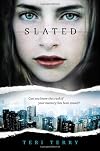
Finally! A book that is actually a dystopian novel in the classic sense of the word (in which society tries to be an utopia, but with a major flaw,) and not another one of those "let's just call it dystopian and claim its the next Hunger Games while we're at it" novels. In Slated, children under sixteen that are deemed detrimental to society (e.g. criminals, terrorists, rebels) will be given a second chance by having their memories wiped and living with a new adoptive family. Slaters are show more then required to wear a Levo, a bracelet that monitors happiness and negativity. When the user drops too low, the bracelet shocks the user before they can harm society. At first it seems that all is good, until more and more citizens disappear for trivial misconduct and citizens fear government is abusing their power.
Slated reminded me of why I love the dystopian genre: its speculative nature is thought-provoking and a great starting point for ethical discussions. However, as much as this futuristic dystopia excited me, the novel as a whole did not. It's not that Slated by Teri Terry had many faults, but just that it didn't stand out and felt slightly heavy-handed at times. The slow pace also failed to hold my attention. However, I still think it succeeded in raising important questions like self-identity (without memories, who are you?) and the nature vs. nuture debate.
Heavy-Handed Writing (Stop it! I am not stupid here!):
I am a fan of the dystopian genre for its introspective qualities, its tendency to make us reconsider moral dilemmas. It's because I feel what makes a dystopian novel special hinges on its ability to think that makes me extra critical of how ideas are presented in Slated. It was annoying to hear Ben (the love interest) rant on and on about being mind-controlled by the government, that there was no freedom. Okay! I get it. Freedom = good, Mind-Control = Bad. Duh. Now convince me without shoving it down my throat.Another problem with heavy-handed writing arose when it came to characterizing Kyla. In a scene Kyla cries after eating broccoli (I guess she really does hate broccoli or it reminds her of some traumatic experience--it's never explained.) After her cryfest, Kyla thinks:
This sentence annoyed me. It was an obvious (and disastrous) attempt to shoehorn in this notion of Kyla being stronger than she appears, to discount her broccoli breakdown--all because SHE'S NOT GOOD AT CRYING. GASP. IT'S NOT SOMETHING SHE DOES! I didn't even know crying was a skill! Can someone tell me how to be better at crying because apparently "great gulpy sobs" is not the way to go? And how would she know if its something she did? She just had her memory erased! Girl couldn't even figure out how to open a car door. How dare she think she's knowledgeable in the art of crying!
Not Quite Original--At Least To Me:
The more I read, the more Slated seemed like a culmination of other stories I've read. I realize that this is more of a personal issue as I've been reading quite a few "dystopian" novels recently. The reason I mention this is not because I think ideas were copied, but because I think having read these novels hindered my experience with Slated, making me draw parallels amongst them (as I will explain further later.) With that said, Slated read to me like a better version of Theo Lawrence's Mystic City plot-wise, and Kiersten White's Mind Games tone-wise (especially at the end.) If you like either or both of these books, you might really love Slated. If you had issues with them (like I did,) I don't think Slated would win you any favors. If you haven't read them, you are safe. Lastly, social criticism, the foundation of a dystopian story, echoed ideas from George Orwell's 1984 where the government seems to be constantly watching you.
Kyla Davis, The One Who Feels The Need To Constantly Remind Us That She's Different:
The depressing, monotonous voice of Kyla was one of my major issues because it made the story move at a snail-like pace. Here is where having read Kiersten White's Mind Games may have hindered my reading slightly. Kyla's voice reminded me of Fia from Mind Games. Like Fia, there is internal monologue. And while Kyla is not nearly as annoying Fia with her tendency to repeat words like she's on drugs, but Kyla does repeat "Kyla is different." quite a bit. Like Fia, Kyla also acts on instincts--which are never wrong apparently. But we already sense that she's different early on--because she seems to be the only Slated that isn't enjoying life. Her constant reaffirmation of her difference not only seems redundant, but also narcissistic. Yes, Kyla, you are the special snowflake. You really don't have to remind me every ten minutes.
I don't like her and I having her narrate the story wasn't the best idea. She's a reclusive, passive character who seems to spend all her time either running, drawing, and going to therapy. When she's not doing those things, she trains her poker face while trying to navigate around the multitude of adults whose intentions are unclear. She can't trust anyone--except the guy she has the hots for. Even though he isn't too bright. You have to get used to her running because she does it A LOT. Basically one of those characters that don't try to make friends, don't laugh, and are not generally pleasant to be around, but are "bullied," so they automatically turn into a nice person. Or at least decent compared than everyone else. It's really not hard to seem like a nice person, when the entire school is only made up of jealous, shallow teenage girls set on bullying you if their love interest so much as winks at you.
You know that poker face I mentioned earlier? Kyla NEEDS it. If not for her own benefit, then for mines. Apparently Kyla is horrible at keeping secrets because her face is an open book, and there have been countless instances where people say stuff life, "I know you are lying! Tell me the truth!" to Kyla. It gets tiring after awhile, reminding me of those stereotypical girls who think something MUST be wrong if their boyfriends are silent. However, giving a Kyla a reason to always have a poker face made her even more banal. So on top having no personality, she can't even emote her feelings now. The last shreds of hope I had of Kyla being more compelling than a plank of wood just vanished.
Ben, Why Does He Like Kyla?
Enter Mr. Nice Guy, who is obviously Kyla's love interest. I have no idea WHY, but he likes Kyla. Ben makes his intentions clear early, but Kyla spends a huge chunk of the book assuming he likes Tori (the beautiful girl) which was frustrating because evidence shows that they are really just regular friends at best. Why would you think he likes a girl he didn't even realize was missing for days? HE EVEN TOLD YOU THAT THEY ARE JUST FRIENDS AND HE TOLD YOU THAT HE LIKES YOU. Her peers claim that Tori isn't even his type (apparently his type are the incredibly slow and dense boring ones.) Perhaps it's her lack of self-confidence that make it unfathomable for her that anyone would ever like her. I which case, she's not alone. I have no idea why anyone would like her either.
Despite the fact that the adults adore him and his friendliness, Ben is not too bright. Part of it might be due to being Slated, and how it makes you more susceptible to manipulation, but I'm not convinced. Even when he is supposedly free to think for himself--he acts even stupider and doesn't plan things through. He is just so simple-minded!
Here is where reading Theo Lawrence's Mystic City might have influenced my reading experience. Like Slated, Theo Lawrence's Mystic City is also about a girl who has her memory erased. In Mystic City, the protagonist forgets her rebel boyfriend. I am NOT sure if this is what happened in Slated, but there are clues to it plausible as Kyla claims Ben to feel familiar in many instances. In Mystic City, I felt that establishing the lovers past relationship was a cop-out to making it "okay" for the lovers to make sickeningly saccharine love proclamations. "It isn't instalove! They really had a deep and passionate relationship! I PROMISE. JUST TRUST ME. So it it's okay for them to claim that they can't live without one another!" It was a sign of weakness in Mystic City, and I was glad Slated didn't resort to that (though I was very suspicious.) However, another part of me thinks this it might benefit Slated if our couple did have a past history, because right now--I don't buy their relationship.
SPOILER ALERT: Why did he have to run off to join a terrorist group when he would be free at 21 anyway? Wouldn't it be better to wait? Then he could stay in school and BE SMARTER.
Uncle Wayne, The Crazy Guy. Or Is He?
Uncle Wayne is a minor character, though he plays a major role at the end. As minor characters go, Slated has A LOT of them making them hard to keep track of. Just when you think you got the cast down, another character pops out of nowhere. Wayne is exceptionally memorable because he is supposedly "crazy" with stalker-ish intentions. Yet, Kyla, against her better judgment, always runs into him. He is the character I felt was most cheated because I felt sympathetic towards him. Wayne is the uncle of Phoebe, another one of Kyla's school bullies. It is later revealed that Pheobe saves Kyla's cat. But soon after she is taken away by officials, never to be seen again presumably due to Kyla's tattling. He, reasonably, holds Kyla responsible for his niece's disappearance. Despite his hostile behavior towards Kyla, I felt it was justified and made me visualize him as the loving uncle who cares deeply about his niece. To my disappointment, somewhere along the way, Wayne is no longer the loving uncle, and instead given the role of "bad guy" to move the plot along. And probably so Kyla can come out looking like a saint once again.
It's a pity that he is also given one of the most awkward lines in the entire novel: "Nice to me, Phoebe was." I know rearranging sentence structure can be an artistic choice, but can go wrong in dialogue. This line not only sounds weird on the tongue, but also suggests the relationship isn't quite normal. As if there's a reason why Phoebe shouldn't be nice to her uncle. As if Wayne is an abandoned pet, and Phoebe was nice to him out of compassion. OR Wayne only cares about his niece because she was nice to him. Of course, the unconventional sentence structure may also be used to convey the oddity of Uncle Wayne. Admittedly, I am nitpicking at ONE SENTENCE, but I just really wanted Uncle Wayne to redeem himself somehow. Mostly I just wanted someone to beat up Kyla just so she learns to RUN when faced with danger and not walk straight into it.
Oh, and Kyla also hates broccoli. howcanyouhatebroccoli,itslikemyfavoritegreenvegetable?! Maybe she was force fed broccoli as a child? I would love to know.
Wordbuilding and Plot: Juvenile When You Think About It:
As much as I love the concept, the more I think about the Slated society, the cornier it becomes. In an effort to prevent crime, criminals and terrorists under 16 will be slated. You'll be under government surveillance until 21. Before then, the government pays for your hospital fees and therapy. I'm not sure what happens after you're 21, I assume they take your Levo off and let you roam free. I don't know who came up with this slated program, but it seems like more trouble than it's worth. How people under 16 are running off BEING TERRORISTS? AND CRIMINALS? What crime could they ever commit? Steal gum? Actually, getting your brain washed for stealing gum might be an effective deterrent.
The only plausible situation I can come up with is a secret group of rebels kidnapping children to carry out crimes, telling them nothing will happen to them with the slated system in place. Maybe this is why Ben ad Kyla are so good at running--because they are trained to run from police. Apparently children are more susceptible to manipulation after being slated, but if my theory is correct: they didn't know how to think for themselves to begin with.
Overall, Slated just very disappointing. I liked that it aimed to be contemplative novel that makes us question morals, but as entertainment--I was not impressed. I blame this on Kyla for being as boring as a plank of wood. She MAY seem likable, but it's just an illusion due to everyone else being bullies. Despite my gripes, I still see her as a realistic character, and I liked her tendency to question things. But, I still wish she could crack a joke. Or at least smile once. At first, I thought Kiersten White's Mind Games and Teri Terry's Slated was only similar in character voices. After I read the last few pages, the plot might also be similar. I wasn't a fan of Mind Games, and I fear Fractured, the sequel to Slated, will be an duplicate of that experience.
Rating: C
On a side note, I'm disappointed why does the US cover look so hideous compared to the UK one? show less
Slated reminded me of why I love the dystopian genre: its speculative nature is thought-provoking and a great starting point for ethical discussions. However, as much as this futuristic dystopia excited me, the novel as a whole did not. It's not that Slated by Teri Terry had many faults, but just that it didn't stand out and felt slightly heavy-handed at times. The slow pace also failed to hold my attention. However, I still think it succeeded in raising important questions like self-identity (without memories, who are you?) and the nature vs. nuture debate.
Heavy-Handed Writing (Stop it! I am not stupid here!):
I am a fan of the dystopian genre for its introspective qualities, its tendency to make us reconsider moral dilemmas. It's because I feel what makes a dystopian novel special hinges on its ability to think that makes me extra critical of how ideas are presented in Slated. It was annoying to hear Ben (the love interest) rant on and on about being mind-controlled by the government, that there was no freedom. Okay! I get it. Freedom = good, Mind-Control = Bad. Duh. Now convince me without shoving it down my throat.Another problem with heavy-handed writing arose when it came to characterizing Kyla. In a scene Kyla cries after eating broccoli (I guess she really does hate broccoli or it reminds her of some traumatic experience--it's never explained.) After her cryfest, Kyla thinks:
"And the way I cried, in great gulpy sobs. I didn’t know how to cry, I wasn’t good at it: it wasn’t something I did."
This sentence annoyed me. It was an obvious (and disastrous) attempt to shoehorn in this notion of Kyla being stronger than she appears, to discount her broccoli breakdown--all because SHE'S NOT GOOD AT CRYING. GASP. IT'S NOT SOMETHING SHE DOES! I didn't even know crying was a skill! Can someone tell me how to be better at crying because apparently "great gulpy sobs" is not the way to go? And how would she know if its something she did? She just had her memory erased! Girl couldn't even figure out how to open a car door. How dare she think she's knowledgeable in the art of crying!
Not Quite Original--At Least To Me:
The more I read, the more Slated seemed like a culmination of other stories I've read. I realize that this is more of a personal issue as I've been reading quite a few "dystopian" novels recently. The reason I mention this is not because I think ideas were copied, but because I think having read these novels hindered my experience with Slated, making me draw parallels amongst them (as I will explain further later.) With that said, Slated read to me like a better version of Theo Lawrence's Mystic City plot-wise, and Kiersten White's Mind Games tone-wise (especially at the end.) If you like either or both of these books, you might really love Slated. If you had issues with them (like I did,) I don't think Slated would win you any favors. If you haven't read them, you are safe. Lastly, social criticism, the foundation of a dystopian story, echoed ideas from George Orwell's 1984 where the government seems to be constantly watching you.
Kyla Davis, The One Who Feels The Need To Constantly Remind Us That She's Different:
The depressing, monotonous voice of Kyla was one of my major issues because it made the story move at a snail-like pace. Here is where having read Kiersten White's Mind Games may have hindered my reading slightly. Kyla's voice reminded me of Fia from Mind Games. Like Fia, there is internal monologue. And while Kyla is not nearly as annoying Fia with her tendency to repeat words like she's on drugs, but Kyla does repeat "Kyla is different." quite a bit. Like Fia, Kyla also acts on instincts--which are never wrong apparently. But we already sense that she's different early on--because she seems to be the only Slated that isn't enjoying life. Her constant reaffirmation of her difference not only seems redundant, but also narcissistic. Yes, Kyla, you are the special snowflake. You really don't have to remind me every ten minutes.
I don't like her and I having her narrate the story wasn't the best idea. She's a reclusive, passive character who seems to spend all her time either running, drawing, and going to therapy. When she's not doing those things, she trains her poker face while trying to navigate around the multitude of adults whose intentions are unclear. She can't trust anyone--except the guy she has the hots for. Even though he isn't too bright. You have to get used to her running because she does it A LOT. Basically one of those characters that don't try to make friends, don't laugh, and are not generally pleasant to be around, but are "bullied," so they automatically turn into a nice person. Or at least decent compared than everyone else. It's really not hard to seem like a nice person, when the entire school is only made up of jealous, shallow teenage girls set on bullying you if their love interest so much as winks at you.
You know that poker face I mentioned earlier? Kyla NEEDS it. If not for her own benefit, then for mines. Apparently Kyla is horrible at keeping secrets because her face is an open book, and there have been countless instances where people say stuff life, "I know you are lying! Tell me the truth!" to Kyla. It gets tiring after awhile, reminding me of those stereotypical girls who think something MUST be wrong if their boyfriends are silent. However, giving a Kyla a reason to always have a poker face made her even more banal. So on top having no personality, she can't even emote her feelings now. The last shreds of hope I had of Kyla being more compelling than a plank of wood just vanished.
Ben, Why Does He Like Kyla?
Enter Mr. Nice Guy, who is obviously Kyla's love interest. I have no idea WHY, but he likes Kyla. Ben makes his intentions clear early, but Kyla spends a huge chunk of the book assuming he likes Tori (the beautiful girl) which was frustrating because evidence shows that they are really just regular friends at best. Why would you think he likes a girl he didn't even realize was missing for days? HE EVEN TOLD YOU THAT THEY ARE JUST FRIENDS AND HE TOLD YOU THAT HE LIKES YOU. Her peers claim that Tori isn't even his type (apparently his type are the incredibly slow and dense boring ones.) Perhaps it's her lack of self-confidence that make it unfathomable for her that anyone would ever like her. I which case, she's not alone. I have no idea why anyone would like her either.
Despite the fact that the adults adore him and his friendliness, Ben is not too bright. Part of it might be due to being Slated, and how it makes you more susceptible to manipulation, but I'm not convinced. Even when he is supposedly free to think for himself--he acts even stupider and doesn't plan things through. He is just so simple-minded!
Here is where reading Theo Lawrence's Mystic City might have influenced my reading experience. Like Slated, Theo Lawrence's Mystic City is also about a girl who has her memory erased. In Mystic City, the protagonist forgets her rebel boyfriend. I am NOT sure if this is what happened in Slated, but there are clues to it plausible as Kyla claims Ben to feel familiar in many instances. In Mystic City, I felt that establishing the lovers past relationship was a cop-out to making it "okay" for the lovers to make sickeningly saccharine love proclamations. "It isn't instalove! They really had a deep and passionate relationship! I PROMISE. JUST TRUST ME. So it it's okay for them to claim that they can't live without one another!" It was a sign of weakness in Mystic City, and I was glad Slated didn't resort to that (though I was very suspicious.) However, another part of me thinks this it might benefit Slated if our couple did have a past history, because right now--I don't buy their relationship.
SPOILER ALERT: Why did he have to run off to join a terrorist group when he would be free at 21 anyway? Wouldn't it be better to wait? Then he could stay in school and BE SMARTER.
Uncle Wayne, The Crazy Guy. Or Is He?
Uncle Wayne is a minor character, though he plays a major role at the end. As minor characters go, Slated has A LOT of them making them hard to keep track of. Just when you think you got the cast down, another character pops out of nowhere. Wayne is exceptionally memorable because he is supposedly "crazy" with stalker-ish intentions. Yet, Kyla, against her better judgment, always runs into him. He is the character I felt was most cheated because I felt sympathetic towards him. Wayne is the uncle of Phoebe, another one of Kyla's school bullies. It is later revealed that Pheobe saves Kyla's cat. But soon after she is taken away by officials, never to be seen again presumably due to Kyla's tattling. He, reasonably, holds Kyla responsible for his niece's disappearance. Despite his hostile behavior towards Kyla, I felt it was justified and made me visualize him as the loving uncle who cares deeply about his niece. To my disappointment, somewhere along the way, Wayne is no longer the loving uncle, and instead given the role of "bad guy" to move the plot along. And probably so Kyla can come out looking like a saint once again.
It's a pity that he is also given one of the most awkward lines in the entire novel: "Nice to me, Phoebe was." I know rearranging sentence structure can be an artistic choice, but can go wrong in dialogue. This line not only sounds weird on the tongue, but also suggests the relationship isn't quite normal. As if there's a reason why Phoebe shouldn't be nice to her uncle. As if Wayne is an abandoned pet, and Phoebe was nice to him out of compassion. OR Wayne only cares about his niece because she was nice to him. Of course, the unconventional sentence structure may also be used to convey the oddity of Uncle Wayne. Admittedly, I am nitpicking at ONE SENTENCE, but I just really wanted Uncle Wayne to redeem himself somehow. Mostly I just wanted someone to beat up Kyla just so she learns to RUN when faced with danger and not walk straight into it.
Oh, and Kyla also hates broccoli. howcanyouhatebroccoli,itslikemyfavoritegreenvegetable?! Maybe she was force fed broccoli as a child? I would love to know.
Wordbuilding and Plot: Juvenile When You Think About It:
As much as I love the concept, the more I think about the Slated society, the cornier it becomes. In an effort to prevent crime, criminals and terrorists under 16 will be slated. You'll be under government surveillance until 21. Before then, the government pays for your hospital fees and therapy. I'm not sure what happens after you're 21, I assume they take your Levo off and let you roam free. I don't know who came up with this slated program, but it seems like more trouble than it's worth. How people under 16 are running off BEING TERRORISTS? AND CRIMINALS? What crime could they ever commit? Steal gum? Actually, getting your brain washed for stealing gum might be an effective deterrent.
The only plausible situation I can come up with is a secret group of rebels kidnapping children to carry out crimes, telling them nothing will happen to them with the slated system in place. Maybe this is why Ben ad Kyla are so good at running--because they are trained to run from police. Apparently children are more susceptible to manipulation after being slated, but if my theory is correct: they didn't know how to think for themselves to begin with.
Overall, Slated just very disappointing. I liked that it aimed to be contemplative novel that makes us question morals, but as entertainment--I was not impressed. I blame this on Kyla for being as boring as a plank of wood. She MAY seem likable, but it's just an illusion due to everyone else being bullies. Despite my gripes, I still see her as a realistic character, and I liked her tendency to question things. But, I still wish she could crack a joke. Or at least smile once. At first, I thought Kiersten White's Mind Games and Teri Terry's Slated was only similar in character voices. After I read the last few pages, the plot might also be similar. I wasn't a fan of Mind Games, and I fear Fractured, the sequel to Slated, will be an duplicate of that experience.
Rating: C
On a side note, I'm disappointed why does the US cover look so hideous compared to the UK one? show less
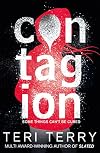
I thought this was a stand alone book so was very disappointed to find out it is the first in yet ANOTHER YA trilogy! Told in alternating chapters by the two main characters : Callie ( Subject 369X) who has been kidnapped and is being held in underground bunker where she is subjected to contamination by a man made disease and then ultimately killed by cremation. Her spirit lives on though after her death as a an undead ghost who is bent on revenge against those who wronged her. Enter Sharona show more (or Shay) who notices a missing poster for Callie and draws on her photographic memory realizing that she may have been one of the last people to see Callie alive. Shay contacts Callie's brother Kai and together they retrace Shay's last steps when she saw Callie.
Meanwhile, the facility where Callie is being held has a huge explosion and Callie AND a terrible disease are released from the Shetland Islands. This disease slowly works its way through Scotland, killing 99% of the people it infects. Those who survive seem to have gone insane as they can see and hear ghosts.
Shay contacts the disease and Callie finally has someone to communicate with. Shay also falls in love with Kai.
There is mystery, disease - bleeding from eyes, unbelievable pain, torture, betrayal; you name it - it all abounds in this first book. (I did guess how the disease was spread though) Can't wait for the next one. show less
Meanwhile, the facility where Callie is being held has a huge explosion and Callie AND a terrible disease are released from the Shetland Islands. This disease slowly works its way through Scotland, killing 99% of the people it infects. Those who survive seem to have gone insane as they can see and hear ghosts.
Shay contacts the disease and Callie finally has someone to communicate with. Shay also falls in love with Kai.
There is mystery, disease - bleeding from eyes, unbelievable pain, torture, betrayal; you name it - it all abounds in this first book. (I did guess how the disease was spread though) Can't wait for the next one. show less
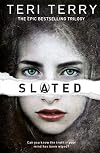
This is one of the good ones, folks! I absolutely devoured this book.
I loved the premise. I loved that Kyla had no memories at the beginning. I love that she was entering a new world and rediscovering old schemas in her brain. I love that Terry included details such as her not knowing a knife was sharp because she had to learn. (I loved that Terry didn't drown the book with these details.)
The world in this book was wonderfully depicted as we were discovering it alongside Kyla. It was show more fascinating to see what other people were taking for granted and what she found to be slightly strange or creepy feeling inducing.
The politics in this book were also beautifully done and deathly possible. Set in a futuristic UK, this goes into enough depth to explain how the world came to be without being boring to those who don't enjoy politics.
The characters in this book were fantastically built. I loved Kyla's 'sister,' fellow Slated, Amy, who was a sweetheart but incredibly different to Kyla. I detested her 'dad.' I grew to grudgingly adore her mother. There were fascinating character at the hospital and at school and all over the place!
About halfway through this, I got up and went to check that my library had the second book available for kindle, because I had a feeling that if it didn't, I would be very angry. It did. Which is good, because I have a physical need to finish this series.
If you like dystopias, this is a must-read. show less
I loved the premise. I loved that Kyla had no memories at the beginning. I love that she was entering a new world and rediscovering old schemas in her brain. I love that Terry included details such as her not knowing a knife was sharp because she had to learn. (I loved that Terry didn't drown the book with these details.)
The world in this book was wonderfully depicted as we were discovering it alongside Kyla. It was show more fascinating to see what other people were taking for granted and what she found to be slightly strange or creepy feeling inducing.
The politics in this book were also beautifully done and deathly possible. Set in a futuristic UK, this goes into enough depth to explain how the world came to be without being boring to those who don't enjoy politics.
The characters in this book were fantastically built. I loved Kyla's 'sister,' fellow Slated, Amy, who was a sweetheart but incredibly different to Kyla. I detested her 'dad.' I grew to grudgingly adore her mother. There were fascinating character at the hospital and at school and all over the place!
About halfway through this, I got up and went to check that my library had the second book available for kindle, because I had a feeling that if it didn't, I would be very angry. It did. Which is good, because I have a physical need to finish this series.
If you like dystopias, this is a must-read. show less
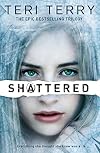
These books. Oh my soul. These books. Book hangover alert. All my yeses. What even was this. I'm still not quite complete.
This trilogy hurt my soul in the most delectable way. It's a very good thing I started these on a weekend with few plans because I read the three in less than thirty hours. They were delectable. Delicious. Scrumdidliumptious.
First of all, the concept. I loved the way I was able to experience the world alongside Kyla, and how I needed very little exposition because I was show more discovering everything alongside her. This was a very real story, and felt like something that could actually happen. It was easily to visualize, and I thought it was brilliant how Terry handled modern technologies, or the lack thereof--for instance, as cell phones were banned for people under the age of 21, at no point did I wonder why they were so dumb as to not use them.
The plot was exquisitely put together. At the end, all of my questions and all of the unsolved mysteries were tied together neatly and a bow was left for me. Maybe I was reading too rapidly to find plotholes, but there was nothing that stood out to me as being out of line or unsolved. I was really impressed by the intricacies webbed, and how small details from the first book came back to be solved in the third. There was even a really intense and fascinating psychological element to it all.
This trilogy was also unpredictable. At no point was I absolutely certain how everything would end. And when I did figure out what was going to happen in the coming scenes, my roommate thought I was crazy because I kept punching my pillow. So there's that. As Terry kept me on my toes, I had no clue if the ending would be happy or not. I had to keep turning those pages. (Seriously, thank goodness it was the weekend.)
The characters felt like people I knew. I had hunches about characters with nothing to base them on. And they turned out to be right. Because each character just had a distinct feel. I could envision them each having their own lives outside of these scenarios.
The ENDING. Okay, so I'm still angry about a certain death in the second book. But I managed to put aside my feelings (though in all seriousness I'm probably too obsessed with a very minor character) and root for someone else and this person succeeded so it's all okay and I have warm fuzzy feelings and there were at least two scenes I reread to feel all the butterflies in my stomach. I appreciated the ultimate message behind everything, which was telling without being overly in-your-face.
Overall, I just adored this trilogy. I need to learn how to savour books instead of devouring them, but that's on me. If you like dystopias or young adult novels or anything with a really good plot or if you just like books in general or if you breathe and are human, I insist that you read these books. It'll be worth it. show less
This trilogy hurt my soul in the most delectable way. It's a very good thing I started these on a weekend with few plans because I read the three in less than thirty hours. They were delectable. Delicious. Scrumdidliumptious.
First of all, the concept. I loved the way I was able to experience the world alongside Kyla, and how I needed very little exposition because I was show more discovering everything alongside her. This was a very real story, and felt like something that could actually happen. It was easily to visualize, and I thought it was brilliant how Terry handled modern technologies, or the lack thereof--for instance, as cell phones were banned for people under the age of 21, at no point did I wonder why they were so dumb as to not use them.
The plot was exquisitely put together. At the end, all of my questions and all of the unsolved mysteries were tied together neatly and a bow was left for me. Maybe I was reading too rapidly to find plotholes, but there was nothing that stood out to me as being out of line or unsolved. I was really impressed by the intricacies webbed, and how small details from the first book came back to be solved in the third. There was even a really intense and fascinating psychological element to it all.
This trilogy was also unpredictable. At no point was I absolutely certain how everything would end. And when I did figure out what was going to happen in the coming scenes, my roommate thought I was crazy because I kept punching my pillow. So there's that. As Terry kept me on my toes, I had no clue if the ending would be happy or not. I had to keep turning those pages. (Seriously, thank goodness it was the weekend.)
The characters felt like people I knew. I had hunches about characters with nothing to base them on. And they turned out to be right. Because each character just had a distinct feel. I could envision them each having their own lives outside of these scenarios.
The ENDING. Okay, so I'm still angry about a certain death in the second book. But I managed to put aside my feelings (though in all seriousness I'm probably too obsessed with a very minor character) and root for someone else and this person succeeded so it's all okay and I have warm fuzzy feelings and there were at least two scenes I reread to feel all the butterflies in my stomach. I appreciated the ultimate message behind everything, which was telling without being overly in-your-face.
Overall, I just adored this trilogy. I need to learn how to savour books instead of devouring them, but that's on me. If you like dystopias or young adult novels or anything with a really good plot or if you just like books in general or if you breathe and are human, I insist that you read these books. It'll be worth it. show less
Lists
Awards


You May Also Like


Statistics
- Works
- 33
- Members
- 2,415
- Popularity
- #10,615
- Rating
- 3.9
- Reviews
- 88
- ISBNs
- 139
- Languages
- 9
- Favorited
- 1