
Megan Shepherd
Author of The Madman's Daughter
About the Author
Image credit: Kristi Hedberg Photography
Series
Works by Megan Shepherd
The Caretaker 2 copies
Associated Works
The Radical Element: 12 Stories of Daredevils, Debutantes, and Other Dauntless Girls (2018) — Contributor — 164 copies, 8 reviews
Tagged
Common Knowledge
- Gender
- female
Members
Reviews
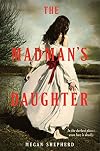
I did not write my review immediately upon finishing this novel because I wanted to be able to explain my feelings on this amazing story rather than have the equivalent of an emotional freakout in front of all of my readers. However, it is now over a week later, and excitement and amazement about this story has not worn off. The Madman's Daughter is everything I ever hoped it would be, and so much more. That is such a cliche statement to make, but it is SO true in this case. The story had me show more eagerly devouring each sentence, all the while cringing over vivid descriptions of mutilations, immoral surgeries and a plethora of other violent and disturbing scenes. Throughout the story, I was searching for some semblance of good, just like the main character, and no one was more surprised than me at each new twist. Often times I see everything coming, but these characters charmed me - fooled me. If you like your description vivid, blood a plenty, mystery dangerous, romance complication, and morality questioned, The Madman's Daughter will blow you away.
The story opens with the main character, Juliet, living as little more than a orphan roaming the streets of London. She has fallen from her former grace, being the daughter of a wealthy and brilliant doctor. But accusations started to fly, her father disappeared, and after her mother's death, her life now shows no resemblance to the lavish existence she once lived. Following in her father's footsteps, she has been studying medicine and anatomy in-between working as a maid a Kings College. Her father's "death" never quite made sense to her, and years later, she is still searching for answers. When she stumbles upon group of schoolboys preforming an illegal vivisection (knowledge searching operation on live animals) with the directions bearing the initials of her father, she finds out that everything she has been told about her father's death is a lie. What comes next will change her life forever... if she gets out alive.
I did not know when reading that this story was based off of The Island of Dr. Moreau by H.G Wells, so I read it as a work entirely its own. In addition, I have not read the aforementioned story, so I do not know which aspects directly relate. All I can say is that The Madman's Daughter is amazingly original and unlike any other YA book I've read. It is gory, it is scary, it is romantic, it is both hopeless and hopeful, moral and immoral. The story delves right into the center of the question, what makes us human? What is it exactly that is separating us from animals - from monsters? The line is continually blurred and redrawn throughout the course of the novel. Even the characters who are decidedly monstrous have heart-wrenchingly human qualities. Dr. Moreau, the villain of the novel, if there ever was one, is as charming as one can be. I loved him upon his first lines, even though I hated him at the same time. I seriously loved to hate him. But it was more than that, I was rooting for him in some strange, twisted way. I wanted him to pull through his issues, to mend the relationship with his daughter, to see the wrong in his way... that may have been too much to ask (I'll let you find out what happens), but I'll say that each emotion Juliet goes through with respects to her father, I experienced those as well. While reading, you want to decide this character is "good" or this character is a "monster", but there is so much more to each one. The levels of complexity just took my breath away. Shepherd's writing style is flawless.
The only aspect that I felt kind of "blah" about was the romance. I did not feel the connection between Juliet and Montgomery, however, this accumulates to a very minor part of the story. I loved Juliet and I loved Montgomery as characters, I just didn't quite see them together. Other than that small aspect, I cannot think of another complaint. I almost wish it was a standalone because it was seriously that perfect, but I will definitely be picking up the next installments of the series. If you have half a brain (or two halves of different brains...) you should pick up this novel as soon as possible. show less
The story opens with the main character, Juliet, living as little more than a orphan roaming the streets of London. She has fallen from her former grace, being the daughter of a wealthy and brilliant doctor. But accusations started to fly, her father disappeared, and after her mother's death, her life now shows no resemblance to the lavish existence she once lived. Following in her father's footsteps, she has been studying medicine and anatomy in-between working as a maid a Kings College. Her father's "death" never quite made sense to her, and years later, she is still searching for answers. When she stumbles upon group of schoolboys preforming an illegal vivisection (knowledge searching operation on live animals) with the directions bearing the initials of her father, she finds out that everything she has been told about her father's death is a lie. What comes next will change her life forever... if she gets out alive.
I did not know when reading that this story was based off of The Island of Dr. Moreau by H.G Wells, so I read it as a work entirely its own. In addition, I have not read the aforementioned story, so I do not know which aspects directly relate. All I can say is that The Madman's Daughter is amazingly original and unlike any other YA book I've read. It is gory, it is scary, it is romantic, it is both hopeless and hopeful, moral and immoral. The story delves right into the center of the question, what makes us human? What is it exactly that is separating us from animals - from monsters? The line is continually blurred and redrawn throughout the course of the novel. Even the characters who are decidedly monstrous have heart-wrenchingly human qualities. Dr. Moreau, the villain of the novel, if there ever was one, is as charming as one can be. I loved him upon his first lines, even though I hated him at the same time. I seriously loved to hate him. But it was more than that, I was rooting for him in some strange, twisted way. I wanted him to pull through his issues, to mend the relationship with his daughter, to see the wrong in his way... that may have been too much to ask (I'll let you find out what happens), but I'll say that each emotion Juliet goes through with respects to her father, I experienced those as well. While reading, you want to decide this character is "good" or this character is a "monster", but there is so much more to each one. The levels of complexity just took my breath away. Shepherd's writing style is flawless.
The only aspect that I felt kind of "blah" about was the romance. I did not feel the connection between Juliet and Montgomery, however, this accumulates to a very minor part of the story. I loved Juliet and I loved Montgomery as characters, I just didn't quite see them together. Other than that small aspect, I cannot think of another complaint. I almost wish it was a standalone because it was seriously that perfect, but I will definitely be picking up the next installments of the series. If you have half a brain (or two halves of different brains...) you should pick up this novel as soon as possible. show less
My goodness, where should I even start when talking about Megan Shepherd's The Madman's Daughter... I suppose I could start by saying that I picked it up while reading Ann Radcliffe's The Italian, which was published in 1797 and is considered one of the very first Gothic thrillers. Reading these two novels while simultaneously researching the Gothic novel as a genre gave me an interesting vantage point from which to view The Madman's Daughter as a Gothic novel and, I think, in the end, it show more may have deepened my love for Shepherd's debut (and for The Italian, which was boring me to tears at the time)!
The setting and atmosphere of a Gothic novel is of utmost importance. In fact, the setting is so important it must act as a character itself. For me, the island where Juliet's father has been secretly living and conducting his "research" more than fulfills this requirement. From the moment Juliet learns of the island (and meets the islander accompanying Montgomery, her father's assistant), the reader knows this isn't going to be an island with gorgeous white-sand beaches and hammocks casually strung between trees. While the island's history isn't explored in extreme depth, the reader knows that it is no stranger to misfortune and, perhaps, even sinister death. Plus, it's the home of a mad scientist who was run out of London after performing horrid experiments on living subjects... it's hard to imagine such a man living in a bright, sunshine-y place.
The Madman's Daughter might remind readers of Frankenstein as it deals with themes of science versus nature, experimentation for the purpose of creation and life, the meaning of humanity and life, and features a scientist that believes he is doing something good, but whose opinion may be a tad (or a lot) biased. One of the things that I absolutely loved about this novel was how often it made me question: is this wrong? Some of the experimentation itself is wrong, but, after Juliet learns what her father is doing, essentially merging and manipulating different parts of animals to create humanoid creatures, she refers to them as monsters. While I do see how such creatures could be viewed as monstrous, I also grew to care deeply about many of them as the novel progressed. At more than one point, I was actually moved to tears as these creatures suffered. I get a little bit weepy just thinking about it now, weeks after reading.
As far as Juliet's father is concerned, I have very strong negative feelings. Though, as a product of the 21st century, I'm not sure that I see his scientific mind and quest for innovation as mad, I definitely still see him as a madman on many other levels. He may have begun as a scientist searching for truth and knowledge, but, by the time the reader meets him, he's off-his-rocker-crazy. The power has gone to his head and, for someone who is obsessed with the secret of creating life, he cares very little about preserving life. Still, after some secrets from Juliet's past are revealed, I couldn't help but take a longer look at Dr. Moreau and consider what he might have been like before.
The Madman's Daughter also incorporates some very pro-feminist vibes as Juliet fights against a very anti-woman world, culture, and father. She strong, determined, and courageous despite nearly everything being stacked against her. She rebels against her father who sees her primarily as something to use and manipulate and secondly as a burden to marry off. She doesn't take no for an answer when Montgomery tries to prevent her from going to the island nor does she accept the simple answers she's given when she knows there's much more to be learned. I can't imagine any reader calling Juliet Moreau weak.
And, to round out an already fantastic plot, there's more than enough romance to satisfy readers who like their heroine's distracted by a guy while fighting their mad father and considering philosophical questions about humanity. In fact, there's a rather intense love triangle featuring two very unique men... but following this tangent would require multiple paragraphs and more than a few spoilers.
I could go on and on about The Madman's Daughter, but I'd say it's in your best interest to read this fantastic novel yourself. show less
The setting and atmosphere of a Gothic novel is of utmost importance. In fact, the setting is so important it must act as a character itself. For me, the island where Juliet's father has been secretly living and conducting his "research" more than fulfills this requirement. From the moment Juliet learns of the island (and meets the islander accompanying Montgomery, her father's assistant), the reader knows this isn't going to be an island with gorgeous white-sand beaches and hammocks casually strung between trees. While the island's history isn't explored in extreme depth, the reader knows that it is no stranger to misfortune and, perhaps, even sinister death. Plus, it's the home of a mad scientist who was run out of London after performing horrid experiments on living subjects... it's hard to imagine such a man living in a bright, sunshine-y place.
The Madman's Daughter might remind readers of Frankenstein as it deals with themes of science versus nature, experimentation for the purpose of creation and life, the meaning of humanity and life, and features a scientist that believes he is doing something good, but whose opinion may be a tad (or a lot) biased. One of the things that I absolutely loved about this novel was how often it made me question: is this wrong? Some of the experimentation itself is wrong, but, after Juliet learns what her father is doing, essentially merging and manipulating different parts of animals to create humanoid creatures, she refers to them as monsters. While I do see how such creatures could be viewed as monstrous, I also grew to care deeply about many of them as the novel progressed. At more than one point, I was actually moved to tears as these creatures suffered. I get a little bit weepy just thinking about it now, weeks after reading.
As far as Juliet's father is concerned, I have very strong negative feelings. Though, as a product of the 21st century, I'm not sure that I see his scientific mind and quest for innovation as mad, I definitely still see him as a madman on many other levels. He may have begun as a scientist searching for truth and knowledge, but, by the time the reader meets him, he's off-his-rocker-crazy. The power has gone to his head and, for someone who is obsessed with the secret of creating life, he cares very little about preserving life. Still, after some secrets from Juliet's past are revealed, I couldn't help but take a longer look at Dr. Moreau and consider what he might have been like before.
The Madman's Daughter also incorporates some very pro-feminist vibes as Juliet fights against a very anti-woman world, culture, and father. She strong, determined, and courageous despite nearly everything being stacked against her. She rebels against her father who sees her primarily as something to use and manipulate and secondly as a burden to marry off. She doesn't take no for an answer when Montgomery tries to prevent her from going to the island nor does she accept the simple answers she's given when she knows there's much more to be learned. I can't imagine any reader calling Juliet Moreau weak.
And, to round out an already fantastic plot, there's more than enough romance to satisfy readers who like their heroine's distracted by a guy while fighting their mad father and considering philosophical questions about humanity. In fact, there's a rather intense love triangle featuring two very unique men... but following this tangent would require multiple paragraphs and more than a few spoilers.
I could go on and on about The Madman's Daughter, but I'd say it's in your best interest to read this fantastic novel yourself. show less
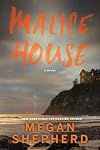
Malice House by Megan Shepherd surprised me. I was not expecting the level of gore or horror that I read. Don’t get me wrong. I liked what I read, and the story continues to haunt me.
In Malice House, Ms. Shepherd plays with the adage regarding the power of the pen wherein the pen, or another artistic medium, literally has the ability to bring monsters to life. As if monsters hunting you are not enough horror, Ms. Shepherd adds untrustworthy acquaintances, a dark and creaky house that may show more or may not be haunted, odd burglary attempts, and a strange neighbor to the creep factor. Where the story ends is not at all expected and is what keeps you thinking about Malice House long after you finish it. For any reader, there is no higher praise than that. show less
In Malice House, Ms. Shepherd plays with the adage regarding the power of the pen wherein the pen, or another artistic medium, literally has the ability to bring monsters to life. As if monsters hunting you are not enough horror, Ms. Shepherd adds untrustworthy acquaintances, a dark and creaky house that may show more or may not be haunted, odd burglary attempts, and a strange neighbor to the creep factor. Where the story ends is not at all expected and is what keeps you thinking about Malice House long after you finish it. For any reader, there is no higher praise than that. show less
Some children’s books are simply wasted on children: The Little Prince, Outside Over There, The Polar Express, The Book Thief, The Invention of Hugo Cabret, the Harry Potter series, Flotsam, The Magic Thief and its sequels.
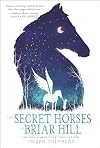
Add to that select list Megan Shepherd’s The Secret Horses of Briar Hill.
Like so many English children during World War II, Emmeline May has been sent to Shropshire; however, unlike those other children, Emmeline and the other children at Briar Hill hospital has not show more been sent to evade the blitz, but to convalesce from a disease she calls “stillwaters.” While all of the children at Briar Hill share the same illness, it is only Emmeline that knows the secret: As she explains in the first chapter, around the other children,
But then one injured white horse escapes the confines of the mirror-world and enters Emmeline’s world. And Emmeline will do whatever it takes to keep the wounded wingèd wonder safe.
Shepherd’s novel is so moving that I can’t see how I can ever forget it. It is about more than determination, imagination, and the healing power of kindness — although all of those elements are in The Secret Horses of Briar Hill. It’s about magic and love and heartache and making the best of what we’re dealt. Highly, highly recommended.
In the interest of full disclosure, I received this book from NetGalley and Random House Children’s Delacorte Books for Young Readers in exchange for an honest review. show less
Add to that select list Megan Shepherd’s The Secret Horses of Briar Hill.
Like so many English children during World War II, Emmeline May has been sent to Shropshire; however, unlike those other children, Emmeline and the other children at Briar Hill hospital has not show more been sent to evade the blitz, but to convalesce from a disease she calls “stillwaters.” While all of the children at Briar Hill share the same illness, it is only Emmeline that knows the secret: As she explains in the first chapter, around the other children,
I have to keep secrets to myself.
But I’ll tell you.
This is my secret: There are winged horses that live in the mirrors of Brian Hill hospital.
But then one injured white horse escapes the confines of the mirror-world and enters Emmeline’s world. And Emmeline will do whatever it takes to keep the wounded wingèd wonder safe.
Shepherd’s novel is so moving that I can’t see how I can ever forget it. It is about more than determination, imagination, and the healing power of kindness — although all of those elements are in The Secret Horses of Briar Hill. It’s about magic and love and heartache and making the best of what we’re dealt. Highly, highly recommended.
In the interest of full disclosure, I received this book from NetGalley and Random House Children’s Delacorte Books for Young Readers in exchange for an honest review. show less
Lists
Awards


You May Also Like


Associated Authors
Statistics
- Works
- 19
- Also by
- 2
- Members
- 4,005
- Popularity
- #6,303
- Rating
- 3.7
- Reviews
- 184
- ISBNs
- 153
- Languages
- 9
- Favorited
- 2