

Sibylle von Olfers (1881–1916)
Author of The Story of the Root Children
About the Author
Works by Sibylle von Olfers
Associated Works
Tagged
Common Knowledge
- Canonical name
- Olfers, Sibylle von
- Legal name
- Von Olfers, Maria Regina Angela Hedwig Sibylla
- Birthdate
- 1881-05-08
- Date of death
- 1916-01-19
- Gender
- female
- Occupations
- Nun
children's book author
art teacher
illustrator
aristocrat - Short biography
- Sibylle von Olfers was born Maria Regina Angela Hedwig Sibylla von Olfers in the Castle of Metgethen (Schloss Metgethen) near Königsberg, Prussia, one of five children in an aristocratic family. She was educated by governesses and tutors and created picture books as a child. Encouraged by an aunt, she attended art college. At age 25, she joined an order of nuns called the Sisters of Saint Elizabeth, and took the name Sister Maria Aloysia. She taught art in a Catholic primary school, and wrote and illustrated children's books. Her work combined elements of the Arts and Crafts and Art Nouveau movements. Her illustrations were marked by strong, simple designs and a keen eye for the natural world. She's best known today for her book Etwas von den Wurzelkindern (The Story of the Root-Children, 1906). She died at age 34 from a lung infection.
- Cause of death
- lung disease
- Nationality
- Germany
- Birthplace
- Konigsberg, East Prussia
- Places of residence
- Lübeck, Germany
- Place of death
- Lübeck, Schleswig-Holstein, Germany
- Associated Place (for map)
- Germany
Members
Reviews
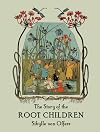
Sibylle von Olfers' Etwas von den Wurzelkindern is likely my very favourite German language picture book (I would even place it among my favourite picture books of all time). I loved this book when my grandmother first read it to me when I was a toddler, and I still love both the text (the original German text) and the luminous "Jugendstil" illustrations with all of my heart and soul (a wonderful homage to spring, rebirth, joy, and to the loving care that Mother Earth gives to all). For a show more picture book originally published in 1906, it remains remarkably fresh and current and continues to be a top-seller, a perennial favourite in Germany, Austria and Switzerland. A German review on Amazon describes Etwas von den Wurzelkindern as soul-nourishment for the youngest, and while I heartily agree with that statement, I think that this book is soul-nourishment not only for the youngest, but for everyone (I can actually recite most of the original text from memory, that is how much I love this book, how much I adore this book).
The Story of the Root-Children (originally published in 1990 by Floris Books of Edinburgh, Scotland) is touted as being an English language translation Etwas von den Wurzelkindern (the translator remains anonymous). Now I am not trying to be dismissive and disrespectful to anyone who has read and enjoyed this book, but for me, the only thing which makes The Story of the Root-Children even remotely worthwhile are Sibylle von Olfers' lush and luminous original illustrations. The text simply does not work for me; in fact, I rather despise it. I know that a translation is never, and can never be the exact replica of the original, but there is not even the vestige of the original German text, of its poetry, cadence and rhythm left in The Story of the Root-Children. Sibylle von Olfers original text, beautiful, evocative and simple enough to share with even the youngest children, has been transformed into a loose adaptation (I cannot, in all honesty, even call this a translation), devoid of any of the poetry and much of the magic that have made Etwas von den Wurzelkindern such a treat, such a joy to read. Furthermore, the text of The Story of the Root-Children has been expanded to such an extent (additional words, actions, scenarios) that, in my opinion, the book has ceased to be a picture book for very young children and has been turned into a textually dense retelling, a loose adaptation more suited for slightly older children.
Now if The Story of the Root-Children had been described and marketed as an adaptation, a retelling of Etwas von den Wurzelkindern (with the author of the text identified, and Sibylle von Olfers named as illustrator), I probably would have enjoyed this book quite a bit more than I did (not as much as the original German version, of course, but I would likely have appreciated the story, the text, as a clever and imaginative retelling). And no, The Story of the Root-Children is definitely not a terrible picture book, a horrible story in and of itself. However, in my opinion, the book cannot be regarded as a translation of Sibylle von Olfers' masterpiece; it is but a rather loose retelling, a loose rendering (a very very pale reflection); in fact, the only part of The Story of the Root-Children that I would designate as being wholly of and by Sibylle von Olfers are the illustrations. And while I cannot really recommend The Story of the Root-Children for its text, its adapted narrative, I can and do recommend it for the simply glorious illustrations (and if you know how to read German, go and get yourself a copy of Etwas von den Wurzelkindern for a truly magical, wonderful reading experience). show less
The Story of the Root-Children (originally published in 1990 by Floris Books of Edinburgh, Scotland) is touted as being an English language translation Etwas von den Wurzelkindern (the translator remains anonymous). Now I am not trying to be dismissive and disrespectful to anyone who has read and enjoyed this book, but for me, the only thing which makes The Story of the Root-Children even remotely worthwhile are Sibylle von Olfers' lush and luminous original illustrations. The text simply does not work for me; in fact, I rather despise it. I know that a translation is never, and can never be the exact replica of the original, but there is not even the vestige of the original German text, of its poetry, cadence and rhythm left in The Story of the Root-Children. Sibylle von Olfers original text, beautiful, evocative and simple enough to share with even the youngest children, has been transformed into a loose adaptation (I cannot, in all honesty, even call this a translation), devoid of any of the poetry and much of the magic that have made Etwas von den Wurzelkindern such a treat, such a joy to read. Furthermore, the text of The Story of the Root-Children has been expanded to such an extent (additional words, actions, scenarios) that, in my opinion, the book has ceased to be a picture book for very young children and has been turned into a textually dense retelling, a loose adaptation more suited for slightly older children.
Now if The Story of the Root-Children had been described and marketed as an adaptation, a retelling of Etwas von den Wurzelkindern (with the author of the text identified, and Sibylle von Olfers named as illustrator), I probably would have enjoyed this book quite a bit more than I did (not as much as the original German version, of course, but I would likely have appreciated the story, the text, as a clever and imaginative retelling). And no, The Story of the Root-Children is definitely not a terrible picture book, a horrible story in and of itself. However, in my opinion, the book cannot be regarded as a translation of Sibylle von Olfers' masterpiece; it is but a rather loose retelling, a loose rendering (a very very pale reflection); in fact, the only part of The Story of the Root-Children that I would designate as being wholly of and by Sibylle von Olfers are the illustrations. And while I cannot really recommend The Story of the Root-Children for its text, its adapted narrative, I can and do recommend it for the simply glorious illustrations (and if you know how to read German, go and get yourself a copy of Etwas von den Wurzelkindern for a truly magical, wonderful reading experience). show less

When a hunter's wife goes to the woods to pick mushrooms one day, she brings her two infant children along, leaving them in their cradle as she wanders off. Mother Rabbit, happening to pass by, sees them and believes them to be abandoned. Taking them home with her, she fashions them rabbit suits, and encourages her own children to play with them. But when the Hunter and his dog happen upon the rabbits, will they destroy little Lucy and John, or will the quick-thinking Spot save the show more day...?
Originally published in 1906 as Mummelchen und Pummelchen: Eine Hasengeschichte, this story from German author/artist Sibylle von Olfers seems at first glance to feature the same kind of reassuring vision of the natural world to be found in so many of her other works. The Mother Rabbit, after all, looks after the lost Lucy and John, ensuring that no harm befalls them, and treating them as her own children. Similarly, Spot the dog recognizes the children for what they are, and acts quickly to prevent tragedy, and to restore them to their worried parents. In this sense, nature is as gentle and nurturing as ever, even if there are no cherub-like beings in the same style as von Olfers' Root Children, or Snow Children. That said, there is a disturbing undertone to this story, with its tale of parental/child separation, an undertone that evokes stories such as Hansel and Gretel, where another set of siblings is lost in the woods. It also raises interesting ethical questions, questions that remain unanswered. If nature is gentle and nurturing to people, what are people to nature? If human children and baby rabbits are interchangeable, what does it mean that the Hunter is a hunter, someone who kills rabbits? Is Mother Rabbit's kindness to be rewarded, or will she and her family continue to be hunted? One suspects the latter... I'm not sure that Von Olfers intentionally raises any of these questions - given her rather sweet depiction of nature elsewhere, I suspect not - but the fact that they are evoked by the text gives it added appeal, in my mind. Fairy-tales, after all, are made all the more powerful by including some disturbing subtext. show less
Originally published in 1906 as Mummelchen und Pummelchen: Eine Hasengeschichte, this story from German author/artist Sibylle von Olfers seems at first glance to feature the same kind of reassuring vision of the natural world to be found in so many of her other works. The Mother Rabbit, after all, looks after the lost Lucy and John, ensuring that no harm befalls them, and treating them as her own children. Similarly, Spot the dog recognizes the children for what they are, and acts quickly to prevent tragedy, and to restore them to their worried parents. In this sense, nature is as gentle and nurturing as ever, even if there are no cherub-like beings in the same style as von Olfers' Root Children, or Snow Children. That said, there is a disturbing undertone to this story, with its tale of parental/child separation, an undertone that evokes stories such as Hansel and Gretel, where another set of siblings is lost in the woods. It also raises interesting ethical questions, questions that remain unanswered. If nature is gentle and nurturing to people, what are people to nature? If human children and baby rabbits are interchangeable, what does it mean that the Hunter is a hunter, someone who kills rabbits? Is Mother Rabbit's kindness to be rewarded, or will she and her family continue to be hunted? One suspects the latter... I'm not sure that Von Olfers intentionally raises any of these questions - given her rather sweet depiction of nature elsewhere, I suspect not - but the fact that they are evoked by the text gives it added appeal, in my mind. Fairy-tales, after all, are made all the more powerful by including some disturbing subtext. show less
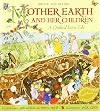
After being rather disappointed with the text (the adapted translation) of The Story of the Root-Children, I am happy to have been quite pleasantly surprised with and by both the text and the quilted illustrations of Mother Earth and Her Children: A Quilted Fairy Tale. I have to admit that while the original illustrations by Sibylle von Olfers will always remain a personal favourite, I was and continue to be wowed and impressed by Sieglinde Schoen-Smith's quiltwork and touched by the show more backstory of the quilt (how creating this lovely masterpiece, celebrating the seasons, celebrating joy, life and rebirth helped Sieglinde Schoen-Smith come to terms with the death of her son, how working on the quilt brought her peace). As someone with basically no sewing skills whatsoever, I remain in complete awe at Sieglinde Schoen-Smith's accomplishment and the fact that she has managed to so successfully portray Sibylle von Olfers' glorious, life-affirming Jugendstil illustrations as a quilt, as a work of exquisite craftsmanship.
The accompanying text by renowned folklore expert Jack Zipes is also impressive, as he has actually managed to successfully capture both the poetry and general rhythm of Sibylle von Olfers original text (as presented in Etwas von den Wurzelkindern), no mean feat when translating poetry. My LT friend Abigail has pointed out that Zack Zipes' text is somewhat shortened, and not as complete as the original (and should therefore perhaps be considered more of an adaptation rather than a translation). However, I believe that this was/is likely in response to the fact that the quilt does not depict all of Sibylle von Olfers' original illustrations. For example, Sieglinde Schoen-Smith's quilt does not contain the scene where the root children are playing near and on the creek, and it would have been strange and problematic if Jack Zipes had included translated text for images not present in the illustrations (the quilt); that really would not have worked well at all. Zipes' text for Mother Earth and Her Children: A Quilted Fairy Tale is very authentic-sounding, capturing the poetry, the exuberant joy of springtime, the beauty (the child-friendly, life-affirming atmosphere) of both Sibylle von Olfers' original text and Sieglinde Schoen-Smith's quilted illustrations.
As to the illustrator's and translator's notes at the back of the book, what can I say, but that they are both informative and impressive. Sieglinde Schoen-Smith's backstory about her childhood in post WWII Germany (how she was allowed to peruse her older sister's books, but had none of her own) and how the making of the quilt helped her cope with the tragic death of her son are both informative and emotionally wrenching. And I think it might be eye-opening for modern American and Canadian children to realise that after WWII, many European children did not have books and toys. My own parents tell very similar stories, that after the war, toys and books were not of prime importance for many families, who were often struggling to simply provide their children with adequate food and clothing.
Jack Zipes' notes on Sibylle von Olfers' life and work are likely a bit too advanced and textually dense for most children. However, for me, they provided and continue to provide a welcome source of academically interesting material, although I do wish that Zipes had provided a bibliographical list with suggestions for further reading. Be that as it may, there is still more than enough information included in the notes for additional, independent research, and I do appreciate what Zipes has provided, as I had never before read any secondary or biographical material on Sibylle von Olfers; all I knew was that she was the author and illustrator of one of my all time favourite picture books (a book I must have read at least a hundred times as a child). show less
The accompanying text by renowned folklore expert Jack Zipes is also impressive, as he has actually managed to successfully capture both the poetry and general rhythm of Sibylle von Olfers original text (as presented in Etwas von den Wurzelkindern), no mean feat when translating poetry. My LT friend Abigail has pointed out that Zack Zipes' text is somewhat shortened, and not as complete as the original (and should therefore perhaps be considered more of an adaptation rather than a translation). However, I believe that this was/is likely in response to the fact that the quilt does not depict all of Sibylle von Olfers' original illustrations. For example, Sieglinde Schoen-Smith's quilt does not contain the scene where the root children are playing near and on the creek, and it would have been strange and problematic if Jack Zipes had included translated text for images not present in the illustrations (the quilt); that really would not have worked well at all. Zipes' text for Mother Earth and Her Children: A Quilted Fairy Tale is very authentic-sounding, capturing the poetry, the exuberant joy of springtime, the beauty (the child-friendly, life-affirming atmosphere) of both Sibylle von Olfers' original text and Sieglinde Schoen-Smith's quilted illustrations.
As to the illustrator's and translator's notes at the back of the book, what can I say, but that they are both informative and impressive. Sieglinde Schoen-Smith's backstory about her childhood in post WWII Germany (how she was allowed to peruse her older sister's books, but had none of her own) and how the making of the quilt helped her cope with the tragic death of her son are both informative and emotionally wrenching. And I think it might be eye-opening for modern American and Canadian children to realise that after WWII, many European children did not have books and toys. My own parents tell very similar stories, that after the war, toys and books were not of prime importance for many families, who were often struggling to simply provide their children with adequate food and clothing.
Jack Zipes' notes on Sibylle von Olfers' life and work are likely a bit too advanced and textually dense for most children. However, for me, they provided and continue to provide a welcome source of academically interesting material, although I do wish that Zipes had provided a bibliographical list with suggestions for further reading. Be that as it may, there is still more than enough information included in the notes for additional, independent research, and I do appreciate what Zipes has provided, as I had never before read any secondary or biographical material on Sibylle von Olfers; all I knew was that she was the author and illustrator of one of my all time favourite picture books (a book I must have read at least a hundred times as a child). show less

Etwas von den Wurzelkindern, original German text and illustrations by Sibylle von Olfers.
After reading two very different English "translations" of this classic German picture-book, first published in 1906 - Jack Zipes' brief but poetic rendition, in Mother Earth and Her Children: A Quilted Fairy Tale, and an unnamed translator's extensive prose version, in Floris Books' The Story of the Root-Children - I have been lucky enough (thank you, Gundula!) to obtain a copy of the original German show more edition. Having now read the original text, my estimation of the two versions listed above, as well as my judgment of two other loose retellings - Audrey Wood's When The Root Children Wake Up, illustrated by Ned Bittinger, and Helen Dean Fish's similarly titled When the Root Children Wake Up, with von Olfers' own artwork - must be reconsidered. An important lesson, I think, about the difficulties attendant upon translating poetic works, even seemingly "simple" narratives like this.
This tale of the little Wurzelkindern, or Root Children, who awaken as Spring approaches, and, with the guidance of old Mutter Erde (Mother Earth), make ready for their appearance in the world, is told entirely in rhyming poetry: "Und als der Frühling / kommt ins Land, / da ziehn gleich einem / bunten Band, / die Käfer, Blumen / Gräser klein, / frohlockend in die / Welt hinein." Together with von Olfers' charming Art Nouveau style illustrations, the sprightly text makes for a delightful reading experience: one imagines that German children have enjoyed hearing it read aloud for a few generations now! It's a shame (though perhaps not surprising) that none of the English-language versions I have read really capture the flavor of the original. In any case, I'm happy to have had the chance to read the German, as it has definitely given me a better appreciation of von Olfers' work! show less
After reading two very different English "translations" of this classic German picture-book, first published in 1906 - Jack Zipes' brief but poetic rendition, in Mother Earth and Her Children: A Quilted Fairy Tale, and an unnamed translator's extensive prose version, in Floris Books' The Story of the Root-Children - I have been lucky enough (thank you, Gundula!) to obtain a copy of the original German show more edition. Having now read the original text, my estimation of the two versions listed above, as well as my judgment of two other loose retellings - Audrey Wood's When The Root Children Wake Up, illustrated by Ned Bittinger, and Helen Dean Fish's similarly titled When the Root Children Wake Up, with von Olfers' own artwork - must be reconsidered. An important lesson, I think, about the difficulties attendant upon translating poetic works, even seemingly "simple" narratives like this.
This tale of the little Wurzelkindern, or Root Children, who awaken as Spring approaches, and, with the guidance of old Mutter Erde (Mother Earth), make ready for their appearance in the world, is told entirely in rhyming poetry: "Und als der Frühling / kommt ins Land, / da ziehn gleich einem / bunten Band, / die Käfer, Blumen / Gräser klein, / frohlockend in die / Welt hinein." Together with von Olfers' charming Art Nouveau style illustrations, the sprightly text makes for a delightful reading experience: one imagines that German children have enjoyed hearing it read aloud for a few generations now! It's a shame (though perhaps not surprising) that none of the English-language versions I have read really capture the flavor of the original. In any case, I'm happy to have had the chance to read the German, as it has definitely given me a better appreciation of von Olfers' work! show less
Lists
Awards


You May Also Like


Associated Authors
Statistics
- Works
- 32
- Also by
- 2
- Members
- 1,302
- Popularity
- #19,719
- Rating
- 4.0
- Reviews
- 21
- ISBNs
- 102
- Languages
- 9
- Favorited
- 1