
Zach Weinersmith
Author of Soonish: Ten Emerging Technologies That'll Improve and/or Ruin Everything
About the Author
Zach Weinersmith is the cartoonist behind the popular geek webcomic Saturday Morning Breakfast Cereal. His work has been featured in The Economist, The Wall Street Journal, Slate, Forbes, Science Friday, Boingboing, the Freakonomics Blog, the RadioLab blog, Entertainment Weekly, Mother Jones, CNN, show more Discovery Magazine, and more. show less
Image credit: by Christina Xu
Series
Works by Zach Weinersmith
Soonish: Ten Emerging Technologies That'll Improve and/or Ruin Everything (2017) 879 copies, 27 reviews
A City on Mars: Can we settle space, should we settle space, and have we really thought this through? (2023) — Cover artist, some editions — 771 copies, 30 reviews
Science: Ruining Everything Since 1543: A Collection of Science-Themed Comics (2013) 138 copies, 6 reviews
Associated Works
The Particle at the End of the Universe: How the Hunt for the Higgs Boson Leads Us to the Edge of a New World (2012) — Illustrator — 690 copies, 18 reviews
Flash Forward: An Illustrated Guide to Possible (and Not So Possible) Tomorrows (2021) — Contributor — 59 copies, 5 reviews
The Cyanide & Happiness Depressing Comic Book (Cyanide & Happiness) (2012) — Foreword — 32 copies, 4 reviews
Hit Reblog: Comics That Caught Fire (comiXology Originals) (2020) — Contributor — 14 copies, 2 reviews
The PaulandStormonomicon — Illustrator — 2 copies
Tagged
Common Knowledge
- Legal name
- Weinersmith, Zachary Alexander
- Other names
- Weiner, Zach
Weinersmith, Zach
Weiner, Zachary Alexander (birth) - Birthdate
- 1982-03-05
- Gender
- male
- Education
- Pitzer College (BA, English)
San Jose State University - Occupations
- cartoonist
- Relationships
- Weinersmith, Kelly (wife)
- Nationality
- USA
- Associated Place (for map)
- USA
Members
Reviews
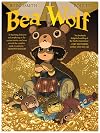
La vigencia de los clásicos se demuestra en su capacidad para ser recreados una y otra vez sin perder su esencia. Un ejemplo es esta revisión de Beowulf, convertida en un cuento infantil con tal fidelidad que muchos de sus pasajes son paráfrasis del poema original. Eso sí, el libro se limita a adaptar solo la primera parte, donde el ruido incesante de los niños irrita al malvado señor Grindle, un ser que odia las fiestas y la diversión.
Sorprende cómo Zach Weinersmith recrea el mito show more con un dibujo excelente de Boulet —destaca su manejo de los grises—, que retrata una historia claramente infantil pero que, al mismo tiempo, transmite una sensación épica. Esto se refuerza con la decisión de mantener la poética del original.
Esta adaptación demuestra que los mitos antiguos pueden dialogar con las nuevas generaciones sin perder su esencia. Weinersmith logra un equilibrio perfecto: simplifica la trama para los niños, pero respeta el ritmo y la solemnidad del poema original. El resultado es un Beowulf accesible, pero que invita a descubrir, en el futuro, la obra en su versión clásica. Una puerta de entrada ideal para jóvenes lectores... y un deleite para quienes ya conocen el mito.
En definitiva, una adaptación divertida que, aunque difiere en muchos aspectos, conserva lo esencial. show less
Sorprende cómo Zach Weinersmith recrea el mito show more con un dibujo excelente de Boulet —destaca su manejo de los grises—, que retrata una historia claramente infantil pero que, al mismo tiempo, transmite una sensación épica. Esto se refuerza con la decisión de mantener la poética del original.
Esta adaptación demuestra que los mitos antiguos pueden dialogar con las nuevas generaciones sin perder su esencia. Weinersmith logra un equilibrio perfecto: simplifica la trama para los niños, pero respeta el ritmo y la solemnidad del poema original. El resultado es un Beowulf accesible, pero que invita a descubrir, en el futuro, la obra en su versión clásica. Una puerta de entrada ideal para jóvenes lectores... y un deleite para quienes ya conocen el mito.
En definitiva, una adaptación divertida que, aunque difiere en muchos aspectos, conserva lo esencial. show less

Long ago, in the kid-kingdom of Suburbia, Treeheart was built. Generations of kid-kings ruled there, a hall full of candy and toys. But the sound of their merriment disgruntled their dyspeptic neighbor, Grindle. He attacked Treeheart and its merry-makers, adultifying all of them. No one could stand against him, and so the children cried out for a hero. Across the creek, someone heard them. Her name was Bea Wolf.
This book is a graphic novel retelling of Beowulf, and it’s incredible. I’ve show more never been able to get through Beowulf myself, but the graphic novel and adapted language made it so accessible that I think I have a better chance now. The language has such a compelling rhythm to it that I couldn’t help but read the whole thing out loud, by myself, to my cat. I really enjoyed Weinersmith’s notes at the end about a brief history of the story, and especially his thought process on adapting the language using lots of hyphenated epithets and alliteration. This book is absolutely a classic, and I will be buying a copy to put on my shelves right next to D’Aulaire’s. show less
This book is a graphic novel retelling of Beowulf, and it’s incredible. I’ve show more never been able to get through Beowulf myself, but the graphic novel and adapted language made it so accessible that I think I have a better chance now. The language has such a compelling rhythm to it that I couldn’t help but read the whole thing out loud, by myself, to my cat. I really enjoyed Weinersmith’s notes at the end about a brief history of the story, and especially his thought process on adapting the language using lots of hyphenated epithets and alliteration. This book is absolutely a classic, and I will be buying a copy to put on my shelves right next to D’Aulaire’s. show less
A City on Mars: Can We Settle Space, Should We Settle Space, and Have We Really Thought This Through? by Kelly Weinersmith

This is a nonfiction book that goes into meticulous detail about the challenges of space colonization, in Earth orbit, on the moon, and on Mars, from both a scientific and legal perspective. Lots of good details, lively writing. My main takeaway was that however hard you think space colonization might be, it's much much harder, way harder than it's commonly portrayed by science fiction stories, or by the tech billionaires currently trying to set up Ayn Randian utopias on Mars. Not about show more science fiction per se, but clearly "related" to it; I enjoyed it a lot and keep thinking about tidbits from it months after reading it. show less

In graphic non-fiction form, libertarian economist and immigration policy expert Caplan discusses how completely unrestricted immigration into and out of the United States is the best option morally, culturally, legally, and ethically. He breaks down every possible argument against open borders, pointing out for almost all of them that they are based on fears of things that already can and do happen with very restricted borders, and calls immigration restrictions “a solution in search of a show more problem”.
This book came out in 2019, when I was reading much less, and it’s just a coincidence that I am finally reading it now, in a moment when the artificial divide between “legal” and “illegal” immigration is in the news again. This book is not really for me - I don’t care about the GDP or whatever “American culture” is. I don’t really agree with Caplan on most of his non-open-borders-related positions, but in a way that’s what makes this book so powerful and important. He shows me how to talk to people like him, and to break through any arguments they might have. I do think that he misses that most people who screech about immigration are doing it out of pure racism and xenophobia, but at least breaking through their other arguments will expose that.
Weinersmith’s illustrations are, as always, a fucking delight. show less
This book came out in 2019, when I was reading much less, and it’s just a coincidence that I am finally reading it now, in a moment when the artificial divide between “legal” and “illegal” immigration is in the news again. This book is not really for me - I don’t care about the GDP or whatever “American culture” is. I don’t really agree with Caplan on most of his non-open-borders-related positions, but in a way that’s what makes this book so powerful and important. He shows me how to talk to people like him, and to break through any arguments they might have. I do think that he misses that most people who screech about immigration are doing it out of pure racism and xenophobia, but at least breaking through their other arguments will expose that.
Weinersmith’s illustrations are, as always, a fucking delight. show less
Lists
Awards


You May Also Like


Associated Authors
Statistics
- Works
- 26
- Also by
- 10
- Members
- 3,344
- Popularity
- #7,637
- Rating
- 4.0
- Reviews
- 151
- ISBNs
- 47
- Languages
- 7
- Favorited
- 2