
Okazaki Mari
Author of Suppli, Volume 1
About the Author
Series
Works by Okazaki Mari
Kashimashi Meshi 2 copies
Tagged
Common Knowledge
- Canonical name
- Mari, Okazaki
- Legal name
- おかざき 真里
- Birthdate
- 1967-06-15
- Gender
- female
- Nationality
- Japan
- Birthplace
- Nagano, Japan
- Associated Place (for map)
- Nagano, Japan
Members
Reviews
I picked this up after a brief review that basically said 'it's josei and it's good' which is pretty much all I needed. I've been looking for a good josei fix and I was more than happy to try this out.
I'm very glad that I did, because this has everything I've been wanting in a romance manga. It's got emotional relationships that I can, well, relate to, along with the dilemmas of balancing your work identity, your personal identity and how to fit a relationship into that mix. All of it rings show more true and is much more in line with my experiences than the idealism of shoujo. If you're looking for a good romance that fits in with adult experience rather than teenage dreams, this is the book to pick up. show less
I'm very glad that I did, because this has everything I've been wanting in a romance manga. It's got emotional relationships that I can, well, relate to, along with the dilemmas of balancing your work identity, your personal identity and how to fit a relationship into that mix. All of it rings show more true and is much more in line with my experiences than the idealism of shoujo. If you're looking for a good romance that fits in with adult experience rather than teenage dreams, this is the book to pick up. show less

Back in 2005 Tokyopop launched a short-lived line of josei manga called Passion Fruit, describing it as a collection of innovative and edgy works. Only two volumes were ever released before Passion Fruit faded out of existence: Mari Okazaki's Sweat & Honey and Junko Kawakami's Galaxy Girl, Panda Boy. I learned about all of this long after the fact and only discovered the Passion Fruit line while searching for more translated manga by Okazaki after rereading her series Suppli (which was sadly show more left incomplete in English after Tokyopop's decline.) Currently, Sweat & Honey is her only other work available, which is a shame. Sweat & Honey was originally published in Japan in 2002 before being released in English in 2005. I didn't realize it when I first picked up a copy--initially I was interested in the fact that it was by Okazaki more than anything else--but Sweat & Honey incorporates sapphic elements and yuri undertones which made me even more curious to read it.
Sweat & Honey collects five short, unrelated manga, most of which focus on the close, personal, and intimate relationships between women, ranging from friendship to love and even more complicated bonds. The volume opens with "After Sex, A Boy's Sweat Smells Like Honey," from which the collection draws its name. In it, a young woman is staying with her cousin; her attitudes toward and dislike of men has her cousin reevaluating her own romantic relationships as the two women grow closer. In "About Kusako," Moeko stumbles upon a girl literally growing out of the ground. It's a curious story and the most fantastical one included in Sweat & Honey. "Sister" follows Chinami, a highschool girl, and Kayo, her 35-year-old neighbor who leads a much more fulfilling life than most realize. The longest story, "The Land Where Rain Falls," is told in three parts. It delves into the intense and twisted connections between Kumi, her classmate Kaya, and Kaya's older brother. The volume closes with "Iced Tea," in which a young man looks back on one of his first crushes, his seventh-grade teacher.
Sweat & Honey, though occasionally lighthearted, is a manga that deals with very mature themes--death, coming of age, self-discovery, nostalgia--and can frankly be disturbing from time to time. Okazaki's artwork aids tremendously in creating this atmosphere in the volume. Her illustrations are sensuous and provocative, with a languid heaviness to them. They are beautiful, but also somewhat disconcerting and ominous, too. The page layouts in Sweat & Honey are also interesting, often featuring a large background panel which sets the scene with smaller, overlapping panels that focus a reader's attention on a particular detail of the people who inhabit it. The elegant line of a neck, hesitant glances or a sly smile, an exposed breast, shifting legs and feet, entwined fingers or tightly clasped hands, all are accentuated. Because of this, the young women in Sweat & Honey seem to exist both in their world and apart from it. Okazaki reveals their personal and private thoughts and feelings while at the same time exposing their physical selves.
Although the short manga collected in Sweat & Honey aren't related by characters or by plot, they all share an emphasis on the inner and outer lives of women and their relationships with each other. Even "Iced Tea," which is told from the perspective of a young man, is focused on his female teacher. Although the ties between the women in Sweat & Honey are the most crucial, their associations with men and how those associations impact their other relationships are also very important. The older cousin in "After Sex, A Boy's Sweat Smell s Like Honey" has a boyfriend, but she isn't able to connect with him in the same way that she does with her younger relative. Moeko drifts away from Kusako when a boy enters the picture. Kayo's seeming lack of romantic involvement is one of the things that bothers Chinami the most. And in "The Land Where Rain Falls," the nearly incestuous relationship instigated by Kaya is one of the key elements of the story. But in the end, while the men have their place in the manga, the true focus of Sweat & Honey is on its young women and their experiences.
Experiments in Manga show less
Sweat & Honey collects five short, unrelated manga, most of which focus on the close, personal, and intimate relationships between women, ranging from friendship to love and even more complicated bonds. The volume opens with "After Sex, A Boy's Sweat Smells Like Honey," from which the collection draws its name. In it, a young woman is staying with her cousin; her attitudes toward and dislike of men has her cousin reevaluating her own romantic relationships as the two women grow closer. In "About Kusako," Moeko stumbles upon a girl literally growing out of the ground. It's a curious story and the most fantastical one included in Sweat & Honey. "Sister" follows Chinami, a highschool girl, and Kayo, her 35-year-old neighbor who leads a much more fulfilling life than most realize. The longest story, "The Land Where Rain Falls," is told in three parts. It delves into the intense and twisted connections between Kumi, her classmate Kaya, and Kaya's older brother. The volume closes with "Iced Tea," in which a young man looks back on one of his first crushes, his seventh-grade teacher.
Sweat & Honey, though occasionally lighthearted, is a manga that deals with very mature themes--death, coming of age, self-discovery, nostalgia--and can frankly be disturbing from time to time. Okazaki's artwork aids tremendously in creating this atmosphere in the volume. Her illustrations are sensuous and provocative, with a languid heaviness to them. They are beautiful, but also somewhat disconcerting and ominous, too. The page layouts in Sweat & Honey are also interesting, often featuring a large background panel which sets the scene with smaller, overlapping panels that focus a reader's attention on a particular detail of the people who inhabit it. The elegant line of a neck, hesitant glances or a sly smile, an exposed breast, shifting legs and feet, entwined fingers or tightly clasped hands, all are accentuated. Because of this, the young women in Sweat & Honey seem to exist both in their world and apart from it. Okazaki reveals their personal and private thoughts and feelings while at the same time exposing their physical selves.
Although the short manga collected in Sweat & Honey aren't related by characters or by plot, they all share an emphasis on the inner and outer lives of women and their relationships with each other. Even "Iced Tea," which is told from the perspective of a young man, is focused on his female teacher. Although the ties between the women in Sweat & Honey are the most crucial, their associations with men and how those associations impact their other relationships are also very important. The older cousin in "After Sex, A Boy's Sweat Smell s Like Honey" has a boyfriend, but she isn't able to connect with him in the same way that she does with her younger relative. Moeko drifts away from Kusako when a boy enters the picture. Kayo's seeming lack of romantic involvement is one of the things that bothers Chinami the most. And in "The Land Where Rain Falls," the nearly incestuous relationship instigated by Kaya is one of the key elements of the story. But in the end, while the men have their place in the manga, the true focus of Sweat & Honey is on its young women and their experiences.
Experiments in Manga show less
I bought from somebody on LJ purely because it was josei (manga for young women rather than girls) and you don't really get a lot of josei in the shops. It was pretty good and it was so refreshing to read a romance manga that wasn't set in high school, for a change. The art style is really pretty, and I loved the look of the main character. She's a stylish graphic designer, who wears glasses from time to time and has a realistically curvy adult figure -- two things I like to see in manga, show more where usually only nerds wear glasses and girls tend to have tiny childlike figures, occasionally with disproportionate boobs. The story is a rather glamorized look at what it's like being a young career woman, but it does focus on some interesting and realistic topics -- balancing work with socialising, and the relationships between female co-workers. I'm looking forward to reading more of this. show less
Twenty-seven-year-old Minami is unhappy in life. Her relationship with her boyfriend of seven years is stagnating and she barely sees him due to her job. But her job at an advertising agency is unsatisfying; Minami wants to create exciting, unconventional ads, while the clients just want the same, safe advertising. By the end of the first chapter (and I don't think I'm giving away anything here) Minami's boyfriend dumps her and her life starts spinning out of control. Luckily for Minami show more she's a plucky manga heroine, so despite numerous setbacks she starts to live life again.
Suppli is another josei manga, intended for an audience of young professional women. I can't say that the story grabbed me, though that may differ for you if you're part of the target audience. Certainly it's refreshing to see a manga targeted at women where the protagonist has interests other than finding a man; one feels that Minami's professional challenges are as important to her as her romantic ones, perhaps even moreso.
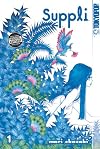
The best part of Suppli is Okazaki's art, which features inky lines that never overwhelm, excellent character design, and a strong sense of graphics and storytelling. While the story may not have held my complete interest throughout, I continued to go through the volume to enjoy the artwork. I pre-ordered this book based solely on the cover, figuring if the art inside was half as good then it would be worth it; happily the interior lives up.
So a mild recommendation to at least pick the book up and look through it; give it a chance to see if the story appeals to you.
Rating: 3 (of 5) show less
Suppli is another josei manga, intended for an audience of young professional women. I can't say that the story grabbed me, though that may differ for you if you're part of the target audience. Certainly it's refreshing to see a manga targeted at women where the protagonist has interests other than finding a man; one feels that Minami's professional challenges are as important to her as her romantic ones, perhaps even moreso.
The best part of Suppli is Okazaki's art, which features inky lines that never overwhelm, excellent character design, and a strong sense of graphics and storytelling. While the story may not have held my complete interest throughout, I continued to go through the volume to enjoy the artwork. I pre-ordered this book based solely on the cover, figuring if the art inside was half as good then it would be worth it; happily the interior lives up.
So a mild recommendation to at least pick the book up and look through it; give it a chance to see if the story appeals to you.
Rating: 3 (of 5) show less
You May Also Like


Statistics
- Works
- 36
- Members
- 441
- Popularity
- #55,515
- Rating
- 3.8
- Reviews
- 7
- ISBNs
- 75
- Languages
- 3
- Favorited
- 1