
Moyoco Anno
Author of Sugar Sugar Rune, Vol. 1
About the Author
Series
Works by Moyoco Anno
Associated Works
バビロンの架空園 (河出文庫) — Cover artist, some editions — 1 copy
Tagged
Common Knowledge
- Canonical name
- Moyoco Anno
- Legal name
- 安野 モヨコ
- Birthdate
- 1971-03-26
- Gender
- female
- Occupations
- manga artist
fashion writer - Awards and honors
- Kodansha Manga Award (1998)
- Relationships
- Anno, Hideaki (husband)
- Nationality
- Japan
- Birthplace
- Suginami, Tokyo, Japan
- Places of residence
- Tama, Japan
- Associated Place (for map)
- Japan
Members
Reviews

Flowers & Bees was the second manga series by Moyoco Anno to be released in English. Viz Media published the first volume of the series in 2003, six months after Tokyopop published the first volume of the English-language edition of Happy Mania. In Japan the first volume of Flowers & Bees was released in 2000. Flowers & Bees was Anno's first foray into a series aimed at a predominantly adult male audience. Prior to Flowers & Bees, Anno was primarily known for her work as a josei artist. I've show more heard Flowers & Bees described as a male version of Happy Mania. Having read both manga, I'd have to say it's actually not a bad comparison; the two series share many themes and other similarities. Even though I had previously read Flowers & Bees, I was looking forward to reading it again for the Moyoco Anno Manga Moveable Feast.
Masao Komatsu is desperate. He's convinced that the reason he's unpopular is his unattractiveness. All he really wants is a little respect and for Noriko, a girl from another high school who he's developed a huge crush on, to give him the time of day. That's when he stumbles into the World of Beautiful Men, a men's beauty salon filled with people who delight in tormenting Komatsu just as much as they do in helping him to develop something at least resembling style. What starts out as a simple eyebrow job soon spirals out of control as Komatsu will do anything and everything he possible can in order to look cool. And it seems to be working. Sort of. The attention that he starts to draw isn't exactly what he had in mind, but at least women are starting to notice him.
I'm rather fond of Komatsu as pitiful as he can be. I can't help but feel some sympathy for the poor guy. He's not nearly as big of a loser as he thinks he is. He just hasn't realized quite yet that he needs to work on his confidence and self-esteem more than he needs to work on his hair. (Granted, a decent haircut certainly doesn't hurt, either.) But Komatsu tries. He really, really tries. His earnestness and obsession with becoming attractive is impressive. It is also highly amusing. As self-conscious as he is as a person, he is also incredibly self-absorbed. Anno doesn't go easy on Komatsu. He's the subject of some pretty cruel treatment. Admittedly, Flowers & Bees can be a little mean, but it can also be hilarious.
As harsh as Flowers & Bees is on occasion, Anno actually does incorporate some legitimate fashion and relationship tips into the manga. At times they're a little difficult to discern as Komatsu is put through all sorts of overly dramatic, not to mention traumatic, experience. Komatsu is desperate and highly impressionable, grasping at even the smallest piece of advice. He doesn't always quite get it, but there's still hope for him. I think that's one of the reasons Flowers & Bees works for me. Komatsu has plenty of room to grow and develop as a character. Many of the changes in the first volume are merely physical, but the foundation for his metamorphosis as a person as a whole is also established. I really do enjoy Flowers & Bees.
Experiments in Manga show less
Masao Komatsu is desperate. He's convinced that the reason he's unpopular is his unattractiveness. All he really wants is a little respect and for Noriko, a girl from another high school who he's developed a huge crush on, to give him the time of day. That's when he stumbles into the World of Beautiful Men, a men's beauty salon filled with people who delight in tormenting Komatsu just as much as they do in helping him to develop something at least resembling style. What starts out as a simple eyebrow job soon spirals out of control as Komatsu will do anything and everything he possible can in order to look cool. And it seems to be working. Sort of. The attention that he starts to draw isn't exactly what he had in mind, but at least women are starting to notice him.
I'm rather fond of Komatsu as pitiful as he can be. I can't help but feel some sympathy for the poor guy. He's not nearly as big of a loser as he thinks he is. He just hasn't realized quite yet that he needs to work on his confidence and self-esteem more than he needs to work on his hair. (Granted, a decent haircut certainly doesn't hurt, either.) But Komatsu tries. He really, really tries. His earnestness and obsession with becoming attractive is impressive. It is also highly amusing. As self-conscious as he is as a person, he is also incredibly self-absorbed. Anno doesn't go easy on Komatsu. He's the subject of some pretty cruel treatment. Admittedly, Flowers & Bees can be a little mean, but it can also be hilarious.
As harsh as Flowers & Bees is on occasion, Anno actually does incorporate some legitimate fashion and relationship tips into the manga. At times they're a little difficult to discern as Komatsu is put through all sorts of overly dramatic, not to mention traumatic, experience. Komatsu is desperate and highly impressionable, grasping at even the smallest piece of advice. He doesn't always quite get it, but there's still hope for him. I think that's one of the reasons Flowers & Bees works for me. Komatsu has plenty of room to grow and develop as a character. Many of the changes in the first volume are merely physical, but the foundation for his metamorphosis as a person as a whole is also established. I really do enjoy Flowers & Bees.
Experiments in Manga show less
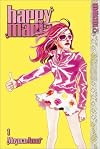
Happy Mania was my introduction to the work of Moyoco Anno. The series was actually one of her earliest professional works and was the first of her manga to be released in English, preceding Flowers & Bees by about half a year. Happy Mania, Volume 1 was first published in Japan in 1996. Tokyopop released the English-language edition in 2003. I believe that Happy Mania was one of Tokyopop's first shrink-wrapped, mature manga. It was also one of the first, if not the first josei manga--manga show more intended for an adult female audience--to be released in English. If I recall correctly, Happy Mania was also the first josei manga that I ever read. What I don't remember is how I learned about Happy Mania or why I picked up the eleven-volume series to begin with. I'm glad that I did, though; it ended up being an unexpected surprise. And I'm happy to give Happy Mania another, closer look for the Moyoco Anno Manga Moveable Feast.
Twenty-four-year old Kayoko Shigeta wants only one thing in her life--a boyfriend. Luckily for her, Shigeta's love horoscope seems to indicate that the right guy for her is just around the corner. Having been dumped almost a year earlier, she's not about to let her chance at true love slip her by. In fact, she takes a job at a local book store in order to meet more men, hoping to find her mate for life. But for one reason or another, Shigeta just can't seem to land a long-term boyfriend. She does have plenty of flings, though. But the men she pursues and attracts simply aren't interested in a committed relationship. Well, there is Takahashi--Shigeta's coworker who is genuinely in love with her. But Shigeta isn't about to give the awkward, geeky Takahashi a second glance. She wants the perfect boyfriend, someone much cooler and better looking. Shigeta just can't understand what she's doing wrong. Will she be doomed to be alone forever?
Happy Mania is very aptly named. Shigeta is the most manic character I have ever encountered in a manga. She's a terrible person--incredibly self-absorbed, judgemental, impulsive, and selfish. But her negative traits (which seem to be most of them) are so exaggerated that Happy Mania ends up being hilarious rather than annoying, assuming that the reader can put up with Shigeta to begin with. (I probably could never be her friend, but I do like her immensely as a character.) In an interview, Anno mentioned that she meant Happy Mania to be in part a cautionary tale. All of Shigeta's romantic failures are brought upon by herself. It's difficult to feel sorry for her when she's flying from one obsessive love to the next or deliberately trying to ruin someone else's happiness. Takahashi, the poor guy, is an entirely different matter and Shigeta's complete opposite. He' much too nice for his own good.
I think Happy Mania works because Shigeta is so outrageously over-the-top. One moment she's in the depths of despair and in the next she's caught up in her own delusions. A more realistic portrayal would have ended up being depressing rather than funny. And Happy Mania is very funny, even if it's not always very kind. Truly horrible things happen to Shigeta and those around her (often as the direct result of her actions.) It's all very melodramatic, and parts of Happy Mania may at first hardly be believable, but underneath are some very nasty grains of truth. Shigeta's obsession with finding true love is something that many people can probably identify with, but woe be the person who actually follows her example. The first volume of Happy Mania actually provides some great dating advice--just think of what Shigeta would do in any given situation and then, whatever you do, don't do it. In real life, Shigeta would be utterly exhausting to have as a friend. Thankfully, Happy Mania isn't real life and provides a buffer against her mania.
Experiments in Manga show less
Twenty-four-year old Kayoko Shigeta wants only one thing in her life--a boyfriend. Luckily for her, Shigeta's love horoscope seems to indicate that the right guy for her is just around the corner. Having been dumped almost a year earlier, she's not about to let her chance at true love slip her by. In fact, she takes a job at a local book store in order to meet more men, hoping to find her mate for life. But for one reason or another, Shigeta just can't seem to land a long-term boyfriend. She does have plenty of flings, though. But the men she pursues and attracts simply aren't interested in a committed relationship. Well, there is Takahashi--Shigeta's coworker who is genuinely in love with her. But Shigeta isn't about to give the awkward, geeky Takahashi a second glance. She wants the perfect boyfriend, someone much cooler and better looking. Shigeta just can't understand what she's doing wrong. Will she be doomed to be alone forever?
Happy Mania is very aptly named. Shigeta is the most manic character I have ever encountered in a manga. She's a terrible person--incredibly self-absorbed, judgemental, impulsive, and selfish. But her negative traits (which seem to be most of them) are so exaggerated that Happy Mania ends up being hilarious rather than annoying, assuming that the reader can put up with Shigeta to begin with. (I probably could never be her friend, but I do like her immensely as a character.) In an interview, Anno mentioned that she meant Happy Mania to be in part a cautionary tale. All of Shigeta's romantic failures are brought upon by herself. It's difficult to feel sorry for her when she's flying from one obsessive love to the next or deliberately trying to ruin someone else's happiness. Takahashi, the poor guy, is an entirely different matter and Shigeta's complete opposite. He' much too nice for his own good.
I think Happy Mania works because Shigeta is so outrageously over-the-top. One moment she's in the depths of despair and in the next she's caught up in her own delusions. A more realistic portrayal would have ended up being depressing rather than funny. And Happy Mania is very funny, even if it's not always very kind. Truly horrible things happen to Shigeta and those around her (often as the direct result of her actions.) It's all very melodramatic, and parts of Happy Mania may at first hardly be believable, but underneath are some very nasty grains of truth. Shigeta's obsession with finding true love is something that many people can probably identify with, but woe be the person who actually follows her example. The first volume of Happy Mania actually provides some great dating advice--just think of what Shigeta would do in any given situation and then, whatever you do, don't do it. In real life, Shigeta would be utterly exhausting to have as a friend. Thankfully, Happy Mania isn't real life and provides a buffer against her mania.
Experiments in Manga show less
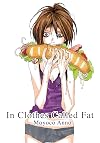
There is a select group of mangaka whose work I will buy without question or hesitation no matter what it is. Out of those creators, Moyoco Anno is one of my favorites. She works in multiple genres for multiple demographics and I have never failed to have been impressed by her manga. Anno's work has been in print in English since 2003, first by Tokyopop and then followed by Viz Media and Del Rey Manga. Most recently, Vertical has been responsible for releasing more of Anno's manga in English show more with superb editions of Sakuran, Insufficient Direction, and now In Clothes Called Fat. I was thrilled to learn that In Clothes Called Fat had been licensed. Collected in a single volume in Japan in 2002, the manga originally began serialization in 1997. Vertical published the English-language edition of In Clothes Called Fat in 2014, including a few pages of Anno's color work which is always nice to see.
Noko Hanazawa is a young office worker under a fair amount of stress. She doesn't get along very well with her coworkers and is frequently criticized by her superiors. There are, however, two things that bring uneasy comfort to Noko: Saito, her boyfriend of eight years, and food. Because Noko eats to alleviate her anxiety, she has also gained a significant amount of weight. Some of the other women in her office, especially Mayumi, bully her for being fat. Men either despise her or fetishize her because of how she looks. Noko eventually convinces herself that all of her unhappiness stems from being overweight and unattractive and that the only solution to her problems is to become skinny. While others urge her not to lose her fat, all for their own selfish reasons, Noko is determined to do anything she has to in order to drop pounds, exchanging one unhealthy relationship with food for another. Unfortunately, weight isn't the only thing that Noko stands to lose in the process, something that she may only realize after the fact.
Obsession with appearance and the pursuit of happiness, identity, confidence, self-worth and self-esteem are all themes that frequently recur in Anno's work. In some of her manga, such as Flowers & Bees, they are used for purposes of black comedy. While In Clothes Called Fat isn't without humor--Vertical calls it a "dark comedy of manners," which is very apt--Anno's approach to the themes in the manga is more honest and bleak. It's the brief moments of dark humor and slight absurdity that make the tragic tale bearable. In Clothes Called Fat is a tough read; there isn't much happiness to be found in the story or its characters. However, the manga is an extraordinarily compelling and searing work. Noko and her struggles may be the focal point of In Clothes Called Fat, but she isn't the only person in the manga who is forced to face some very harsh and hard truths about themselves and who they are as people. Some of them are able to eventually cope with reality while others will continue to try to live in denial.
As much as In Clothes Called Fat is about outward appearances, it's even more about the characters' internal turmoil and states of mind. Noko and the others use her weight as an excuse. She blames her unhappiness on her size and they torment her because of it, but that's only an attempt to make themselves feel better and to assuage or avoid their own anxieties. The fixation on weight is merely a symptom of much more problematic underlying issues. Anno's artwork in In Clothes called Fat emphasizes both the inner and outward conflicts of the characters. Backgrounds tend to be fairly minimal; the focus of the manga is very much on the people themselves: their facial expressions, their interactions with one another, and perhaps most importantly their body language. In Clothes Called Fat explores the extremes of ugliness and beauty, both physical and psychological, in appearance and in action. In Clothes Called Fat is a powerful work and easily one of the best manga--one of the best comics--that I've recently read. It can be uncomfortable, but it is also exceptional in its depth.
Experiments in Manga show less
Noko Hanazawa is a young office worker under a fair amount of stress. She doesn't get along very well with her coworkers and is frequently criticized by her superiors. There are, however, two things that bring uneasy comfort to Noko: Saito, her boyfriend of eight years, and food. Because Noko eats to alleviate her anxiety, she has also gained a significant amount of weight. Some of the other women in her office, especially Mayumi, bully her for being fat. Men either despise her or fetishize her because of how she looks. Noko eventually convinces herself that all of her unhappiness stems from being overweight and unattractive and that the only solution to her problems is to become skinny. While others urge her not to lose her fat, all for their own selfish reasons, Noko is determined to do anything she has to in order to drop pounds, exchanging one unhealthy relationship with food for another. Unfortunately, weight isn't the only thing that Noko stands to lose in the process, something that she may only realize after the fact.
Obsession with appearance and the pursuit of happiness, identity, confidence, self-worth and self-esteem are all themes that frequently recur in Anno's work. In some of her manga, such as Flowers & Bees, they are used for purposes of black comedy. While In Clothes Called Fat isn't without humor--Vertical calls it a "dark comedy of manners," which is very apt--Anno's approach to the themes in the manga is more honest and bleak. It's the brief moments of dark humor and slight absurdity that make the tragic tale bearable. In Clothes Called Fat is a tough read; there isn't much happiness to be found in the story or its characters. However, the manga is an extraordinarily compelling and searing work. Noko and her struggles may be the focal point of In Clothes Called Fat, but she isn't the only person in the manga who is forced to face some very harsh and hard truths about themselves and who they are as people. Some of them are able to eventually cope with reality while others will continue to try to live in denial.
As much as In Clothes Called Fat is about outward appearances, it's even more about the characters' internal turmoil and states of mind. Noko and the others use her weight as an excuse. She blames her unhappiness on her size and they torment her because of it, but that's only an attempt to make themselves feel better and to assuage or avoid their own anxieties. The fixation on weight is merely a symptom of much more problematic underlying issues. Anno's artwork in In Clothes called Fat emphasizes both the inner and outward conflicts of the characters. Backgrounds tend to be fairly minimal; the focus of the manga is very much on the people themselves: their facial expressions, their interactions with one another, and perhaps most importantly their body language. In Clothes Called Fat explores the extremes of ugliness and beauty, both physical and psychological, in appearance and in action. In Clothes Called Fat is a powerful work and easily one of the best manga--one of the best comics--that I've recently read. It can be uncomfortable, but it is also exceptional in its depth.
Experiments in Manga show less
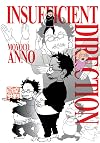
I picked up the first few volumes of Moyoco Anno's manga series Happy Mania more on a whim than anything else. After reading them I immediately went out and tracked down all of the manga by Anno available in English that I could find. I have been a fan ever since and even went so far as to host the Moyoco Anno Manga Moveable Feast. Anno is an extraordinarily talented creator. I adore her work and so was extremely happy when Vertical released Insufficient Direction in 2014. Originally show more published in Japan in 2005, the manga is a somewhat fictionalized account of Anno's married life with her husband Hideaki Anno of Neon Genesis Evangelion fame. Now, I know quite a few people who were interested in Insufficient Direction primarily because of the Hideaki Anno connection. In addition to being one of the manga's main subjects, an essay in which he discusses Insufficient Direction is also included as part of the volume's extra materials. But for me, my interest in Insufficient Direction was all about Moyoco Anno. I was excited to have the chance to learn a little more about her and her life directly from her own perspective.
Rompers (aka Moyoco Anno) and Director-kun (aka Hideaki Anno) are getting married. It just so happens that Director-kun is one of the "big four" of Japanese otaku. A director of both film and anime, he is also a huge fan and obsessive collector of Japanese pop culture. Rompers has her own otaku tendencies and enjoys manga, anime, and such, but she has tried to keep those impulses under control in order to lead a more "normal" life. However, Rompers' marriage to Director-kun makes that almost impossible and she slowly becomes bona-fide ota wife. Although Rompers obsesses over some of her own interests, it's nothing when compared to Director-kun. Instead of denying her otakuness, Rompers begins to embrace it, partly out of self-preservation. She and Director-kun are able to share their love of Japanese television, anime, and manga, but how much is too much? Their home quickly fills with their collections and they can be embarrassingly enthusiastic over the smallest bits of trivia. In the end, it is a way of life and they love it (although Rompers continues to have some reservations). But more importantly, they love each other.
There are a ton of references to tokusatsu, anime, manga, and other Japanese pop culture and celebrities. In fact, there are thirty pages of annotations to help interested readers keep a handle on everything. Sometimes reading the notes actually takes longer than reading the chapters they're associated with. However, understanding all of the minutia and details isn't absolutely needed to enjoy Insufficient Direction; simply recognizing the extreme levels of geekiness and nerd cred involved should be enough. Rompers and Director-kun make an adorable and loving couple. The reason that there are so many pop culture references isn't just because that is what they are interested in, it's also one of the ways they connect and communicate with each other. Entire conversations can be held that consist of nothing but quotes from anime and other media. Singing theme songs at the top of their lungs brings them even closer together. Vacations and excursions are based on locations from films and television shows. Fortunately, because they do share so many interests, they usually can happily spend time enjoying them as a couple.
Although Insufficient Direction is fictionalized--mostly to emphasize the more humorous aspects of Rompers and Director-kun's relationship--I find it to be entirely and completely believable. As a bit of an otaku myself, I am very familiar with relationships that work in similar ways to theirs and am all too aware of some of the challenges faced by avid collectors. Insufficient Direction shows both of the Anno's to be very relatable people. At least I could certainly identify with them. Insufficient Direction is quirky, smart, and very funny. Compared to some of Anno's other manga, the artwork in Insufficient Direction tends to be simpler in style, suitable for what basically amounts to a real-life gag manga. The individual chapters are short and there isn't really an overarching plot so much as there is an ongoing challenge for Rompers and Director-kun to put up with each other's quirks and interests. There's quite a bit of good-natured teasing in Insufficient Direction and quite a bit of love, not just for each other but for art and entertainment as well. I found Insufficient Direction to be a very enjoyable read and am very happy to have it in English.
Experiments in Manga show less
Rompers (aka Moyoco Anno) and Director-kun (aka Hideaki Anno) are getting married. It just so happens that Director-kun is one of the "big four" of Japanese otaku. A director of both film and anime, he is also a huge fan and obsessive collector of Japanese pop culture. Rompers has her own otaku tendencies and enjoys manga, anime, and such, but she has tried to keep those impulses under control in order to lead a more "normal" life. However, Rompers' marriage to Director-kun makes that almost impossible and she slowly becomes bona-fide ota wife. Although Rompers obsesses over some of her own interests, it's nothing when compared to Director-kun. Instead of denying her otakuness, Rompers begins to embrace it, partly out of self-preservation. She and Director-kun are able to share their love of Japanese television, anime, and manga, but how much is too much? Their home quickly fills with their collections and they can be embarrassingly enthusiastic over the smallest bits of trivia. In the end, it is a way of life and they love it (although Rompers continues to have some reservations). But more importantly, they love each other.
There are a ton of references to tokusatsu, anime, manga, and other Japanese pop culture and celebrities. In fact, there are thirty pages of annotations to help interested readers keep a handle on everything. Sometimes reading the notes actually takes longer than reading the chapters they're associated with. However, understanding all of the minutia and details isn't absolutely needed to enjoy Insufficient Direction; simply recognizing the extreme levels of geekiness and nerd cred involved should be enough. Rompers and Director-kun make an adorable and loving couple. The reason that there are so many pop culture references isn't just because that is what they are interested in, it's also one of the ways they connect and communicate with each other. Entire conversations can be held that consist of nothing but quotes from anime and other media. Singing theme songs at the top of their lungs brings them even closer together. Vacations and excursions are based on locations from films and television shows. Fortunately, because they do share so many interests, they usually can happily spend time enjoying them as a couple.
Although Insufficient Direction is fictionalized--mostly to emphasize the more humorous aspects of Rompers and Director-kun's relationship--I find it to be entirely and completely believable. As a bit of an otaku myself, I am very familiar with relationships that work in similar ways to theirs and am all too aware of some of the challenges faced by avid collectors. Insufficient Direction shows both of the Anno's to be very relatable people. At least I could certainly identify with them. Insufficient Direction is quirky, smart, and very funny. Compared to some of Anno's other manga, the artwork in Insufficient Direction tends to be simpler in style, suitable for what basically amounts to a real-life gag manga. The individual chapters are short and there isn't really an overarching plot so much as there is an ongoing challenge for Rompers and Director-kun to put up with each other's quirks and interests. There's quite a bit of good-natured teasing in Insufficient Direction and quite a bit of love, not just for each other but for art and entertainment as well. I found Insufficient Direction to be a very enjoyable read and am very happy to have it in English.
Experiments in Manga show less
Lists
Awards


You May Also Like


Associated Authors
Statistics
- Works
- 76
- Also by
- 2
- Members
- 1,755
- Popularity
- #14,658
- Rating
- 3.8
- Reviews
- 26
- ISBNs
- 167
- Languages
- 7
- Favorited
- 2