
Kee Hwang (1914–2002)
Author of Tang soo do (soo bahk do)
About the Author
Works by Kee Hwang
Tagged
Common Knowledge
- Birthdate
- 1914-11-09
- Date of death
- 2002-07-14
- Gender
- male
- Nationality
- Republic of Korea
- Associated Place (for map)
- Republic of Korea
Members
Reviews
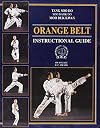
When Grand Master Hwang Kee originally created the belt system in Tang Soo Do Moo Duk Kwan there were only four colors: White, Green, Red and Blue. The Orange Belt was officially adopted in 1975 as an encouragement and motivation for the White Belt beginners.
The Philosophy of the Belt system of Tang Soo Do Moo Duk Kwan is based on nature. Whie, (Orange), Green, Red, and Blue are related to the four seasons.
As an Orange Belt you represent the period of time between winter and spring. Through show more your actions in Tang Soo Do Moo Duk Kwan you have begun to uncover some of the snow to see who you are and what you can really do.
Contents
1 Stances (jaseh)
Ready & return stance
Back stance
Crossed-leg stance
2 Turning to the rear
3 Use of hip
4 Hand techniques
Reverse middle punch
Reverse high punch
Knife hand low block
Knife hand middle block
Two fist middle block
Spear hand attack
Low block, reverse high punch
High block, reverse middle punch
5 Foot technique (jok gi)
Inside-outside snap kick
Outside-inside snap kick (Defense)
Outside-inside snap kick (Offense)
Stepping roundhouse kick
Back kick
Short back spinning kick
Jumping front snap kick
6 Forms (hyung)
Basic form #3
Pyung ahn cho dan
Pyung ahn e dan
Chil sung e ro
7 One-step sparring (Il soo sik)
One-step sparring #3-#8
8 Self-defense (Ho sin sool)
Same side wrist grip #1-#4
Two-handed wrist grip #1-#3
9 Sparring combinations
Combination #1-#5
Breaking (Kyok pa)
Culture and etiquette
Terminology show less
The Philosophy of the Belt system of Tang Soo Do Moo Duk Kwan is based on nature. Whie, (Orange), Green, Red, and Blue are related to the four seasons.
As an Orange Belt you represent the period of time between winter and spring. Through show more your actions in Tang Soo Do Moo Duk Kwan you have begun to uncover some of the snow to see who you are and what you can really do.
Contents
1 Stances (jaseh)
Ready & return stance
Back stance
Crossed-leg stance
2 Turning to the rear
3 Use of hip
4 Hand techniques
Reverse middle punch
Reverse high punch
Knife hand low block
Knife hand middle block
Two fist middle block
Spear hand attack
Low block, reverse high punch
High block, reverse middle punch
5 Foot technique (jok gi)
Inside-outside snap kick
Outside-inside snap kick (Defense)
Outside-inside snap kick (Offense)
Stepping roundhouse kick
Back kick
Short back spinning kick
Jumping front snap kick
6 Forms (hyung)
Basic form #3
Pyung ahn cho dan
Pyung ahn e dan
Chil sung e ro
7 One-step sparring (Il soo sik)
One-step sparring #3-#8
8 Self-defense (Ho sin sool)
Same side wrist grip #1-#4
Two-handed wrist grip #1-#3
9 Sparring combinations
Combination #1-#5
Breaking (Kyok pa)
Culture and etiquette
Terminology show less

Tang soo do (soo bahk do) is the first volume (of five) on the classical Korean martial art of tang soo do moo duk kwan. It is the most complete text on basic unarmed martial artistry in print.
This first volume contains a general history of the martial arts, as well as the history of soo bahk do (the historical form of tang soo do moo duk kwan) in the form of the original instructional scrolls which date from the 17th century.
Anyone, whether he is an active practitioner or interested show more observer, will find more fundamental factual knowledge of the martial arts here than in any other single source. For example, the reader will find Newton's principles of motion applied to the human body. This is the first time that such scientific theory has been related to martial arts practice.
This first volume is the basic reference text on tang soo do moo duk kwan as taught by Grandmster Hwang Kee, the founder of the style. All basic movements, striking points principles and the first nine forms (Hyung) are described both in words and in pictures.
No martial arts library can be complete without this book and no serious student of martial artistry can ignore the information contained in this work.
Contents
Preface
Acknowledgement
Unit I-Knowledge of culture
I The principles of martial artistry
Introduction
II Tang Soo Do culture in historyi
Korea
China
Okinawa
Japan
India
Southeast Asia
Egypt
Greece
Rome
Conclusion
III Attributes of Tang Soo Do
The difference between tang soo do and other martal arts or sports
The theory of tang soo do's ryu pa (style)
A guideline for tang soo do training
Unit II-The ancient martial arts
I Introduction
II Ancient disciplines of mnd and body
Kong Bup
III Moo yei do bo tong ji
Explanation of the book of kwon bup
Unit III-Scientific analysis of the development of power
I Introduction
Force and newton's 2nd law of force
Acceleration
Velocity
Kinetic energy
Force and its practical application
Actions in terms of acceleration
Distance
The relationship between kinetic energy and motion
Physical interperetation of practical performance and breaking
Conclusion
The explanation of symbols and formulas
III Practical study
Weight and height
Body angle and analysis of distance (Use waist)
The explanation of the circle
Choice of actions and time analysis
Hand skill method
Foot skill
Physical explanation for the breaking
Analysis of practical breaking
Conclusion
Unit IV-Analysis of techniques
I Introduction
II Methods of training teh hands and feet
Methods o fusing the hands
Diagram of hand bones
Closed hand (fist) techniques
Using the fist
Using part of the fist
Back fist (Kap kwon)
Soft fist (Yoo kwon)
Knife fist (Kwon do)
One-finger fist (A) (Il ji kwon)
One-finger fist (B) (Il ji kwon)
Open-hand techniques
Knife hand (Soo do)
Reverse knife hand (Yuk soo do)
Spear hand (Kwon soo)
Fore-knuckle hand (Ban jul kwan soo)
One-finger spear hand (Il ji kwan soo)
Two-finger spear hand (Ee ji kwan soo)
Plier hand (Jip kye son)
Palm heel (Son ba dak mit or jang kwon)
Upper wrist (Son mak deung)
Upper arm techniques
Wrist (Pal mok)
Elbow (Pal koop) (A)
Elbow (Pal koop) (B)
Methods of using the feet
Diagram of the bones of the foot
Bottom of the foot (Bal ba dak mit (A)
Palm foot (Bal ba dak mit (B)
Side heel (Bal yup koom chi)
Front outside edge (bal aph buri yup)
Instep (Bal deung)
The heel (Bal dwi koom chi)
Bottom edge of heel (Bal dwi koom chi yup ba dak)
The knee (Moo roop)
III Stance
Practical examples of stance
Deiagrams of stances
Preparatory movements (Choon bee jaseh)
Various positions of choon bee jasehs
Triangle stance (Pyung lip jaseh)
Pigeon-toe stance (Dwi pal ja lip haseh)
Feet together stance (Bal moa seo kee jaseh)
Duck-foot stance (Bal bul ri go mao seo kee jaseh)
Natural leg-spread stance (Bal nul bee seo kee jaseh)
Twist stance (Bul yeo seo kee jaseh)
Twist stance (Pyung rlp dullyo seo kee jaseh)
Front stance (Chun gul jaseh)
Cat stance (Dwi bal koop hee kee jaseh)
Cat stance (Hu gul jaseh)
Cat stance (Ahp bal but neun hu gul jaseh)
Low stance (Choi ha dan soo do jaseh)
Horse sance (Sa ko rip jaseh)
Cross-leg stance (kyo cha rip jaseh)
Cross-leg stance (basai jaseh)
One-knee stance (han bal seo kee jaseh)
Crane stance (Han bal seo kee jaseh (A)
Crane stance (Han bal seo kee jaseh (B)
Crane stance (Han bal seo kee jaseh (C)
Crane stance (Han bal seo kee jaseh (D)
IV Principles of basic movements
Preface
Diagram for direction
Basic movements
Hand techniques
Foot techniques
V Forms (hyung)
Introduction
Origin of forms
Kee cho hyung Il boo
Kee cho hyung ed boo
Kee cho hyung sam boo
Pyung ahn cho dan hyung
Pyung ahn ee dan hyung
Pyung ahn sam dan hyung
Pyung ahn sa danhyung
Pyung ahn oh dan hyung
Basahee hyung show less
Tang soo do (soo bahk do) is the first volume (of five) on the classical Korean martial art of tang soo do moo duk kwan. It is the most complete text on basic unarmed martial artistry in print.
This first volume contains a general history of the martial arts, as well as the history of soo bahk do (the historical form of tang soo do moo duk kwan) in the form of the original instructional scrolls which date from the 17th century.
Anyone, whether he is an active practitioner or interested show more observer, will find more fundamental factual knowledge of the martial arts here than in any other single source. For example, the reader will find Newton's principles of motion applied to the human body. This is the first time that such scientific theory has been related to martial arts practice.
This first volume is the basic reference text on tang soo do moo duk kwan as taught by Grandmster Hwang Kee, the founder of the style. All basic movements, striking points principles and the first nine forms (Hyung) are described both in words and in pictures.
No martial arts library can be complete without this book and no serious student of martial artistry can ignore the information contained in this work.
Contents
Preface
Acknowledgement
Unit I-Knowledge of culture
I The principles of martial artistry
Introduction
II Tang Soo Do culture in historyi
Korea
China
Okinawa
Japan
India
Southeast Asia
Egypt
Greece
Rome
Conclusion
III Attributes of Tang Soo Do
The difference between tang soo do and other martal arts or sports
The theory of tang soo do's ryu pa (style)
A guideline for tang soo do training
Unit II-The ancient martial arts
I Introduction
II Ancient disciplines of mnd and body
Kong Bup
III Moo yei do bo tong ji
Explanation of the book of kwon bup
Unit III-Scientific analysis of the development of power
I Introduction
Force and newton's 2nd law of force
Acceleration
Velocity
Kinetic energy
Force and its practical application
Actions in terms of acceleration
Distance
The relationship between kinetic energy and motion
Physical interperetation of practical performance and breaking
Conclusion
The explanation of symbols and formulas
III Practical study
Weight and height
Body angle and analysis of distance (Use waist)
The explanation of the circle
Choice of actions and time analysis
Hand skill method
Foot skill
Physical explanation for the breaking
Analysis of practical breaking
Conclusion
Unit IV-Analysis of techniques
I Introduction
II Methods of training teh hands and feet
Methods o fusing the hands
Diagram of hand bones
Closed hand (fist) techniques
Using the fist
Using part of the fist
Back fist (Kap kwon)
Soft fist (Yoo kwon)
Knife fist (Kwon do)
One-finger fist (A) (Il ji kwon)
One-finger fist (B) (Il ji kwon)
Open-hand techniques
Knife hand (Soo do)
Reverse knife hand (Yuk soo do)
Spear hand (Kwon soo)
Fore-knuckle hand (Ban jul kwan soo)
One-finger spear hand (Il ji kwan soo)
Two-finger spear hand (Ee ji kwan soo)
Plier hand (Jip kye son)
Palm heel (Son ba dak mit or jang kwon)
Upper wrist (Son mak deung)
Upper arm techniques
Wrist (Pal mok)
Elbow (Pal koop) (A)
Elbow (Pal koop) (B)
Methods of using the feet
Diagram of the bones of the foot
Bottom of the foot (Bal ba dak mit (A)
Palm foot (Bal ba dak mit (B)
Side heel (Bal yup koom chi)
Front outside edge (bal aph buri yup)
Instep (Bal deung)
The heel (Bal dwi koom chi)
Bottom edge of heel (Bal dwi koom chi yup ba dak)
The knee (Moo roop)
III Stance
Practical examples of stance
Deiagrams of stances
Preparatory movements (Choon bee jaseh)
Various positions of choon bee jasehs
Triangle stance (Pyung lip jaseh)
Pigeon-toe stance (Dwi pal ja lip haseh)
Feet together stance (Bal moa seo kee jaseh)
Duck-foot stance (Bal bul ri go mao seo kee jaseh)
Natural leg-spread stance (Bal nul bee seo kee jaseh)
Twist stance (Bul yeo seo kee jaseh)
Twist stance (Pyung rlp dullyo seo kee jaseh)
Front stance (Chun gul jaseh)
Cat stance (Dwi bal koop hee kee jaseh)
Cat stance (Hu gul jaseh)
Cat stance (Ahp bal but neun hu gul jaseh)
Low stance (Choi ha dan soo do jaseh)
Horse sance (Sa ko rip jaseh)
Cross-leg stance (kyo cha rip jaseh)
Cross-leg stance (basai jaseh)
One-knee stance (han bal seo kee jaseh)
Crane stance (Han bal seo kee jaseh (A)
Crane stance (Han bal seo kee jaseh (B)
Crane stance (Han bal seo kee jaseh (C)
Crane stance (Han bal seo kee jaseh (D)
IV Principles of basic movements
Preface
Diagram for direction
Basic movements
Hand techniques
Foot techniques
V Forms (hyung)
Introduction
Origin of forms
Kee cho hyung Il boo
Kee cho hyung ed boo
Kee cho hyung sam boo
Pyung ahn cho dan hyung
Pyung ahn ee dan hyung
Pyung ahn sam dan hyung
Pyung ahn sa danhyung
Pyung ahn oh dan hyung
Basahee hyung show less
Statistics
- Works
- 9
- Members
- 26
- Popularity
- #495,360
- Rating
- 5.0
- Reviews
- 3
- ISBNs
- 6