
Stephen Smith (7) (1956–)
Author of Négrologie : Pourquoi l'Afrique meurt
For other authors named Stephen Smith, see the disambiguation page.
About the Author
Stephen Smith is a leading expert on contemporary Africa. After thirty years as a journalist at Liberation and Le Monde, he is now Professor of African Studies at Duke University.
Works by Stephen Smith
Tagged
Common Knowledge
- Legal name
- Smith, Stephen William
- Birthdate
- 1956-10-30
- Gender
- male
- Education
- Pantheon-Sorbonne University (anthropology)
Free University of Berlin (PhD|Semiotics) - Occupations
- journalist
news editor
writer
consultant
professor - Organizations
- Reuters
Radio France International / RFI
Libération [journal] (Africa editor)
Le Monde (deputy editor of foreign desk)
Duke University
London Review of Books - Nationality
- USA
- Birthplace
- Connecticut, USA
- Associated Place (for map)
- Connecticut, USA
Members
Reviews
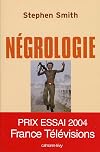
The list of misfortunes afflicting Africa is long – HIV/AIDS, civil wars, regional wars, corruption, brain and brawn drain, etc., and this book attempts to examine its root causes. The author provocatively argues that while the continent has had to endure centuries of slavery, colonization, racism, exploitation, its present predicament is due in large part to Africa’s inhabitants. It is the result of what he calls auto-damnation: their self-perception and ability to act are bound by show more feelings of victimization and restricted by identities that have been created and idealized and which compound historical disadvantages. Consequently, the Continent finds itself paralyzed, unable to compete and out of depth. While the book may be a bit pessimistic (or irrevocably pessimistic depending on your point of view), the author strives to be fair but tough. There are, admittedly, a few bright spots: progress made in Botswana, South Africa, Gabon, and a way forward: the author is adamant that the continent must reconcile itself with its past – as victim and perpetrator. A tough provocative read, even if my knowledge of the continent is patchy. show less
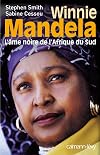
A highly competent factual narrative of the career of Mrs. Mandela, which fails to get under the skin of the subject.
I was convinced tat it was not just the perception of Mandela that changed in the late 80's; it was her character that changed - from dogged generous fighter to self-important messiah or (at least) general. Her judgement of people had always been a bit suspect, but this had not hitherto much mattered. So the Mother of the Nation became an amost certain accomplice to a sordid show more murder.
It is good to be rminded that Winnie was - inter alia - held in solitary confinement, brtally interrogated, had live rounds fired into her house,and wsas forced to send her young children to boarding school in another country.another country. All this time she was struggling to make a living in menial jobs in Soweto - prevented from utilising her professional qualifications. She did not get the support - moral or financial - that she expected from the ANC, whose leadership, I strongly suspect, regarded her as Nelson's bit-on-the-side.
Perhaps not so surprising that the belated recognition she received rather went to her head. The authors do not mention - and perhaps it is a dangerous speculation - but at around the time she began to be hailed by domestic crowds and foriegn dignitories, she must have gone through the menopause; an uncertain element in the general mix.
I ended this book with rather more sympathy for Mandela than when I had started it. But it cannot be said to be unjust that she should go down in history largely as the murderer of young Stompie. show less
I was convinced tat it was not just the perception of Mandela that changed in the late 80's; it was her character that changed - from dogged generous fighter to self-important messiah or (at least) general. Her judgement of people had always been a bit suspect, but this had not hitherto much mattered. So the Mother of the Nation became an amost certain accomplice to a sordid show more murder.
It is good to be rminded that Winnie was - inter alia - held in solitary confinement, brtally interrogated, had live rounds fired into her house,and wsas forced to send her young children to boarding school in another country.another country. All this time she was struggling to make a living in menial jobs in Soweto - prevented from utilising her professional qualifications. She did not get the support - moral or financial - that she expected from the ANC, whose leadership, I strongly suspect, regarded her as Nelson's bit-on-the-side.
Perhaps not so surprising that the belated recognition she received rather went to her head. The authors do not mention - and perhaps it is a dangerous speculation - but at around the time she began to be hailed by domestic crowds and foriegn dignitories, she must have gone through the menopause; an uncertain element in the general mix.
I ended this book with rather more sympathy for Mandela than when I had started it. But it cannot be said to be unjust that she should go down in history largely as the murderer of young Stompie. show less
Essai politique volontairement provocateur frisant le pamphlet, Négrologie vieilli mal. Peut-être trop collé à l'actualité, au 11 septembre, à la crise ivoirienne, il manque de perspective historique. Plusieurs pistes ouvertes par son auteur sont intéressantes, certes. Mais elles semblent trop peu développés; on semble préférer le name-dropping, le bombardement de chiffres au profit de la thèse. Le travail est celui d'un journaliste collé sur l'actualité.
Awards

Statistics
- Works
- 12
- Members
- 76
- Popularity
- #233,521
- Rating
- 3.6
- Reviews
- 3
- ISBNs
- 100
- Languages
- 5