
Santiago Rivas
Author of Wings of the Malvinas: The Argentine Air War Over the Falklands
About the Author
Disambiguation Notice:
Santiago Rivas was born in Buenos Aires in 1977. He started his career as an aviation/defence journalist and photographer in 1997. Since then he has been published in mor than 60 books and magazines around the world, as well as being a correspondent on fourteen magazines and a permanent contributor to two Argentine aviation and defence magazines. Specialising in Latin American aviation and defence matters, both recent and historic, he manages Argentina's primary defence and aviation archive, providing materials for over 40 magazines around the world. He has published seven books in four countries as well as contributing to many more. Santiago lives in downtown Buenos Aires with his wife and three children.
Series
Works by Santiago Rivas
Brazilians at War: Brazilian Aviation in the Second World War (Latin America@War) (2018) 13 copies, 1 review
Skyhawks over the South Atlantic: Argentine Skyhawks in the Malvinas/Falklands War 1982 (Latin America@War) (2019) 13 copies
Air War Over the Putumayo: Colombian and Peruvian air operations during the 1932-1933 conflict (Latin America@War) (2018) 12 copies
Playa Girón: The Cuban Exiles' Invasion at the Bay of Pigs 1961 (Latin America@War) (2017) 10 copies
Tagged
Common Knowledge
- Birthdate
- 1977
- Gender
- male
- Occupations
- journalist
photographer - Nationality
- Argentina
- Birthplace
- Buenos Aires, Argentina
- Places of residence
- Buenos Aires, Argentina
- Disambiguation notice
- Santiago Rivas was born in Buenos Aires in 1977. He started his career as an aviation/defence journalist and photographer in 1997. Since then he has been published in mor than 60 books and magazines around the world, as well as being a correspondent on fourteen magazines and a permanent contributor to two Argentine aviation and defence magazines. Specialising in Latin American aviation and defence matters, both recent and historic, he manages Argentina's primary defence and aviation archive, providing materials for over 40 magazines around the world. He has published seven books in four countries as well as contributing to many more. Santiago lives in downtown Buenos Aires with his wife and three children.
- Associated Place (for map)
- Buenos Aires, Argentina
Members
Reviews

An extremely satisfying purchase.
This book is a truly ambitious survey of German and Italian aircraft, their civil and military customers, airlines, companies, and engineers throughout Latin America. Considering the scope of their subject, for a one volume effort, the authors have succeeded in producing an excellent stand-alone volume and a must have for any student of aviation. Coverage includes "transient" aircraft and post WWII activities as well. The book is well illustrated, has some show more color plates that are pretty decent and an excellent index. The TOC is arranged alphabetically by country with each chapter covering aircraft, airlines and indigenous production efforts when appropriate. "Axis" airlines and expat engineers also get their own chapter. A nice surprise was a chapter on aircraft that would be classified as today general aviation and privately owned.
This is an incredible book and highly recommended across multiple aviation spectrum's of interest. I look forward to more works by Mr. Tincopa and Mr. Rivas. show less
This book is a truly ambitious survey of German and Italian aircraft, their civil and military customers, airlines, companies, and engineers throughout Latin America. Considering the scope of their subject, for a one volume effort, the authors have succeeded in producing an excellent stand-alone volume and a must have for any student of aviation. Coverage includes "transient" aircraft and post WWII activities as well. The book is well illustrated, has some show more color plates that are pretty decent and an excellent index. The TOC is arranged alphabetically by country with each chapter covering aircraft, airlines and indigenous production efforts when appropriate. "Axis" airlines and expat engineers also get their own chapter. A nice surprise was a chapter on aircraft that would be classified as today general aviation and privately owned.
This is an incredible book and highly recommended across multiple aviation spectrum's of interest. I look forward to more works by Mr. Tincopa and Mr. Rivas. show less
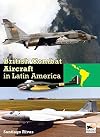
Although it's hard to argue that one really needs a book like this, Santiago Rivas has impressed me with his output in the past, and this massive compendium of all things British military aircraft and Latin America in the broader sense also really impresses me. The real core of the book is the age of classic British jets, as London had only made a limited commercial penetration of the more significant air arms of South America prior to 1939. After 1945, they then became the main alternative show more to the United States, particularly since Washington had no real interest in creating the atmosphere of an arms race in the wider region.
In as much as Rivas is Argentinian, there is a certain particular focus on the Argentinian air arm, but that is fair in that the FAA had more money and ambition than most of its neighbors. Besides Rivas' take on the Falklands War, the adventure of Argentina buying a turn-key strategic bomber force from London post-1945 is the single most interesting thing to me.
Anyway, if you're interested in military aviation, and you find a copy at a viable price point, this book is well-worthy of your consideration. show less
In as much as Rivas is Argentinian, there is a certain particular focus on the Argentinian air arm, but that is fair in that the FAA had more money and ambition than most of its neighbors. Besides Rivas' take on the Falklands War, the adventure of Argentina buying a turn-key strategic bomber force from London post-1945 is the single most interesting thing to me.
Anyway, if you're interested in military aviation, and you find a copy at a viable price point, this book is well-worthy of your consideration. show less
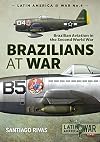
Santiago Rivas is well on his way to becoming a significant aviation historian, and this is a good example of his work; the subtitle being truth in advertising. This work really tells two different stories. After Rivas provides an overview of the development of Brazilian military aviation up to the outbreak of World War II, the first major segment deals with Brazilian contributions to the Battle of the Atlantic, once the Axis submarines arrived off Brazilian shores. This dealing as much with show more the contributions of the US Navy patrol squadrons as it does with their Brazilian counterparts.
The second half of the book is also alluded to by the cover, as the focus is providing a blow-by-blow operational history of the air contingent that was deployed to Italy in conjunction with the Brazilian land force.
This is all well done so if you've ever had an interest in the Brazilian adventure I don't think that you'll be disappointed in this work. show less
The second half of the book is also alluded to by the cover, as the focus is providing a blow-by-blow operational history of the air contingent that was deployed to Italy in conjunction with the Brazilian land force.
This is all well done so if you've ever had an interest in the Brazilian adventure I don't think that you'll be disappointed in this work. show less

Rather more of an encyclopedia than a narrative history, if there is something to say about German, Italian or Japanese aircraft in regards to Latin America it seems to be in this book.
Basically two trends are addressed. One is how the region provided an outlet for a German aviation industry during the constraints of the Versailles period and when a variety of efforts were made to get commercial air transportation established on a regular basis. The other trend is how in the mid-to-late show more Thirties Italy (and to a lesser degree Germany) became a source of high-performance warplanes for a number of air arms with varying degrees of success, with the biggest failure being experienced by Chile. That nation tried to totally reequip with German and Italian aircraft (even pro-fascist Argentina saw fit to diversify) and most of these aircraft failed to live up to their promise, particularly the Breda 65, which was supposed to do double-duty as a fighter and an attack plane and turned out to be incapable of even flying safely. One might have wished that the authors had seen fit to include more of the period Chilean media coverage, which one is given to believe was scathing.
If there is a particular lack in this work the authors might have provided a chapter giving an overall perspective of both the American effort to shut down German & Italian aviation efforts in the Western Hemisphere and, for that matter, what was the perspective from Berlin & Rome in terms of their aviation policy towards the region; this would act as something of a capstone to what is a very impressive work. show less
Basically two trends are addressed. One is how the region provided an outlet for a German aviation industry during the constraints of the Versailles period and when a variety of efforts were made to get commercial air transportation established on a regular basis. The other trend is how in the mid-to-late show more Thirties Italy (and to a lesser degree Germany) became a source of high-performance warplanes for a number of air arms with varying degrees of success, with the biggest failure being experienced by Chile. That nation tried to totally reequip with German and Italian aircraft (even pro-fascist Argentina saw fit to diversify) and most of these aircraft failed to live up to their promise, particularly the Breda 65, which was supposed to do double-duty as a fighter and an attack plane and turned out to be incapable of even flying safely. One might have wished that the authors had seen fit to include more of the period Chilean media coverage, which one is given to believe was scathing.
If there is a particular lack in this work the authors might have provided a chapter giving an overall perspective of both the American effort to shut down German & Italian aviation efforts in the Western Hemisphere and, for that matter, what was the perspective from Berlin & Rome in terms of their aviation policy towards the region; this would act as something of a capstone to what is a very impressive work. show less
Statistics
- Works
- 21
- Members
- 124
- Popularity
- #161,164
- Rating
- 4.6
- Reviews
- 5
- ISBNs
- 20
- Languages
- 1