
Colleen Doran
Author of Snow, Glass, Apples {graphic novel}
About the Author
Image credit: Heroes Con 2006 (Wikipedia)
Series
Works by Colleen Doran
Amazing Fantastic Incredible: A Marvelous Memoir (2015) — Illustrator; Cover artist — 379 copies, 17 reviews
Anne Rice's The Master of Rampling Gate: A Graphic Tale of Unspeakable Horror by the Author of 'The Vampire Lestat' (1991) 79 copies, 3 reviews
Disney's Beauty and the Beast: A Tale of Enchantment (Cartoon Tales) (1992) — Illustrator — 35 copies
The Vampire Diaries #1: Vervain 5 copies
The Clock #1 4 copies
A Distant Soil (1991) Issue #29 3 copies
Lucifer # 62 — Illustrator — 2 copies
A Distant Soil (1991) Issue #23 2 copies
A Distant Soil (1991) Issue #24 2 copies
A Distant Soil #20 2 copies
A Distant Soil #s 15- 1 copy
A Distant Soil 0 1 copy
Big Nemo 1 copy
A Distant Soil #s 1-6 1 copy
A Distant Soil $s 7-12 1 copy
Images of A Distant Soil #1 1 copy
A Distant Soil #s 23,25-27 1 copy
Sensational Wonder Woman #5 1 copy
Associated Works
9-11: The World's Finest Comic Book Writers & Artists Tell Stories to Remember (2002) — Illustrator — 256 copies, 1 review
Angel Catbird Volume 2: To Castle Catula (2017) — Contributor, some editions — 112 copies, 3 reviews
Chicks Dig Comics: A Celebration of Comic Books by the Women Who Love Them (2012) — Contributor — 90 copies, 5 reviews
Strip AIDS U.S.A.: A Collection of Cartoon Art to Benefit People With AIDS (1988) — Contributor — 65 copies
Tagged
Common Knowledge
- Canonical name
- Doran, Colleen
- Birthdate
- 1968-07-24
- Gender
- female
- Nationality
- USA
- Associated Place (for map)
- USA
Members
Reviews

This is small but perfectly formed. I listened to this in recording, with the narration and Mrs Whitaker played by Glenda Jackson. Mrs Whitaker discovers the Holy Grail under a fur coat in the Oxfam shop one Thursday morning after collecting her pension from the post office. She thinks it will look nice on the mantlepiece, and so it does. She's then visited by Galahad, who is on a quest to discover the grail. Before she will let him in she asks to see some ID and his identification is a work show more of genius. He offers her precious objects she offers him a cup of tea and a sandwich for the journey home. It a fabulous mis-match, full of comedic moments, but pathos as well.
Just brilliant. show less
Just brilliant. show less
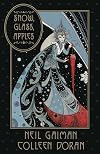
We all know how much I love a good Neil Gaiman story. He's one of my favorite authors currently writing and I've yet to encounter one of his stories that I haven't enjoyed in some way or another. Some of my favorite Gaiman things are the comic adaptations of his prose work. I always find it really intriguing seeing how comic artists adapt the work of Gaiman (an author who got, perhaps, one of his earliest and biggest breaks within the world of comics) into this more visual medium. This is show more where Snow, Glass, Apples comes into play. It's the latest in a fairly-lengthy line of comic adaptations of Gaiman's work to be published by Dark Horse Comics; ignoring their ongoing American Gods adaptation, it's the second such graphic novel adapting some of Gaiman's short stories. What intrigued me the most about this adaptation were the excerpts that featured some of Collen Doran's illustrations. Her style promised a really interesting, unique, and gorgeous take on the original short story and I was very excited to give it a read. How did it turn out? Just as good as I'd hoped it would be, if not better!
The short story this comic is based on is, perhaps, one of Gaiman's best-known shorts. A retelling of the Snow White fairy tale from the point of view of the Step-Mother. What if Snow White were some kind of vampire-esque monster and the "Evil Queen" was only trying to save her kingdom from this threat? This is the question at the heart of the short story, itself a haunting and suspenseful tale that, as you'd expect, ends in tragedy. It's a really solid short story, originally collected in Gaiman's Smoke and Mirrors collection. I'm a sucker for a good twist on an old fairy tale and this one proves to be more than just "what if the villain was misunderstood", pivoting hard into more of a "what if the 'hero' was actually the monster?" and I really dig that. Gaiman handles the subject with care, walking a fine line between sympathy for all the characters and depicting monstrous things with a monstrous touch. It's a really solid, entertaining, haunting, and spooky story and it's one of my favorites of Gaiman's short fiction.
What makes this particular adaptation unique, though, are the illustrations from Colleen Doran. Doran's art style throughout this comic adaptation is more reminiscent of religious stained glass artwork than that found in a traditional graphic novel. This stylistic choice really works well for the material, though, as it gives the whole story an elevated visual identity. Doran's artwork is beautiful and she manages to maintain a superb balance between the beauty of the images and the practicality needed from them to usher the actual story of the graphic novel along. Each of her images, while being gorgeous works of art, exist to serve the story being told. They're beautifully detailed but never too indulgent. It's a perfect balance between beauty and practicality.
All in all, this is a must-read for Gaiman fans. It's a short read - clocking in at around 60 pages - but it's a beautiful new take on a Gaiman classic that will delight you, frighten you, and make you want to read it again and again. The story is haunting and well-executed, Doran's artwork is beautiful and perfectly matches the tone of the story, and the whole affair just serves as a wonderful retelling of a great short story. It's perfect for the spooky season, too, so give it a read. show less
The short story this comic is based on is, perhaps, one of Gaiman's best-known shorts. A retelling of the Snow White fairy tale from the point of view of the Step-Mother. What if Snow White were some kind of vampire-esque monster and the "Evil Queen" was only trying to save her kingdom from this threat? This is the question at the heart of the short story, itself a haunting and suspenseful tale that, as you'd expect, ends in tragedy. It's a really solid short story, originally collected in Gaiman's Smoke and Mirrors collection. I'm a sucker for a good twist on an old fairy tale and this one proves to be more than just "what if the villain was misunderstood", pivoting hard into more of a "what if the 'hero' was actually the monster?" and I really dig that. Gaiman handles the subject with care, walking a fine line between sympathy for all the characters and depicting monstrous things with a monstrous touch. It's a really solid, entertaining, haunting, and spooky story and it's one of my favorites of Gaiman's short fiction.
What makes this particular adaptation unique, though, are the illustrations from Colleen Doran. Doran's art style throughout this comic adaptation is more reminiscent of religious stained glass artwork than that found in a traditional graphic novel. This stylistic choice really works well for the material, though, as it gives the whole story an elevated visual identity. Doran's artwork is beautiful and she manages to maintain a superb balance between the beauty of the images and the practicality needed from them to usher the actual story of the graphic novel along. Each of her images, while being gorgeous works of art, exist to serve the story being told. They're beautifully detailed but never too indulgent. It's a perfect balance between beauty and practicality.
All in all, this is a must-read for Gaiman fans. It's a short read - clocking in at around 60 pages - but it's a beautiful new take on a Gaiman classic that will delight you, frighten you, and make you want to read it again and again. The story is haunting and well-executed, Doran's artwork is beautiful and perfectly matches the tone of the story, and the whole affair just serves as a wonderful retelling of a great short story. It's perfect for the spooky season, too, so give it a read. show less
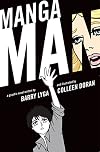
Actual rating: 3.5 stars. Four stars for the initial premise and the hilarious and clever parody of manga techniques, 2 stars for the wispy plot and minimal resolution.
Yo, man, this book is so awesomely meta.
Ryoko, a bishonen (beautiful boy), is from a typical manga world, where the norm is demon attacks, high school rumbles, and dudes dressed as girls because they magically change sexes. He accidentally falls through a Rip and ends up in our world, where he‰Ãªs baffled by the show more different (Western) narrative techniques evident in the high school heÂês forced to attend. Suddenly, everything he does is either wrong or downright off-putting: when he turns into the overly cute chibi version of himself; when he sees a pretty girl and his eyes turn into hearts that pop out; when he thinks of a person and has their head appear over his shoulder (causing cries of ÂÃÃOMG is that a disembodied head?ÂÃÂ); when he moves too quickly and the action lines he leaves in his wake poke people and then fall to the ground and the janitor has to sweep them up; where he sweat drops and everybody is grossed out. In one particularly hilarious scene, he gets in a fight with a boy at school and is baffled when the boy ends up hospitalized, because nobody in his universe ever sustains any real lasting injuries.
So, a lot of the fun of this graphic novel is looking for all of the manga techniques Lyga and Doran parody (some totally obvious and some very subtle) and seeing how they play in the so-called ÂÃÃrealÂàworld (which is drawn in a hyper-realistic style). ItÂês pure genius. And itÂês trippy, because even in this world, Ryoko is still aware of the interstitial spaces between panels (finally, I can use the word ÂÃÃinterstitialÂàin a review!) that are the norm in all comics, and is able to convince his love interest Marissa that her world, despite the differences, is just like his. She is at first freaked out, thinking her world is not real, but eventually, like him, learns to use the space between panels to travel (for example, using the interstitial spaces to step from her bedroom to her friendÂês bedroom, a kind of inter-dimensional shortcut).
ItÂês a cool premise and, like I said, a lot of fun. The story itself is barely there, existing only to fuel the meta: thereÂês a romance between Ryoko and Marissa and the brief conflict with her ex-boyfriend; meanwhile, RyokoÂês guardian (I forget his exact job, but heÂês basically a secret government agent) attempts to fix the Rip, as a bunch of manga-style demons are attempting to cross over as well, and then send Ryoko home before it closes completely. Since Ryoko and Marissa fall in love, then they have to decide what to do about their different worlds. The resolution is disappointing and doesnÂêt entirely make sense (maybe because it happens in two seconds), and the characters are, ya know, flat (Flat! Get it! Hahahaha!), but this is totally worth a read, particularly for manga/anime fans. I only wish it could have been longer, long enough to actually develop the characters and plot so it could be more than just a clever and hilarious exercise in comparing Eastern and Western comic book techniques. show less
Yo, man, this book is so awesomely meta.
Ryoko, a bishonen (beautiful boy), is from a typical manga world, where the norm is demon attacks, high school rumbles, and dudes dressed as girls because they magically change sexes. He accidentally falls through a Rip and ends up in our world, where he‰Ãªs baffled by the show more different (Western) narrative techniques evident in the high school heÂês forced to attend. Suddenly, everything he does is either wrong or downright off-putting: when he turns into the overly cute chibi version of himself; when he sees a pretty girl and his eyes turn into hearts that pop out; when he thinks of a person and has their head appear over his shoulder (causing cries of ÂÃÃOMG is that a disembodied head?ÂÃÂ); when he moves too quickly and the action lines he leaves in his wake poke people and then fall to the ground and the janitor has to sweep them up; where he sweat drops and everybody is grossed out. In one particularly hilarious scene, he gets in a fight with a boy at school and is baffled when the boy ends up hospitalized, because nobody in his universe ever sustains any real lasting injuries.
So, a lot of the fun of this graphic novel is looking for all of the manga techniques Lyga and Doran parody (some totally obvious and some very subtle) and seeing how they play in the so-called ÂÃÃrealÂàworld (which is drawn in a hyper-realistic style). ItÂês pure genius. And itÂês trippy, because even in this world, Ryoko is still aware of the interstitial spaces between panels (finally, I can use the word ÂÃÃinterstitialÂàin a review!) that are the norm in all comics, and is able to convince his love interest Marissa that her world, despite the differences, is just like his. She is at first freaked out, thinking her world is not real, but eventually, like him, learns to use the space between panels to travel (for example, using the interstitial spaces to step from her bedroom to her friendÂês bedroom, a kind of inter-dimensional shortcut).
ItÂês a cool premise and, like I said, a lot of fun. The story itself is barely there, existing only to fuel the meta: thereÂês a romance between Ryoko and Marissa and the brief conflict with her ex-boyfriend; meanwhile, RyokoÂês guardian (I forget his exact job, but heÂês basically a secret government agent) attempts to fix the Rip, as a bunch of manga-style demons are attempting to cross over as well, and then send Ryoko home before it closes completely. Since Ryoko and Marissa fall in love, then they have to decide what to do about their different worlds. The resolution is disappointing and doesnÂêt entirely make sense (maybe because it happens in two seconds), and the characters are, ya know, flat (Flat! Get it! Hahahaha!), but this is totally worth a read, particularly for manga/anime fans. I only wish it could have been longer, long enough to actually develop the characters and plot so it could be more than just a clever and hilarious exercise in comparing Eastern and Western comic book techniques. show less
Alternative interpretations of familiar fairy tales are fun. I really liked this. It’s dark, it radically diverges from the popular narrative while keeping many familiar elements, and it is very well told.
Lists
SuperHeroes (1)
Awards


You May Also Like


Associated Authors
Statistics
- Works
- 99
- Also by
- 52
- Members
- 3,557
- Popularity
- #7,133
- Rating
- 4.2
- Reviews
- 129
- ISBNs
- 77
- Languages
- 7
- Favorited
- 1