
Dave Sim
Author of Cerebus, Volume 1
About the Author
Series
Works by Dave Sim
Glamourpuss 4 copies
Cerebus No. 264 4 copies
Following Cerebus #10 3 copies
Cerebus #92 2 copies
Cerebus #168 2 copies
Cerebus #169 2 copies
Cerebus #167 2 copies
Cerebus #75 2 copies
SWORDS OF CEREBUS IN HELL TP VOL 10 2 copies
Cerebus Archive #2 2 copies
Cerebus No. 289 / 290 2 copies
Diamondback [GAME] 2 copies
Cerebus #230 1 copy
Cerebus #204 1 copy
Cerebus #205 1 copy
Cerebus #210 1 copy
Cerebus #235 1 copy
Cerebus #203 1 copy
Cerebus #236 1 copy
Cerebus #206 1 copy
Cerebus #207 1 copy
Cerebus #209 1 copy
Cerebus #208 1 copy
Cerebus #211 1 copy
Cerebus #238 1 copy
Cerebus #239 1 copy
Cerebus #237 1 copy
Cerebus #234 1 copy
Cerebus #212 1 copy
Cerebus #232 1 copy
Cerebus #220 1 copy
Cerebus #218 1 copy
Cerebus #221 1 copy
Cerebus #217 1 copy
Cerebus #222 1 copy
Cerebus #216 1 copy
Cerebus #223 1 copy
Cerebus #215 1 copy
Cerebus #229 1 copy
Cerebus #224 1 copy
Cerebus #214 1 copy
Cerebus #225 1 copy
Cerebus #226 1 copy
Cerebus #227 1 copy
Cerebus #213 1 copy
Cerebus #228 1 copy
Cerebus #233 1 copy
Cerebus #172 1 copy
Cerebus #202 1 copy
Cerebus #166 1 copy
Cerebus #177 1 copy
Cerebus #176 1 copy
Cerebus #175 1 copy
Cerebus #174 1 copy
Cerebus #173 1 copy
Cerebus #241 1 copy
Cerebus #171 1 copy
Cerebus #170 1 copy
Cerebus #165 1 copy
Cerebus #179 1 copy
Cerebus #164 1 copy
Cerebus #163 1 copy
Cerebus #162 1 copy
Cerebus #161 1 copy
Cerebus #160 1 copy
Cerebus #159 1 copy
Cerebus #158 1 copy
Cerebus #157 1 copy
Cerebus #178 1 copy
Cerebus #180 1 copy
Cerebus #201 1 copy
Cerebus #192 1 copy
Cerebus #200 1 copy
Cerebus #199 1 copy
Cerebus #198 1 copy
Cerebus #197 1 copy
Cerebus #196 1 copy
Cerebus #195 1 copy
Cerebus #194 1 copy
Cerebus #193 1 copy
Cerebus #191 1 copy
Cerebus #181 1 copy
Cerebus #190 1 copy
Cerebus #189 1 copy
Cerebus #188 1 copy
Cerebus #187 1 copy
Cerebus #186 1 copy
Cerebus #185 1 copy
Cerebus #184 1 copy
Cerebus #183 1 copy
Cerebus #182 1 copy
Cerebus #240 1 copy
Cerebus #242 1 copy
Cerebus: Melmoth, #s 139-150 1 copy
Cerebus #s 23-25 1 copy
Cerebus #155 1 copy
Cerebus the Aardvark #126 1 copy
Cerebus #s 187-200 1 copy
Cerebus #s 232-265 1 copy
Cerebus #s201-219: Guys 1 copy
Cerebus #243 1 copy
Cerebus #256 1 copy
Cerebus #267 1 copy
Cerebus #266 1 copy
Cerebus #263 1 copy
Cerebus #262 1 copy
Cerebus #261 1 copy
Cerebus #260 1 copy
Cerebus #259 1 copy
Cerebus #258 1 copy
Cerebus #257 1 copy
Cerebus #255 1 copy
Cerebus #271 1 copy
Cerebus #253 1 copy
Cerebus #251 1 copy
Cerebus #250 1 copy
Cerebus #249 1 copy
Cerebus #248 1 copy
Cerebus #247 1 copy
Cerebus #246 1 copy
Cerebus #245 1 copy
Cerebus #244 1 copy
Cerebus #268 1 copy
Cerebus #275 1 copy
Glamourpuss #1 1 copy
Cerebus #295 1 copy
Cerebus Zero 1 copy
Cerebus World Tour Book #1 1 copy
Cerebus Archive #3 1 copy
Cerebus Archive #1 1 copy
Cerebus #300 1 copy
Cerebus #299 1 copy
Cerebus #298 1 copy
Cerebus #297 1 copy
Cerebus #296 1 copy
Cerebus #294 1 copy
Cerebus #276 1 copy
Cerebus #293 1 copy
Cerebus #292 1 copy
Cerebus #291 1 copy
Cerebus #290 1 copy
Cerebus #289 1 copy
Cerebus #285 1 copy
Cerebus #284 1 copy
Cerebus #280 1 copy
Cerebus #277 1 copy
Cerebus #156 1 copy
Cerebus #99 1 copy
Cerebus #154 1 copy
Cerebus High Society #6 1 copy
Cerebus High Society #13 1 copy
Cerebus High Society #15 1 copy
Cerebus High Society #14 1 copy
Cerebus High Society #11 1 copy
Cerebus High Society #10 1 copy
Cerebus High Society #8 1 copy
Cerebus High Society #9 1 copy
Cerebus High Society #4 1 copy
Cerebus High Society #5 1 copy
Cerebus High Society #3 1 copy
Cerebus #33 1 copy
Cerebus #42 1 copy
Cerebus #41 1 copy
Cerebus #40 1 copy
Cerebus #39 1 copy
Cerebus #38 1 copy
Cerebus #37 1 copy
Cerebus #36 1 copy
Cerebus #35 1 copy
Cerebus #34 1 copy
Cerebus No. 014 1 copy
Cerebus No. 013 1 copy
Cerebus: Church & State 17 1 copy
Cerebus High Society #1 1 copy
Cerebus #44 1 copy
Cerebus Church & State #12 1 copy
Cerebus Church & State #15 1 copy
Cerebus Church & State #16 1 copy
Cerebus Church & State #18 1 copy
Cerebus Church & State #19 1 copy
Cerebus Church & State #20 1 copy
Cerebus Church & State #10 1 copy
Cerebus Companion #1 1 copy
Zootanapuss #01 1 copy
Cerebus In Hell? 2017 1 copy
Cerebus, Volume 1-6 1 copy
Krang! Volume 1, Number 5 1 copy
The True North 1 copy
Cerebus Church & State #11 1 copy
Cerebus Church & State #8 1 copy
Cerebus Church & State #7 1 copy
Cerebus Church & State #4 1 copy
Cerebus Church & State #5 1 copy
Cerebus Church & State #6 1 copy
Cerebus #43 1 copy
Cerebus #46 1 copy
Cerebus #153 1 copy
Cerebus #114 1 copy
Cerebus #126 1 copy
Cerebus #124 1 copy
Cerebus #123 1 copy
Cerebus #121 1 copy
Cerebus #120 1 copy
Cerebus #119 1 copy
Cerebus #118 1 copy
Cerebus #116 1 copy
Cerebus #115 1 copy
Cerebus #112 & #113 1 copy
Cerebus #129 1 copy
Cerebus #111 1 copy
Cerebus #110 1 copy
Cerebus #109 1 copy
Cerebus #108 1 copy
Cerebus #107 1 copy
Cerebus #106 1 copy
Cerebus #104 1 copy
Cerebus #103 1 copy
Cerebus #102 1 copy
Cerebus #128 1 copy
Cerebus #130 1 copy
Cerebus #100 1 copy
Cerebus #143 1 copy
Cerebus #152 1 copy
Cerebus #151 1 copy
Cerebus #150 1 copy
Cerebus #149 1 copy
Cerebus #148 1 copy
Cerebus #147 1 copy
Cerebus #146 1 copy
Cerebus #145 1 copy
Cerebus #144 1 copy
Cerebus #142 1 copy
Cerebus #131 1 copy
Cerebus #141 1 copy
Cerebus #140 1 copy
Cerebus #139 1 copy
Cerebus #137 1 copy
Cerebus #136 1 copy
Cerebus #135 1 copy
Cerebus #134 1 copy
Cerebus #133 1 copy
Cerebus #132 1 copy
Cerebus #101 1 copy
Cerebus #98 1 copy
Cerebus #47 1 copy
Cerebus #58 1 copy
Cerebus #67 1 copy
Cerebus #66 1 copy
Cerebus #65 1 copy
Cerebus #64 1 copy
Cerebus #63 1 copy
Cerebus #62 1 copy
Cerebus #61 1 copy
Cerebus #60 1 copy
Cerebus #59 1 copy
Cerebus #57 1 copy
Cerebus #70 1 copy
Cerebus #56 1 copy
Cerebus #55 1 copy
Cerebus #54 1 copy
Cerebus #53 1 copy
Cerebus #52 1 copy
Cerebus #51 1 copy
Cerebus #50 1 copy
Cerebus #49 1 copy
Cerebus #48 1 copy
Cerebus #69 1 copy
Cerebus #71 1 copy
Cerebus #97 1 copy
Cerebus #86 1 copy
Cerebus #96 1 copy
Cerebus #95 1 copy
Cerebus #94 1 copy
Cerebus #93 1 copy
Cerebus #91 1 copy
Cerebus #90 1 copy
Cerebus #89 1 copy
Cerebus #88 1 copy
Cerebus #87 1 copy
Cerebus #85 1 copy
Cerebus #72 1 copy
Cerebus #84 1 copy
Cerebus #83 1 copy
Cerebus #82 1 copy
Cerebus #80 1 copy
Cerebus #79 1 copy
Cerebus #78 1 copy
Cerebus #77 1 copy
Cerebus #76 1 copy
Cerebus #74 1 copy
Cerebus #73 1 copy
Associated Works
Teenage Mutant Ninja Turtles: The Ultimate Collection, Vol. 2 (2012) — Contributor — 87 copies, 4 reviews
Flaming Carrot Comics: Man of Mystery! (Collected Album 1) (1997) — Introduction — 63 copies, 1 review
Tagged
Common Knowledge
- Canonical name
- Sim, Dave
- Legal name
- Sim, David Victor
- Birthdate
- 1956-05-17
- Gender
- male
- Occupations
- cartoonist
publisher - Organizations
- Aardvark-Vanaheim
Renegade Press - Awards and honors
- Harvey Award (Letterer, 2004)
Ignatz Award (Outstanding Artist, 1998)
Kirby Award (Best Black-and-white series, 1985)
Kirby Award (Best Black-and-white series, 1987)
Joe Shuster Award (Outstanding Canadian Comic Book Achievement, 2005)
Joe Shuster Award (Canadian Comics Hall of Fame, 2006) (show all 13)
Squiddy Award (Best Creative Team, 1987)
Squiddy Award (Best Creative Team, 1990)
Squiddy Award (Best Creative Team, 1991)
Squiddy Award (Best Creative Team, 1992)
Squiddy Award (Best Creative Team, 1993)
Comic Book Legal Defense Fund (Defender of Liberty Award, 1996)
Inkpot Award (1981) - Nationality
- Canada
- Birthplace
- Hamilton, Ontario, Canada
- Places of residence
- Hamilton, Ontario, Canada
Kitchener, Ontario, Canada - Associated Place (for map)
- Ontario, Canada
Members
Reviews
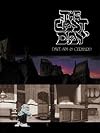
This is it! The last volume of Cerebus, collecting issues 289 - 300 of the stellar independent series. Cerebus was truly the first breakout independent title, the first comic to go 300 issues with the same writer and artist (I think the only one to come close would be the 190 issues of G.I. Joe written by Larry Hama- and that’s not including the artist). As you read from the volume to volume you can truly take in the growth of the artist. When Cerebus was good, it was the best. When it show more went downhill, it was still good (art wise) just not as much as it used to be. And while I lambasted the previous volume, I believe this one comes back on track.
It opens with a forty page spread of a new revelation by Cerebus on the creation of the universe. Based on previous biblical text combined with scientific theory, it is a reworking of the first chapter of the Book of Genesis. This may sound similar to what I was complaining about in the previous volume, but here he does the execution right. Script with illustration, rather than long blocks of text. The only flaw is the microscopic annotations at the bottom of each page. Which should have included them in the back of the volume along with all the others. Cerebus writes down this revelation and hides it, ala I, Claudius.
It is many many years later, and the sanctuary the three wise guys created is not a fortress. A collective religious shrine, political powerhouse, with the various city states about all tied in a mutual defense pact. The world is on high alert. A new collective of feminist/pedophile/terrorist groups is threatening to destabilize civilization. It sounded farfetched then when it was written in 2004, but now it seems like a lot of these prediction have bloomed. He was called a religious nut and paranoid, but in the end Dave Sim seems to be right about what is coming.
It’s with a heavy heart that I watch our once vibrant antihero descend into decrepitude and senility. Cerebus is a wrinkled incontinent mess, his body on the verge of collapse. Mentally he is gone, his mind a garbage heap of old ideas and incongruent memories. Close to two hundred years old, his one obsession is to see his son again. Shep-Shep as he is called hasn’t been to see Cerebus in close to fifteen years, but the latter cannot remember why they parted.
He is Cerebus’s son with New Joanne, whom we meet at the end of Latter Days. She is the reporter who is talking with Cerebus about his ideas on the Torah and his past with the prophet Rick. She is in fact a dead ringer for Jaka, which is why Cerebus falls for her.
An interesting note about Shep-Shep is that his only resemblance to his father that is he has three toes. A subtle detail that I missed and had to read about it in the annotations. The reunion, as you can guess, is not a happy one. The Judge way back in issue 123 decreed that Cerebus would die, “alone, unmourned, and unloved” and he did not lie.
Shep-Shep is a creepy little shit, full of odd powers, and weird ideas. He has completely sided with his mother and they share an incestuous relationship. Apparently he is destined to be the inspiration for the Sphinx (or his bastard creations are). His purpose in visiting is to taunt his father about his beliefs and his collapsing religious foundation. The Muslims are coming. One of the interesting aspects here is that Shep-Shep’s mother, New Joanne, has inserted herself into Cerebus’s history, rewriting the events to give herself a prominent role. This is reminiscent of feminist rewriting of history to suit their political agendas. It reminds me of Erin Patria Margaret Pizzey, the woman who created the first domestic abuse shelter, but has since nearly been erased from history because she rejected the Marxist ideology that most feminist organizations at the time projected.
After he leaves, Cerebus is in a rage. I will say this for our antihero, he dies with sword in hand, leaping from his bed. But the flesh is weak and he collapses dying alone on the floor. What comes next is a manner of some debate. The light opens, the spirit of Cerebus sees all of the figures from the past, friend and foe, with one exception. Rick is absent. The prophet and messianic figure for Cerebus's religion isn't present, which gives our antihero pause. He then runs, runs from the light. His spirit is yanked and that is that.
This was a quarter of a century long journey. A feat many jealous naysayers claimed would be impossible. The talent of the author cannot be denied, whether or not you agree with what he did with it. Cerebus lived hard and died hard, this was a true and fitting ending for him. An ending that should used a model for others. I thoroughly enjoyed my time reading this series and I cannot recommend strongly enough for everyone else to read it as well. (Rex Hurst) show less
It opens with a forty page spread of a new revelation by Cerebus on the creation of the universe. Based on previous biblical text combined with scientific theory, it is a reworking of the first chapter of the Book of Genesis. This may sound similar to what I was complaining about in the previous volume, but here he does the execution right. Script with illustration, rather than long blocks of text. The only flaw is the microscopic annotations at the bottom of each page. Which should have included them in the back of the volume along with all the others. Cerebus writes down this revelation and hides it, ala I, Claudius.
It is many many years later, and the sanctuary the three wise guys created is not a fortress. A collective religious shrine, political powerhouse, with the various city states about all tied in a mutual defense pact. The world is on high alert. A new collective of feminist/pedophile/terrorist groups is threatening to destabilize civilization. It sounded farfetched then when it was written in 2004, but now it seems like a lot of these prediction have bloomed. He was called a religious nut and paranoid, but in the end Dave Sim seems to be right about what is coming.
It’s with a heavy heart that I watch our once vibrant antihero descend into decrepitude and senility. Cerebus is a wrinkled incontinent mess, his body on the verge of collapse. Mentally he is gone, his mind a garbage heap of old ideas and incongruent memories. Close to two hundred years old, his one obsession is to see his son again. Shep-Shep as he is called hasn’t been to see Cerebus in close to fifteen years, but the latter cannot remember why they parted.
He is Cerebus’s son with New Joanne, whom we meet at the end of Latter Days. She is the reporter who is talking with Cerebus about his ideas on the Torah and his past with the prophet Rick. She is in fact a dead ringer for Jaka, which is why Cerebus falls for her.
An interesting note about Shep-Shep is that his only resemblance to his father that is he has three toes. A subtle detail that I missed and had to read about it in the annotations. The reunion, as you can guess, is not a happy one. The Judge way back in issue 123 decreed that Cerebus would die, “alone, unmourned, and unloved” and he did not lie.
Shep-Shep is a creepy little shit, full of odd powers, and weird ideas. He has completely sided with his mother and they share an incestuous relationship. Apparently he is destined to be the inspiration for the Sphinx (or his bastard creations are). His purpose in visiting is to taunt his father about his beliefs and his collapsing religious foundation. The Muslims are coming. One of the interesting aspects here is that Shep-Shep’s mother, New Joanne, has inserted herself into Cerebus’s history, rewriting the events to give herself a prominent role. This is reminiscent of feminist rewriting of history to suit their political agendas. It reminds me of Erin Patria Margaret Pizzey, the woman who created the first domestic abuse shelter, but has since nearly been erased from history because she rejected the Marxist ideology that most feminist organizations at the time projected.
After he leaves, Cerebus is in a rage. I will say this for our antihero, he dies with sword in hand, leaping from his bed. But the flesh is weak and he collapses dying alone on the floor. What comes next is a manner of some debate. The light opens, the spirit of Cerebus sees all of the figures from the past, friend and foe, with one exception. Rick is absent. The prophet and messianic figure for Cerebus's religion isn't present, which gives our antihero pause. He then runs, runs from the light. His spirit is yanked and that is that.
This was a quarter of a century long journey. A feat many jealous naysayers claimed would be impossible. The talent of the author cannot be denied, whether or not you agree with what he did with it. Cerebus lived hard and died hard, this was a true and fitting ending for him. An ending that should used a model for others. I thoroughly enjoyed my time reading this series and I cannot recommend strongly enough for everyone else to read it as well. (Rex Hurst) show less
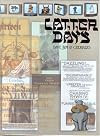
Oh Lord.
(of course I would say LORD wouldn’t I because in the Bible LORD refers to YHWH aka YooWhoo who is the evil female demiurge who lives at the centre of the Earth and is constantly trying to persuade God to marry her and half the Bible is her and her mouthpieces being jealous of the truth of God and pretending she can create things but she can’t because women can’t)
Anyway yes it’s this one. Latter Days has a fair claim to be the worst comic I’ve ever read. Usually when show more Cerebus gets hateful or tedious there’s a lot of craft to guiltily admire but the most loathsome parts here are also the weakest artistically - story and art become almost entirely unmoored as the entire comic distorts under the pressure of Dave Sim’s religious obsessions. On here even the reviews which have been all “yeah Dave you tell those beta cucks” come to Latter Days and go “ok actually fuck this”.
The story so far: while doing Bible parody Rick’s Story, Dave Sim had a conversion experience and realised the Bible was true, as was the Koran, and developed a religion of his own devising combining bits of Islam, Judaism and Christianity. Sim’s religious journey didn’t stop him finishing off Cerebus’ story with Jaka in Going Home. But in Latter Days it comes roaring back - around 2/3 of the way through the book Woody Allen analogue Konigsberg shows up with a copy of the Torah and Cerebus starts reading it, dictating his commentary to Konigsbergs and an unseen scribe. In practise what this means is page after page of Dave Sim’s Torah exegesis in very small font alongside inscrutable pictures of Woody Allen in a variety of styles.
It’s almost impossible to convey how difficult, tiresome and awful the experience of reading these parts is. Sim is apparently convinced it will take 100-200 years for Jewish scholars to catch up with his analysis here and yes it does feel like that is how long you’ve been reading it. For all that the commentaries are an endurance test they’re also pretty easy to summarise: Sim has picked up on the (generally accepted I believe) idea that Genesis and other early bits of the Bible are the work of multiple authors, and has refracted this through his gender obsession to decode it as a hostile dialogue between a male divinity and his female wannabe counterpart who can’t admit he created her.
It’s certainly original. But you do not in fact have to hand it to Dave Sim for creating a banging new heresy as the way he does it is monstrously unfriendly to even an imagined sympathetic reader. We never see the text, just Cerebus bantering commentary on it; every pause and aside is ‘faithfully’ documented, and if you do somehow manage to concentrate on the text you’re also rewarded with rancid little nuggets like the Gay Panic defense invoked to justify Cain killing Abel and at least two separate nudge-wink hints that the Jews brought the Holocaust on themselves. It’s as vile as it is grotesque.
At first the Woody Allen pages - extracts from Konigsberg’s diary of his love life and later his analysis - are a merciful break from this swill. They’re not good - the Freud analogue is called Dr Fraud, which indicates the state of Sim’s wit at this stage - but they’re different. Gradually, though, the Allen sections become more abstract as the character endures a series of humiliating tableaux at the hands of Fellini and others, rendered in the photorealistic style Sim had begun experimenting with. I’m normally keen to ask the question “what was Sim up to here?” but at this point Cerebus defeated me: this and the Torah material in juxtaposition are just utterly unrewarding and grim.
And yet, inconcievably, they may not be the worst parts of this comic.
Before we get to the Torah sections, Latter Days has a job to do, which is covering a span of decades and resolving the *other* main religious plot, the one Rick’s Story was designed to start in the first place. The Booke Of Ricke presented Cerebus as a prophet - now the other shoe drops, and we learn that it also presented him as a Messiah, who will return to fulfil the prophecies and drive out the Cirinists, whose power is waning in any case. While Cerebus is spending decades herding sheep and becoming a professional sports star, the land fills with chapters of Cerebites, all awaiting the one true Cerebus.
There is a long section - they all feel like long sections at this point - in which Cerebus is abducted by the Three Stooges, adherents to this religion, who are eventually convinced he IS the one foretold (Sim said the Stooges were his most difficult caricatures ever; I’ll happily take his word for it). But maybe the nadir of Latter Days comes after he’s convinced, in the sections where the Cirinists are slaughtered by his followers, led by a Todd McFarlane analogue who is also (I think) standing in for the Apostle Paul, and Sim decides to do a Spawn parody, a full decade after the character appeared.
The Torah sections are borderline impossible to read and hateful when you do, but on some important level they aren’t actually comics. I’m not expecting Dave Sim to be a competent rabbinical exegesist. I am expecting him to be a competent cartoonist, and in the middle parts of Latter Days even that falls away. The Spawn parody is inane; the McFarlane character is incomprehensible (ironic that Sim’s worst phonetic speech is him writing a Canadian!); the plot makes so sense; Sim’s choices of what to show on and off page are bizarre (perhaps he was rushing through his original plan to fit the Torah material in). Needless to add the story revels in the slaughter of women, though a resolution to the Cirinist strand was always likely to - but the petty sadism of including a Canadian woman cartoonist (Julie Doucet) to execute her on panel speaks volumes about where Sim’s head was at.
Basically, nothing works in this comic. The setpieces fall flat - theres something which I think is a Kurtzman tribute trying to add pathos to the war scenes but it’s tawdry; the photorealism is static and cold. The pacing is abominable. The ideas are demented. Everything Dave Sim used to be good at is almost entirely absent here. Unbelievable that it’s come to this, and there’s still a book to go.
(by Tom Ewing) show less
(of course I would say LORD wouldn’t I because in the Bible LORD refers to YHWH aka YooWhoo who is the evil female demiurge who lives at the centre of the Earth and is constantly trying to persuade God to marry her and half the Bible is her and her mouthpieces being jealous of the truth of God and pretending she can create things but she can’t because women can’t)
Anyway yes it’s this one. Latter Days has a fair claim to be the worst comic I’ve ever read. Usually when show more Cerebus gets hateful or tedious there’s a lot of craft to guiltily admire but the most loathsome parts here are also the weakest artistically - story and art become almost entirely unmoored as the entire comic distorts under the pressure of Dave Sim’s religious obsessions. On here even the reviews which have been all “yeah Dave you tell those beta cucks” come to Latter Days and go “ok actually fuck this”.
The story so far: while doing Bible parody Rick’s Story, Dave Sim had a conversion experience and realised the Bible was true, as was the Koran, and developed a religion of his own devising combining bits of Islam, Judaism and Christianity. Sim’s religious journey didn’t stop him finishing off Cerebus’ story with Jaka in Going Home. But in Latter Days it comes roaring back - around 2/3 of the way through the book Woody Allen analogue Konigsberg shows up with a copy of the Torah and Cerebus starts reading it, dictating his commentary to Konigsbergs and an unseen scribe. In practise what this means is page after page of Dave Sim’s Torah exegesis in very small font alongside inscrutable pictures of Woody Allen in a variety of styles.
It’s almost impossible to convey how difficult, tiresome and awful the experience of reading these parts is. Sim is apparently convinced it will take 100-200 years for Jewish scholars to catch up with his analysis here and yes it does feel like that is how long you’ve been reading it. For all that the commentaries are an endurance test they’re also pretty easy to summarise: Sim has picked up on the (generally accepted I believe) idea that Genesis and other early bits of the Bible are the work of multiple authors, and has refracted this through his gender obsession to decode it as a hostile dialogue between a male divinity and his female wannabe counterpart who can’t admit he created her.
It’s certainly original. But you do not in fact have to hand it to Dave Sim for creating a banging new heresy as the way he does it is monstrously unfriendly to even an imagined sympathetic reader. We never see the text, just Cerebus bantering commentary on it; every pause and aside is ‘faithfully’ documented, and if you do somehow manage to concentrate on the text you’re also rewarded with rancid little nuggets like the Gay Panic defense invoked to justify Cain killing Abel and at least two separate nudge-wink hints that the Jews brought the Holocaust on themselves. It’s as vile as it is grotesque.
At first the Woody Allen pages - extracts from Konigsberg’s diary of his love life and later his analysis - are a merciful break from this swill. They’re not good - the Freud analogue is called Dr Fraud, which indicates the state of Sim’s wit at this stage - but they’re different. Gradually, though, the Allen sections become more abstract as the character endures a series of humiliating tableaux at the hands of Fellini and others, rendered in the photorealistic style Sim had begun experimenting with. I’m normally keen to ask the question “what was Sim up to here?” but at this point Cerebus defeated me: this and the Torah material in juxtaposition are just utterly unrewarding and grim.
And yet, inconcievably, they may not be the worst parts of this comic.
Before we get to the Torah sections, Latter Days has a job to do, which is covering a span of decades and resolving the *other* main religious plot, the one Rick’s Story was designed to start in the first place. The Booke Of Ricke presented Cerebus as a prophet - now the other shoe drops, and we learn that it also presented him as a Messiah, who will return to fulfil the prophecies and drive out the Cirinists, whose power is waning in any case. While Cerebus is spending decades herding sheep and becoming a professional sports star, the land fills with chapters of Cerebites, all awaiting the one true Cerebus.
There is a long section - they all feel like long sections at this point - in which Cerebus is abducted by the Three Stooges, adherents to this religion, who are eventually convinced he IS the one foretold (Sim said the Stooges were his most difficult caricatures ever; I’ll happily take his word for it). But maybe the nadir of Latter Days comes after he’s convinced, in the sections where the Cirinists are slaughtered by his followers, led by a Todd McFarlane analogue who is also (I think) standing in for the Apostle Paul, and Sim decides to do a Spawn parody, a full decade after the character appeared.
The Torah sections are borderline impossible to read and hateful when you do, but on some important level they aren’t actually comics. I’m not expecting Dave Sim to be a competent rabbinical exegesist. I am expecting him to be a competent cartoonist, and in the middle parts of Latter Days even that falls away. The Spawn parody is inane; the McFarlane character is incomprehensible (ironic that Sim’s worst phonetic speech is him writing a Canadian!); the plot makes so sense; Sim’s choices of what to show on and off page are bizarre (perhaps he was rushing through his original plan to fit the Torah material in). Needless to add the story revels in the slaughter of women, though a resolution to the Cirinist strand was always likely to - but the petty sadism of including a Canadian woman cartoonist (Julie Doucet) to execute her on panel speaks volumes about where Sim’s head was at.
Basically, nothing works in this comic. The setpieces fall flat - theres something which I think is a Kurtzman tribute trying to add pathos to the war scenes but it’s tawdry; the photorealism is static and cold. The pacing is abominable. The ideas are demented. Everything Dave Sim used to be good at is almost entirely absent here. Unbelievable that it’s come to this, and there’s still a book to go.
(by Tom Ewing) show less
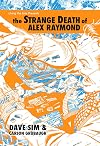
A beautiful book that’s somewhat challenging to read both in terms of content and presentation. The bulk of the art is recreations of various photorealistic cartoonists of the mid-twentieth century who make up the central characters. There isn’t really much of story in the traditional sense—the basic facts of the titular death are dispatched pretty quickly—but it’s Sim’s exploration of the event’s Cosmic Significance that, for better or for worse, make up most the book.
Dave show more Sim is a big believer in what can best be described as a magical connection between our reality and creativity. Fictional characters and situations will be replicated in real life and vice versa. As Sim sees it, Alex Raymond’s strange death we foreshadowed in (or caused by) events in comics created by him, his contemporaries and others. And not just Raymond—Gone With the Wind author Margaret Mitchell (who gets just as much screen time as Alex Raymond) also died in a car accident which was also a manifestation of various creative works. Other real life people associated with Raymond and Mitchell also had fates that echoed fictional works, and it seems that the more Sim dug the more connections he found.
At its best the book reads like an entertaining comics history version of someone pointing out all the fun coincidences when you play Dark Side of the Moon with “The Wizard of Oz.” But eventually the obsessive depth becomes exhausting (if two events happen on the same date years apart or if two people share the similar last name they obviously have a Cosmic Significance, for instance). show less
Dave show more Sim is a big believer in what can best be described as a magical connection between our reality and creativity. Fictional characters and situations will be replicated in real life and vice versa. As Sim sees it, Alex Raymond’s strange death we foreshadowed in (or caused by) events in comics created by him, his contemporaries and others. And not just Raymond—Gone With the Wind author Margaret Mitchell (who gets just as much screen time as Alex Raymond) also died in a car accident which was also a manifestation of various creative works. Other real life people associated with Raymond and Mitchell also had fates that echoed fictional works, and it seems that the more Sim dug the more connections he found.
At its best the book reads like an entertaining comics history version of someone pointing out all the fun coincidences when you play Dark Side of the Moon with “The Wizard of Oz.” But eventually the obsessive depth becomes exhausting (if two events happen on the same date years apart or if two people share the similar last name they obviously have a Cosmic Significance, for instance). show less

Volume two of the Cerebus the Aardvark series, High Society, is the beginning of the main Cerebus story line and one of the finest graphic novels ever published. If you have to start from the very beginning, you'll need the first volume, Cerebus, but if you don't mind a modicum of confusion, this is a much more satisfying place to begin. The artwork is much improved and the level of humor reaches its high point in the series to date. (Unkind critics point to High Society as the older, show more funnier book of the Cerebus series.)
Parliamentary politics were never so much fun as they are in the Prime Minister election of 1414. Lord Julius and the mysterious Astoria battle for control of the city-state Iest with Cerebus as their unwitting pawn. Goats, bunny sketches, the Regency Elf, and Moon Roach join the pandemonium, helping to set the stage for things to come. High Society is a home run; an instant classic both as a stand-alone volume and in the context of the rest of the series. Beware though, the ending dovetails directly into Church and State; You may want to grab that volume as well, because once you start the series, the story of Cerebus gets increasingly harder to put down. show less
Parliamentary politics were never so much fun as they are in the Prime Minister election of 1414. Lord Julius and the mysterious Astoria battle for control of the city-state Iest with Cerebus as their unwitting pawn. Goats, bunny sketches, the Regency Elf, and Moon Roach join the pandemonium, helping to set the stage for things to come. High Society is a home run; an instant classic both as a stand-alone volume and in the context of the rest of the series. Beware though, the ending dovetails directly into Church and State; You may want to grab that volume as well, because once you start the series, the story of Cerebus gets increasingly harder to put down. show less
Lists
Awards


You May Also Like


Associated Authors
Statistics
- Works
- 755
- Also by
- 26
- Members
- 7,703
- Popularity
- #3,160
- Rating
- 3.8
- Reviews
- 44
- ISBNs
- 65
- Languages
- 3
- Favorited
- 7

