
About the Author
Nicholas Canny is Professor of History, and Academic Director of the Centre for the Study of Human Settlement and Historical Change, at the National University of Ireland Galway
Works by Nicholas Canny
The Oxford History of the British Empire, Volume 1 : The Origins of Empire: British Overseas Enterprise to the Close of the Seventeenth Century (1998) — Editor; Preface; Contributor — 287 copies, 1 review
The Upstart Earl: A Study of the Social and Mental World of Richard Boyle, First Earl of Cork, 1566-1643 (1982) 9 copies
Europeans on the move : studies on European migration, 1500-1800 (1994) — Editor; Contributor — 6 copies
Associated Works
The Oxford Illustrated History of Ireland (1989) — Contributor, some editions — 397 copies, 1 review
Colonial America: Essays in Politics and Social Development (1983) — Contributor, some editions — 177 copies, 1 review
Tagged
Common Knowledge
- Legal name
- Canny, Nicholas Patrick
- Birthdate
- 1944-01-04
- Gender
- male
- Education
- University College Galway
Institute of Historical Research
University of Pennsylvania - Occupations
- historian
- Awards and honors
- Fellow, Royal Irish Academy
- Nationality
- Ireland
- Birthplace
- Clifden, County Galway, Ireland
- Associated Place (for map)
- County Galway, Ireland
Members
Reviews
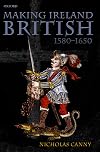
http://nwhyte.livejournal.com/1880870.html
looking not so much at the big picture of Irish history as specifically at the colonisation policies pursued by English (and Scottish) officials in Ireland from 1580 until the Cromwellian settlement resolved the land issue for three centuries.
Canny argues persuasively that the intellectual agenda for colonisation (or 'plantation' in local dialect) was set out by Spenser in both The Faerie Queene and the View of the Present State of Ireland, and while show more it wasn't the whole-hearted policy of either the royal court in London or of the Dublin Castle administration, it became inevitable after the Flight of the Earls and the fact that the viceroys under James I were themselves deeply involved with plantation. He also finds that Wentworth/Strafford, who was executed largely on suspicion of being too nice to Irish Catholics, was actually secretly pursuing a pro-plantation agenda which was as extreme as Cromwell's ten years later. In fact Irish Catholics found it difficult to resist the creeping dispossession of their lands precisely because it was never enshrined as government policy, so the traditional idea that appealing to the King or Queen might sort out the more hostile local officials never quite got lost until 1649. Lots of interesting detail about what life was like in Ireland at the period, including how widespread the use of Irish was in the Pale and the curious incident of the Pathan who settled near Roscrea. Not quite enough for my purposes on my own ancestors - both the sixteenth-century Sir Nicholas White and his seventeenth-century grandson of the same name are mentioned, but the story is not really about them or their people. Still, a very interesting read. show less
looking not so much at the big picture of Irish history as specifically at the colonisation policies pursued by English (and Scottish) officials in Ireland from 1580 until the Cromwellian settlement resolved the land issue for three centuries.
Canny argues persuasively that the intellectual agenda for colonisation (or 'plantation' in local dialect) was set out by Spenser in both The Faerie Queene and the View of the Present State of Ireland, and while show more it wasn't the whole-hearted policy of either the royal court in London or of the Dublin Castle administration, it became inevitable after the Flight of the Earls and the fact that the viceroys under James I were themselves deeply involved with plantation. He also finds that Wentworth/Strafford, who was executed largely on suspicion of being too nice to Irish Catholics, was actually secretly pursuing a pro-plantation agenda which was as extreme as Cromwell's ten years later. In fact Irish Catholics found it difficult to resist the creeping dispossession of their lands precisely because it was never enshrined as government policy, so the traditional idea that appealing to the King or Queen might sort out the more hostile local officials never quite got lost until 1649. Lots of interesting detail about what life was like in Ireland at the period, including how widespread the use of Irish was in the Pale and the curious incident of the Pathan who settled near Roscrea. Not quite enough for my purposes on my own ancestors - both the sixteenth-century Sir Nicholas White and his seventeenth-century grandson of the same name are mentioned, but the story is not really about them or their people. Still, a very interesting read. show less
The Oxford History of the British Empire: Volume I: The Origins of Empire: British Overseas Enterprise to the Close by Nicholas P. Canny
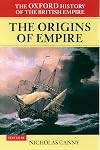
This book is an overview of the first period of the creation of the British Empire. It covers all parts of that empire from India to the New World. Each chapter was written by a different expert. Each chapter has its own bibliography.
The writing is even but a little unimaginative. As I said this is an overview so interesting and personal details are left out. This is a book of reference so would be valuable for the writing of papers on the subject but it does lack in reading pleasure. I will show more not be buying the other four books in the series (they are expensive). I can recommend it for reference purposes. show less
The writing is even but a little unimaginative. As I said this is an overview so interesting and personal details are left out. This is a book of reference so would be valuable for the writing of papers on the subject but it does lack in reading pleasure. I will show more not be buying the other four books in the series (they are expensive). I can recommend it for reference purposes. show less
Lists
You May Also Like


Associated Authors
Statistics
- Works
- 14
- Also by
- 4
- Members
- 177
- Popularity
- #121,426
- Rating
- 3.8
- Reviews
- 2
- ISBNs
- 33