
Heather O'Neill (1) (1974–)
Author of Lullabies for Little Criminals
For other authors named Heather O'Neill, see the disambiguation page.
Works by Heather O'Neill
Associated Works
Drawn & Quarterly: Twenty-five Years of Contemporary Cartooning, Comics, and Graphic Novels (2015) — Contributor — 149 copies, 5 reviews
Whatever Gets You Through: Twelve Survivors on Life after Sexual Assault (2019) — Contributor — 26 copies, 2 reviews
Tagged
Common Knowledge
- Birthdate
- 1974
- Gender
- female
- Education
- McGill University (BA)
- Occupations
- novelist
poet
short story writer
screenwriter
journalist - Agent
- Sam Stoloff (Frances Goldin Literary Agency)
- Nationality
- Canada
- Birthplace
- Montréal, Québec, Canada
- Places of residence
- Montréal, Québec, Canada
USA - Associated Place (for map)
- Québec, Canada
Members
Discussions
Lullabies and Little Criminals (no spoilers) in Orange January/July (July 2012)
Reviews
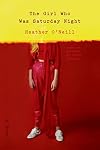
It’s difficult to avoid being charmed by O’Neil’s satire of life among the natives of inner Montreal. Her heroine, Noushka Trembley, navigates the treacherous shores of nationalist snobbery and masculine megalomania to emerge somehow a little stronger and, amazingly, somewhat sober.
In this novel, Quebec is really a distinct society with its celebrity obsession, Catholic priests who covet story-telling children, and biker capitalists.
Or maybe not so distinct. All Canada is a little bit show more obscene.
The scene is the 1995 Quebec referendum on sovereignty, and background is Canada’s refusal to accept Quebec as a distinct society and left it out of Canada’s Constitution. It is still, in my opinion, a national disgrace not for Quebec but for Canada.
Nicolas and Noushka, twins born and then almost immediately abandoned in a kind of virgin birth tumble in the manger. English and French. Male and Female. Beauty and Beastliness. Right and Wrong.
There is love story built in between Mary Magdalene who becomes the Virgin Mary in a cockeyed telling of the story where Jesus saves his tormentors the trouble by doing himself in.
Where O’Neil’s structure struggles a little in a rambling narrative she recovers in astonishingly beautiful prose and soaring imagination, comparable with Henry Fielding or Lawrence Sterne or some of the great Russian satirists. (And nobody accused Sterne of a rambling narrative?)
What Mordecai Richler did for Montreal Jews, she does for its Catholics. show less
In this novel, Quebec is really a distinct society with its celebrity obsession, Catholic priests who covet story-telling children, and biker capitalists.
Or maybe not so distinct. All Canada is a little bit show more obscene.
The scene is the 1995 Quebec referendum on sovereignty, and background is Canada’s refusal to accept Quebec as a distinct society and left it out of Canada’s Constitution. It is still, in my opinion, a national disgrace not for Quebec but for Canada.
Nicolas and Noushka, twins born and then almost immediately abandoned in a kind of virgin birth tumble in the manger. English and French. Male and Female. Beauty and Beastliness. Right and Wrong.
There is love story built in between Mary Magdalene who becomes the Virgin Mary in a cockeyed telling of the story where Jesus saves his tormentors the trouble by doing himself in.
Where O’Neil’s structure struggles a little in a rambling narrative she recovers in astonishingly beautiful prose and soaring imagination, comparable with Henry Fielding or Lawrence Sterne or some of the great Russian satirists. (And nobody accused Sterne of a rambling narrative?)
What Mordecai Richler did for Montreal Jews, she does for its Catholics. show less
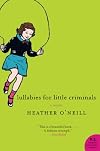
Baby is an unconventional name for an unconventional girl. Baby lost her mother when she was young, so young that she has no memories of the woman who gave birth to her. All she has is a drug addicted, emotionally unstable, and nomadic father who moves her from one insect infested, tattered walled apartment to the next. Baby's life puts the term poverty to shame as she oscillates between a little girl who craves the love and affection of her absent father, to the young and rebellious teen show more that one day finds herself with not only a pimp as a boyfriend, but the delusional glamour of being a prostitute.
I thought I would be shocked, outraged, or at least indignant at what life doled out for Baby and yet somehow the dysfunctionality that is her normal, somehow seemed normal. It's the idea that if you don't know better, you wouldn't expect or demand better. The world that Baby exists is the only world she knows and like an endangered species, she carves out a niche of her very own. It is by no mean a childhood transition into adulthood that one would desire, but in its own shattered emptiness, there was a faint gleam of redemption. Lullabies for Criminals was not what I expected, but it worked, and the chord it struck can still be heard echoing within me. show less
I thought I would be shocked, outraged, or at least indignant at what life doled out for Baby and yet somehow the dysfunctionality that is her normal, somehow seemed normal. It's the idea that if you don't know better, you wouldn't expect or demand better. The world that Baby exists is the only world she knows and like an endangered species, she carves out a niche of her very own. It is by no mean a childhood transition into adulthood that one would desire, but in its own shattered emptiness, there was a faint gleam of redemption. Lullabies for Criminals was not what I expected, but it worked, and the chord it struck can still be heard echoing within me. show less
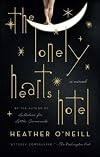
Look, I loved the Neutral Milk Hotel's "In the Aeroplane Over the Sea" as much as anyone did. I even bought the first album from their Quebecer cousins/copycats The Arcade Fire, and I don't think it's too bad. But while the uncanny mix of innocence and vice in Heather O'Neill's "Lullabies for Little Criminals" positively astounded me, she plays with something a bit more dangerous here, and that's whimsy. Other reviewers have certainly mentioned the term, but it's undeniable: throughout "The show more Lonely Hearts Hotel", the author runs the risk of getting Too Cute.
But she doesn't, mostly. Yes, namesake of the male protagonist, Pierrot, is a sad clown character, and he's introduced to opiates by a redhead named Poppy. But "The Lonely Hearts Hotel" is, at the end, a story of survival and heartbreak, and underneath these mannerisms, it can be as real and hard-hitting as anything else in the bookstore.
It helps that O'Niell's writerly talent is still on display here. She's still capable of ambushing the reader with a descriptive phrase so beautiful — and so unexpected — that you'd swear it could give you fibrillations. But she also meditates at length — as she did in "Lullabies", actually — on the nature of art. This time, she contrasts Rose and Pierrot's spontaneous, brilliantly raw piano playing and dance moves with the ruminations of the sad, philosophical clowns that come together to form a circus in the book's second half. Sad, philosophical clowns! If that's not whimsy, I don't know what is. But then again, O'Neill writes trenchantly about poverty, too: both the structural kind you find in orphanage where Pierrot and Rose are raised and the kind that overtook much of the world during the Great Depression. There aren't enough pretty turns of phrase or unlikely, heart-warming plot twists to paper over the kind of suffering that she describes in some of this book's sections. "The Lonely Hearts Hotel" is, in a sense, a pretty book about ugly things, and it succeeds on its own terms. Did I like it as much as I liked the author's first one? No. But it's still a fine piece of writing, and I suspect that many readers will enjoy it. show less
But she doesn't, mostly. Yes, namesake of the male protagonist, Pierrot, is a sad clown character, and he's introduced to opiates by a redhead named Poppy. But "The Lonely Hearts Hotel" is, at the end, a story of survival and heartbreak, and underneath these mannerisms, it can be as real and hard-hitting as anything else in the bookstore.
It helps that O'Niell's writerly talent is still on display here. She's still capable of ambushing the reader with a descriptive phrase so beautiful — and so unexpected — that you'd swear it could give you fibrillations. But she also meditates at length — as she did in "Lullabies", actually — on the nature of art. This time, she contrasts Rose and Pierrot's spontaneous, brilliantly raw piano playing and dance moves with the ruminations of the sad, philosophical clowns that come together to form a circus in the book's second half. Sad, philosophical clowns! If that's not whimsy, I don't know what is. But then again, O'Neill writes trenchantly about poverty, too: both the structural kind you find in orphanage where Pierrot and Rose are raised and the kind that overtook much of the world during the Great Depression. There aren't enough pretty turns of phrase or unlikely, heart-warming plot twists to paper over the kind of suffering that she describes in some of this book's sections. "The Lonely Hearts Hotel" is, in a sense, a pretty book about ugly things, and it succeeds on its own terms. Did I like it as much as I liked the author's first one? No. But it's still a fine piece of writing, and I suspect that many readers will enjoy it. show less

*4.75*
There is no love without fury. There is no beauty without ugliness.
This book was a rollercoaster. I loved it. I hated it. I wanted to name my first-born Pierrot and then I wanted to burn the entire first-manuscript for the pain it put me through. It was like being love—full of fury and ugliness.
I want to first say that the prose of this novel was absolutely gorgeous. It was descriptive while still heady, and it made the characters–and especially the setting–come so, so alive. show more
The dual narrative of the novel between Rose and Pierrot throughout was genius. I haven't seen something like that done so seamlessly and though totally conspicuous to illustrate how they are always together in thought, I found myself not really caring. I'm not always a fan of experimental form, but this was just different enough for me to not only appreciate it, but also absolutely love it. Take this paragraph:
The character of Pierrot was one of my most favorite characters I've read in a long time. I loved having such an emotional, good-hearted, male figure to follow and get to know, and he ultimately felt so real. From his heart-breaking beginnings with the nun (argh!!) to the later abuse problems, I thought both were handled so well and poignantly, especially the former. I do think though in the end, I almost wish there was more of a discussion on it, and the long-term effects it would have had on him. Just because he tells Rose, doesn't mean it's out of his system for good. Being able to see the character in situations of wealth to nothing was also fascinating, and made me think about all the lovely characters I've come admire though they be bathed in wealth. Who would they be without it?
I liked being able to see Pierrot for the good in both and made me seem that much better through it. Through his battles and vices though, I thought it was smart in the end to have Rose eventually come to be a foil/contrast for the avarice and need for control was really smart. He's a good man, just in a bad situation.
The ending was heartbreaking. I don't even know if I can probably put what I felt into words. It left me seeing hollow, and I honestly hadn't expected Pierrot's death. I did like the icing of the bitch nun at the end, and Rose looking after his son though, and that's probably the best I could ask for after losing a character I loved so much. I'm a bit iffy on the book's message his life was destined to be over though–I'm not of a nature to believe people have a purpose and then die, or that death is some way valiant or affirming. I know I'm still sensitive to it, but I just needed to put it out there I didn't agree with the author there.
One major issue I had with the book was the gratuitousness of the sex present. I feel like I need to start off saying that I'm not a prude, nor am I weird about this stuff, and you'll just have to believe me when I say I deal with written sex more than I care to admit. I rationalized the choice to show such scenes in the beginning believing it would come back later to highlight all the (frankly) terrible sexual experiences the two had had earlier, to contrast it to love and what not, but by the end I wasn't convinced that was so much so. The same needlessly explicit language was used when (TW: rape)Pierrot was raped as a child to Rose's time as a trapped mistress, and while the scenes of the two together were sweet,
it was still a bit too much than warranted, and shows to me no development. In the end, I don't like large enough elements (here, the motif of explicit sex) that add nothing to the theme, and I ultimately felt that the raunchiness of the sex was pointless and told me nothing of the characters or their development. It felt pornographic at times, and it confused me trying to read into it, ultimately fruitlessly. Oh Eavan, how fucking naïve.
I'm not here to harang it anymore though, and I could probably spend a good few hours remembering and putting into words thoughts and feelings on this book, but I'd be here all day. Read this book. Enjoy it. Throw it against a wall and cry. Do everything with it–it won't disappoint. show less
There is no love without fury. There is no beauty without ugliness.
This book was a rollercoaster. I loved it. I hated it. I wanted to name my first-born Pierrot and then I wanted to burn the entire first-manuscript for the pain it put me through. It was like being love—full of fury and ugliness.
I want to first say that the prose of this novel was absolutely gorgeous. It was descriptive while still heady, and it made the characters–and especially the setting–come so, so alive. show more
The dual narrative of the novel between Rose and Pierrot throughout was genius. I haven't seen something like that done so seamlessly and though totally conspicuous to illustrate how they are always together in thought, I found myself not really caring. I'm not always a fan of experimental form, but this was just different enough for me to not only appreciate it, but also absolutely love it. Take this paragraph:
Pierrot lit a cigarette. Rose inhaled from her cigarette. Pierrot exhaled smoke rings. Rose let white swirls escape from her nose. Pierrot tossed the cigarette onto the ground. Rose ground the cigarette with the sole of her shoe.
The character of Pierrot was one of my most favorite characters I've read in a long time. I loved having such an emotional, good-hearted, male figure to follow and get to know, and he ultimately felt so real. From his heart-breaking beginnings with the nun (argh!!) to the later abuse problems, I thought both were handled so well and poignantly, especially the former. I do think though in the end, I almost wish there was more of a discussion on it, and the long-term effects it would have had on him. Just because he tells Rose, doesn't mean it's out of his system for good. Being able to see the character in situations of wealth to nothing was also fascinating, and made me think about all the lovely characters I've come admire though they be bathed in wealth. Who would they be without it?
I liked being able to see Pierrot for the good in both and made me seem that much better through it. Through his battles and vices though, I thought it was smart in the end to have Rose eventually come to be a foil/contrast for the avarice and need for control was really smart. He's a good man, just in a bad situation.
He was walking around, but he knew that his story was over. His life story was written, and he was living in the extra blank pages at the back of a book. There was a beginning, middle, end to his life.
But most of all, he wanted to do something he had never done before. He wanted to have sex with someone he was in love with.
One major issue I had with the book was the gratuitousness of the sex present. I feel like I need to start off saying that I'm not a prude, nor am I weird about this stuff, and you'll just have to believe me when I say I deal with written sex more than I care to admit. I rationalized the choice to show such scenes in the beginning believing it would come back later to highlight all the (frankly) terrible sexual experiences the two had had earlier, to contrast it to love and what not, but by the end I wasn't convinced that was so much so. The same needlessly explicit language was used when (TW: rape)
it was still a bit too much than warranted, and shows to me no development.
I'm not here to harang it anymore though, and I could probably spend a good few hours remembering and putting into words thoughts and feelings on this book, but I'd be here all day. Read this book. Enjoy it. Throw it against a wall and cry. Do everything with it–it won't disappoint. show less
Lists
First Novels (1)
Canadian Fiction (1)
Best Young Adult (1)
Female Author (1)
Five star books (1)
Magic Realism (1)
Awards


You May Also Like
Associated Authors
Statistics
- Works
- 11
- Also by
- 3
- Members
- 3,510
- Popularity
- #7,240
- Rating
- 3.9
- Reviews
- 166
- ISBNs
- 121
- Languages
- 5
- Favorited
- 3
