
Steven Conn
Author of Museums and American Intellectual Life, 1876-1926
About the Author
Steven Conn is the W. E. Smith Professor of History at Miami University in Oxford, Ohie.
Works by Steven Conn
Associated Works
Journal of the Early Republic: Summer 1996 Vol.16, No.2 — Contributor — 1 copy
Tagged
Common Knowledge
- Gender
- male
- Education
- Yale University (1987)
University of Pennsylvania (PhD | 1994) - Places of residence
- Columbus, Ohio, USA
- Associated Place (for map)
- Ohio, USA
Members
Reviews
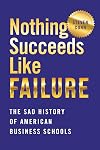
Steven Conn, a history professor at Miami University of Ohio, takes the discarded furniture donated by the business school to the humanities departments as his prompt to write a critical history of business education in the United States. Business schools originated among the larger boom of higher education in the late 19th-century with the Wharton School at University of Pennsylvania in 1881 being the first. Conn's central questions throughout the work are whether business schools have ever show more been able to define their purpose, and if business schools serve a greater public good. (Spoiler: Conn makes it pretty clear throughout this book that the answer to both is "No!").
There's a seed of a good book here and I particularly found the historical details of how business schools first emerged and their spread over a century and a half to be interesting. Conn makes some good points comparing to business schools unfavorably to medical and law schools which actually provide a credential process and malpractice regulations for their fields that business lacks. The success of "self-made business men" tests the necessity of business schools since it's generally regarded as a positive in a way that a "self-made surgeon" would not. The book also explores the failure of business schools to create a consistent curriculum, the strained relationship of business with the discipline of economics, and how business schools have perpetuated business as a white man's field. Conn also cites the business school adoption of Milton Friedman's ethos of the primacy of shareholder value as key to major corporate scandals, recessions, and rise of right-wing populism.
There's a lot in this book that I agree with on the surface. But I also find that Conn's research feels incomplete. Conn dismisses the case study method of education out of hand saying it was simply borrowed from law schools but does no analysis of how it's actually used at business schools. In a chapter on how business schools respond to crises, he says they were largely indifferent and ineffective regarding the Great Depression, the post-war urban crisis, and the economic malaise of the 1970s. However, I know that Harvard Business School responded to World War II by completely retooling education to train military officers in statistics and logistics. It would be interesting to see whether or not Conn felt these wartime schools were a good response to a crisis, but he doesn't even mention them.
The gaps in research as well as the big chip Conn clearly has on his shoulder make this a lesser book than it could've been.
Favorite Passages:
There's a seed of a good book here and I particularly found the historical details of how business schools first emerged and their spread over a century and a half to be interesting. Conn makes some good points comparing to business schools unfavorably to medical and law schools which actually provide a credential process and malpractice regulations for their fields that business lacks. The success of "self-made business men" tests the necessity of business schools since it's generally regarded as a positive in a way that a "self-made surgeon" would not. The book also explores the failure of business schools to create a consistent curriculum, the strained relationship of business with the discipline of economics, and how business schools have perpetuated business as a white man's field. Conn also cites the business school adoption of Milton Friedman's ethos of the primacy of shareholder value as key to major corporate scandals, recessions, and rise of right-wing populism.
There's a lot in this book that I agree with on the surface. But I also find that Conn's research feels incomplete. Conn dismisses the case study method of education out of hand saying it was simply borrowed from law schools but does no analysis of how it's actually used at business schools. In a chapter on how business schools respond to crises, he says they were largely indifferent and ineffective regarding the Great Depression, the post-war urban crisis, and the economic malaise of the 1970s. However, I know that Harvard Business School responded to World War II by completely retooling education to train military officers in statistics and logistics. It would be interesting to see whether or not Conn felt these wartime schools were a good response to a crisis, but he doesn't even mention them.
The gaps in research as well as the big chip Conn clearly has on his shoulder make this a lesser book than it could've been.
Favorite Passages:
“Notice how many Americans think the nation’s economy ought to be run like an individual business (though one wonders which” and think that government ought to be run by businessmen (though one wonders who). Notice as well how many economists try to remind us that making a profit and managing an entire economy have little in common.”show less
“However much business schools preached – or agonized – about the importance of social responsibility in the private sector, the education on offer remained primarily designed to serve the needs of a business world where the profit motive reigned supreme.”
“U.S. business schools had little to say about the economic crisis of the 1970s, just as they had had little to offer during the Great Depression, just as they had little to offer to their own urban neighborhoods as many of those neighborhoods imploded. Even while the steel industry collapsed in Pittsburgh and automakers in Detroit found themselves looking at ruin, U.S. business education became a major export product. Across the twentieth century, business schools failed to anticipate crises, and they had little by way of solutions to them. But they did demonstrate an ability to turn these crises to their own advantage.”
“...the question business schools have avoided perhaps more than any other: Just how accountable should they be for the performance of their graduates?”
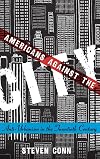
Americans Against the City: Anti-Urbanism in the Twentieth Century by Steven Conn (Oxford University Press, $34.95).
There are some people who seem to think cities are somehow—for lack of a better word—sinful.
Beyond just not wanting to live in one, there exists in the American mythos the idea that rural life is not only healthier and more industrious, but somehow more virtuous. The belief has fueled the development of suburbs and their accompanying sprawl for more than a century, as show more Steven Conn points out in Americans Against the City: Anti-Urbanism in the Twentieth Century.
A history professor at the Ohio State University, Conn suggests that this distrust of urbanism fuels our “red state-blue state” divide, but that it’s also preventing us from solving some of our most entrenched social problems.
This is a comprehensive examination of how we came to hate the city without embracing the small community—for, as he clearly notes, the suburbs are the not small towns, which—like cities—produce social mixing rather than isolation. The substitution of the suburb, with its lack of true community centers and required cars actually work against the real advantages of a small town, creating instead an illusion of semi-rural living, one without the work of farm life, the mutual engagement of small towns, and the social mixing of cities.
Conn’s book provides some real insight into the political and social implications of accepting suburbs as substitutes for small town and rural life.
Reviewed on Lit/Rant: www.litrant.tumblr.com show less
There are some people who seem to think cities are somehow—for lack of a better word—sinful.
Beyond just not wanting to live in one, there exists in the American mythos the idea that rural life is not only healthier and more industrious, but somehow more virtuous. The belief has fueled the development of suburbs and their accompanying sprawl for more than a century, as show more Steven Conn points out in Americans Against the City: Anti-Urbanism in the Twentieth Century.
A history professor at the Ohio State University, Conn suggests that this distrust of urbanism fuels our “red state-blue state” divide, but that it’s also preventing us from solving some of our most entrenched social problems.
This is a comprehensive examination of how we came to hate the city without embracing the small community—for, as he clearly notes, the suburbs are the not small towns, which—like cities—produce social mixing rather than isolation. The substitution of the suburb, with its lack of true community centers and required cars actually work against the real advantages of a small town, creating instead an illusion of semi-rural living, one without the work of farm life, the mutual engagement of small towns, and the social mixing of cities.
Conn’s book provides some real insight into the political and social implications of accepting suburbs as substitutes for small town and rural life.
Reviewed on Lit/Rant: www.litrant.tumblr.com show less

As a multi-author endeavor, this book suffers from the typical uneven quality typical of such books. Some of the chapters were excellent, others just so-so. I still found it worth reading and anyone who thinks government is the problem, and not the solution, should read this. Although our government has not always succeeds in what it has set out to do, it has done very well for the most part.
You May Also Like


Associated Authors
Statistics
- Works
- 9
- Also by
- 1
- Members
- 349
- Popularity
- #68,499
- Rating
- 3.5
- Reviews
- 3
- ISBNs
- 35
- Languages
- 1