
William Cronon
Author of Changes in the Land: Indians, Colonists, and the Ecology of New England
About the Author
William Cronon is Frederick Jackson Turner Professor of History, Geography, and Environmental Studies at the University of Wisconsin-Madison.
Image credit: Subject: William Cronon Photographer: Hilary Cronon (daughter) Location: Madison, WI Arboretum Date: 2007 By Hilary Cronon, CC BY-SA 3.0, https://commons.wikimedia.org/w/index.php?curid=18317186
Works by William Cronon
Changes in the Land: Indians, Colonists, and the Ecology of New England (1983) 1,569 copies, 14 reviews
Uncommon Ground: Rethinking the Human Place in Nature (1995) — Editor; Contributor — 428 copies, 3 reviews
The Lost Wolves of Japan 1 copy
The Trouble with Wilderness 1 copy
Associated Works
Native Seattle: Histories from the Crossing-Over Place (2007) — Foreword, some editions — 128 copies, 2 reviews
The Republic of Nature: An Environmental History of the United States (2012) — Foreword, some editions — 110 copies, 1 review
Fire in America: A Cultural History of Wildland and Rural Fire (1982) — Foreword, some editions — 81 copies
Major Problems in the History of the American West: Documents and Essays (1989) — Contributor — 65 copies
Forest Dreams, Forest Nightmares: The Paradox of Old Growth in the Inland West (1995) — Foreword, some editions — 60 copies, 1 review
Driven Wild: How the Fight Against Automobiles Launched the Modern Wilderness Movement (2002) — Foreword, some editions; Introduction, some editions — 55 copies, 2 reviews
Mountain Gloom and Mountain Glory: The Development of the Aesthetics of the Infinite (1997) — Foreword, some editions — 54 copies, 1 review
Making Salmon: An Environmental History of the Northwest Fisheries Crisis (1999) — Foreword, some editions — 44 copies
Tangled Roots : the Appalachian Trail and American Environmental Politics (2013) — Foreword, some editions — 42 copies, 1 review
Irrigated Eden: The Making of an Agricultural Landscape in the American West (1999) — Foreword, some editions — 42 copies
The Country in the City: The Greening of the San Francisco Bay Area (2007) — Foreword, some editions — 42 copies
George Perkins Marsh: Prophet of Conservation (2000) — Foreword, some editions — 37 copies, 2 reviews
Discovered Lands, Invented Pasts: Transforming Visions of the American West (1992) — Contributor — 36 copies
Pests in the City: Flies, Bedbugs, Cockroaches, and Rats (2013) — Foreword, some editions — 30 copies
Toxic Archipelago: A History of Industrial Disease in Japan (2010) — Foreword, some editions — 28 copies
Iceland Imagined: Nature, Culture, and Storytelling in the North Atlantic (2011) — Foreword, some editions — 26 copies
Quagmire: Nation-Building and Nature in the Mekong Delta (2010) — Foreword, some editions — 25 copies, 1 review
Where Land & Water Meet: A Western Landscape Transformed (2003) — Foreword, some editions — 24 copies, 1 review
Nature Next Door: Cities and Trees in the American Northeast (2012) — Foreword, some editions — 22 copies
The Promise of Wilderness: American Environmental Politics since 1964 (2012) — Foreword, some editions — 21 copies, 1 review
Behind the Curve: Science and the Politics of Global Warming (2014) — Foreword, some editions — 20 copies, 1 review
A Symbol of Wilderness: Echo Park and the American Conservation Movement (1994) — Foreword, some editions — 20 copies
DDT, Silent Spring, and the Rise of Environmentalism: Classic Texts (2008) — Foreword, some editions — 19 copies
Seeking Refuge: Birds and Landscapes of the Pacific Flyway (2010) — Foreword, some editions — 19 copies
The Fishermen's Frontier: People and Salmon in Southeast Alaska (2008) — Foreword, some editions — 18 copies, 1 review
Windshield Wilderness: Cars, Roads, and Nature in Washington's National Parks (2006) — Foreword, some editions — 17 copies
Wilderness Forever: Howard Zahniser and the Path to the Wilderness Act (2005) — Foreword, some editions — 16 copies
Conservation in the Progressive Era: Classic Texts (2004) — Foreword, some editions — 16 copies, 1 review
Loving Nature, Fearing the State: Environmentalism and Antigovernment Politics before Reagan (2013) — Foreword, some editions — 15 copies
Faith in Nature: Environmentalism as Religious Quest (Weyerhaeuser Environmental Books) (2004) — Foreword, some editions — 14 copies
Vacationland: Tourism and Environment in the Colorado High Country (2013) — Foreword, some editions — 13 copies
The Dawn of Conservation Diplomacy: U.S.-Canadian Wildlife Protection Treaties in the Progressive Era (1998) — Foreword, some editions — 13 copies
Whales and Nations: Environmental Diplomacy on the High Seas (2013) — Foreword, some editions — 13 copies
Drawing Lines in the Forest: Creating Wilderness Areas in the Pacific Northwest (2007) — Foreword, some editions — 13 copies
Shaping the Shoreline: Fisheries and Tourism on the Monterey Coast (2008) — Foreword, some editions — 12 copies
Tagged
Common Knowledge
- Canonical name
- Cronon, William
- Birthdate
- 1954-09-11
- Gender
- male
- Education
- Yale University (MA|1979|M.Phil|1980|Ph.D|1990)
Jesus College, Oxford University (D.Phil|1981)
University of Wisconsin-Madison (BA|1976) - Occupations
- professor
historian - Organizations
- University of Wisconsin-Madison
Yale University
American Society for Environmental History - Awards and honors
- MacArthur Fellowship (1985)
American Philosophical Society (1999)
American Academy of Arts & Sciences (2006)
Corresponding Fellow, British Academy (2017)
Fellow, Forest History Society (2008)
Bancroft Prize (1992) (show all 11)
American Antiquarian Society (1988)
Society of American Historians (1988)
Francis Parkman Prize (1984)
Rhodes Scholar (1976)
Heartland Prize (1991) - Nationality
- USA
- Birthplace
- New Haven, Connecticut, USA
- Places of residence
- Madison, Wisconsin, USA
- Associated Place (for map)
- USA
Members
Reviews
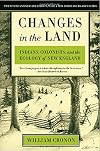
This is the first Environmental History book many students read. Partly because it’s one of the books that helped establish the field; partly because it covers a time period at the beginning of traditional American History courses (my own course includes two units before North American colonization, but lots of people still start there). Cronon begins with an introduction called “The View from Walden,” that not only acknowledges some of the changes Henry David Thoreau saw in his show more neighborhood, but explodes the idea that these changes represent some “fall” from a pristine, ahistorical initial state. The landscape is always changing, and was changed by the Indians before white people arrived. Cronon states: “There has been no timeless wilderness in a state of perfect changelessness, no climax forest in permanent stasis.” (11) Cronon criticizes first-generation ecologists for assuming that all systems tend toward a stable equilibrium, and also for assuming “humanity was somehow outside the ideal climax community.” (10) This may be unfair to ecologists, who recognized their error and developed more complicated systems theories, but it’s an instructive metaphor for historians.
Cronon’s economic argument centers on the idea that European visitors’ and colonists’ response to New England was colored by their cultural baggage (valuation of the abundance they discovered was influenced by scarcity back home, as in the case of timber and firewood), and on the assertion that the colonists were part of a transatlantic capitalist market and drew the Indians into it as well (in his afterword, written on the twentieth anniversary of publication, Cronon seems to regret the slightly oversimplified depiction of “capitalism”). The pre-colonial landscape he describes is quite different from the trackless wilderness I’d always imagined, and Cronon’s detailed descriptions of the difference is one of the most attractive features of the book. Along the way, I picked up a lot of interesting details: for example, that the colonists were generally healthier and longer-lived than the people they left behind, since they were no longer exposed to the European disease environment (24). Of course, the diseases the colonists brought with them killed 90-100% of the Indians in many affected villages. But the Puritan settlers saw this as a sign of their God’s providence. (90)
Cronon observes that “Many European visitors were struck by what seemed to them the poverty of Indians who lived in the midst of a landscape endowed so astonishingly with abundance.” (33) He argues this is a misunderstanding of the Indian approach to life and land use. In a passage that reminds me a lot of Colin Tudge’s argument about agriculturalists and hunter-gatherers in Neanderthals, Bandits and Farmers, Cronon says that not only did the Indians have a noncommercial value-system that led them to shun accumulation, but they were actually managing their environment in sophisticated ways that the colonists completely failed to recognize. Burning the forest understory created “edge” environments preferred by game animals. Gardening in “tangles” of maize, beans, and squash maximized crop yields, reduced erosion, and increased soil fertility (relative to the colonists’ monoculture). (43, 51)
Cronon’s point is that the Indians had a more stable, sustainable approach to their environment than did the colonists. He frequently accuses the colonists of “mining” the soil, but the fact that their society treated land as a commodity doesn’t necessarily mean that individual farmers deliberately set out to put short-term gains before sustainability. Cronon may be leaning too heavily on Frederick Jackson Turner when he assumes the colonists all simply planned on moving west when they’d exhausted their farms.
The Indian approach clearly required mobility, which made it incompatible with settled European agricultural culture. In another passage that Tudge echoes in his 1998 book, Cronon contrasts the Indians’ seasonal migrations with the colonists’ construction of fences – even their pastoralism was sedentary! Cronon admits that Indian “conservation…was less the result of an enlightened ecological sensibility than of the Indians’ limited social definition of ‘need.’” (98) He invokes Leibig’s Law to explain low Indian population densities (“biological populations are limited not by the total annual resources available to them but by the minimum amount that can be found at the scarcest time of year” 41), but doesn’t elaborate on the mechanism of population control (was it by restricting fertility, or by the starving of the weak?). Clearly, though, the Indians are the “good guys” in Cronon’s account. (I don’t disagree, I’m just pointing it out)
The second half of the book continues these arguments but doesn’t extend them much. Cronon throws in several interesting items for me, though. Springfield, begun by William Pynchon in 1636, was the latest in a string of “fur posts” on the Connecticut River. (99) English colonists who had been restricted by the Game Laws in their home country, overhunted to the point that “Hunting with us,” said Timothy Dwight, “exists chiefly in the tales of other times.” (101) A typical New England household consumed thirty to forty cords of firewood a year.” (120) “Roads…were typically between 99 and 165 feet wide…since they facilitated moving large herds to market.” (140) And Narragansett sachem Miantonomo made a speech in 1642 that complained about ecological degradation and warned “we shall all be starved” (162), so the colonists assassinated him in 1643. Overall, Changes in the Land is a very good read. Cronon makes a strong case for and environmental understanding of early America, and the book helped establish the field of Environmental History in the US. show less
Cronon’s economic argument centers on the idea that European visitors’ and colonists’ response to New England was colored by their cultural baggage (valuation of the abundance they discovered was influenced by scarcity back home, as in the case of timber and firewood), and on the assertion that the colonists were part of a transatlantic capitalist market and drew the Indians into it as well (in his afterword, written on the twentieth anniversary of publication, Cronon seems to regret the slightly oversimplified depiction of “capitalism”). The pre-colonial landscape he describes is quite different from the trackless wilderness I’d always imagined, and Cronon’s detailed descriptions of the difference is one of the most attractive features of the book. Along the way, I picked up a lot of interesting details: for example, that the colonists were generally healthier and longer-lived than the people they left behind, since they were no longer exposed to the European disease environment (24). Of course, the diseases the colonists brought with them killed 90-100% of the Indians in many affected villages. But the Puritan settlers saw this as a sign of their God’s providence. (90)
Cronon observes that “Many European visitors were struck by what seemed to them the poverty of Indians who lived in the midst of a landscape endowed so astonishingly with abundance.” (33) He argues this is a misunderstanding of the Indian approach to life and land use. In a passage that reminds me a lot of Colin Tudge’s argument about agriculturalists and hunter-gatherers in Neanderthals, Bandits and Farmers, Cronon says that not only did the Indians have a noncommercial value-system that led them to shun accumulation, but they were actually managing their environment in sophisticated ways that the colonists completely failed to recognize. Burning the forest understory created “edge” environments preferred by game animals. Gardening in “tangles” of maize, beans, and squash maximized crop yields, reduced erosion, and increased soil fertility (relative to the colonists’ monoculture). (43, 51)
Cronon’s point is that the Indians had a more stable, sustainable approach to their environment than did the colonists. He frequently accuses the colonists of “mining” the soil, but the fact that their society treated land as a commodity doesn’t necessarily mean that individual farmers deliberately set out to put short-term gains before sustainability. Cronon may be leaning too heavily on Frederick Jackson Turner when he assumes the colonists all simply planned on moving west when they’d exhausted their farms.
The Indian approach clearly required mobility, which made it incompatible with settled European agricultural culture. In another passage that Tudge echoes in his 1998 book, Cronon contrasts the Indians’ seasonal migrations with the colonists’ construction of fences – even their pastoralism was sedentary! Cronon admits that Indian “conservation…was less the result of an enlightened ecological sensibility than of the Indians’ limited social definition of ‘need.’” (98) He invokes Leibig’s Law to explain low Indian population densities (“biological populations are limited not by the total annual resources available to them but by the minimum amount that can be found at the scarcest time of year” 41), but doesn’t elaborate on the mechanism of population control (was it by restricting fertility, or by the starving of the weak?). Clearly, though, the Indians are the “good guys” in Cronon’s account. (I don’t disagree, I’m just pointing it out)
The second half of the book continues these arguments but doesn’t extend them much. Cronon throws in several interesting items for me, though. Springfield, begun by William Pynchon in 1636, was the latest in a string of “fur posts” on the Connecticut River. (99) English colonists who had been restricted by the Game Laws in their home country, overhunted to the point that “Hunting with us,” said Timothy Dwight, “exists chiefly in the tales of other times.” (101) A typical New England household consumed thirty to forty cords of firewood a year.” (120) “Roads…were typically between 99 and 165 feet wide…since they facilitated moving large herds to market.” (140) And Narragansett sachem Miantonomo made a speech in 1642 that complained about ecological degradation and warned “we shall all be starved” (162), so the colonists assassinated him in 1643. Overall, Changes in the Land is a very good read. Cronon makes a strong case for and environmental understanding of early America, and the book helped establish the field of Environmental History in the US. show less
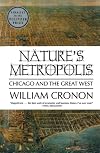
This fascinating book explores the intricate interweaving of the City and the Country in American economic reality that simultaneously explains and belies a commonly-perceived distinction in the American mythos that presents the City as the epitome of all that is evil and the Country as the epitome of all that is wholesome. The economic tale, told in great detail through the story of three key natural resources' journeys to becoming commodities in Chicago markets (wheat, timber, and pork), show more is much more complicated than the mythic construction admits. City and Country are human constructs of what Cronon calls "second nature," and are interdependent rather than opposed. The issue with "second nature" (the human-created order imposed on the ecosystem; e.g., the railroad) is that, though it radically transforms both human and ecological existence, it does so in such a way as to be self-effacing.
In truth, I chose to read this book thinking it would be similar to Ian Frazier's "Great Plains" and Jonathan Raban's "Badlands" (a truly remarkable book!). That initial hunch was both right and wrong. I was wrong to think of the book as a work of "cultural geography" like Frazier's and Raban's work; it was far too focused on economics for that (though, in truth, it did tread some of the same ground). However, that in fact, became for me one of the more fascinating aspects of the book; Cronon's explanation especially of the development of the grain futures market (through the story of the development of the Chicago Board of Trade) was wonderfully written. However, toward the end of the book, when Cronon begins to map the competing "moral geographies" of City and Country present in late 19th-century literature, my hunch proves correct, for Cronon's work there very much connects with the unique cultural geography of American Western life.
Perhaps for me, the most intriguing aspect of Cronon's work was his exposition of the meaning of Chicago's Columbian World Exposition in 1893. He notes that the Exposition must be considered in relation to the Great Chicago Fire, representing an important "death/resurrection" sequence in Midwestern American self-understanding. The "White City," then, was much more than a grandiose display of American achievement but a grandiose vision of the world's future, an attempt to prophesy what humanity could and should become. However, observer Henry Adams, who visited Chicago twice, was not as impressed, saying: "Chicago, asked in 1893 for the first time the question whether the American people knew where they were driving." I find it interesting that Cronon's reflection on the relationship of City and Country concludes with an extended reflection on the relationship of Past and Future. And just as the prior relationship reveals itself to be complex, so also the promise of unending future Progress appeared already in 1893 to be ambiguously tenuous.
I suppose in this I am drawing lessons from Cronon that he never intended to teach, his focus being much more on correcting this false dichotomy between City and Country by explaining their economic interrelationships. Or, better, perhaps I am applying the lessons Cronon is teaching to my own particular interests in understanding the fundamental impact of modernity on the archetypal American psyche, most clearly manifested in a near-fanatical "rugged individualism" as well as an obstinate faith in unending progress. In some ways, Cronon's book offers an "economic" leg to the growing evidence that the myths of modernity have failed. Economic growth is not limitless; progress is not unending; and radical individualism is not psychologically nor sociologically sustainable. In the end, Mr. Adams was right; no matter the White City's beautiful electric glow, we didn't know where we were driving. And now we've ended up somewhere that wasn't on our map, lost in a world of our own finite and fallen creation. show less
In truth, I chose to read this book thinking it would be similar to Ian Frazier's "Great Plains" and Jonathan Raban's "Badlands" (a truly remarkable book!). That initial hunch was both right and wrong. I was wrong to think of the book as a work of "cultural geography" like Frazier's and Raban's work; it was far too focused on economics for that (though, in truth, it did tread some of the same ground). However, that in fact, became for me one of the more fascinating aspects of the book; Cronon's explanation especially of the development of the grain futures market (through the story of the development of the Chicago Board of Trade) was wonderfully written. However, toward the end of the book, when Cronon begins to map the competing "moral geographies" of City and Country present in late 19th-century literature, my hunch proves correct, for Cronon's work there very much connects with the unique cultural geography of American Western life.
Perhaps for me, the most intriguing aspect of Cronon's work was his exposition of the meaning of Chicago's Columbian World Exposition in 1893. He notes that the Exposition must be considered in relation to the Great Chicago Fire, representing an important "death/resurrection" sequence in Midwestern American self-understanding. The "White City," then, was much more than a grandiose display of American achievement but a grandiose vision of the world's future, an attempt to prophesy what humanity could and should become. However, observer Henry Adams, who visited Chicago twice, was not as impressed, saying: "Chicago, asked in 1893 for the first time the question whether the American people knew where they were driving." I find it interesting that Cronon's reflection on the relationship of City and Country concludes with an extended reflection on the relationship of Past and Future. And just as the prior relationship reveals itself to be complex, so also the promise of unending future Progress appeared already in 1893 to be ambiguously tenuous.
I suppose in this I am drawing lessons from Cronon that he never intended to teach, his focus being much more on correcting this false dichotomy between City and Country by explaining their economic interrelationships. Or, better, perhaps I am applying the lessons Cronon is teaching to my own particular interests in understanding the fundamental impact of modernity on the archetypal American psyche, most clearly manifested in a near-fanatical "rugged individualism" as well as an obstinate faith in unending progress. In some ways, Cronon's book offers an "economic" leg to the growing evidence that the myths of modernity have failed. Economic growth is not limitless; progress is not unending; and radical individualism is not psychologically nor sociologically sustainable. In the end, Mr. Adams was right; no matter the White City's beautiful electric glow, we didn't know where we were driving. And now we've ended up somewhere that wasn't on our map, lost in a world of our own finite and fallen creation. show less
Masterwork of its genre. I heard of William Cronon after reading Charles C. Mann's 1491, where he extensively cites Cronon. In his book, Mann takes a broader, more journalistic point of view to make his point that much of what people believed about the "New World" pre- European colonization was either wrong or more complicated than it seemed. Cronon, on the other had, has the luxury of addressing a more specialized audience. He breaks down how the first wave of English colonists in New show more England set off a massive environmental revolution that I would characterize as a kind of catastrophe. It's been politically correct for the last decade or so to cast the English colonists as genocidal imperialists; like Mann in his book, Cronon complicates that perception while somehow revealing that the destruction wrought by colonists was worse than even their wokest critics could imagine. Extractive mentalities and poor farming practices caused massive deforestation, extirpation of species, and the destruction of the watershed due to erosion and silting in. While some of what the colonists did was due to greed and racism towards the Native peoples, as is usual throughout history, ignorance and market forces played a much greater role than any kind of villainous intentions.
Possibly the greatest virtue of Cronon's book, like 1491, is the way it challenges the myths of ecological and social history that so many Americans still believe. The continent that the colonists "discovered" was far from pristine, untouched wilderness - rather, Native peoples had been heavily managing the land for time immemorial, mostly living in equilibrium with the natural resources that sustained them. This undermines our romantic notions about what nature was, and by extension, what nature is. Cronon starts his book with a poignant example of Thoreau's jeremiad on the New England wilderness. Writing in the 19th century, Thoreau bemoaned the loss of natural beauty that might have been seen by his ancestors. Today, we look at the time Thoreau inhabited as idyllic. A key part of Cronon's argument is that man has always played a much greater role in his environment than is typically understood. By extension, those of us living today must do away with romantic notions about nature and admit that nothing lives or thrives on this planet without the implicit or explicit permission of man. In order to create a society more in balance with the constraints of nature, we have to take an active role in managing the environment. These days, anthropogenic climate change is an existential threat to humanity. Following Cronon's logic would suggest that human greed and ignorance created the problem, and a proactive kind of human ingenuity is needed to restore balance. show less
Possibly the greatest virtue of Cronon's book, like 1491, is the way it challenges the myths of ecological and social history that so many Americans still believe. The continent that the colonists "discovered" was far from pristine, untouched wilderness - rather, Native peoples had been heavily managing the land for time immemorial, mostly living in equilibrium with the natural resources that sustained them. This undermines our romantic notions about what nature was, and by extension, what nature is. Cronon starts his book with a poignant example of Thoreau's jeremiad on the New England wilderness. Writing in the 19th century, Thoreau bemoaned the loss of natural beauty that might have been seen by his ancestors. Today, we look at the time Thoreau inhabited as idyllic. A key part of Cronon's argument is that man has always played a much greater role in his environment than is typically understood. By extension, those of us living today must do away with romantic notions about nature and admit that nothing lives or thrives on this planet without the implicit or explicit permission of man. In order to create a society more in balance with the constraints of nature, we have to take an active role in managing the environment. These days, anthropogenic climate change is an existential threat to humanity. Following Cronon's logic would suggest that human greed and ignorance created the problem, and a proactive kind of human ingenuity is needed to restore balance. show less
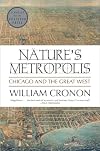
I've been really into economic histories lately, and this analysis of Chicago's development and its relationship to the Midwest it came to dominate was both staggeringly detailed and elegantly well-written. On the highest level, this is sort of a refutation and extension of Frederick Jackson Turner's "frontier hypothesis" (short version: the old countries of Europe never had the Wild West's unique conflict between the "individual freedom" of society's rejects on the frontier and the "law and show more order" back in the Eastern cities, which helped explain why America was so different than its transatlantic ancestors). Cronon's copiously researched opinion is that city and country, far from being opposed, critically depend on each other. For example, he explores how the holy trinity of the grain elevator, grade standardization (a pile of wheat became "no. 1 spring wheat"), and futures trading at the Board of Trade revolutionized how farmers sold their goods, to the extent that Chicago is a world center of commodities trading to this day and the Midwest is some of the most productive farmland on the planet. Without Chicago (and to a lesser extent similar cities like St. Louis, Cincinnati, Minneapolis, and Kansas City; the sections where he traces the rail and financial linkages between them are awesome), the settlers at the frontier never would have managed a living for want of markets; without the farmers producing goods for consumption and distribution, Chicago would have no reason for ever existing. Reading this book so soon after The Box brought home a lot of lessons on how miraculous our current standard of living is: in some ways the Industrial Revolution has never ended, and the great wave of commerce that stretches back to the early 1800s has only begun for most of the world. The book touches mainly grain, lumber, and meat out of the hundreds of goods that Chicago shipped, stored, refined, or revolutionized, but it does a fantastic job of showing not only why Chicago is one of the great cities of the world, but how America has evolved and innovated over time. Basically the only thing I didn't like about the book was that it could have been longer and included more insight from urban development economics. Cronon spends a great deal of time using Von Thünen's concentric circle model as a foil to show how cities don't just accrete in a vacuum but develop symbiotically with the hinterland they create, but it feels like he strawman's this very simple and very old model unnecessarily. If he had used some more modern work in urban development from someone like Ed Glaeser or Paul Krugman (who later wrote an excellent paper on this very book) I think readers would have benefited, but otherwise it was genius. show less
Lists
Awards


You May Also Like


Associated Authors
Statistics
- Works
- 9
- Also by
- 62
- Members
- 3,263
- Popularity
- #7,843
- Rating
- 4.1
- Reviews
- 31
- ISBNs
- 17
- Languages
- 1
- Favorited
- 1