
John Carswell (4)
Author of Tolkien's Requiem: Concerning Beren and Lúthien (Tolkien's Wisdom) (Volume 1)
For other authors named John Carswell, see the disambiguation page.
John Carswell (4) has been aliased into John M Carswell.
Works by John Carswell
Works have been aliased into John M Carswell.
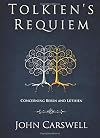
Tolkien's Requiem: Concerning Beren and Lúthien (Tolkien's Wisdom) (Volume 1) (2014) 25 copies, 1 review
Tagged
Common Knowledge
There is no Common Knowledge data for this author yet. You can help.
Members
Reviews
Criticism is the sincerest form of flattery.
I mean literary criticism, of course; to study and analyze a work generally means that a writing has enough to say that it is is worth trying to expand on that writing -- making clear what is obscure, expanding what is only hinted at, clarifying the background. So there is a lot to be said for criticism of the works of J. R. R. Tolkien, including his beloved romance of Beren and Lúthien.
I fear, though, that I cannot say much good about this show more particular work.
For starters, Chapter 19 of The Silmarillion, "Of Beren and Lúthien," is not really a work of J. R. R. Tolkien; it was patched together by Christopher Tolkien. As Douglas R. Kane points out on p. 173 of Arda Reconstructed: The Creation of the Published Silmarillion, the tale in the published book is an amalgam of two Tolkien versions which Christopher Tolkien called "QS I" and "QS II," plus excerpts from the "Grey Annals." Kane's conclusion is that "There can be no better evidence that Christopher was driven more by his own sense of what should be included than by any other consideration." To do criticism of the chapter of The Silmarillion without attending to the sources (as well as the sources for the story that Christopher did not use, such as the "Lay of Leithian") is to misrepresent what Tolkien did and didn't do.
Then, too, there are the inaccuracies. Almost at the very beginning, on p. 2, Carswell introduces his analysis by quoting one of J. R. R. Tolkien's letters, "[In 1909] I met the Lúthien Tinuviel of my own personal romance...." The "In 1909" is Carswell's personal insertion, and it is wrong. As Carswell could have known had he consulted any reliable chronology, Tolkien met Edith Bratt, his future wife who was his "Lúthien," at the very beginning of 1908. Because of the odd circumstances of his life as an orphan, she was for all intents and purposes the first girl he met in his adolescence. This is important; although Edith Bratt was pretty, she shared almost none of Ronald Tolkien's interests. He fell in love with her because she was the only girl he knew. Had they not met until 1909, Tolkien would likely have met other girls, and perhaps found a very different woman to fall in love with -- and his life and writings would have been very different. I believe there are other errors of this sort, though I haven't bothered to check them.
Of course, if one is interested only in Carswell's criticism of the actual text, you could argue that that doesn't matter. And indeed Carswell confines himself mostly to the text once he actually gets started. But it seems to me that too much of what follows is just rehash of Tolkien's text. To take one random example, Carswell comments on the prevalence of "rash promises" in the text --but doesn't follow up on this rich folklore motif that Tolkien the folklorist knew well (e.g. from the Orpheus legend and its reflection in the romance of "Sir Orfeo"). Or the notion of Beren as an outcast who cannot rejoin his tribe; consider the Old English poem of "The Wanderer," who told "of cruel slaughters and dear kinsmen's downfall."
Maybe I'm asking too much. Many people would probably be satisfied with a Cliff's Notes of Christopher Tolkien's version of his father's story. But I was constantly bothered by all the things that weren't here in this little book. show less
I mean literary criticism, of course; to study and analyze a work generally means that a writing has enough to say that it is is worth trying to expand on that writing -- making clear what is obscure, expanding what is only hinted at, clarifying the background. So there is a lot to be said for criticism of the works of J. R. R. Tolkien, including his beloved romance of Beren and Lúthien.
I fear, though, that I cannot say much good about this show more particular work.
For starters, Chapter 19 of The Silmarillion, "Of Beren and Lúthien," is not really a work of J. R. R. Tolkien; it was patched together by Christopher Tolkien. As Douglas R. Kane points out on p. 173 of Arda Reconstructed: The Creation of the Published Silmarillion, the tale in the published book is an amalgam of two Tolkien versions which Christopher Tolkien called "QS I" and "QS II," plus excerpts from the "Grey Annals." Kane's conclusion is that "There can be no better evidence that Christopher was driven more by his own sense of what should be included than by any other consideration." To do criticism of the chapter of The Silmarillion without attending to the sources (as well as the sources for the story that Christopher did not use, such as the "Lay of Leithian") is to misrepresent what Tolkien did and didn't do.
Then, too, there are the inaccuracies. Almost at the very beginning, on p. 2, Carswell introduces his analysis by quoting one of J. R. R. Tolkien's letters, "[In 1909] I met the Lúthien Tinuviel of my own personal romance...." The "In 1909" is Carswell's personal insertion, and it is wrong. As Carswell could have known had he consulted any reliable chronology, Tolkien met Edith Bratt, his future wife who was his "Lúthien," at the very beginning of 1908. Because of the odd circumstances of his life as an orphan, she was for all intents and purposes the first girl he met in his adolescence. This is important; although Edith Bratt was pretty, she shared almost none of Ronald Tolkien's interests. He fell in love with her because she was the only girl he knew. Had they not met until 1909, Tolkien would likely have met other girls, and perhaps found a very different woman to fall in love with -- and his life and writings would have been very different. I believe there are other errors of this sort, though I haven't bothered to check them.
Of course, if one is interested only in Carswell's criticism of the actual text, you could argue that that doesn't matter. And indeed Carswell confines himself mostly to the text once he actually gets started. But it seems to me that too much of what follows is just rehash of Tolkien's text. To take one random example, Carswell comments on the prevalence of "rash promises" in the text --but doesn't follow up on this rich folklore motif that Tolkien the folklorist knew well (e.g. from the Orpheus legend and its reflection in the romance of "Sir Orfeo"). Or the notion of Beren as an outcast who cannot rejoin his tribe; consider the Old English poem of "The Wanderer," who told "of cruel slaughters and dear kinsmen's downfall."
Maybe I'm asking too much. Many people would probably be satisfied with a Cliff's Notes of Christopher Tolkien's version of his father's story. But I was constantly bothered by all the things that weren't here in this little book. show less
Statistics
- Works
- 1
- Members
- 25
- Popularity
- #508,560
- Rating
- 3.6
- Reviews
- 1
- ISBNs
- 35
- Languages
- 3