
Susan Martins Miller
Author of Jim Elliot: Missionary Martyr
About the Author
Image credit: via Church Health Reader
Series
Works by Susan Martins Miller
Dietrich Bonhoeffer: The Life and Martydom of a Great Man Who Counted the Cost of Discipleship (Men of Faith) (2002) 36 copies, 1 review
Down in Front Children's Sermons: On Bible People, Places and Things (Bible Fun Stuff) (2004) 8 copies
Peter 3 copies
Jim Elliot Missionary to Ecuador 3 copies
Life of Hudson Taylor 1 copy
Walking with Abraham and Sarah: Six Weeks of Devotions for Body and Spirit (Ways to Wellness) (2020) 1 copy
By Susan Martins Miller Hudson Taylor (Young Reader's Christian Library) (English Language) [Mass Market Paperback] (1993) 1 copy
Owen's Big Chance 1 copy
Associated Works
Tagged
Common Knowledge
- Canonical name
- Miller, Susan Martins
- Other names
- Miller, Susan
Hayden, Susannah - Gender
- female
- Nationality
- USA
- Places of residence
- Colorado Springs, Colorado, USA
- Associated Place (for map)
- Colorado, USA
Members
Reviews
Dietrich Bonhoeffer: The Life and Martydom of a Great Man Who Counted the Cost of Discipleship (Men of Faith) by Susan Martins Miller
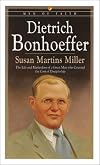
His biographer clearly states and supports the fact that as to assassinating a tyrant, Bonhoeffer "reached a point where the real question was how could he NOT join such a conspiracy?" [130] Because of Hitler's extreme policies, people were being murdered. He read the Bible, and as a confessing Christian, could not turn his back on suffering.
Hitler invoked Christianity [37], and appealed to "populist" issues [45], claiming to be a "leader"/Fuhrer. The Nazi Party claimed to "Make Germany show more Great Again". {In fact, the Nazis led more Germans to their deaths than any other movement in history.} show less
Hitler invoked Christianity [37], and appealed to "populist" issues [45], claiming to be a "leader"/Fuhrer. The Nazi Party claimed to "Make Germany show more Great Again". {In fact, the Nazis led more Germans to their deaths than any other movement in history.} show less

Another book in the Heroes of the Faith book series, a series of biographies targeted at young adult readers, focused on various influential Christian persons.
Jim Elliot was a young man on a mission from God, and he didn't let anything else get in the way. He's abscond dances, socials, and anything else that didn't draw him closer to God or God's will. He even avoided building a relationship with his eventual long-suffering wife, for fear that marriage was not in the cards for him.
Elliot show more became a missionary to Ecuador, where he strove to minister to the Aucas (or Huaorani people), who had only had violent interactions with the white man prior.
While Elliot's life ends in tragedy, his death helps build relations between the Huaorani and the surviving missionaries.
This book chronicles Elliot's life, from early childhood, through college, and to his last days, showing his dedication to an ideal, and proving to the world that his dedication was true. The prose is written to a level that will be understandable to most readers, teenage and up, and the message of the book is a Christian one. show less
Jim Elliot was a young man on a mission from God, and he didn't let anything else get in the way. He's abscond dances, socials, and anything else that didn't draw him closer to God or God's will. He even avoided building a relationship with his eventual long-suffering wife, for fear that marriage was not in the cards for him.
Elliot show more became a missionary to Ecuador, where he strove to minister to the Aucas (or Huaorani people), who had only had violent interactions with the white man prior.
While Elliot's life ends in tragedy, his death helps build relations between the Huaorani and the surviving missionaries.
This book chronicles Elliot's life, from early childhood, through college, and to his last days, showing his dedication to an ideal, and proving to the world that his dedication was true. The prose is written to a level that will be understandable to most readers, teenage and up, and the message of the book is a Christian one. show less

Time Period: 1889 In Minneapolis in 1889, ten-year-old Rachel Borland finds her family torn apart by the new labor movement. Two of her uncles quarrel over the necessity of a streetcar workers' union-and before long, it becomes even more personal as Rachel is unwittingly caught up in a labor riot. Written especially for eight- to twelve-year-old girls, Rachel and the Riot tells the compelling story of a young girl hoping to bring peace to her divided family-while at the same time teaching show more important lessons of American history and the Christian faith. show less

This book really makes you feel like you are lost in the middle of the streetcar riot!
In the "Note to Readers" the author says, "While the Allertons and their friends are fictional, the Easter riots actually took place.".Because some owners wouldn't pay their workers enough money to live on, workers formed unions. "In most places, unions weren't legal,."
This story begins with Anna Allerton asking for a knife. She was making stew and told her brother, Richard, that he could pick out the show more onions if he didn't like them. Richard responded that she sounded like their mama. When Mama came into the kitchen, she reminded Anne to put the peas in last. Anne had remembered and left them on the counter. When Papa came home he told them that the streetcar drivers might strike, which led to a host of questions. Anna listened intently to the discussion. It was thought that Thomas Lowry, the owner of the Minneapolis Street Railway, was holding wages down so he could put in electric streetcars, but was that fair to the drivers and their families? The youngest wanted to know what a strike was. Suddenly the were interrupted by an unpleasant odor. The stew was beginning to stick to the pot! Over dinner they discussed how hard it was for the young children to sit still during school. The problem with the streetcars was causing family problems. Uncle Charles thinks the streetcar drivers should be able to form a union. Uncle Enoch thinks Thomas Lowry should make decisions for the good of his company. When they said grace, Anne prayed for her uncles. show less
In the "Note to Readers" the author says, "While the Allertons and their friends are fictional, the Easter riots actually took place.".Because some owners wouldn't pay their workers enough money to live on, workers formed unions. "In most places, unions weren't legal,."
This story begins with Anna Allerton asking for a knife. She was making stew and told her brother, Richard, that he could pick out the show more onions if he didn't like them. Richard responded that she sounded like their mama. When Mama came into the kitchen, she reminded Anne to put the peas in last. Anne had remembered and left them on the counter. When Papa came home he told them that the streetcar drivers might strike, which led to a host of questions. Anna listened intently to the discussion. It was thought that Thomas Lowry, the owner of the Minneapolis Street Railway, was holding wages down so he could put in electric streetcars, but was that fair to the drivers and their families? The youngest wanted to know what a strike was. Suddenly the were interrupted by an unpleasant odor. The stew was beginning to stick to the pot! Over dinner they discussed how hard it was for the young children to sit still during school. The problem with the streetcars was causing family problems. Uncle Charles thinks the streetcar drivers should be able to form a union. Uncle Enoch thinks Thomas Lowry should make decisions for the good of his company. When they said grace, Anne prayed for her uncles. show less
Lists
You May Also Like


Associated Authors
Statistics
- Works
- 53
- Also by
- 3
- Members
- 4,452
- Popularity
- #5,623
- Rating
- 4.1
- Reviews
- 23
- ISBNs
- 105
- Languages
- 2
- Favorited
- 1