
Joanna Romer
Author of Widow: A Survival Guide for the First Year
Works by Joanna Romer
Tagged
Common Knowledge
- Birthdate
- 20th century
- Gender
- female
- Education
- Northwestern University (M.S.|Journalism)
- Nationality
- USA
- Places of residence
- Daytona Beach, Florida, USA
- Associated Place (for map)
- Florida, USA
Members
Reviews
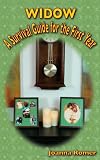
Widow; A Survival Guide for the First Year by Joanna Romer
MSI Press; 2012. Hollister, California.
Note: I received a free copy of this book in return for an online review at LibraryThing.com
What is a 58 year old male reading THIS book?
Well, I have a mother, widowed 6 years ago and a friend whose husband died 2 years ago. I still miss my dad and my friend, Jim. So, curiosity and the desire to maybe have the chance to do something for people I care about. Curiosity in the sense, “If I still show more have pain, how does a woman get through the ‘I don’t want to think about how much worse’ pain they have?”
Joanna Romer, a professional writer having worked for The New York Times, Cosmo and other publications, a teacher and a newly minted widow, has given us a window on how to cope with one of the devastating losses we may all face.
The book has 48 chapters of 2 to 5 pages in length plus an appendix of various lists Ms. Romer found helpful. And she is a list-maker! And a journal writer. I think that she wrote the book as therapy for herself and set a goal of writing a chapter a week. Just my feeling. But this is not a bad thing.
Romer writes in a rather personal style…if not for the subject matter, I would call it “breezy”. She sort of blows along and gives you an insight into how she coped. Spoiler alert: some of her tips about to follow!
The loss of your partner will be devastating emotionally and will last much longer than you think possible…but, well let’s let her speak for herself:
Writing for Cosmo, I learned that almost any problem can be remedied with concentrated self-nurturing and a few well thought-out lists. And so, throughout the years, I was able to handle two divorces, three marriages, many job changes and the untimely deaths of both my parents (although this last occurrence required the help of a very nice therapist). (Page 3)
Most of what she suggests from here on out follows those 2 principles; look after yourself and make lists. But, she also talks about the spiritual side of life and says that GRATITUDE should be the focus of many of your lists! Another good thing, especially for the new widow, is to do something nice for someone else which helps you get out of your focus on yourself. And the physical side of life too! One of the tendencies she notes is that you spend a lot of time introspecting and it is necessary for you to do something PHYSICAL to regain balance in your life. A walk, a swim, gardening, a good meal…use your imagination! She happens to love shopping and dancing and, for her, the willingness to go out with a partner with no other motive than to dance was a sign she was getting back to normal.
Romer is not a financial planner; so don’t look to her for that kind of advice. She is a soul-nurturer. So she recommends being financially responsible, but, at the same time, realize that this is not a time to be miserly when you need some nurturing. Spend the money, this IS an emergency!
I was positively impressed with her insights. Time after time she hit something that probably would not have occurred to a journalist/writer researching a new book. For example, she says pay attention to your warning signals, be aware that a sense of unreality is one of the symptoms of grief, that one can be “ambushed”, start crying and not be sure why, etc. Her examples are so simple, yet of critical importance; one may gain/lose weight and not notice anything except your clothes don’t fit any more. One may have strange physical symptoms that come and go…often signs of anxiety. In other words, your regular levels of coping are already being used up and so smaller things than usual may put you over the edge.
Romer is also aware of other “pitfalls”, like how to stay good friends with still married lady friends. Don’t initiate hugs with her husband, avoid eye contact…even 2 seconds can give or be perceived to give the wrong signal. If you know “he” likes you, maybe meet her at the restaurant you are going out to. Be careful how you dress when with both of them. Oh, and if he hugs you, even if you have to go back into the house, do it to give your friend the hug you may not have given before you walked out the door. Little things, but big things. Smart.
Romer also goes on and on about the things you like, to fill your life with them and notice them. Going out for lunch, walks in your favorite places, noticing the feel of the wind in your hair, the little things that you love where you live. A couple of her lists include her “wonderful” or “miraculous” Hyundai. I like Hyundai’s, my mom has one, but “wonderful”? Let it be, Don, she needed to express her thankfulness in a way appropriate for her…which leads me to another of her good points; don’t apologize for being who you are. In fact, if appropriate, you may need to tell your friend, “That song, book, kind of steak,” “…always reminds me of him because….” Your friends will understand and support you. And you need affirmation, affirmation that will also start rebuilding your confidence which is one of the key characteristics to be restored now that you are alone.
Loneliness. Big issue. Romer gives ample information about how to deal with it and eventually make it your friend.
There’s more, lots more, but this gives you a taste for what you will get here. In my opinion, this is a very useful, worthwhile addition for any widow or even, dare I say it, widower.
Now, do I agree with everything? No, no way. Although Romer talks about going to church, she also supports transcendental meditation which I would STRONGLY advise against. Although meditation is very helpful, the mantra, emptying your mind type is much less so and I feel may even open your spirit to the wrong kind of spiritual beings. Biblical meditation is to “think on that which is good, true, noble, pure, of good report” and not to just empty yourself. In fact, the Good Book does also tell us to “Cast all our cares on Him/ For He careth for you.” More good advice.
Romer also is somewhat too casual about rebuilding your sexual life. Again, follow God, not the “if it feels good, it must be alright” school of modern thought. Romer mentions her “leave one third” diet because of the importance of body image (not just) for women. If I did what feels good, I’d still be north of 300 and going for 400, because I like taking second helpings of my favorite foods. Enough said? I hope so.
Now to perhaps trample on Romer’s toes a little. As a writer she holds typos as virtual mortal sins (p. 51). So, let me call these type-setting flaws. If you’re not interested, skip the rest of this paragraph. I include it since the publisher, I believe, is partly to credit for my free book. Thanks, by the way. I did find several obvious errors and one or two personal preference dislikes. The title on page 23 misspells “Guidelines”. On page 46, the reference to the Lord’s Prayer is incomplete: Matthew 6/9 to 13. Page 82 misses the “e” at the end of the word “spine”. The end of chapter 26 does not begin the numbering of the guidelines at 1 like the other chapters. On page 173 I have both a “type-setting” error: the word “quit” is replaced by the inappropriate “quite”; and the stylistic quibble. Whereas Romer has written “in midst grieving and healing”, I prefer strongly the wordier “in the midst of grieving and healing”. I leave this to the style gurus to ponder/reject.
I both enjoyed the read and disliked it…because of the subject! This is a worthwhile book to add to your library. Many will find it helpful and not too hard to read. Oh, and one last thing: Romer mentions making lists, and how to do them right. She also says give yourself the freedom to not follow your own list. Just as she mentions that there will probably be some job, task, chore that you just CANNOT do. It will be loaded with emotional freight and you may not even know why. Eventually, you will have to do it. But wait until your emotions have caught up to your mind. You KNOW you have to, but your EMOTIONS can’t handle it. You may have to get help. Don’t be afraid to ask.
Good advice. show less
MSI Press; 2012. Hollister, California.
Note: I received a free copy of this book in return for an online review at LibraryThing.com
What is a 58 year old male reading THIS book?
Well, I have a mother, widowed 6 years ago and a friend whose husband died 2 years ago. I still miss my dad and my friend, Jim. So, curiosity and the desire to maybe have the chance to do something for people I care about. Curiosity in the sense, “If I still show more have pain, how does a woman get through the ‘I don’t want to think about how much worse’ pain they have?”
Joanna Romer, a professional writer having worked for The New York Times, Cosmo and other publications, a teacher and a newly minted widow, has given us a window on how to cope with one of the devastating losses we may all face.
The book has 48 chapters of 2 to 5 pages in length plus an appendix of various lists Ms. Romer found helpful. And she is a list-maker! And a journal writer. I think that she wrote the book as therapy for herself and set a goal of writing a chapter a week. Just my feeling. But this is not a bad thing.
Romer writes in a rather personal style…if not for the subject matter, I would call it “breezy”. She sort of blows along and gives you an insight into how she coped. Spoiler alert: some of her tips about to follow!
The loss of your partner will be devastating emotionally and will last much longer than you think possible…but, well let’s let her speak for herself:
Writing for Cosmo, I learned that almost any problem can be remedied with concentrated self-nurturing and a few well thought-out lists. And so, throughout the years, I was able to handle two divorces, three marriages, many job changes and the untimely deaths of both my parents (although this last occurrence required the help of a very nice therapist). (Page 3)
Most of what she suggests from here on out follows those 2 principles; look after yourself and make lists. But, she also talks about the spiritual side of life and says that GRATITUDE should be the focus of many of your lists! Another good thing, especially for the new widow, is to do something nice for someone else which helps you get out of your focus on yourself. And the physical side of life too! One of the tendencies she notes is that you spend a lot of time introspecting and it is necessary for you to do something PHYSICAL to regain balance in your life. A walk, a swim, gardening, a good meal…use your imagination! She happens to love shopping and dancing and, for her, the willingness to go out with a partner with no other motive than to dance was a sign she was getting back to normal.
Romer is not a financial planner; so don’t look to her for that kind of advice. She is a soul-nurturer. So she recommends being financially responsible, but, at the same time, realize that this is not a time to be miserly when you need some nurturing. Spend the money, this IS an emergency!
I was positively impressed with her insights. Time after time she hit something that probably would not have occurred to a journalist/writer researching a new book. For example, she says pay attention to your warning signals, be aware that a sense of unreality is one of the symptoms of grief, that one can be “ambushed”, start crying and not be sure why, etc. Her examples are so simple, yet of critical importance; one may gain/lose weight and not notice anything except your clothes don’t fit any more. One may have strange physical symptoms that come and go…often signs of anxiety. In other words, your regular levels of coping are already being used up and so smaller things than usual may put you over the edge.
Romer is also aware of other “pitfalls”, like how to stay good friends with still married lady friends. Don’t initiate hugs with her husband, avoid eye contact…even 2 seconds can give or be perceived to give the wrong signal. If you know “he” likes you, maybe meet her at the restaurant you are going out to. Be careful how you dress when with both of them. Oh, and if he hugs you, even if you have to go back into the house, do it to give your friend the hug you may not have given before you walked out the door. Little things, but big things. Smart.
Romer also goes on and on about the things you like, to fill your life with them and notice them. Going out for lunch, walks in your favorite places, noticing the feel of the wind in your hair, the little things that you love where you live. A couple of her lists include her “wonderful” or “miraculous” Hyundai. I like Hyundai’s, my mom has one, but “wonderful”? Let it be, Don, she needed to express her thankfulness in a way appropriate for her…which leads me to another of her good points; don’t apologize for being who you are. In fact, if appropriate, you may need to tell your friend, “That song, book, kind of steak,” “…always reminds me of him because….” Your friends will understand and support you. And you need affirmation, affirmation that will also start rebuilding your confidence which is one of the key characteristics to be restored now that you are alone.
Loneliness. Big issue. Romer gives ample information about how to deal with it and eventually make it your friend.
There’s more, lots more, but this gives you a taste for what you will get here. In my opinion, this is a very useful, worthwhile addition for any widow or even, dare I say it, widower.
Now, do I agree with everything? No, no way. Although Romer talks about going to church, she also supports transcendental meditation which I would STRONGLY advise against. Although meditation is very helpful, the mantra, emptying your mind type is much less so and I feel may even open your spirit to the wrong kind of spiritual beings. Biblical meditation is to “think on that which is good, true, noble, pure, of good report” and not to just empty yourself. In fact, the Good Book does also tell us to “Cast all our cares on Him/ For He careth for you.” More good advice.
Romer also is somewhat too casual about rebuilding your sexual life. Again, follow God, not the “if it feels good, it must be alright” school of modern thought. Romer mentions her “leave one third” diet because of the importance of body image (not just) for women. If I did what feels good, I’d still be north of 300 and going for 400, because I like taking second helpings of my favorite foods. Enough said? I hope so.
Now to perhaps trample on Romer’s toes a little. As a writer she holds typos as virtual mortal sins (p. 51). So, let me call these type-setting flaws. If you’re not interested, skip the rest of this paragraph. I include it since the publisher, I believe, is partly to credit for my free book. Thanks, by the way. I did find several obvious errors and one or two personal preference dislikes. The title on page 23 misspells “Guidelines”. On page 46, the reference to the Lord’s Prayer is incomplete: Matthew 6/9 to 13. Page 82 misses the “e” at the end of the word “spine”. The end of chapter 26 does not begin the numbering of the guidelines at 1 like the other chapters. On page 173 I have both a “type-setting” error: the word “quit” is replaced by the inappropriate “quite”; and the stylistic quibble. Whereas Romer has written “in midst grieving and healing”, I prefer strongly the wordier “in the midst of grieving and healing”. I leave this to the style gurus to ponder/reject.
I both enjoyed the read and disliked it…because of the subject! This is a worthwhile book to add to your library. Many will find it helpful and not too hard to read. Oh, and one last thing: Romer mentions making lists, and how to do them right. She also says give yourself the freedom to not follow your own list. Just as she mentions that there will probably be some job, task, chore that you just CANNOT do. It will be loaded with emotional freight and you may not even know why. Eventually, you will have to do it. But wait until your emotions have caught up to your mind. You KNOW you have to, but your EMOTIONS can’t handle it. You may have to get help. Don’t be afraid to ask.
Good advice. show less
 This review was written for LibraryThing Early Reviewers.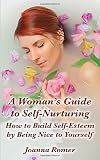
Having set as my goal for 2016 "Be Kind To Yourself", I was really looking forward to receiving this book as part of LibraryThing's "Early Reviewers" program. It is a slim volume, but I had great hopes as to what it might contain.
Thus, I was tremendously dismayed when I was greeted by a quote from the Bible's Psalms even before the introduction, followed by a book filled with Bible passages and obviously aimed at a Christian woman. Perhaps some of the ideas would have helped me, but I was so show more irritated by the high-handed Christian privilege throughout the book that I was immediately turned off. Chapters entitled, "Bible Showcase," "Prayer," and "Answered Prayer" left me cold.
If you can stomach the belief in a magical sky friend, you might get something out of this book. It's full of reference to pop culture (movies, books, television, products like Starbucks.) There are suggestions some mainstream (read: wealthy, white, privileged) women will enjoy. If you're not a person who is gender-normative, body-shaming, Christian, and moneyed, seek your path somewhere else. I recommend "What the Buddha Taught" by Walpola Rahula. show less
Thus, I was tremendously dismayed when I was greeted by a quote from the Bible's Psalms even before the introduction, followed by a book filled with Bible passages and obviously aimed at a Christian woman. Perhaps some of the ideas would have helped me, but I was so show more irritated by the high-handed Christian privilege throughout the book that I was immediately turned off. Chapters entitled, "Bible Showcase," "Prayer," and "Answered Prayer" left me cold.
If you can stomach the belief in a magical sky friend, you might get something out of this book. It's full of reference to pop culture (movies, books, television, products like Starbucks.) There are suggestions some mainstream (read: wealthy, white, privileged) women will enjoy. If you're not a person who is gender-normative, body-shaming, Christian, and moneyed, seek your path somewhere else. I recommend "What the Buddha Taught" by Walpola Rahula. show less
This review was written for LibraryThing Early Reviewers.
Johanna Romer became a widow in January 2011 when her husband Jack died after a long illness. This guide is her account of how she got through the difficult first year alone. Each chapter is short, only two to four pages long, and includes guidelines for handling various aspects of living single again.
Some of her advice is good albeit basic: get up in the morning, remember to eat, establish a routine, and be good to yourself (your husband would want this). She reminds us not to make any show more major changes during that first year, to maintain friendships, accept help and try to do something for others. She assures us that crying is to be expected and that grief and loneliness can be incapacitating but that life will improve. She is very fond of journaling and making lists. She advises us to continue activities that we once enjoyed with our husband, learn to dine alone in restaurants, travel as much as we can afford and indulge in retail therapy. Indeed, shopping is presented as a wonderful way to heal your heart. Some of her suggestions seem odd to say the least. She describes how helpful she found Facebook because it enabled her to reconnect with her old hairstylist/astrologer whom she hadn't seen in twenty years. In Chapter Twenty-Four she states: "You need a project" so keep your eyes open for something to do. Five chapters later she urges us to get an i-Phone but doesn't really say why except that she got one so maybe we should too. She recommends meditation and describes the "purple or lavender waves of energy [which] are associated with the Age of Aquarius" that we may experience. Other suggestions include watching the Twilight Saga movies, "Sex and the City" or any movie with Richard Gere. It's also important to stay fashionable, go shopping and travel is "essential."
Romer tries to address the many aspects of widowhood but seems to skim over the more difficult (read emotional) challenges and concentrates on less taxing details. Her tone is very conversational; she frequently addresses the reader as "dear widow" which becomes annoying with repetition. The back cover mentions that she has written for Cosmopolitan and Mademoiselle and her writing style does seem more appropriate for a magazine article rather than serious non-fiction. This book was not labeled as an Advance Reader's Copy so it was surprising to find so many typos had gotten past her editor.
ADDENDUM: After posting my review, I received an email from the publisher regarding the typos. It included this statement:
This book was professionally copyedited prior to typesetting and galleys were proofread subsequent to typesetting by the author, a professional writer. There should have been few typos. (Eliminating all typos is a noble but unachievable goal; I have never read a book without typos, whether from the #1 academic press, big six US publishers, or small presses.)
I noted that this was not labeled as an ARC edition because I did not expect so many errors in the finished product. It has been my experience that most books contain few if any proofreading or typesetting problems. If this were so common or if this book had been clearly labeled as an uncorrected proof copy, I would not even have mentioned the errors. show less
Some of her advice is good albeit basic: get up in the morning, remember to eat, establish a routine, and be good to yourself (your husband would want this). She reminds us not to make any show more major changes during that first year, to maintain friendships, accept help and try to do something for others. She assures us that crying is to be expected and that grief and loneliness can be incapacitating but that life will improve. She is very fond of journaling and making lists. She advises us to continue activities that we once enjoyed with our husband, learn to dine alone in restaurants, travel as much as we can afford and indulge in retail therapy. Indeed, shopping is presented as a wonderful way to heal your heart. Some of her suggestions seem odd to say the least. She describes how helpful she found Facebook because it enabled her to reconnect with her old hairstylist/astrologer whom she hadn't seen in twenty years. In Chapter Twenty-Four she states: "You need a project" so keep your eyes open for something to do. Five chapters later she urges us to get an i-Phone but doesn't really say why except that she got one so maybe we should too. She recommends meditation and describes the "purple or lavender waves of energy [which] are associated with the Age of Aquarius" that we may experience. Other suggestions include watching the Twilight Saga movies, "Sex and the City" or any movie with Richard Gere. It's also important to stay fashionable, go shopping and travel is "essential."
Romer tries to address the many aspects of widowhood but seems to skim over the more difficult (read emotional) challenges and concentrates on less taxing details. Her tone is very conversational; she frequently addresses the reader as "dear widow" which becomes annoying with repetition. The back cover mentions that she has written for Cosmopolitan and Mademoiselle and her writing style does seem more appropriate for a magazine article rather than serious non-fiction. This book was not labeled as an Advance Reader's Copy so it was surprising to find so many typos had gotten past her editor.
ADDENDUM: After posting my review, I received an email from the publisher regarding the typos. It included this statement:
This book was professionally copyedited prior to typesetting and galleys were proofread subsequent to typesetting by the author, a professional writer. There should have been few typos. (Eliminating all typos is a noble but unachievable goal; I have never read a book without typos, whether from the #1 academic press, big six US publishers, or small presses.)
I noted that this was not labeled as an ARC edition because I did not expect so many errors in the finished product. It has been my experience that most books contain few if any proofreading or typesetting problems. If this were so common or if this book had been clearly labeled as an uncorrected proof copy, I would not even have mentioned the errors. show less
This review was written for LibraryThing Early Reviewers.
This book is short, and alternates between interviews/vignettes of widowers and the author's own advice. She'd previously written a similar book for widows, and I can see how this wouldn't be a stretch, though perhaps it would've been different coming from a male point-of-view. I asked to review this because my father was recently widowed, and it wasn't something I felt I could give to him. It was either too condescending or too general in most parts, or too individualized in others. And I'm show more not sure whether it was bad editing, but one of the first situations sounds like a man got through grief by hooking up with his step-daughter?? show less
This review was written for LibraryThing Early Reviewers.Statistics
- Works
- 5
- Members
- 41
- Popularity
- #363,651
- Rating
- 3.3
- Reviews
- 30
- ISBNs
- 5
