
Blake Gopnik
Author of Warhol
About the Author
Blake Gopnik, one of North America's leading arts writers, has served as art and design critic at Newsweek, and as chief art critic at the Washington Post and Canada's Globe and Mail. He has a Ph.D. in art history from the University of Oxford and is a regular contributor to the New York Times.
Image credit: Blake Gopnik, 2011, acrylic on mylar, 10 x 8 inches (Series: Portraits of Facebook)
Works by Blake Gopnik
Associated Works
Tagged
Common Knowledge
Members
Reviews
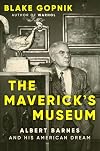
During our time in Philadelphia I had heard of the Barnes Museum but we never visited it because of the need to make reservations. And, it was easier to hop on public transportation to get the Philadelphia Museum of Art. But I was interested to learn about Barnes and his collection.
What a character Barnes was! Progressive and anti-racist, a man who treated his employees more than fairly. He hired a gay man to tutor him. He was also vengeful and vindictive, sensitive, and mercurial in his show more friendships.
Barnes childhood led him to identify with the downtrodden. His own rise and achievements, becoming a doctor and entrepreneur, manufacturing a remarkable drug to prevent blindness in babies, made him imperious and certain that all men and women could improve themselves and their lives.
In 1872, Barnes was born in Fishtown where rowhouses were filled with textile factory workers. The family later relocated to a rough South Philly neighborhood prone to flooding. He gained admission to the exclusive Central High School, an early public high school with a progressive mandate that conferred bachelor’s degrees.
His Methodist mother took him to rural camp meetings where he discovered “the realm of mysticism” that he believed lead him to a love of art. The African Americans’ hymn singing gave him a deep respect for Black culture, although still maintaining stereotyping he never “managed to shed.”
With wealth, Barnes became obsessed with buying cutting-edge art. His philosophy of art was inspired by his friend, John Dewey and his theory of education based on experience.
Barnes was drawn to art by the Ashcan school and Picasso, but particularly liked Renoir and Cezanne. He branched to collect African masks and even farm implements and tools. Although he spoke about the ‘plastic’ in art, he did show a favor for female nudes.
Barnes gave his workers six hour work days and provided educational classes. He believed in bringing art to the ordinary man on the street. When he built the Barnes Institute to house his collection, he wanted to keep out the elite intellectuals and limited who could gain entry.
The biography kept my interest. I admired Barnes and I found him appalling, but always interesting. I appreciated the illustrations of the art work talked about in the book. I thoroughly enjoyed this read.
Thanks to the publisher for a free book through NetGalley. show less
What a character Barnes was! Progressive and anti-racist, a man who treated his employees more than fairly. He hired a gay man to tutor him. He was also vengeful and vindictive, sensitive, and mercurial in his show more friendships.
Barnes childhood led him to identify with the downtrodden. His own rise and achievements, becoming a doctor and entrepreneur, manufacturing a remarkable drug to prevent blindness in babies, made him imperious and certain that all men and women could improve themselves and their lives.
In 1872, Barnes was born in Fishtown where rowhouses were filled with textile factory workers. The family later relocated to a rough South Philly neighborhood prone to flooding. He gained admission to the exclusive Central High School, an early public high school with a progressive mandate that conferred bachelor’s degrees.
His Methodist mother took him to rural camp meetings where he discovered “the realm of mysticism” that he believed lead him to a love of art. The African Americans’ hymn singing gave him a deep respect for Black culture, although still maintaining stereotyping he never “managed to shed.”
With wealth, Barnes became obsessed with buying cutting-edge art. His philosophy of art was inspired by his friend, John Dewey and his theory of education based on experience.
Barnes was drawn to art by the Ashcan school and Picasso, but particularly liked Renoir and Cezanne. He branched to collect African masks and even farm implements and tools. Although he spoke about the ‘plastic’ in art, he did show a favor for female nudes.
Barnes gave his workers six hour work days and provided educational classes. He believed in bringing art to the ordinary man on the street. When he built the Barnes Institute to house his collection, he wanted to keep out the elite intellectuals and limited who could gain entry.
The biography kept my interest. I admired Barnes and I found him appalling, but always interesting. I appreciated the illustrations of the art work talked about in the book. I thoroughly enjoyed this read.
Thanks to the publisher for a free book through NetGalley. show less
Intelligently written and TOO LONG. (I'm keeping this review short by way of protest. Ha!)
Basada en años de investigación y entrevistas con decenas de amigos, amantes y detractores de Warhol, esta biografía traza el recorrido del artista desde sus orígenes como hijo de inmigrantes de Europa del Este en Pittsburgh hasta su revolucionario papel en el mundo del arte. Además, es un fascinante retrato de la sociedad y del mundo en los años setenta y ochenta y de las grandes transformaciones ocurridas en el comercio y la cultura.
Tras el resplandor de su famosa Factory, por donde show more pasaron las figuras más glamurosas de su tiempo (Susan Sontag, Mick Jagger o los barones de Rothschild, entre otros), había un hombre tímido que vivió gran parte de su vida con su madre y protegió con celo su privacidad. Repleto de ideas nuevas sobre el trabajo y la personalidad del artista, este libro capta a la perfección las contradicciones y el radical ingenio que llevaron a Warhol a revolucionar el panorama cultural. ¿Era una broma o un auténtico genio? ¿Era un radical o un arribista? Como el propio Warhol habría respondido: sí. show less
Tras el resplandor de su famosa Factory, por donde show more pasaron las figuras más glamurosas de su tiempo (Susan Sontag, Mick Jagger o los barones de Rothschild, entre otros), había un hombre tímido que vivió gran parte de su vida con su madre y protegió con celo su privacidad. Repleto de ideas nuevas sobre el trabajo y la personalidad del artista, este libro capta a la perfección las contradicciones y el radical ingenio que llevaron a Warhol a revolucionar el panorama cultural. ¿Era una broma o un auténtico genio? ¿Era un radical o un arribista? Como el propio Warhol habría respondido: sí. show less
Awards


You May Also Like
Associated Authors
Statistics
- Works
- 5
- Also by
- 1
- Members
- 223
- Popularity
- #100,549
- Rating
- 4.1
- Reviews
- 3
- ISBNs
- 23
- Languages
- 3