
Bernhard Weiss (2) (1962–)
Author of Michael Dummett
For other authors named Bernhard Weiss, see the disambiguation page.
About the Author
Bernhard Weiss is Associate Professor of Philosophy at the University of Cape Town, South Africa.
Image credit: Bernhard Weiss
Works by Bernhard Weiss
Associated Works
Tagged
Common Knowledge
- Birthdate
- 1962-05-16
- Nationality
- Südafrika
- Places of residence
- Kapstadt, Südafrika
Members
Reviews
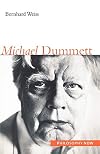
This book presents itself as an introduction to the work of Michael Dummett, and I’m interested in it because Dummett famously builds on and develops Wittgenstein’s “use model” of language, truth, and meaning.
As an introduction to Michael Dummett’s ideas about truth and meaning and his view of anti-realism, the book is pretty good. Rather, I should say that the book dutifully touches on, names, and elaborates what appear to be Dummett’s main contributions to the philosophy of show more language. I was hoping that the book would be more introductory, however, meeting a wider variety of audiences who may find themselves at the edges of Dummett’s thinking but having arriving there from different starting points: linguistics, writing and rhetoric, communication studies. And the book just wasn’t that. It was clear that Weiss intended readers to enter the discussion via analytic philosophy, philosophy of language, or metaphysics. In that sense, the book failed to be the kind of introduction that the cover blurb and series position statement suggest.
I’m a stubborn reader, however, so I was determined to limp along through the text with the help of numerous other outside resources, including the very helpful Stanford Encyclopedia of Philosophy. It’s possible to supplement enough to get the introduction one might need to read further in Dummett’s work. At least I hope that’s the case because it’s where I’m headed next.
As an attempt to position Dummett’s work in the flow of discourse about philosophy of language, speech acts, and analytic philosophy, I suspect that this book is more successful, but I am a less capable judge of how well it succeeds. Many of the chapters begin with a brief overview of Dummett’s position and then step backwards to consider what Dummett is responding to and then step forward to consider the implications and complications of Dummett’s positions. As a result, many chapters dwell, considerably, in the work of other scholars who are grappling with Dummett’s ideas, often in very specific and abstruse ways. Weiss also spends time challenging and pushing on Dummett’s ideas. All of this work seems to be aimed at establishing the meaning of Dummett’s work by positioning that work into the flow of discourse in which it is to make sense. And as frustrating as I found this at times, I have to admit that it seems like a delightfully meta way of demonstrating Dummett’s position that meaning and understanding is situated in discourses where the truths that are manifest are warrantable and assertable.
This has me wondering about entry points into conversations. If truth and meaning are grounded in use and uses are grounded in situations and in discourse that is chained together, where does one find an entry point to join? It feels a little like entering a conversation in mid-stream where you have no or limited access to the past and the grounds that is provides for assertions and the commitments of participants in the present. I’m curious to find out if this point gets resolved at all in other parts of Dummett’s work. We’ll see.
In the end, I think that I grudgingly appreciate this book more than I liked it. If I’m right about Weiss’s intent then I think that could have been signaled much more clearly. I’d also like to see a whole lot of the meta-language stripped out of this book. Weiss doesn’t have thoughts and then just state them. Those thoughts are accompanied by “I am thinking” or “I have to believe” or similar junk expressions that state the obvious. Frustratingly, these are also accompanied by passages that are what I can best describe as linear accounts of highly non-linear thinking. I get the sense that Weiss has mapped out logical arguments in visual/verbal ways that are then translated back into linear speech. It didn’t work for me. show less
As an introduction to Michael Dummett’s ideas about truth and meaning and his view of anti-realism, the book is pretty good. Rather, I should say that the book dutifully touches on, names, and elaborates what appear to be Dummett’s main contributions to the philosophy of show more language. I was hoping that the book would be more introductory, however, meeting a wider variety of audiences who may find themselves at the edges of Dummett’s thinking but having arriving there from different starting points: linguistics, writing and rhetoric, communication studies. And the book just wasn’t that. It was clear that Weiss intended readers to enter the discussion via analytic philosophy, philosophy of language, or metaphysics. In that sense, the book failed to be the kind of introduction that the cover blurb and series position statement suggest.
I’m a stubborn reader, however, so I was determined to limp along through the text with the help of numerous other outside resources, including the very helpful Stanford Encyclopedia of Philosophy. It’s possible to supplement enough to get the introduction one might need to read further in Dummett’s work. At least I hope that’s the case because it’s where I’m headed next.
As an attempt to position Dummett’s work in the flow of discourse about philosophy of language, speech acts, and analytic philosophy, I suspect that this book is more successful, but I am a less capable judge of how well it succeeds. Many of the chapters begin with a brief overview of Dummett’s position and then step backwards to consider what Dummett is responding to and then step forward to consider the implications and complications of Dummett’s positions. As a result, many chapters dwell, considerably, in the work of other scholars who are grappling with Dummett’s ideas, often in very specific and abstruse ways. Weiss also spends time challenging and pushing on Dummett’s ideas. All of this work seems to be aimed at establishing the meaning of Dummett’s work by positioning that work into the flow of discourse in which it is to make sense. And as frustrating as I found this at times, I have to admit that it seems like a delightfully meta way of demonstrating Dummett’s position that meaning and understanding is situated in discourses where the truths that are manifest are warrantable and assertable.
This has me wondering about entry points into conversations. If truth and meaning are grounded in use and uses are grounded in situations and in discourse that is chained together, where does one find an entry point to join? It feels a little like entering a conversation in mid-stream where you have no or limited access to the past and the grounds that is provides for assertions and the commitments of participants in the present. I’m curious to find out if this point gets resolved at all in other parts of Dummett’s work. We’ll see.
In the end, I think that I grudgingly appreciate this book more than I liked it. If I’m right about Weiss’s intent then I think that could have been signaled much more clearly. I’d also like to see a whole lot of the meta-language stripped out of this book. Weiss doesn’t have thoughts and then just state them. Those thoughts are accompanied by “I am thinking” or “I have to believe” or similar junk expressions that state the obvious. Frustratingly, these are also accompanied by passages that are what I can best describe as linear accounts of highly non-linear thinking. I get the sense that Weiss has mapped out logical arguments in visual/verbal ways that are then translated back into linear speech. It didn’t work for me. show less
You May Also Like
Associated Authors
Statistics
- Works
- 4
- Also by
- 1
- Members
- 70
- Popularity
- #248,178
- Rating
- 3.6
- Reviews
- 1
- ISBNs
- 44
- Languages
- 1