

Lucille Fletcher (1912–2000)
Author of Sorry, Wrong Number and The Hitch-Hiker
About the Author
Works by Lucille Fletcher
Morte presunta 1 copy
Associated Works
McSweeney's 45: Hitchcock and Bradbury Fistfight in Heaven (2013) — Contributor — 118 copies, 6 reviews
Reader's Digest Condensed Books 1963 v02: A River Ran Out of Eden / Escape from Red China / The Surgeon / Smith and Jones / To Sir with Love / ....and presumed dead (1963) — Author — 27 copies
More Murder on Cue: Stage, Screen & Radio Favorites: Stories from Ellery Queen's Mystery Magazine (1990) — Contributor — 9 copies
Reader's Digest Condensed Books. A Song Of Sixpence, Taxi To Tobruk, Strangers On A Bridge, Varda: The Flight Of A Falcon, ...And Presumed Dead (1961) — Contributor — 3 copies
Tagged
Common Knowledge
- Legal name
- Fletcher, Violet Lucille
- Birthdate
- 1912-03-28
- Date of death
- 2000-08-31
- Gender
- female
- Education
- Vassar College
- Occupations
- typist
novelist
playwright
music librarian
publicity writer
suspense author - Organizations
- CBS Broadcasting
- Short biography
- Lucille Fletcher was born in Brooklyn, New York, and began writing as a child. She attended Bay Ridge High School and was editor of the school magazine. In 1929, at age 17, she placed third in the National Oratorical Contest on the Constitution of the United States, judged by five justices of the Supreme Court. She graduated with honors from Vassar College in 1933, and went to work as a typist, music librarian, and publicity writer at CBS. There she met her future husband, Bernard Herrmann, composer and conductor of the CBS orchestra; they married in 1939 and had two daughters. In 1940, she began her radio career when a magazine story she had written, "My Client Curley," was made into a radio play; it was later adapted for the 1944 film Once Upon a Time. Her famous radio script "Hitchhiker" was first performed by Orson Welles on his radio program.
"Sorry, Wrong Number," which premiered in 1943 as an episode of the radio series Suspense, transfixed audiences; it was broadcast nationwide seven times between 1943 and 1948, and was adapted for a 1948 film. It also won an Edgar from the Mystery Writers of America, inspired two operas, and became a television drama in 1989. In the late 1950s, she began writing novels, which included Blindfold (1960), adapted into a 1966 film; And Presumed Dead (1963); The Girl in Cabin B54 (1968) and Eighty Dollars to Stamford (1975).
In 1972, her suspense play ''Night Watch,'' was produced on Broadway and became a film the following year. - Nationality
- USA
- Birthplace
- Brooklyn, New York, USA
- Places of residence
- Oxford, Maryland, USA
- Place of death
- Langhorne, Pennsylvania, USA
- Associated Place (for map)
- USA
Members
Reviews
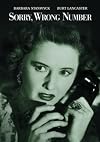
Lucille Fletcher’s gripping story of a bed-bound woman who overhears her own murder being plotted when her phone connection was crossed, made for one of the most exciting edge-of-your-seat thrillers ever produced for radio. Originally airing on Suspense with Agnes Moorehead in the lead role, and later Barbara Stanwyck, it would be broadcast an unprecedented seven times due to its incredible popularity. It was a forgone conclusion it would make it to film, and when it did, those who had show more doubted the claustrophobia of the radio version would translate well to the visual medium were treated to something nearly as good as what they’d heard over the airwaves while the lights were turned low.
Hal Wallis would produce more than one excellent noir melodrama with Barbara Stanwyck in the lead, and Sorry, Wrong Number was one of their finest collaborations. Stanwyck gives a very brave performance for a star of her caliber, allowing the audience to see a selfish and controlling woman hard to like through most of this film. It created sympathy for Burt Lancaster as her husband, Henry, who may have been bullied too far. In those nail-biting final moments, however, when Stanwyck is stripped and vulnerable, we see that it was insecurity that fueled her behavior, changing our opinion of the bed-ridden woman, and creating panic in our hearts as someone makes their way up the stairs…
Through phone calls, flashbacks and inventiveness on director Livak’s part, everything prior to the phone call unfolds until the viewer is hanging on the next scene, wondering if this is all headed where they think it is — unless, of course, you’ve heard it on radio. But the backstory is done well, helping to flesh out how it got to this point. Ann Richards is wonderful in creating sympathy for the girl Henry probably belonged with but was weak enough to lose. She still cares for him, and when her attorney husband seems to be focused on something big involving him, she has to find out if Henry is in any danger.
It is moody and atmospheric as she tails men to the beach. Mysterious signals precede the arrival by sea she knows can mean nothing good for Henry. Her desperate to warn someone is nearly as nail-biting as the ending. William Conrad, whose own career had ties to radio, portraying Matt Dillon in Gunsmoke for years, is first-rate as Morano. Someone has a change of heart, but it may be too late…
Stanwyck is magnificent in the final moments, just as both she and Moorehead were on radio. Interestingly, Stanwyck would appear in an episode of Jack Benny’s radio show in which he and the gang went to see this film, and afterward had a dream about it. Stanwyck had some great lines, and the spoof proved to be one of the most hilarious Jack Benny shows he ever did.
Beautifully photographed by Sol Polito, and framed by a suspenseful Franz Waxman score, director Antole Litvak gives this lonely and atmospheric thriller the wider scope required for the film medium through the use of flashbacks and shots of the harbor and bridge outside Leona's bedroom window. It is done so well the viewer never gets the sense this was once a radio play confined entirely to an invalid’s bedroom. Having Tangerine playing on the car radio as Leona seduces Henry away from Sally is also a nice atmospheric touch, as it was playing softly down the street in a famous scene from Stanwyck’s Double Indemnity as well. Harold Vermilyea is excellent as Henry’s amiable pal who realizes before Henry does that they are in over their heads. Wendell Corey, who would star with Stanwyck in another great Hal Wallis production, The File on Thelma Jordan, offers some good scenes as the doctor who clues Lancaster in on Leona’s condition.
This is film full of suspense and atmospheric touches, with a tremendous performance from Barbara Stanwyck. Another must-see film classic. show less
Hal Wallis would produce more than one excellent noir melodrama with Barbara Stanwyck in the lead, and Sorry, Wrong Number was one of their finest collaborations. Stanwyck gives a very brave performance for a star of her caliber, allowing the audience to see a selfish and controlling woman hard to like through most of this film. It created sympathy for Burt Lancaster as her husband, Henry, who may have been bullied too far. In those nail-biting final moments, however, when Stanwyck is stripped and vulnerable, we see that it was insecurity that fueled her behavior, changing our opinion of the bed-ridden woman, and creating panic in our hearts as someone makes their way up the stairs…
Through phone calls, flashbacks and inventiveness on director Livak’s part, everything prior to the phone call unfolds until the viewer is hanging on the next scene, wondering if this is all headed where they think it is — unless, of course, you’ve heard it on radio. But the backstory is done well, helping to flesh out how it got to this point. Ann Richards is wonderful in creating sympathy for the girl Henry probably belonged with but was weak enough to lose. She still cares for him, and when her attorney husband seems to be focused on something big involving him, she has to find out if Henry is in any danger.
It is moody and atmospheric as she tails men to the beach. Mysterious signals precede the arrival by sea she knows can mean nothing good for Henry. Her desperate to warn someone is nearly as nail-biting as the ending. William Conrad, whose own career had ties to radio, portraying Matt Dillon in Gunsmoke for years, is first-rate as Morano. Someone has a change of heart, but it may be too late…
Stanwyck is magnificent in the final moments, just as both she and Moorehead were on radio. Interestingly, Stanwyck would appear in an episode of Jack Benny’s radio show in which he and the gang went to see this film, and afterward had a dream about it. Stanwyck had some great lines, and the spoof proved to be one of the most hilarious Jack Benny shows he ever did.
Beautifully photographed by Sol Polito, and framed by a suspenseful Franz Waxman score, director Antole Litvak gives this lonely and atmospheric thriller the wider scope required for the film medium through the use of flashbacks and shots of the harbor and bridge outside Leona's bedroom window. It is done so well the viewer never gets the sense this was once a radio play confined entirely to an invalid’s bedroom. Having Tangerine playing on the car radio as Leona seduces Henry away from Sally is also a nice atmospheric touch, as it was playing softly down the street in a famous scene from Stanwyck’s Double Indemnity as well. Harold Vermilyea is excellent as Henry’s amiable pal who realizes before Henry does that they are in over their heads. Wendell Corey, who would star with Stanwyck in another great Hal Wallis production, The File on Thelma Jordan, offers some good scenes as the doctor who clues Lancaster in on Leona’s condition.
This is film full of suspense and atmospheric touches, with a tremendous performance from Barbara Stanwyck. Another must-see film classic. show less
A clever little one-act, but one in which most audiences are probably applauding the death of the whiny "heroine."
A one-act audio drama in which an invalid woman accidentally overhears a telephone call plotting the murder of a woman and then slowly realizes that the woman is her. A very quick listen (under half an hour) that does a decent job of building suspense even if the main character is pretty insufferable.

A good quick read. Suspenseful
But I still don't understand why the killer sets up teh cabbie ( the main character).
I suppose I get it but shows that people must be so shallow.
Would like to read Sorry Wrong Number by the same author ( remember watching it as a kid with my father)
Big Ship
26 June 2016
But I still don't understand why the killer sets up teh cabbie ( the main character).
I suppose I get it but shows that people must be so shallow.
Would like to read Sorry Wrong Number by the same author ( remember watching it as a kid with my father)
Big Ship
26 June 2016
Lists
Awards

You May Also Like


Associated Authors
Statistics
- Works
- 26
- Also by
- 14
- Members
- 315
- Popularity
- #74,964
- Rating
- 3.6
- Reviews
- 9
- ISBNs
- 22
- Languages
- 3