
Charles R. Ritcheson
Author of Aftermath of Revolution: British Policy toward the United States, 1783-1795
About the Author
Works by Charles R. Ritcheson
Associated Works
Peace and the Peacemakers: The Treaty of 1783 (United States Capitol Historical Society) (1985) — Contributor — 15 copies
Tagged
Common Knowledge
- Birthdate
- 1926-02-26
- Gender
- male
- Education
- University of Oklahoma
Zurich University
Harvard University
University of Oxford (St Edmund Hall) - Occupations
- diplomat
- Organizations
- United States Navy
- Nationality
- USA
- Birthplace
- Marysville, Oklahoma, USA
- Places of residence
- Marysville, Oklahoma, USA (birth)
- Associated Place (for map)
- Marysville, Oklahoma, USA
Members
Reviews
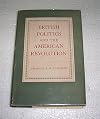
Even though this book was written more than half a century ago, it still covers aspects of its topic that have not been fully fleshed out. Specifically, how did the events in America leading up to and including the early stages of the American Revolution impact domestic politics within Great Britain. Ritcheson speaks at length about how the dynamics of American unrest led to a reordering of parties and factions in the British Parliament and how George III used those changed dynamics to show more breathe life into his reorganisation of the relationship between Crown and Ministers. Particular attention is paid to how Edmund Burke, on behalf of the Old Whigs, sparred with Lord North's Ministry and its policies. Burke is shown to have been inconsistent in his framing of the government's response to America on occasion in order to bolster the Old Whig's reputation as being more consistently supportive of the British Constitutional settlement.
The heart of the book is a debate over which side was truly defending the British Constitution and the Settlement of 1688. Ritcheson argues cogently that when Americans appealed to the Crown and the person of the king against the Parliament they were turning the British Constitutional settlement on its head; Parliament alone stood as the defender of British (and American) liberties against the encroachments of the Crown. A traditional understanding of the Glorious Revolution would not admit of any other interpretation. Americans could not conceive that the king could not address American concerns except through his ministers in Parliament.
Ritcheson argues that what the Americans were envisioning was a theory of empire built along the lines of a commonwealth akin to what the British Empire was destined to become. This would be self-governing component parts held together solely through common allegiance to the Crown. That would never be possible until the Crown ceased to be a potent force within party politics. The notion of the Crown not being a potent force in party politics, though was anathema to George III. This American theory of empire, which was discussed in embryonic form among some British Parliamentarians, would only be realised when the monarch became divorced from party politics and could, therefore, serve as a unifying symbol, above politics, to all the Crown's scattered peoples.
As I stated, the book is over half a century old, but these themes are still important avenues of inquiry for any historian exploring the British reaction to the American Revolution. show less
The heart of the book is a debate over which side was truly defending the British Constitution and the Settlement of 1688. Ritcheson argues cogently that when Americans appealed to the Crown and the person of the king against the Parliament they were turning the British Constitutional settlement on its head; Parliament alone stood as the defender of British (and American) liberties against the encroachments of the Crown. A traditional understanding of the Glorious Revolution would not admit of any other interpretation. Americans could not conceive that the king could not address American concerns except through his ministers in Parliament.
Ritcheson argues that what the Americans were envisioning was a theory of empire built along the lines of a commonwealth akin to what the British Empire was destined to become. This would be self-governing component parts held together solely through common allegiance to the Crown. That would never be possible until the Crown ceased to be a potent force within party politics. The notion of the Crown not being a potent force in party politics, though was anathema to George III. This American theory of empire, which was discussed in embryonic form among some British Parliamentarians, would only be realised when the monarch became divorced from party politics and could, therefore, serve as a unifying symbol, above politics, to all the Crown's scattered peoples.
As I stated, the book is over half a century old, but these themes are still important avenues of inquiry for any historian exploring the British reaction to the American Revolution. show less
You May Also Like
Associated Authors
Statistics
- Works
- 3
- Also by
- 1
- Members
- 22
- Popularity
- #553,377
- Rating
- 4.0
- Reviews
- 1
- ISBNs
- 5