
John Picacio
Author of The invisible parade
About the Author
Image credit: John Burlinson. Dec. 8, 2007
Works by John Picacio
Associated Works
Elric: The Stealer of Souls {Del Rey omnibus} (2008) — Illustrator, some editions — 665 copies, 13 reviews
The Fantasy Writer's Assistant and Other Stories (2002) — Cover artist, some editions — 192 copies, 6 reviews
Fast Forward 1: Future Fiction from the Cutting Edge (2007) — Cover artist, some editions — 139 copies, 5 reviews
Tales from la Vida: A Latinx Comics Anthology (Latinographix) (2018) — Contributor — 44 copies, 3 reviews
The Resurrection Man's Legacy: And Other Stories (2003) — Cover artist, some editions — 37 copies, 2 reviews
The Girl Who Loved Animals: And Other Stories (2007) — Cover artist, some editions — 33 copies, 1 review
Knowing Darkness: Artists Inspired by Stephen King (2009) — Illustrator, some editions — 33 copies, 2 reviews
How to Move Spheres and Influence People (2019) — Cover artist, some editions — 19 copies, 2 reviews
Asimov's Science Fiction: Vol. 32, No. 9 [September 2008] (2008) — Cover artist — 16 copies, 2 reviews
Asimov's Science Fiction: Vol. 33, No. 9 [September 2009] (2009) — Cover artist — 15 copies, 1 review
Elric: Die illustrierte Gesamtausgabe | Neu übersetzte Prachtausgabe (2023) — Illustrator, some editions — 8 copies
Tagged
Common Knowledge
- Legal name
- Picacio, John
- Birthdate
- 1969-09-03
- Gender
- male
- Occupations
- artist
- Organizations
- Lone Boy
- Awards and honors
- Hugo Nominee (Professional artist, 2026)
Locus Award (Artist, 2026) - Nationality
- USA
- Birthplace
- San Antonio, Texas, USA
- Associated Place (for map)
- Texas, USA
Members
Reviews
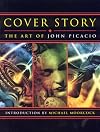
I have see the future of speculative fiction art, and its name is John Picacio.
Except, if I'm being honest with myself and my readers, that's not true. It's a damn lie, in fact. You see, to be the future would imply that Picacio has yet to come into his own. Anyone who even casually thumbs through Cover Story: The Art of John Picacio knows full well that this young artist has arrived. The question isn't how good he is, it's how much better can he possibly get?
The immediate impulse is to show more compare Picacio to the genre greats who've come before him, giants with names like Don Maitz, Frank Kelly Freas, Michael Whelan, the Brothers Hildebrandt. That impulse is a mistake, though, doing a disservice to both Picacio and those other artists. Art isn't a measured quality that can be run as a horse race. Pitting the work of Richard M. Powers against Wayne Douglas Barlowe's in a steel cage match is the sport of fools. They're all obscenely talented, all distinctive and all were the hot new thing at some point in their careers. As is Picacio now.
What set Picacio's work apart from others on the bookshelf is his refusal to pigeonhole himself into one trademark style. That's not to say a Picacio cover isn't immediately recognizable--it is, often startlingly so. But Picacio isn't one who's work is content with one basic calling card. He works digitally, yes, but his paintings are done with canvass and brush, not mouse clicks and Photoshop. He builds shadow boxes around paintings to complete the scene. Found objects take on new life when touched by his imagination. He has a particular affinity for earth tones, but can turn around and dazzle with the most spectacular use of luminous color. His seemingly effortless creative diversity is his distinctive edge, and it that primal foundation of his art that is instantly recognizable rather than any simple technical mode.
Picacio is an artist blessed with an obscene amount of talent--more than any single human being has a right to. Fortunately for the rest of us mortals, he only uses his powers for good. show less
Except, if I'm being honest with myself and my readers, that's not true. It's a damn lie, in fact. You see, to be the future would imply that Picacio has yet to come into his own. Anyone who even casually thumbs through Cover Story: The Art of John Picacio knows full well that this young artist has arrived. The question isn't how good he is, it's how much better can he possibly get?
The immediate impulse is to show more compare Picacio to the genre greats who've come before him, giants with names like Don Maitz, Frank Kelly Freas, Michael Whelan, the Brothers Hildebrandt. That impulse is a mistake, though, doing a disservice to both Picacio and those other artists. Art isn't a measured quality that can be run as a horse race. Pitting the work of Richard M. Powers against Wayne Douglas Barlowe's in a steel cage match is the sport of fools. They're all obscenely talented, all distinctive and all were the hot new thing at some point in their careers. As is Picacio now.
What set Picacio's work apart from others on the bookshelf is his refusal to pigeonhole himself into one trademark style. That's not to say a Picacio cover isn't immediately recognizable--it is, often startlingly so. But Picacio isn't one who's work is content with one basic calling card. He works digitally, yes, but his paintings are done with canvass and brush, not mouse clicks and Photoshop. He builds shadow boxes around paintings to complete the scene. Found objects take on new life when touched by his imagination. He has a particular affinity for earth tones, but can turn around and dazzle with the most spectacular use of luminous color. His seemingly effortless creative diversity is his distinctive edge, and it that primal foundation of his art that is instantly recognizable rather than any simple technical mode.
Picacio is an artist blessed with an obscene amount of talent--more than any single human being has a right to. Fortunately for the rest of us mortals, he only uses his powers for good. show less
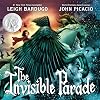
As her family and neighbors prepare for Dia de los Muertos, Cala is mired in sadness and grief, missing her grandfather. She reluctantly accompanies her family to the cemetery, and when she is separated from them, she meets four horsemen: illness, hunger, anger, and Death. But through her interactions with them, they become less frightening, and Cala and Death rejoin the party - together.
The art is dark, dreamy, marvelous; I especially love the negative space between Death's horse's show more crow-like wings turning into birds.
Text-heavy, so best for older children with longer attention spans.
See also: Popo the Xolo; Coco (movie) show less
The art is dark, dreamy, marvelous; I especially love the negative space between Death's horse's show more crow-like wings turning into birds.
Text-heavy, so best for older children with longer attention spans.
See also: Popo the Xolo; Coco (movie) show less
On a purely aesthetic level, Cover Story: The Art of John Picacio is a beautiful book. The cover is gorgeous, featuring a triptych of book covers wildly divergent in style but connected by Picacio's rich palette of colors. Everything comes together with a feel that's both functional and artistic, from the typeface to the richly colored endpapers to the glossy pages.
But let's be honest — pretty covers and a smart layout will only take you so far. What really counts is the content, show more right?
Luckily the content is top-notch, too. Along with full-page, full-color reproductions of the covers we get sketches and background info about the creation of each cover. This insight into the creative process sets the book apart for me. Knowing that, say, the wings from John's cover to Dangerous Visions were actually built and existed in the real world adds to my appreciation of the picture. In fact, if I have a quibble, it's that I'd love to see even more of this background material. It's not that what's here isn't relevant or informative; rather it's that I find all of these tidbits so interesting that I'd like to hear more.
But the book would be well worth the cover price for the pictures alone. show less
But let's be honest — pretty covers and a smart layout will only take you so far. What really counts is the content, show more right?
Luckily the content is top-notch, too. Along with full-page, full-color reproductions of the covers we get sketches and background info about the creation of each cover. This insight into the creative process sets the book apart for me. Knowing that, say, the wings from John's cover to Dangerous Visions were actually built and existed in the real world adds to my appreciation of the picture. In fact, if I have a quibble, it's that I'd love to see even more of this background material. It's not that what's here isn't relevant or informative; rather it's that I find all of these tidbits so interesting that I'd like to hear more.
But the book would be well worth the cover price for the pictures alone. show less
Wow just wow. The artwork was utterly beautiful and just amazing throughout! This book is about a girl who lost her grandfather and is sad and doesn't want to party on the Day of the Dead. But four "skeletons" find her in the graveyard that may change her mind. Just a wonderful story for any age.
Awards


You May Also Like
Associated Authors
Statistics
- Works
- 4
- Also by
- 75
- Members
- 122
- Popularity
- #163,288
- Rating
- 4.0
- Reviews
- 8
- ISBNs
- 6