
Murphy Anderson (1926–2015)
Author of Showcase Presents: Green Lantern, Vol. 2
Series
Works by Murphy Anderson
Adam Strange: The Silver Age Omnibus (2017) — Inker, Penciller (1/2 story), and Artist (1 story) — 24 copies
Hawkman [1964] #3 — Illustrator — 1 copy
Hawkman [1964] #7 — Illustrator — 1 copy
Hawkman [1964] #6 — Illustrator — 1 copy
Hawkman [1964] #8 — Illustrator — 1 copy
Hawkman [1964] #9 — Illustrator — 1 copy
Hawkman [1964] #5 — Illustrator — 1 copy
Hawkman [1964] #4 — Illustrator — 1 copy
Hawkman [1964] #2 — Illustrator — 1 copy
Hawkman [1964] #1 — Illustrator — 1 copy
Mystery in Space [1951] #89 — Illustrator — 1 copy
Hawkman [1964] #11 — Illustrator — 1 copy
Associated Works
Superman's Girl Friend Lois Lane, no. 99 — Cover artist — 1 copy
Mystery in Space [1951] #90 — Illustrator — 1 copy
Mystery in Space [1951] #88 — Illustrator — 1 copy
Mystery in Space [1951] #87 — Illustrator — 1 copy
Superman's Girl Friend, Lois Lane #097 — Cover artist — 1 copy
Superman's Girl Friend Lois Lane, no. 105 — Cover artist — 1 copy
Tagged
Common Knowledge
- Legal name
- Anderson, Murphy Clyde
- Birthdate
- 1926-07-09
- Date of death
- 2015-10-23
- Gender
- male
- Occupations
- comic book artist
- Nationality
- USA
- Birthplace
- Ashville, North Carolina, USA
- Associated Place (for map)
- North Carolina, USA
Members
Reviews
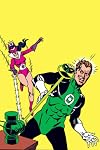
My new year’s resolution is to read my stack of ‘DC Showcase’ at the rate of one comic magazine per day. As they usually contain over twenty issues I should get through one and a bit per month. I can’t do more than one a day as they tend to blend into each other in a foggy blur of pseudo-science which makes individual issues hard to remember. This volume runs from Green Lantern # 18 (January 1963) to Green Lantern # 38 (July 1965) so it’s two and a half years worth of comic show more books.
The thing with Silver Age DC Comics is that nothing changes in the life of the characters. When this volume starts Hal Jordan (Green Lantern) works as a test pilot for the Ferris Aircraft Company run by Carol Ferris who likes Hal but loves Green Lantern. He is assisted by a ‘grease-monkey’ called Thomas Kalmaku – nicknamed Pieface, an Eskimo who knows his super-hero identity and keeps a file of his cases as Doctor Watson did for Sherlock Holmes. Jordan is a member of the Green Lantern Corps founded by the Guardians of the Universe who occasionally summon him to help out on another planet. By the end of the book, none of this has changed.
As most issues contain two stories there are nearly forty tales here so the thing to do would be to pick out the highlights. There aren’t any highlights. One yarn is pretty much the same quality as any other. Partly that’s because they were all written by either John Broome or Gardner Fox. Both have a way with science that is less than accurate but generally, Fox takes it to greater extremes of fantasy. He writes every issue from # 32 onwards but before that, it’s more or less fifty-fifty between these twin titans of the tall story.
Lacking highlights I will, in a good-natured way, pick out the worst science. Not that I know much science but a clever ten-year-old could see through most of this hokum. In ‘Green Lantern vs. Power Ring’ (GL#18) Hal is practising controlling the ring at a distance through rock when he is separated from it by a cave-in. A hungry hobo picks it up and thinks he fancies a melon. A melon appears! But the ring cannot work on anything yellow ‘due to a necessary impurity’ so how can it create melons? In GL#24, ‘The Shark That Hunted Human Prey’, a tiger shark is evolved into a human and then beyond by a freak nuclear accident so that with ‘mind power’ it can do anything. An ‘invisible yellow aura’ protects it from Green Lantern’s ring. How can something invisible be yellow? In ‘The House That Fought Green Lantern’ (#28) the ring is useless because it’s affected by the vibrations of a grandfather clock. In ‘This World Is Mine’ (#29), an evil force animates a giant papier-mâché model of Green Lantern and uses it to destroy fairground rides. Steel is generally reckoned to be stronger than papier-mâché and able to resist it. In ‘Three Way Attack Against Green Lantern‘ (GL#34), villain Hector Hammond uses his super-brain to create an ‘energy duplicate’ of a Guardian of the Universe to defeat Green Lantern. This is from Gardner Fox who had someone use ‘tornado power’ to create duplicates of the Justice League of America to defeat them. How can you create things more powerful than yourself? Oh, those duplicates!
Part of the problem is that the power ring can do anything. In ‘Secret Of The Power-Ringed Robot’ (GL#36), it transforms Hal’s flesh into a robot body, allowing a spectacular cover in which his arm comes off. In another story, ‘The Spies Who Owned Green Lantern’ (GL#37), it turns him into a letter and Pieface posts him to the criminals' hideout. It frequently reads minds and there’s a microworld inside it where Abin Sur trapped a villain called Myrwhydden in ‘World Within the Power Ring’ (GL #26) as you do.
On the credit side, a few ideas here seem to precede similar stories over at the Mighty Competition, a company whose oeuvre I know well. ‘Parasite Planet Peril’ (GL#20, April 1963) is a kind of highlight because it’s of ‘novel’ length and teams GL up with Flash. They are both shrunk down to a microworld. Something similar happened in the world’s greatest comic magazine in July 1963, though to be fair, the microworld idea is older than that. In fact, it dates back to ‘Out Of The Sub-Universe’, a 1928 story by Roman Frederick Starzl. In ‘The Strange World Named Green Lantern’ (GL#24, October 1963), the emerald crusader meets a living planet, a whole world that is one single entity. Perhaps lacking a big ego (geddit?), it calls itself Green Lantern after the hero it so admires. Research indicates that the notion of a living planet dates back to Nat Schachner and Arthur Leo Zagat’s 1931 short story ‘The Menace From Andromeda’. There are probably few far-out ideas that weren’t explored in the first three decades of American Science Fiction magazines.
In a few of the adventures, our hero wins when all seems lost because he had, with unusual prescience, done something earlier to foil the villain’s final attack. In ‘Master Of The Power Ring (GL#22), he had ordered the ring to drain itself of energy if another mind took it over. In ‘The Defeat Of Green Lantern’ (GL#19), he had previously created a globe of green energy to rescue him in time of need. Perhaps he read the script first, like Colombo.
As for the art, Gil Kane pencils are constrained by the DC house style and the inks of Joe Giella and Murphy Anderson up to issue #28. In number #29, Sid Greene takes over the inks and there’s a bit of a step up in quality, I think. Not a giant leap, the other two are worthy professionals, but he seems to put in more blacks and generally give it a more solid look. Kane’s pencils still keep the house style but there are odd flashes of the more dynamic poses and knobbly figures he developed over time. Personally, I prefer the restrained stuff to the unleashed Kane of later years. All the art is fine and much of it is first class.
Some of these reprint editions are being sold at ludicrous prices but this one is still available for a few pounds or dollars. A reasonably good read if taken in small doses and not too seriously. The art is a treat and the stories are good for a laugh. The science should be taken with a pinch of salt. No, an oil tanker of salt. I’m off to have dinner now. I shall eat beans and then use the wind power generated to create an energy duplicate of Superman who will conquer the world for me.
Eamonn Murphy
This review first appeared at https://www.sfcrowsnest.info/ show less
The thing with Silver Age DC Comics is that nothing changes in the life of the characters. When this volume starts Hal Jordan (Green Lantern) works as a test pilot for the Ferris Aircraft Company run by Carol Ferris who likes Hal but loves Green Lantern. He is assisted by a ‘grease-monkey’ called Thomas Kalmaku – nicknamed Pieface, an Eskimo who knows his super-hero identity and keeps a file of his cases as Doctor Watson did for Sherlock Holmes. Jordan is a member of the Green Lantern Corps founded by the Guardians of the Universe who occasionally summon him to help out on another planet. By the end of the book, none of this has changed.
As most issues contain two stories there are nearly forty tales here so the thing to do would be to pick out the highlights. There aren’t any highlights. One yarn is pretty much the same quality as any other. Partly that’s because they were all written by either John Broome or Gardner Fox. Both have a way with science that is less than accurate but generally, Fox takes it to greater extremes of fantasy. He writes every issue from # 32 onwards but before that, it’s more or less fifty-fifty between these twin titans of the tall story.
Lacking highlights I will, in a good-natured way, pick out the worst science. Not that I know much science but a clever ten-year-old could see through most of this hokum. In ‘Green Lantern vs. Power Ring’ (GL#18) Hal is practising controlling the ring at a distance through rock when he is separated from it by a cave-in. A hungry hobo picks it up and thinks he fancies a melon. A melon appears! But the ring cannot work on anything yellow ‘due to a necessary impurity’ so how can it create melons? In GL#24, ‘The Shark That Hunted Human Prey’, a tiger shark is evolved into a human and then beyond by a freak nuclear accident so that with ‘mind power’ it can do anything. An ‘invisible yellow aura’ protects it from Green Lantern’s ring. How can something invisible be yellow? In ‘The House That Fought Green Lantern’ (#28) the ring is useless because it’s affected by the vibrations of a grandfather clock. In ‘This World Is Mine’ (#29), an evil force animates a giant papier-mâché model of Green Lantern and uses it to destroy fairground rides. Steel is generally reckoned to be stronger than papier-mâché and able to resist it. In ‘Three Way Attack Against Green Lantern‘ (GL#34), villain Hector Hammond uses his super-brain to create an ‘energy duplicate’ of a Guardian of the Universe to defeat Green Lantern. This is from Gardner Fox who had someone use ‘tornado power’ to create duplicates of the Justice League of America to defeat them. How can you create things more powerful than yourself? Oh, those duplicates!
Part of the problem is that the power ring can do anything. In ‘Secret Of The Power-Ringed Robot’ (GL#36), it transforms Hal’s flesh into a robot body, allowing a spectacular cover in which his arm comes off. In another story, ‘The Spies Who Owned Green Lantern’ (GL#37), it turns him into a letter and Pieface posts him to the criminals' hideout. It frequently reads minds and there’s a microworld inside it where Abin Sur trapped a villain called Myrwhydden in ‘World Within the Power Ring’ (GL #26) as you do.
On the credit side, a few ideas here seem to precede similar stories over at the Mighty Competition, a company whose oeuvre I know well. ‘Parasite Planet Peril’ (GL#20, April 1963) is a kind of highlight because it’s of ‘novel’ length and teams GL up with Flash. They are both shrunk down to a microworld. Something similar happened in the world’s greatest comic magazine in July 1963, though to be fair, the microworld idea is older than that. In fact, it dates back to ‘Out Of The Sub-Universe’, a 1928 story by Roman Frederick Starzl. In ‘The Strange World Named Green Lantern’ (GL#24, October 1963), the emerald crusader meets a living planet, a whole world that is one single entity. Perhaps lacking a big ego (geddit?), it calls itself Green Lantern after the hero it so admires. Research indicates that the notion of a living planet dates back to Nat Schachner and Arthur Leo Zagat’s 1931 short story ‘The Menace From Andromeda’. There are probably few far-out ideas that weren’t explored in the first three decades of American Science Fiction magazines.
In a few of the adventures, our hero wins when all seems lost because he had, with unusual prescience, done something earlier to foil the villain’s final attack. In ‘Master Of The Power Ring (GL#22), he had ordered the ring to drain itself of energy if another mind took it over. In ‘The Defeat Of Green Lantern’ (GL#19), he had previously created a globe of green energy to rescue him in time of need. Perhaps he read the script first, like Colombo.
As for the art, Gil Kane pencils are constrained by the DC house style and the inks of Joe Giella and Murphy Anderson up to issue #28. In number #29, Sid Greene takes over the inks and there’s a bit of a step up in quality, I think. Not a giant leap, the other two are worthy professionals, but he seems to put in more blacks and generally give it a more solid look. Kane’s pencils still keep the house style but there are odd flashes of the more dynamic poses and knobbly figures he developed over time. Personally, I prefer the restrained stuff to the unleashed Kane of later years. All the art is fine and much of it is first class.
Some of these reprint editions are being sold at ludicrous prices but this one is still available for a few pounds or dollars. A reasonably good read if taken in small doses and not too seriously. The art is a treat and the stories are good for a laugh. The science should be taken with a pinch of salt. No, an oil tanker of salt. I’m off to have dinner now. I shall eat beans and then use the wind power generated to create an energy duplicate of Superman who will conquer the world for me.
Eamonn Murphy
This review first appeared at https://www.sfcrowsnest.info/ show less

Access a version of the below that includes illustrations on my blog.
This volume contains sci-fi material (normally I try to say "sf," not "sci-fi"... but this material is definitely sci-fi, not sf) from Strange Adventures, Mystery in Space, and Action Comics. Mostly they are standalone one-off tales; if you've read any of DC's horror anthologies from around the late 1960s and early '70s (e.g., House of Mystery, House of Secrets, The Witching Hour), as I have, you'll recognize the show more format. There are a few recurring features: in addition to the Captain Comet stories from Strange Adventures, there are also stories about Tommy Tomorrow of the Planeteers from Action, "Interplanetary Insurance, Inc." from Mystery in Space, and the very first "Space Cabbie" story from Mystery in Space #21 (by Otto Binder and Howard Sherman), which would go on to become a recurring feature.
I have enjoyed some archival Captain Comet stories I've read (e.g., those reprinted in DC Super-Stars of Space), but these struck me as rather anodyne. Later creators would do good stuff with this setup, but here, the character is pretty bland. The most interesting ones here are definitely Strange Adventures #35, where he meets the "Guardians of the Universe" (writer John Broome clearly beginning to iterate concepts he would crystallize much more successfully in Green Lantern a few years later; art by Murphy Anderson) and #39 (by John Broome and Murphy Anderson), where he testifies against a murderous sapient gorilla (mostly because I enjoyed how this one started in medias res with a whole implied adventure beforehand).
The Tommy Tomorrow stuff, though, was even worse. This guy has no personality and, as far as I could tell, no consistent supporting cast or worldbuilding from story to story. He's very very occasionally been brought back, but I assume only because later writers would have read these stories when they were five. Outside of indiscriminate nostalgia, I don't see what you could enjoy in these tales.
On the other hand, I was surprised by how much I enjoyed the stories of "I.I.I.": Interplanetary Insurance, Inc. I don't know why someone at DC Comics thought kids would love stories of an interplanetary insurance fraud investigator, but it's the exact kind of mixing of the mundane and the fantastic that I enjoy. The stories don't always make a lot of sense on their own terms (maybe you should investigate the life-cycles of newly discovered aliens before selling them life insurance?) but the idea was wacky enough to be delightful. Similarly, the one "Space Cabbie" story here is good fun, and you can see why DC picked it up to be a recurring feature later on. DC has brought back Space Cabbie occasionally, but where is my return appearance for Bert Brandon of I.I.I.!?
Outside of those features, this is entirely done-in-one standalone tales. Like I said, it reminded me a lot of the DC horror anthologies I've read... but those were much more consistently enjoyable than these. Is horror an easier genre to get right than sci-fi? Or have 1960s horror trappings just dated less than 1950s sci-fi trappings? The stuff here is largely pretty cheeseball. Lots of bug-eyed aliens and mad scientists who invent amazing technologies but can't think of anything better to do with them than petty theft. Every now and then there was a good one in a sort of sub-Twilgiht Zone kind of way. My favorite was probably "The Eye-Dropper World" (from Strange Adventures #42, by Otto Binder, Murphy Anderson, and Joe Giella), where a guy evolves a species of oversized paramecium to sentience in his backyard with tragic results.
So, overall, this is fine in terms of actual reading experience. But it's great in terms of the archival experience: I suspect most, if not all, of these stories have never been reprinted before; the "DC Finest" volumes have given us some sure things, like "triangle era" Superman and the Jim Shooter Legion and Mike Grell's Green Arrow, but I appreciate very much their commitment to more forgotten aspects of DC's long publication history. I doubt this well sell as well as any of those, but I hope we get more volumes of Silver Age sci-fi. show less
This volume contains sci-fi material (normally I try to say "sf," not "sci-fi"... but this material is definitely sci-fi, not sf) from Strange Adventures, Mystery in Space, and Action Comics. Mostly they are standalone one-off tales; if you've read any of DC's horror anthologies from around the late 1960s and early '70s (e.g., House of Mystery, House of Secrets, The Witching Hour), as I have, you'll recognize the show more format. There are a few recurring features: in addition to the Captain Comet stories from Strange Adventures, there are also stories about Tommy Tomorrow of the Planeteers from Action, "Interplanetary Insurance, Inc." from Mystery in Space, and the very first "Space Cabbie" story from Mystery in Space #21 (by Otto Binder and Howard Sherman), which would go on to become a recurring feature.
I have enjoyed some archival Captain Comet stories I've read (e.g., those reprinted in DC Super-Stars of Space), but these struck me as rather anodyne. Later creators would do good stuff with this setup, but here, the character is pretty bland. The most interesting ones here are definitely Strange Adventures #35, where he meets the "Guardians of the Universe" (writer John Broome clearly beginning to iterate concepts he would crystallize much more successfully in Green Lantern a few years later; art by Murphy Anderson) and #39 (by John Broome and Murphy Anderson), where he testifies against a murderous sapient gorilla (mostly because I enjoyed how this one started in medias res with a whole implied adventure beforehand).
The Tommy Tomorrow stuff, though, was even worse. This guy has no personality and, as far as I could tell, no consistent supporting cast or worldbuilding from story to story. He's very very occasionally been brought back, but I assume only because later writers would have read these stories when they were five. Outside of indiscriminate nostalgia, I don't see what you could enjoy in these tales.
On the other hand, I was surprised by how much I enjoyed the stories of "I.I.I.": Interplanetary Insurance, Inc. I don't know why someone at DC Comics thought kids would love stories of an interplanetary insurance fraud investigator, but it's the exact kind of mixing of the mundane and the fantastic that I enjoy. The stories don't always make a lot of sense on their own terms (maybe you should investigate the life-cycles of newly discovered aliens before selling them life insurance?) but the idea was wacky enough to be delightful. Similarly, the one "Space Cabbie" story here is good fun, and you can see why DC picked it up to be a recurring feature later on. DC has brought back Space Cabbie occasionally, but where is my return appearance for Bert Brandon of I.I.I.!?
Outside of those features, this is entirely done-in-one standalone tales. Like I said, it reminded me a lot of the DC horror anthologies I've read... but those were much more consistently enjoyable than these. Is horror an easier genre to get right than sci-fi? Or have 1960s horror trappings just dated less than 1950s sci-fi trappings? The stuff here is largely pretty cheeseball. Lots of bug-eyed aliens and mad scientists who invent amazing technologies but can't think of anything better to do with them than petty theft. Every now and then there was a good one in a sort of sub-Twilgiht Zone kind of way. My favorite was probably "The Eye-Dropper World" (from Strange Adventures #42, by Otto Binder, Murphy Anderson, and Joe Giella), where a guy evolves a species of oversized paramecium to sentience in his backyard with tragic results.
So, overall, this is fine in terms of actual reading experience. But it's great in terms of the archival experience: I suspect most, if not all, of these stories have never been reprinted before; the "DC Finest" volumes have given us some sure things, like "triangle era" Superman and the Jim Shooter Legion and Mike Grell's Green Arrow, but I appreciate very much their commitment to more forgotten aspects of DC's long publication history. I doubt this well sell as well as any of those, but I hope we get more volumes of Silver Age sci-fi. show less
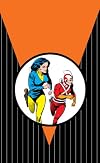
The intro was well done and I appreciated the diffrention about this science-fiction super-hero from his peers back in the day. Rather than using strength or fighting skill as the number one method of overcoming obsticles and/or enemies Adam Strange used his mind to come up with creative means of winning out.
Art work was really well done. Stories seemed very simple with minimal character development.
Standard excellent quality for Archive editions.
Art work was really well done. Stories seemed very simple with minimal character development.
Standard excellent quality for Archive editions.
GL is really a stupid concept if you think about it. Hal Jordan has a magic ring that essential functions like Aladdin's genie, but rather than simply scooping up the bad guys and hauling them to jail, GL makes his ring form all kinds of silly shapes and snares. I guess it was done to keep things interesting but it reminds me of the old Popeye cartoons where a hive of bees would shape themselves into the form a pair of scissors and cut Popeye's clothes to pieces.
Still it does have Gil Kane's show more wonderful art so it's not totally bad. show less
Still it does have Gil Kane's show more wonderful art so it's not totally bad. show less
You May Also Like
Associated Authors
Statistics
- Works
- 34
- Also by
- 52
- Members
- 341
- Popularity
- #69,902
- Rating
- 4.0
- Reviews
- 8
- ISBNs
- 16
- Languages
- 1