

Anna Jansson
Author of Strange Bird
About the Author
Image credit: Jan Ainali
Series
Works by Anna Jansson
Maria Wern 02: Strange Bird 1 copy
Cette ombre derrière toi 1 copy
Maria Wener 1 t/m 4 1 copy
Vem är utan skuld POCKET ???? — Author — 1 copy
Brevtjuven 1 copy
Tuhopolttaja Hämärän Lapset 1 copy
Associated Works
Tagged
Common Knowledge
- Legal name
- Jansson, Anna Maria Angelika
- Birthdate
- 1958-02-13
- Gender
- female
- Nationality
- Sweden
- Associated Place (for map)
- Sweden
Members
Reviews

This is the second case in the Kristoffer Bark series, which once again had me on the edge of my seat from the first page to the last.
Years ago, a woman's body was found in a barrel pierced with nails – and now the killer has a new target.
Six months after the dramatic search for his daughter, one thing remains unchanged for Kristoffer Bark: he is still leafing through the dusty files of unsolved cold cases. He is currently working on the case of Emelie Kartmann, who was brutally murdered show more years ago. The victim had previously reported being stalked. But before Kristoffer can delve deeper into the case, the husband of his colleague Sara Bredow, who is on long-term sick leave, is suddenly murdered, and in the course of his investigations, Kristoffer discovers that Sara is being subjected to similar harassment as Emelie once was. Is there a connection between the cases? If so, his colleague is in mortal danger.
I have grown fond of Kristoffer Bark's team. Even though this team is “sidelined” within the police force for reasons of ADHD, panic attacks, hypochondria, etc., it is precisely this group that can solve not only cold cases but also current cases and regularly has to disregard the orders of the upper management, who cannot see beyond the ends of their own noses.
I am really looking forward to the next volume in this series. show less
Years ago, a woman's body was found in a barrel pierced with nails – and now the killer has a new target.
Six months after the dramatic search for his daughter, one thing remains unchanged for Kristoffer Bark: he is still leafing through the dusty files of unsolved cold cases. He is currently working on the case of Emelie Kartmann, who was brutally murdered show more years ago. The victim had previously reported being stalked. But before Kristoffer can delve deeper into the case, the husband of his colleague Sara Bredow, who is on long-term sick leave, is suddenly murdered, and in the course of his investigations, Kristoffer discovers that Sara is being subjected to similar harassment as Emelie once was. Is there a connection between the cases? If so, his colleague is in mortal danger.
I have grown fond of Kristoffer Bark's team. Even though this team is “sidelined” within the police force for reasons of ADHD, panic attacks, hypochondria, etc., it is precisely this group that can solve not only cold cases but also current cases and regularly has to disregard the orders of the upper management, who cannot see beyond the ends of their own noses.
I am really looking forward to the next volume in this series. show less
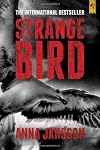
Strange Bird by Anna Jansson, set in Sweden on the island of Gotland, is Book One of the fourteen books in the Maria Wern series, translated into English by Paul Norlen (available September 17, 2013.)
Something deadly has landed on Gotland. Ruben Nilsson raises homing pigeons and has been preparing for an upcoming race when he discovers that a new pigeon has flown into his dovecote, a “sturdy, light brown speckled bird with a white head.... A truly powerful bird, although a bit worn out show more after the flight. Marked with a metal ring around the foot. A foreigner—in Sweden, the pigeons have plastic rings. A flying tourist on a visit?”
Nilsson believes the bird, which comes from Biaroza in Belarus, will prove to be a prize worthy treasure. Instead, like a Trojan Horse, it carries inside it a means of killing thousands. The foreign bird is the source of a deadly flu, which soon turns into a pandemic; deaths begin to mount, and panic spreads among the Island’s inhabitants.
A dead man is discovered on an abandoned farm. The man, who has no identity papers, has been murdered. An empty birdcage is found in his car. Detective Inspector Maria Wern is assigned to the case and soon learns that there is a link between the dead man and the pandemic.
Wern can’t solve the case fast enough. Just two days after first encountering the bird, Ruben Nilsson is dead. His neighbor, Berit Hoas, who nursed him through what she thought was a simple flu, falls ill, but not before making breakfast for kids at the soccer camp where she works as a cook. Peter Cederroth drives her to the hospital in his cab. Through these seemingly innocent and neighborly actions, the pandemic spreads quickly through the island from the children at the camp to the staff at the hospital.
A newly built health center, which has a vaccine for those who can pay, might be at the center of the case. Something about it makes Maria Wern uneasy. “She looked with disfavor at the pompous entryway and tried to explain to herself what it was that aroused such feelings of antipathy. The injustice in that someone can buy themselves a place before others in the line for healthcare, faster diagnosis, faster treatment. And yet. If you were in that position yourself and had the chance to pay to be rid of pain. . . .And yet you would hope that the public healthcare system could offer the optimal treatment, that solidarity would somehow find a way.”
Detective Maria Wern appears more concerned with the pandemic than the murders she has been charged with solving. Perhaps this is because her son is infected. Talking to a doctor at the hospital where her son is being treated for the flu, Maria says, “I read a book about the plague last summer . . . It sounded mostly like an exciting fairy tale. I never thought about it as the reality of living people. Maybe you can’t understand history without experiencing it. That’s why mistakes are repeated over and over. It’s not just about reason. The author had a theory that the plague spread so quickly because people fled from death. They didn’t know that they were infected themselves and so it spread like wildfire.”
The author is perhaps using the plague allegorically, saying to readers that Gotland and even Sweden are infected and ill prepared should disaster strike them as it has elsewhere in Europe. While I admire Jansson’s social conscience, I would have preferred more mystery and less pandemic.
As this is the first of Anna Jansson’s series to be translated into English, I am willing to suggest that her next book might well be worth reading. It can take two or three novels in a series to really get going. Some of the elements of a successful series are already in place: a detective with flaws and heart, an intriguing location, and a prolific author. show less
Something deadly has landed on Gotland. Ruben Nilsson raises homing pigeons and has been preparing for an upcoming race when he discovers that a new pigeon has flown into his dovecote, a “sturdy, light brown speckled bird with a white head.... A truly powerful bird, although a bit worn out show more after the flight. Marked with a metal ring around the foot. A foreigner—in Sweden, the pigeons have plastic rings. A flying tourist on a visit?”
Nilsson believes the bird, which comes from Biaroza in Belarus, will prove to be a prize worthy treasure. Instead, like a Trojan Horse, it carries inside it a means of killing thousands. The foreign bird is the source of a deadly flu, which soon turns into a pandemic; deaths begin to mount, and panic spreads among the Island’s inhabitants.
A dead man is discovered on an abandoned farm. The man, who has no identity papers, has been murdered. An empty birdcage is found in his car. Detective Inspector Maria Wern is assigned to the case and soon learns that there is a link between the dead man and the pandemic.
Wern can’t solve the case fast enough. Just two days after first encountering the bird, Ruben Nilsson is dead. His neighbor, Berit Hoas, who nursed him through what she thought was a simple flu, falls ill, but not before making breakfast for kids at the soccer camp where she works as a cook. Peter Cederroth drives her to the hospital in his cab. Through these seemingly innocent and neighborly actions, the pandemic spreads quickly through the island from the children at the camp to the staff at the hospital.
A newly built health center, which has a vaccine for those who can pay, might be at the center of the case. Something about it makes Maria Wern uneasy. “She looked with disfavor at the pompous entryway and tried to explain to herself what it was that aroused such feelings of antipathy. The injustice in that someone can buy themselves a place before others in the line for healthcare, faster diagnosis, faster treatment. And yet. If you were in that position yourself and had the chance to pay to be rid of pain. . . .And yet you would hope that the public healthcare system could offer the optimal treatment, that solidarity would somehow find a way.”
Detective Maria Wern appears more concerned with the pandemic than the murders she has been charged with solving. Perhaps this is because her son is infected. Talking to a doctor at the hospital where her son is being treated for the flu, Maria says, “I read a book about the plague last summer . . . It sounded mostly like an exciting fairy tale. I never thought about it as the reality of living people. Maybe you can’t understand history without experiencing it. That’s why mistakes are repeated over and over. It’s not just about reason. The author had a theory that the plague spread so quickly because people fled from death. They didn’t know that they were infected themselves and so it spread like wildfire.”
The author is perhaps using the plague allegorically, saying to readers that Gotland and even Sweden are infected and ill prepared should disaster strike them as it has elsewhere in Europe. While I admire Jansson’s social conscience, I would have preferred more mystery and less pandemic.
As this is the first of Anna Jansson’s series to be translated into English, I am willing to suggest that her next book might well be worth reading. It can take two or three novels in a series to really get going. Some of the elements of a successful series are already in place: a detective with flaws and heart, an intriguing location, and a prolific author. show less

Leichenschilf is the first volume in the Kristoffer Bark series. It took me a moment to 'warm up' to this crime thriller. I was particularly disturbed by the fate of Inspector Bark, which was more than obsessive and took up a lot of space, which made me feel at first how the protagonists and the course of the plot were interlinked.
Five years ago, his daughter Vera disappeared without a trace at Lake Hjälmar on her hen night. Her body was never found. Since then, Bark has been constantly show more searching for her or her trail, driving everyone around him mad. Vera's girlfriend also disappeared at the same time, but was found dead. Now a corpse appears on the lake shore. Who is she? What does she have to do with Vera's disappearance?
Even after all these years, Vera's fiancé is not making a good trap. Could he have something to do with Vera's disappearance or the body that was found?
Questions upon questions that kept me guessing what had happened in the last five years. show less
Five years ago, his daughter Vera disappeared without a trace at Lake Hjälmar on her hen night. Her body was never found. Since then, Bark has been constantly show more searching for her or her trail, driving everyone around him mad. Vera's girlfriend also disappeared at the same time, but was found dead. Now a corpse appears on the lake shore. Who is she? What does she have to do with Vera's disappearance?
Even after all these years, Vera's fiancé is not making a good trap. Could he have something to do with Vera's disappearance or the body that was found?
Questions upon questions that kept me guessing what had happened in the last five years. show less

This is the first English translation of Swedish author Anna Jansson's crime series featuring Detective Maria Vern. Although this title is the 11th book in the series, Maria actually doesn’t figure much in this story, so I didn’t feel I was missing essential plot elements by not having read earlier installments.
On the Swedish island of Gotland, there have been a number of vicious and ritualistic murders. The killer seems to know a great deal about his victims, who share some show more similarities. Maria’s colleague Erika takes the lead on this case, since Maria herself has been attacked, although she was not killed. [This fact turns out to be a possible clue to the killer’s motives.]
Erika juggles the demands of the casework with her personal life, and this compromises her dedication to solving the crimes. Meanwhile, suspense builds as the deaths continue and red herrings pile up, and dangers increase for the detectives involved in the case. It doesn't help matters that Erika bears a striking resemblance to some of the previous victims!
Discussion: In trying to make ambiguous the guilt or innocence of one of the main characters, the author has the character behave quite inconsistently and therefore this person is not too convincingly wrought. It’s an interesting problem from an authorial point of view – you want to create good red herrings, but you still need to create believable characters. Another red herring is the introduction of a plot line that in the end turns out to be totally unrelated to anything, and therefore its inclusion seems baffling rather than clever. Other authors have accomplished the art of constructing credible red herrings, but I don’t believe that Jansson has done so in this particular book.
Evaluation: In spite of some shortcomings, this is an entertaining page-turner. I had some problems with the story (see the Discussion, above), but would still recommend it for those wanting more familiarity with popular Swedish crime writers. Stockholm Text, the publisher, intends to translate more of these popular authors for English-speaking audiences. For me it is a bonus of globalization! show less
On the Swedish island of Gotland, there have been a number of vicious and ritualistic murders. The killer seems to know a great deal about his victims, who share some show more similarities. Maria’s colleague Erika takes the lead on this case, since Maria herself has been attacked, although she was not killed. [This fact turns out to be a possible clue to the killer’s motives.]
Erika juggles the demands of the casework with her personal life, and this compromises her dedication to solving the crimes. Meanwhile, suspense builds as the deaths continue and red herrings pile up, and dangers increase for the detectives involved in the case. It doesn't help matters that Erika bears a striking resemblance to some of the previous victims!
Discussion: In trying to make ambiguous the guilt or innocence of one of the main characters, the author has the character behave quite inconsistently and therefore this person is not too convincingly wrought. It’s an interesting problem from an authorial point of view – you want to create good red herrings, but you still need to create believable characters. Another red herring is the introduction of a plot line that in the end turns out to be totally unrelated to anything, and therefore its inclusion seems baffling rather than clever. Other authors have accomplished the art of constructing credible red herrings, but I don’t believe that Jansson has done so in this particular book.
Evaluation: In spite of some shortcomings, this is an entertaining page-turner. I had some problems with the story (see the Discussion, above), but would still recommend it for those wanting more familiarity with popular Swedish crime writers. Stockholm Text, the publisher, intends to translate more of these popular authors for English-speaking audiences. For me it is a bonus of globalization! show less
Lists
Awards

You May Also Like


Associated Authors
Statistics
- Works
- 88
- Also by
- 1
- Members
- 1,518
- Popularity
- #16,944
- Rating
- 3.2
- Reviews
- 49
- ISBNs
- 386
- Languages
- 14
- Favorited
- 5