
Yitzhak Rudashevski (1927–1943)
Author of Diary of the Vilna Ghetto
About the Author
Works by Yitzhak Rudashevski
טאגבוך פון ווילנער געטא 1 copy
Associated Works
Tagged
Common Knowledge
- Birthdate
- 1927-12-10
- Date of death
- 1943-10-01
- Gender
- male
- Occupations
- diarist
- Short biography
- Yitskhok Rudashevski was born to a close-knit Jewish family in Vilna (Vilnius), Lithuania, the only child of Rose and Elihu Rudashevski. His father worked as a typesetter for a well-known Yiddish newspaper and his mother was a seamstress. Yitskhok had a relatively comfortable childhood. He was 14 years old in 1941 when Nazi Germany invaded his city in World War II. He was confined to the Vilna Ghetto with his family, where he attended a clandestine school and kept a diary detailing his life and struggles. He was shot to death in the mass murder of Jews known as the Ponary massacre of September–October 1943. Yitskhok's diary was hidden and later discovered by a cousin who managed to escape the massacre and join the partisans. He returned to Vilna after the war and found Yitskhok's 204-page diary. It was published in 1973 by the Ghetto Fighters' House publisher in Israel and translated into English as The Diary of the Vilna Ghetto, June 1941-April 1943.
- Nationality
- Lithuania
- Birthplace
- Vilnius, Lithuania
- Places of residence
- Vilnius, Lithuania
- Place of death
- Vilnius, Lithuania
- Associated Place (for map)
- Vilnius, Lithuania
Members
Reviews

This is the diary of one of the "other Anne Franks," teen diarists of the Holocaust who are not nearly as famous as she. Yitskhok Rudashevski was fourteen when he began his diary in Vilna (Vilnius), Lithuania during the Nazi occupation. He was a gifted writer and wrote movingly of how his family and all the other Vilna Jews were confined to a ghetto and the ghetto kept shrinking and shrinking as the Nazis conducted "Aktions" and killed vast numbers of people, usually by machine-gunning them show more en masse at nearby Ponar. Rudashevski did not survive; he and his family went into hiding, but they were caught and almost all of them were executed. He was fifteen years old when he died. His account of the suffering of the Vilna Jews, and his own struggle to remain human amid the disaster, is well worth reading. show less
Holocaust Memorial Day (HMD) is commemorated each year on the 27th January, because that is the day of the liberation of the Nazi extermination and concentration camp at Auschwitz-Birkenau in 1945. As it says on the HMD website:
*This introduction is taken from the HMD website, but I have edited it to make clear that the Holocaust refers specifically to the murder of six million Jews.This year's theme is 'Bridging Generations':
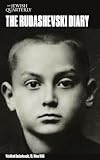
Each year I commemorate this day by reading Jewish testimony from the Holocaust, but the testimony of Yitskhok Rudashevski — like the powerful testimony about life in hiding of Anne Frank (1929-1945) — is also from a teenager who did not survive. Yitskhok Rudashevski was thirteen years old when he was transferred to the Vilna Ghetto in Lithuania, and he kept a diary. This is from the back cover of this Jewish Quarterly edition:
The first part of the diary reads more like a memoir, as if Yitskhok has realised the importance of bearing witness. Although he writes with the immediacy of the present tense, he makes occasional comments that show that he is looking back at the very recent past from the present day. For example, in the diary entry dated October 1941, when writing about the search for firewood in the first days of the ghetto, he records that:
I think it was Tolstoy who said that in war, the commanders plotting strategy don't know what's really happening on the ground, and those on the battlefield can't see the big picture or its strategic importance, only their own part in it, so both disparage the other. This is true of Yitskhok's perspective.
To read the rest of my review please read https://anzlitlovers.com/2026/01/27/the-rudashevski-diary-1941-1943-by-yitskhok-... show less
Holocaust Memorial Day is the day for everyone to remember the millions of people [LH edit*: six million Jews] murdered in the Holocaust, under Nazi Persecution, and [LH edit: the people killed] in the genocides which followed in Cambodia, Rwanda, Bosnia, and show more Darfur.
*This introduction is taken from the HMD website, but I have edited it to make clear that the Holocaust refers specifically to the murder of six million Jews.This year's theme is 'Bridging Generations':
The theme for Holocaust Memorial Day (HMD) 2026, 'Bridging Generations', is a call-to-action. A reminder that the responsibility of remembrance doesn't end with the survivors - it lives on through their children, their grandchildren and through all of us. This theme encourages us all to engage actively with the past - to listen, to learn and to carry those lessons forward. By doing so, we build a bridge between memory and action, between history and hope for the future. [LH: underlining mine].
Each year I commemorate this day by reading Jewish testimony from the Holocaust, but the testimony of Yitskhok Rudashevski — like the powerful testimony about life in hiding of Anne Frank (1929-1945) — is also from a teenager who did not survive. Yitskhok Rudashevski was thirteen years old when he was transferred to the Vilna Ghetto in Lithuania, and he kept a diary. This is from the back cover of this Jewish Quarterly edition:
'Today I turned fifteen and live very much for tomorrow. I do not feel two ways about it. I see before me sun and sun and sun...'
For nearly two years he used a small notebook to chronicle his hope, his despair and his experience of daily ghetto life. His diary was later discovered in an attic that was the final hiding place for him and his parents.This remarkable translation from Yiddish by Solon Beinfeld reveals a teenager whose love of culture, history and knowledge defied the cruelty that surrounded him. Displaying empathy and intellect far beyond his years, Yitskhok confronts the terrible moral choices required for survival in the ghetto.
His diary, expertly introduced by Samuel D Kassow, is both a crucial historical document and a deeply poignant portrait of one lost soul among millions.
The first part of the diary reads more like a memoir, as if Yitskhok has realised the importance of bearing witness. Although he writes with the immediacy of the present tense, he makes occasional comments that show that he is looking back at the very recent past from the present day. For example, in the diary entry dated October 1941, when writing about the search for firewood in the first days of the ghetto, he records that:
We break up doors and floors and carry off the wood. One person tries to snatch from another. People fight over a piece of wood. People become petty, egoistic, and even cruel to one another. Soon we see the first Jewish policemen. They are supposed to maintain order in the ghetto. In time, they become a caste that helps the oppressors do their work. Over time, many things were done by the Gestapo with the help of the Jewish police. They help grab their brother by the throat; they help trip up their brother. (p.40, underlining mine)
I think it was Tolstoy who said that in war, the commanders plotting strategy don't know what's really happening on the ground, and those on the battlefield can't see the big picture or its strategic importance, only their own part in it, so both disparage the other. This is true of Yitskhok's perspective.
To read the rest of my review please read https://anzlitlovers.com/2026/01/27/the-rudashevski-diary-1941-1943-by-yitskhok-... show less
You May Also Like
Associated Authors
Statistics
- Works
- 3
- Also by
- 1
- Members
- 27
- Popularity
- #483,026
- Rating
- 3.6
- Reviews
- 2
- ISBNs
- 4
- Favorited
- 1