
Kenneth Cameron (1) (1931–2021)
Author of The Frightened Man
For other authors named Kenneth Cameron, see the disambiguation page.
Kenneth Cameron (1) has been aliased into Kenneth M. Cameron.
Series
Works by Kenneth Cameron
Works have been aliased into Kenneth M. Cameron.
Tagged
Common Knowledge
- Legal name
- Cameron, Kenneth MacLean
- Other names
- Bartram, George
Kent, Gordon (pseudonym) - Birthdate
- 1931-06-26
- Date of death
- 2021
- Gender
- male
- Education
- University of Rochester
Carnegie-Mellon University - Occupations
- instructor
author - Organizations
- U.S. Navy
University of Rochester
University of Iowa
Dartmouth College - Relationships
- Cameron, Christian (son)
- Short biography
- [excerpted from Book Series in Order website]
Kenneth Cameron is an American author of fiction. He was born June 26, 1931, in Rochester, New York. He is also known by his pen name George Bartram and Gordon Kent.
He is the author or collaborating author of over thirty books that range from everything from historical novels to spy novels to the history of the African safari. He has also written an analysis of films focusing on Africa that was titled Africa on Film. It won him the MLA Independent Scholars Award.
Kenneth Cameron has also had his plays produced off-Broadway as well as the London Fringe. Cameron's first work to be published was the inclusion of two of his poems in the Best Poems of 1955 collection. - Birthplace
- Rochester, New York, USA
- Places of residence
- Leiters, Indiana, USA
- Place of death
- New Bern, North Carolina, USA
- Associated Place (for map)
- USA
Members
Reviews
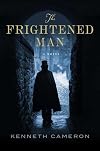
The Frightened Man by Kenneth Cameron is an excellent Victorian thriller with a Jack-the-Ripper style plot. Cameron's debut in this new series of Denton Mysteries was extremely well written, had endearing lovable characters who are very cheeky, and talent to weave a darn good yarn!
Our new perceptive detective Denton is an American transport living in London at the turn of the century. Escaping the States from a heroic deed while acting as a U.S. Marshall in the wild west and an incident show more involving his wife, he begins a new life as a popular author of fictional books and sets himself up in a grand London house complete with one hilarious valet named Sergeant. Everyone is going to fall in love with this smart-mouthed house servant who has charm, wit and one heck of an attitude! In the midst of a writer's block slump, hard up to pay the bills, one evening Denton and Sergeant are visited at their home by a raving mad man seeking Denton's help for protection against a murderer. It appears he has witnessed a brutal slaying of a young woman and fears he was seen. Near hysteria the man begs Denton's help in finding the killer before he too becomes the next Victim at the hand of what the man feels could be Jack-the-Ripper returned.
With the help of the local police, a band of woman in the literary circle to help him to do research, and a suffragette style brassy bold woman to be reckoned with, Denton takes up the chase to find the slasher in hopes of seeking justice and at the same time find a story for his next book.
I found the novel very evocative of the times. The author really allows the reader to feel they are being transported to London in 1900, complete with the gaslit, fog shrouded nights as horses and carriages rumble along cobblestone streets to the high society of the ton down to the seedy wharf-side pubs crawling with whores, pickpockets and knife wielding vagrants. I very much liked Cameron's ability to blend characters so sarcastic you can't help but laugh, while at the same time making you cringe at the graphic and grotesque murders most macabre. Can't wait for book two, the Bohemian Girl. Excellent Victorian who-dun-it, just loved it! show less
Our new perceptive detective Denton is an American transport living in London at the turn of the century. Escaping the States from a heroic deed while acting as a U.S. Marshall in the wild west and an incident show more involving his wife, he begins a new life as a popular author of fictional books and sets himself up in a grand London house complete with one hilarious valet named Sergeant. Everyone is going to fall in love with this smart-mouthed house servant who has charm, wit and one heck of an attitude! In the midst of a writer's block slump, hard up to pay the bills, one evening Denton and Sergeant are visited at their home by a raving mad man seeking Denton's help for protection against a murderer. It appears he has witnessed a brutal slaying of a young woman and fears he was seen. Near hysteria the man begs Denton's help in finding the killer before he too becomes the next Victim at the hand of what the man feels could be Jack-the-Ripper returned.
With the help of the local police, a band of woman in the literary circle to help him to do research, and a suffragette style brassy bold woman to be reckoned with, Denton takes up the chase to find the slasher in hopes of seeking justice and at the same time find a story for his next book.
I found the novel very evocative of the times. The author really allows the reader to feel they are being transported to London in 1900, complete with the gaslit, fog shrouded nights as horses and carriages rumble along cobblestone streets to the high society of the ton down to the seedy wharf-side pubs crawling with whores, pickpockets and knife wielding vagrants. I very much liked Cameron's ability to blend characters so sarcastic you can't help but laugh, while at the same time making you cringe at the graphic and grotesque murders most macabre. Can't wait for book two, the Bohemian Girl. Excellent Victorian who-dun-it, just loved it! show less
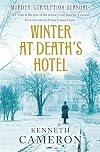
It is 1896 and the creator of Sherlock Holmes, Arthur Conan Doyle, has arrived in New York to start a lecture tour. With him is his wife, Louisa. They stay at an upmarket hotel, but just as they are about to check out to start their journey around the eastern states, Louisa trips up and badly sprains her ankle, making it impossible for her to accompany her husband. Reluctantly, he goes on without her.
Really enjoyed this...excellent observations on the culture clash between upper class show more British and the New World. Also how a woman restrained by traditional roles and moral codes finds New York refreshing liberal. Louisa is a charming character who alternates by being horrified and secretly thrilled at the freedom she experiences. Oh and there is a Ripper-esque murderer at large....unexpectedly powerful and not for the faint hearted. show less
Really enjoyed this...excellent observations on the culture clash between upper class show more British and the New World. Also how a woman restrained by traditional roles and moral codes finds New York refreshing liberal. Louisa is a charming character who alternates by being horrified and secretly thrilled at the freedom she experiences. Oh and there is a Ripper-esque murderer at large....unexpectedly powerful and not for the faint hearted. show less
Many a mystery author has turned their hand to solving the Jack the Ripper crimes of 1888, and many suspects and scenarios have tried the wits of many sleuths. In the end, however, almost inevitably the Whitechapel monster is caught in short order and Victorian London resumes its life.
But what if the Ripper hadn’t been caught in the 1880’s, and after years lying low, resumed his frenzied crimes? It’s a realistic enough scenario with serial killers, and it forms the basis of Kenneth show more Cameron’s “The Frightened Man”. Amidst the splendor and squalor of 1900, the Ripper still lurks at the back of the mind of Englishmen and women. And then a familiar criminal signature begins to show up as a mutilated prostitute is discovered, and once again London will be gripped in terror…if the news gets out. The police are quite happy to dismiss one dead prostitute, however, rather than risk widespread panic.
Matching wits with the killer is Denton, American, ex-Western lawman, Civil War veteran, and a noted author. No gunslinging cowboy, however, Denton is a peculiarly engaging mix of natural American egalitarianism and adopted British reserve, the toll from the war and from his badge-toting days heavy on his mind.
Along the way of his investigation Denton makes the acquaintance of Janet Striker, feminist and provider of a home for unwed mothers, a woman who carries numerous scars of her own. Acerbic manservant Atkins also throws in some real gems of wit, and his banter with Denton is a treat.
The mystery is entwined with a well-balanced sense of period atmosphere and detail; along the way to catching the Ripper and deviating from the usual laundry list of suspects, a great deal of the British Empire on the cusp of the twentieth century comes to light. Attitudes towards women, the iron-cast class hierarchy with the desperate grinding poverty a stone’s throw from the sumptuous mansions, bureaucracy, corruption, and social morality are all addressed, neatly a part of the plot so that the information provides context and yet doesn’t come across as cloying or clumsy.
The outrage about the crimes of murder and of society is muted but genuine, the characters no shining beacons of reform and law. There are no shining heroes in “The Frightened Man”, no plucky do-gooders. Denton and Striker make for a formidable, street-smart team who believably can survive the moody, fog-riddled night streets of London to find the truth and bring justice, and in the end, the tale is a satisfying one. show less
But what if the Ripper hadn’t been caught in the 1880’s, and after years lying low, resumed his frenzied crimes? It’s a realistic enough scenario with serial killers, and it forms the basis of Kenneth show more Cameron’s “The Frightened Man”. Amidst the splendor and squalor of 1900, the Ripper still lurks at the back of the mind of Englishmen and women. And then a familiar criminal signature begins to show up as a mutilated prostitute is discovered, and once again London will be gripped in terror…if the news gets out. The police are quite happy to dismiss one dead prostitute, however, rather than risk widespread panic.
Matching wits with the killer is Denton, American, ex-Western lawman, Civil War veteran, and a noted author. No gunslinging cowboy, however, Denton is a peculiarly engaging mix of natural American egalitarianism and adopted British reserve, the toll from the war and from his badge-toting days heavy on his mind.
Along the way of his investigation Denton makes the acquaintance of Janet Striker, feminist and provider of a home for unwed mothers, a woman who carries numerous scars of her own. Acerbic manservant Atkins also throws in some real gems of wit, and his banter with Denton is a treat.
The mystery is entwined with a well-balanced sense of period atmosphere and detail; along the way to catching the Ripper and deviating from the usual laundry list of suspects, a great deal of the British Empire on the cusp of the twentieth century comes to light. Attitudes towards women, the iron-cast class hierarchy with the desperate grinding poverty a stone’s throw from the sumptuous mansions, bureaucracy, corruption, and social morality are all addressed, neatly a part of the plot so that the information provides context and yet doesn’t come across as cloying or clumsy.
The outrage about the crimes of murder and of society is muted but genuine, the characters no shining beacons of reform and law. There are no shining heroes in “The Frightened Man”, no plucky do-gooders. Denton and Striker make for a formidable, street-smart team who believably can survive the moody, fog-riddled night streets of London to find the truth and bring justice, and in the end, the tale is a satisfying one. show less
This novel was difficult for me to review, as I have two sides to my opinions on it.
One one hand, the writing was at times gripping, the author had a good, believable voice, and at times I was very into the storyline. But then the story would rely on yet another old cliche, and ruin things for me.... And I'm not the only female reader who seems to have felt this, either. “Winter at Death’s Hotel” by Kenneth Cameron seems to be lacking in Sense and Logic, at times.
What Mr Cameron has show more done with this novel, is he has at times indulged in every sick male fantasy along the way, allowing his heroine Mrs Doyle to be brutalized and near-raped by a crazed villain who was so obvious right from the beginning, I'd be concerned if you could not tell by half way through the novel. And just when you thought you couldn’t possibly be more irritated at all this, at the very end the author lets the villain escape and doesn’t even bother to tie together any of the other plot strings. The ending is VERY abrupt. I hated it, for many reasons.
These Are my issues with this novel:
-The plot, which may or may not have been based on Dr. H H Holmes' murder house, had some serious problems. Mr Cameron tries to make us believe that a tall, very large-shouldered man could snake his way through a narrow, less than 2 feet wide gap between walls AND climb up and down ladders and slide through trap doors in these “tunnels” with ease. While clearly totally insane, and having some kind of disease that effected his head so that it swelled very large, as well. (Wouldn't that effect his balance, and coordination at all...?).
-Somehow, the actual killer (not the elder hotel owner) is able to chase after two females, who are much smaller than him, without any problems at all, holding a knife in one hand and a lantern in the other, while tearing up and down vertical ladders and flitting through trap doors that are 2 feet wide, like some kind of monkey?
- And in ALL the years this peeping tom was doing this, no one else saw, or heard anything, to make them complain to the management, and find out why....? Only the servants notice, and complain, but the think it's just ghosts....? Ok, I will suspend my beliefs and my training in Architecture, and just keep reading...
-Incidentally, having suffered sprained ankles many times over throughout my life time, I would think that one doesn’t hobble about with crutches or walking sticks for 2 weeks like 28-year-old Louisa Doyle does. I haven't sprained my ankle nearly that badly, but to me, Louisa's ankle seemed broken, instead. Also, one does not take drugs like morphine for the first 3 days to dull the allegedly excruciating pain – it’s not actually that painful once the foot is elevated and wrapped up. And iced, for that matter.
-When Mrs Doyle craves independence from her controlling husband and seeks the companionship of other females, this author promptly lets her meet a preposterous pre-suffragette woman who tells Mrs Doyle that the “perfect man” is a man who acts out all his fantasies. In other words, when a woman has achieved independence as three of the women in this story have, she talks nothing but nonsense and can’t be anything other than a man hater and lesbian. I found this other character annoying and bitter. And then the same character helps Louisa throughout the end of the novel.....which doesn't seem like something that character would turn around and do....please correct me if I'm wrong?
-Then Dr. Conan Doyle starts acting horrid, and not giving Louisa hardly any money. Just what did this man expect his wife to live on, while he was gone for weeks, and while supporting/paying a maid? At this point in the novel the reader wonders if the author is trying to telling us that Louisa had better be a meek little wife, tolerating her husband’s irritating, mean and pompous ways instead of looking for a better life and marriage. I found Cameron's version of Dr. Conan Doyle really mental, with his mood swings and tight-fistedness as ridiculous, and off-putting. But thinking of your wife as more of a child than an equal? Like Dr. Conan Doyle did at the end of the novel? EW. Mr. Cameron, how could you?
-And the whole scene with the elder hotel owner was totally unnecessary, and the “Show us your Tits” type of chauvinistic writing.
-Also, every time a female character of this book is left to her own devices and without male company, she immediately strips off and twirls around her room without wearing much of anything. Given that the plot is set in the winter (the title was a dead give-away) and that 1896 hotels didn’t have the type of central heating we have today, this behaviour is clearly aimed to please male readers – which I doubt many would read this novel. And, Victorian people’s attitude to nudity was such that they would have bathed in their undergarments and not stripped off at all, never mind how cold or warm the room would have been.
-When protagonist Mrs Doyle meets the character of Minnie Fitch, a woman newspaper reporter cliché, both women embark on the beginnings of a lesbian relationship instead of doing what they set out to do, namely being comrades in arms against a common foe and becoming friends in the process. Naturally, the reporter suddenly freaks out mid-kiss, and won't return any of Louisa's phone calls. I'm guessing it's because she's worried she will be labeled subversive as well as another character did. (Fitch got murdered in the end, so this wouldn't happen. Don't worry! [sarcasm])
-When the reveal finally arrives, every reader with an ounce of sense will have guessed who the killer is. There were only ever 3 men who had the means and opportunity, and it was pretty obvious which one of them would be the killer.
-Not content with subjecting his heroine and female readers to horrendous ways in which the killer has murdered and disposed of his female victims, the author now treats his readers to a graphic description of a rape, the brutalization of two women, one of them Mrs Arthur Conan Doyle herself. What the descendants of historic characters like Sir Arthur Conan Doyle and his wife must have made of this horrible book one can only wonder.
-The author tells us that he researched New York City’s architecture as it was in the 1890s – it would have been far better had he spent time researching what motivated Victorian women, what their aspirations were in 1896 and what women really think of men – then and now. For it would have allowed him to present readers with realistic and believable female characters instead of hackneyed comic book fiction versions of women...and men for that matter.
-The brutalisation of women in this book is clearly used to shock us all, or perhaps even titillate those that like these kinds of scenes. All they did for me was trigger my rape issues.
-Dr. Conan Doyle lets the bleeding, dying killer get away, instead of pursuing him to help him out, because he is so worried about his poor little wife.
-The jewelry Louisa pawned, because her hubby was so tight with money can no longer be bought back, as the claim slip has burned up in the hotel's massive fire in the end. Which is a small issue, but how about it?
-The disfiguring disease/issue the elder hotel owner had, that disfigured his face and head, and caused Louisa to think was leprosy, was never explained. Was it contagious? Is Louisa going to get it?
-Teddy Roosevelt was an awful caricature, and I hated that.
My likes about this novel: or, But then again......
One of the main themes in the novel is the police brutality and corruption. Two men are on the take and Louisa and Maggie set out to prove that they have covered up the first murder in order to collect money from the husband. So you should expect this kind of behavior, in a city rife with it.
At the heart of Winter at Death’s Hotel is the figure of Louise Conan Doyle and she charms the socks off at nearly every page. A young and confident woman, vibrant and funny, restricted by her corsets and the conventions of marriage, she loves her husband Arthur, revelling in a sexual desire that is barely confined to the privacy of the bedchamber. This restraint or secrecy or even hypocrisy is a powerful theme of the novel. What is it that goes on behind closed doors, what secrets do walls hide and what happens when these passions or instincts are unleashed? Louisa might be tied by tradition and moral codes but, with her husband away, she can snip away at the laws, bit by bit.
Louisa draws others into her investigations, especially the ‘modern’ female journalist Minnie Fitch, her maid Ethel, the hotel detective and other guests in the hotel, which include Henry Irving and William ‘Buffalo Bill’ Cody – a fascinating cast of characters. Then there is the police force. This is a time when New York City was ruled by its gangs and members of its police force had their own allegiances and codes. Everyone has their own agenda and goals, leaving Louisa and Minnie almost alone to fight for the victims. Very soon there is more than one and the Ripper-esque horrors suffered by these women makes Louise fight all the harder.
Kenneth Cameron achieves something nearly special with the style of "Winter at Death’s Hotel". It is -sometimes- extremely well written but it also benefits from an ease and accessibility that pulls the reader in from the beginning. All credit to Cameron for creating such a some what believable and likeable female heroine. Louisa is an admirable guide through the maze of 1890s’ polite society, through the pitfalls of a happy upper middle class marriage, and, ultimately, through a terrible sequence of events.
In a way, this ease and charm, the way we fall for characters such as Louisa and Minnie, it fools us because it means we are completely unprepared for the way that events unfold. I think while I read the second half of the novel it really turned things around for me, made me forget all the little issues that caused me consternation in the first half, and kept me reading through to the ending. This is certainly a novel I won’t forget in a hurry. But I don't know if I can urge anyone to read it.
How about 2 and a half stars? show less
One one hand, the writing was at times gripping, the author had a good, believable voice, and at times I was very into the storyline. But then the story would rely on yet another old cliche, and ruin things for me.... And I'm not the only female reader who seems to have felt this, either. “Winter at Death’s Hotel” by Kenneth Cameron seems to be lacking in Sense and Logic, at times.
What Mr Cameron has show more done with this novel, is he has at times indulged in every sick male fantasy along the way, allowing his heroine Mrs Doyle to be brutalized and near-raped by a crazed villain who was so obvious right from the beginning, I'd be concerned if you could not tell by half way through the novel. And just when you thought you couldn’t possibly be more irritated at all this, at the very end the author lets the villain escape and doesn’t even bother to tie together any of the other plot strings. The ending is VERY abrupt. I hated it, for many reasons.
These Are my issues with this novel:
-The plot, which may or may not have been based on Dr. H H Holmes' murder house, had some serious problems. Mr Cameron tries to make us believe that a tall, very large-shouldered man could snake his way through a narrow, less than 2 feet wide gap between walls AND climb up and down ladders and slide through trap doors in these “tunnels” with ease. While clearly totally insane, and having some kind of disease that effected his head so that it swelled very large, as well. (Wouldn't that effect his balance, and coordination at all...?).
-Somehow, the actual killer (not the elder hotel owner) is able to chase after two females, who are much smaller than him, without any problems at all, holding a knife in one hand and a lantern in the other, while tearing up and down vertical ladders and flitting through trap doors that are 2 feet wide, like some kind of monkey?
- And in ALL the years this peeping tom was doing this, no one else saw, or heard anything, to make them complain to the management, and find out why....? Only the servants notice, and complain, but the think it's just ghosts....? Ok, I will suspend my beliefs and my training in Architecture, and just keep reading...
-Incidentally, having suffered sprained ankles many times over throughout my life time, I would think that one doesn’t hobble about with crutches or walking sticks for 2 weeks like 28-year-old Louisa Doyle does. I haven't sprained my ankle nearly that badly, but to me, Louisa's ankle seemed broken, instead. Also, one does not take drugs like morphine for the first 3 days to dull the allegedly excruciating pain – it’s not actually that painful once the foot is elevated and wrapped up. And iced, for that matter.
-When Mrs Doyle craves independence from her controlling husband and seeks the companionship of other females, this author promptly lets her meet a preposterous pre-suffragette woman who tells Mrs Doyle that the “perfect man” is a man who acts out all his fantasies. In other words, when a woman has achieved independence as three of the women in this story have, she talks nothing but nonsense and can’t be anything other than a man hater and lesbian. I found this other character annoying and bitter. And then the same character helps Louisa throughout the end of the novel.....which doesn't seem like something that character would turn around and do....please correct me if I'm wrong?
-Then Dr. Conan Doyle starts acting horrid, and not giving Louisa hardly any money. Just what did this man expect his wife to live on, while he was gone for weeks, and while supporting/paying a maid? At this point in the novel the reader wonders if the author is trying to telling us that Louisa had better be a meek little wife, tolerating her husband’s irritating, mean and pompous ways instead of looking for a better life and marriage. I found Cameron's version of Dr. Conan Doyle really mental, with his mood swings and tight-fistedness as ridiculous, and off-putting. But thinking of your wife as more of a child than an equal? Like Dr. Conan Doyle did at the end of the novel? EW. Mr. Cameron, how could you?
-And the whole scene with the elder hotel owner was totally unnecessary, and the “Show us your Tits” type of chauvinistic writing.
-Also, every time a female character of this book is left to her own devices and without male company, she immediately strips off and twirls around her room without wearing much of anything. Given that the plot is set in the winter (the title was a dead give-away) and that 1896 hotels didn’t have the type of central heating we have today, this behaviour is clearly aimed to please male readers – which I doubt many would read this novel. And, Victorian people’s attitude to nudity was such that they would have bathed in their undergarments and not stripped off at all, never mind how cold or warm the room would have been.
-When protagonist Mrs Doyle meets the character of Minnie Fitch, a woman newspaper reporter cliché, both women embark on the beginnings of a lesbian relationship instead of doing what they set out to do, namely being comrades in arms against a common foe and becoming friends in the process. Naturally, the reporter suddenly freaks out mid-kiss, and won't return any of Louisa's phone calls. I'm guessing it's because she's worried she will be labeled subversive as well as another character did. (Fitch got murdered in the end, so this wouldn't happen. Don't worry! [sarcasm])
-When the reveal finally arrives, every reader with an ounce of sense will have guessed who the killer is. There were only ever 3 men who had the means and opportunity, and it was pretty obvious which one of them would be the killer.
-Not content with subjecting his heroine and female readers to horrendous ways in which the killer has murdered and disposed of his female victims, the author now treats his readers to a graphic description of a rape, the brutalization of two women, one of them Mrs Arthur Conan Doyle herself. What the descendants of historic characters like Sir Arthur Conan Doyle and his wife must have made of this horrible book one can only wonder.
-The author tells us that he researched New York City’s architecture as it was in the 1890s – it would have been far better had he spent time researching what motivated Victorian women, what their aspirations were in 1896 and what women really think of men – then and now. For it would have allowed him to present readers with realistic and believable female characters instead of hackneyed comic book fiction versions of women...and men for that matter.
-The brutalisation of women in this book is clearly used to shock us all, or perhaps even titillate those that like these kinds of scenes. All they did for me was trigger my rape issues.
-Dr. Conan Doyle lets the bleeding, dying killer get away, instead of pursuing him to help him out, because he is so worried about his poor little wife.
-The jewelry Louisa pawned, because her hubby was so tight with money can no longer be bought back, as the claim slip has burned up in the hotel's massive fire in the end. Which is a small issue, but how about it?
-The disfiguring disease/issue the elder hotel owner had, that disfigured his face and head, and caused Louisa to think was leprosy, was never explained. Was it contagious? Is Louisa going to get it?
-Teddy Roosevelt was an awful caricature, and I hated that.
My likes about this novel: or, But then again......
One of the main themes in the novel is the police brutality and corruption. Two men are on the take and Louisa and Maggie set out to prove that they have covered up the first murder in order to collect money from the husband. So you should expect this kind of behavior, in a city rife with it.
At the heart of Winter at Death’s Hotel is the figure of Louise Conan Doyle and she charms the socks off at nearly every page. A young and confident woman, vibrant and funny, restricted by her corsets and the conventions of marriage, she loves her husband Arthur, revelling in a sexual desire that is barely confined to the privacy of the bedchamber. This restraint or secrecy or even hypocrisy is a powerful theme of the novel. What is it that goes on behind closed doors, what secrets do walls hide and what happens when these passions or instincts are unleashed? Louisa might be tied by tradition and moral codes but, with her husband away, she can snip away at the laws, bit by bit.
Louisa draws others into her investigations, especially the ‘modern’ female journalist Minnie Fitch, her maid Ethel, the hotel detective and other guests in the hotel, which include Henry Irving and William ‘Buffalo Bill’ Cody – a fascinating cast of characters. Then there is the police force. This is a time when New York City was ruled by its gangs and members of its police force had their own allegiances and codes. Everyone has their own agenda and goals, leaving Louisa and Minnie almost alone to fight for the victims. Very soon there is more than one and the Ripper-esque horrors suffered by these women makes Louise fight all the harder.
Kenneth Cameron achieves something nearly special with the style of "Winter at Death’s Hotel". It is -sometimes- extremely well written but it also benefits from an ease and accessibility that pulls the reader in from the beginning. All credit to Cameron for creating such a some what believable and likeable female heroine. Louisa is an admirable guide through the maze of 1890s’ polite society, through the pitfalls of a happy upper middle class marriage, and, ultimately, through a terrible sequence of events.
In a way, this ease and charm, the way we fall for characters such as Louisa and Minnie, it fools us because it means we are completely unprepared for the way that events unfold. I think while I read the second half of the novel it really turned things around for me, made me forget all the little issues that caused me consternation in the first half, and kept me reading through to the ending. This is certainly a novel I won’t forget in a hurry. But I don't know if I can urge anyone to read it.
How about 2 and a half stars? show less
Awards


Statistics
- Works
- 11
- Members
- 453
- Popularity
- #54,168
- Rating
- 3.6
- Reviews
- 15
- ISBNs
- 70
- Languages
- 1
