

Alexander Mercer
Author of Infections, Chronic Disease, and the Epidemiological Transition: A New Perspective
Works by Alexander Mercer
Infections, Chronic Disease, and the Epidemiological Transition: A New Perspective (2014) 6 copies, 2 reviews
Associated Works
Tagged
Common Knowledge
There is no Common Knowledge data for this author yet. You can help.
Members
Reviews
Infections, Chronic Disease, and the Epidemiological Transition (Rochester Studies in Medical History) by Alexander Mercer
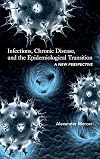
Infections, Chronic Disease, and the Epidemiological Transition by Alexander Mercer is a historical account of the epidemiological transition incorporating additional causal agents aside from the usually cited "health interventions" and "standard of living." This is the first such overview focusing on one country over a long time period which allows for a more nuanced approach to causes.
This text is likely intended for an audience of healthcare and medical professionals and policy makers. I show more am not such a person and found much of the book tough going. That said, the explanations and discussions were still accessible to me as long as I was willing to look up some key terms and concepts. It rewarded my efforts by being very interesting and, to my mind, persuasive.
My big takeaway was that the shift from infectious disease to chronic disease as the predominant cause of morbidity and mortality is due to more than just the two items mentioned in my first paragraph. To continue improving health outcomes it is important to also understand that microorganisms, infectious disease and disorders often are underlying factors in chronic disease. In a large scale epidemiological perspective this means that these underlying factors need to be followed and documented when assessing chronic disease for prevention, treatment and forecasting purposes. Note: Any misunderstanding of the book in my review is all on me, not the book, which was clearly written and presented.
While certainly interesting reading for a layperson with an interest in this area, I would highly recommend this book to medical professionals, epidemiologists and healthcare policy makers.
Reviewed from a copy made available by the publisher via NetGalley. show less
This text is likely intended for an audience of healthcare and medical professionals and policy makers. I show more am not such a person and found much of the book tough going. That said, the explanations and discussions were still accessible to me as long as I was willing to look up some key terms and concepts. It rewarded my efforts by being very interesting and, to my mind, persuasive.
My big takeaway was that the shift from infectious disease to chronic disease as the predominant cause of morbidity and mortality is due to more than just the two items mentioned in my first paragraph. To continue improving health outcomes it is important to also understand that microorganisms, infectious disease and disorders often are underlying factors in chronic disease. In a large scale epidemiological perspective this means that these underlying factors need to be followed and documented when assessing chronic disease for prevention, treatment and forecasting purposes. Note: Any misunderstanding of the book in my review is all on me, not the book, which was clearly written and presented.
While certainly interesting reading for a layperson with an interest in this area, I would highly recommend this book to medical professionals, epidemiologists and healthcare policy makers.
Reviewed from a copy made available by the publisher via NetGalley. show less
Infections, Chronic Disease, and the Epidemiological Transition (Rochester Studies in Medical History) by Alexander Mercer
I wanted to read this book mainly because I was hoping for some insight to further explain my own chronic health problems. I have ongoing, degenerative issues with chronic Lyme disease (or neuro-Lyme), Epstein Barr virus (EPV), and cytomegalovirus (CMV). And so I was interested in the link between infectious disease and chronic disease. The author does deliver in that respect, though not to the degree I expected.
The content covers early infectious diseases with great detail, including show more specifics on mortality rates and lots of charts. About halfway through the book we get to chronic diseases and the infections and viruses that might cause them. Much of the focus is on heart disease and cancer, with only brief mentions of Lyme, CMV, and EPV. None of this was new information to me.
This book would work very well as a textbook for college courses and/or for anyone in the medical field, which was probably the intent. It's the kind of detailed book that requires a reader's full focus. I don't think it works as well for a mainstream kind of read. While there is some interesting, pertinent information, it reads much like a dry textbook, with an extreme amount of attention to dates and details, to the point where it feels like a data dump.
For me, this book was a challenge to get through. But if you have an interest in the history of disease, you'll likely find lots of interesting detail here.
*I was provided with an ebook copy by the publisher, via NetGalley, in exchange for my honest review.* show less
The content covers early infectious diseases with great detail, including show more specifics on mortality rates and lots of charts. About halfway through the book we get to chronic diseases and the infections and viruses that might cause them. Much of the focus is on heart disease and cancer, with only brief mentions of Lyme, CMV, and EPV. None of this was new information to me.
This book would work very well as a textbook for college courses and/or for anyone in the medical field, which was probably the intent. It's the kind of detailed book that requires a reader's full focus. I don't think it works as well for a mainstream kind of read. While there is some interesting, pertinent information, it reads much like a dry textbook, with an extreme amount of attention to dates and details, to the point where it feels like a data dump.
For me, this book was a challenge to get through. But if you have an interest in the history of disease, you'll likely find lots of interesting detail here.
*I was provided with an ebook copy by the publisher, via NetGalley, in exchange for my honest review.* show less
You May Also Like
Associated Authors
Statistics
- Works
- 1
- Also by
- 1
- Members
- 6
- Popularity
- #1,227,254
- Rating
- 3.4
- Reviews
- 2
- ISBNs
- 2