
Ben Tanzer
Author of Lucky Man
About the Author
Image credit: Ben Tanzer
Works by Ben Tanzer
Tagged
Common Knowledge
- Birthdate
- 20th Century
- Gender
- male
- Nationality
- USA
- Associated Place (for map)
- USA
Members
Reviews
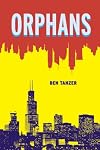
Rating: 4.125* of five
The Publisher Says: With Orphans, Ben Tanzer continues his ongoing literary survey of the 21st Century male psyche, yet does so with a newfound twist, contemporary themes set in a world that is anything but. In this dystopian tale of a future Chicago, workers are sent off to sell property on Mars to those who can afford to leave, leaving what’s left to those who have little choice but to make do with what’s left behind: burnt out neighborhoods, black helicopters show more policing the streets, flash mobs, the unemployed in their scruffy suits, robots taking the few jobs that remain, and clones who replace those workers who do find work so that a modicum of family stability can be maintained. It is a story about the impact of work on family. How work warps our best intentions. And how everything we think we know about ourselves looks different during a recession. This idea is writ large in the world of Orphans, where recession is all we know, work is only available to the lucky few, and this lucky few not only need to fear being replaced on the job, but in their homes and beds. It is also a story about drugs, surfing, punk music, lost youth, parenting, sex, pop culture as vernacular, and a conscious intersection of Death of a Salesman or Glengarry Glen Ross with The Martian Chronicles. Looking to the genre of science fiction has allowed Tanzer to produce something new and fresh, expanding both his literary horizons, and the potential market for his work. Tanzer also looks to the story of Bartleby the Scrivener with Orphans, and the question of what are we allowed as workers, and expected to be, or do, when work is fraught with desperation. Ultimately, Orphans is intended to be a contemporary story about manhood and what it means in today’s world, told from the perspective of work and family, and how any of us manage the parameters that family and work produce; but it’s a story told in a futuristic world, where our greatest fears are in fact already realized, because there isn’t enough of anything, and we are all too easily replaced.
My Review: Good gravy! That description of Orphansis pretty much what I planned to say in my review. I agree with all of it. The book is a small, rough diamond of Maleness, familiar to anyone who is approaching middle years or has passed through the horrors of middlescence into the Useless Years. I mean, I mean, GOLDEN years, GOLDEN of course haha. Tanzer's Norrin Radd (is that a 70s punk name or what?) is a father in deepest love with his child, Joey, and would do literally anything to feed, clothe, house, and protect him. His wife Shalla, although he is fixated on her presence, is not the focus of his world, nor he of hers. This is the inevitable pattern of family life, as parents struggle to figure out who they are in relation to birth families and work mates and the endlessly shifting sandbars in their home waters.
Norrin is a schlemiel, a perpetual underdog, not even beta in the pack hierarchy of maleness but more the omega. His escape is surfing Lake Michigan, renamed along with Chicago after a complete takeover of the country by a Chinese corporate hierarchy. The world hasn't really changed all that much from our own. Norrin would be begging for scraps and hustling to support his drug habit and his family in 2016 as well as this dystopic future. Norrin's love of surfing is telling: Speed is freedom, rushing along the surface of an illimitable deep gives him his only small mastery of the deeps in his life. It's all too short, and even Norrin seems to realize it's an illusion; after time on his sailboard, he sits with the wise man (humorously named Lebowski, as in "The Big") who treats him as a grown son. He's mildly impatient and endlessly willing to listen and advise. In short, he's a dad. Can't help but wonder whose dad...that'll make more sense after you've read the book, which I strongly suggest you do. After all, what other writer has the confidence to casually mention in passing that many places in and beyond the Solar System are inhabited?
Orphans is unjustly underknown. In spite of some copyediting irritations, eg "bare" for "bear" throughout the book, likewise "reign" for "rein" etc etc etc, the prose is vintage Tanzer. It is without gonfalons and ormolu cherubs or even pseudohip fake-slang, all of which date a book mighty soon after it appears. This is someone's subtle dystopia TV show (blessedly without zombies!)...maybe the Esquire Network? It could be filmed on the cheap in Detroit, and they need original programming...heck, why not Participant Media, those lovely lefties, as producers? I hate wastefulness, and that's what leaving Orphans on the shelf when it can be so much more is.
DISCLOSURE I am acquainted with Mr. Tanzer across several social-media sites. I did not solicit, nor did he or his publisher offer, a free copy to me. I paid retail like any other schlub. show less
The Publisher Says: With Orphans, Ben Tanzer continues his ongoing literary survey of the 21st Century male psyche, yet does so with a newfound twist, contemporary themes set in a world that is anything but. In this dystopian tale of a future Chicago, workers are sent off to sell property on Mars to those who can afford to leave, leaving what’s left to those who have little choice but to make do with what’s left behind: burnt out neighborhoods, black helicopters show more policing the streets, flash mobs, the unemployed in their scruffy suits, robots taking the few jobs that remain, and clones who replace those workers who do find work so that a modicum of family stability can be maintained. It is a story about the impact of work on family. How work warps our best intentions. And how everything we think we know about ourselves looks different during a recession. This idea is writ large in the world of Orphans, where recession is all we know, work is only available to the lucky few, and this lucky few not only need to fear being replaced on the job, but in their homes and beds. It is also a story about drugs, surfing, punk music, lost youth, parenting, sex, pop culture as vernacular, and a conscious intersection of Death of a Salesman or Glengarry Glen Ross with The Martian Chronicles. Looking to the genre of science fiction has allowed Tanzer to produce something new and fresh, expanding both his literary horizons, and the potential market for his work. Tanzer also looks to the story of Bartleby the Scrivener with Orphans, and the question of what are we allowed as workers, and expected to be, or do, when work is fraught with desperation. Ultimately, Orphans is intended to be a contemporary story about manhood and what it means in today’s world, told from the perspective of work and family, and how any of us manage the parameters that family and work produce; but it’s a story told in a futuristic world, where our greatest fears are in fact already realized, because there isn’t enough of anything, and we are all too easily replaced.
My Review: Good gravy! That description of Orphansis pretty much what I planned to say in my review. I agree with all of it. The book is a small, rough diamond of Maleness, familiar to anyone who is approaching middle years or has passed through the horrors of middlescence into the Useless Years. I mean, I mean, GOLDEN years, GOLDEN of course haha. Tanzer's Norrin Radd (is that a 70s punk name or what?) is a father in deepest love with his child, Joey, and would do literally anything to feed, clothe, house, and protect him. His wife Shalla, although he is fixated on her presence, is not the focus of his world, nor he of hers. This is the inevitable pattern of family life, as parents struggle to figure out who they are in relation to birth families and work mates and the endlessly shifting sandbars in their home waters.
Norrin is a schlemiel, a perpetual underdog, not even beta in the pack hierarchy of maleness but more the omega. His escape is surfing Lake Michigan, renamed along with Chicago after a complete takeover of the country by a Chinese corporate hierarchy. The world hasn't really changed all that much from our own. Norrin would be begging for scraps and hustling to support his drug habit and his family in 2016 as well as this dystopic future. Norrin's love of surfing is telling: Speed is freedom, rushing along the surface of an illimitable deep gives him his only small mastery of the deeps in his life. It's all too short, and even Norrin seems to realize it's an illusion; after time on his sailboard, he sits with the wise man (humorously named Lebowski, as in "The Big") who treats him as a grown son. He's mildly impatient and endlessly willing to listen and advise. In short, he's a dad. Can't help but wonder whose dad...that'll make more sense after you've read the book, which I strongly suggest you do. After all, what other writer has the confidence to casually mention in passing that many places in and beyond the Solar System are inhabited?
Orphans is unjustly underknown. In spite of some copyediting irritations, eg "bare" for "bear" throughout the book, likewise "reign" for "rein" etc etc etc, the prose is vintage Tanzer. It is without gonfalons and ormolu cherubs or even pseudohip fake-slang, all of which date a book mighty soon after it appears. This is someone's subtle dystopia TV show (blessedly without zombies!)...maybe the Esquire Network? It could be filmed on the cheap in Detroit, and they need original programming...heck, why not Participant Media, those lovely lefties, as producers? I hate wastefulness, and that's what leaving Orphans on the shelf when it can be so much more is.
DISCLOSURE I am acquainted with Mr. Tanzer across several social-media sites. I did not solicit, nor did he or his publisher offer, a free copy to me. I paid retail like any other schlub. show less

The title alone made me put this on a to-read list, and I'm happy to report that it didn't disappoint. I read half of it, staying up way past my bedtime, and then finished it the next night. The story is vivid, I could see the apartment and the office and the characters. The language creates a feeling of motion that, to me, synchronized with the mental state of the narrator. Brisk, fresh, enjoyable.
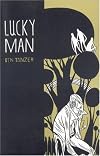
Full disclosure: I know Ben Tanzer (although we’ve yet to meet in person) and will actually be reading with him at Freebird Books in Brooklyn, NY on September 28. (http://www.kenwohlrob.com/2008/08/mark-your-calendars-new-reading.html)
Some books have a way of winning you over. I remember the first time I picked up John Fante’s Wait Until Spring, Bandini. It was not Ask the Dust. When the former was written, the author had not developed into the great teacher of Bukowski that can be found show more in the latter. And yet, as I delved deeper and deeper into Wait Until Spring, Bandini, my perception of the novel changed. While the book is not a definitive example of Fante’s greatness as a writer (Ask the Dust is his most memorable book for a reason), it has great heart, it has soul. The scene of Bandini’s mother and father laying in bed together in the first chapter just about made me weep. It was a beautiful piece of writing. I was won over.
Ben Tanzer’s Lucky Man also won me over. Perhaps because the book starts so unsuspectingly, providing no grand opening or sudden launch into the action. It starts with a conversation — between the four main characters and the reader who serves as an impromptu listener of their life stories. But I think there is a simpler answer. There isn’t an ounce of pretense in Tanzer’s writing, something lacking among a lot of my peers. You never get the sense that Tanzer is trying too hard to convince you of his writing skill. His dialogue fits his characters. The situations always feel real. All of this helps the reader settle in and go along with what at first seems like a standard coming-of-age story.
Once the book gets moving however, the story takes flight (as do the characters). Lucky Man reads like a 220-page long prose poem, told by the four main characters who speak directly to the reader in present tense. One often feels like they’re reading transcripts of reality show confessionals strung together. This is even taken to an absurd pretense when one of the characters has an unfortunate incident. But it is also the four perspectives of Sammy, Louie, Jake and Gabe that deliver a great sense of seeing the world of Lucky Man from all sides, or rather all camera angles. Along the way, there is a lot of humor and a ton of sadness. But Tanzer never uses the breakups, suicides, adultery, car crashes, drug abuse, or sudden death as cheap thrills. This is life in all its grimness.
Ultimately, the title is a grand joke. And that is what really won me over in the end. Lucky Man can be dark. And anyone who has read my work knows I have a penchant for the dark and strange and cynical. But the last page of Lucky Man nicely turns a dark, cynical outlook into a great punch line. show less
Some books have a way of winning you over. I remember the first time I picked up John Fante’s Wait Until Spring, Bandini. It was not Ask the Dust. When the former was written, the author had not developed into the great teacher of Bukowski that can be found show more in the latter. And yet, as I delved deeper and deeper into Wait Until Spring, Bandini, my perception of the novel changed. While the book is not a definitive example of Fante’s greatness as a writer (Ask the Dust is his most memorable book for a reason), it has great heart, it has soul. The scene of Bandini’s mother and father laying in bed together in the first chapter just about made me weep. It was a beautiful piece of writing. I was won over.
Ben Tanzer’s Lucky Man also won me over. Perhaps because the book starts so unsuspectingly, providing no grand opening or sudden launch into the action. It starts with a conversation — between the four main characters and the reader who serves as an impromptu listener of their life stories. But I think there is a simpler answer. There isn’t an ounce of pretense in Tanzer’s writing, something lacking among a lot of my peers. You never get the sense that Tanzer is trying too hard to convince you of his writing skill. His dialogue fits his characters. The situations always feel real. All of this helps the reader settle in and go along with what at first seems like a standard coming-of-age story.
Once the book gets moving however, the story takes flight (as do the characters). Lucky Man reads like a 220-page long prose poem, told by the four main characters who speak directly to the reader in present tense. One often feels like they’re reading transcripts of reality show confessionals strung together. This is even taken to an absurd pretense when one of the characters has an unfortunate incident. But it is also the four perspectives of Sammy, Louie, Jake and Gabe that deliver a great sense of seeing the world of Lucky Man from all sides, or rather all camera angles. Along the way, there is a lot of humor and a ton of sadness. But Tanzer never uses the breakups, suicides, adultery, car crashes, drug abuse, or sudden death as cheap thrills. This is life in all its grimness.
Ultimately, the title is a grand joke. And that is what really won me over in the end. Lucky Man can be dark. And anyone who has read my work knows I have a penchant for the dark and strange and cynical. But the last page of Lucky Man nicely turns a dark, cynical outlook into a great punch line. show less
(Reprinted from the Chicago Center for Literature and Photography [cclapcenter.com]. IMPORTANT DISCLOSURE: Some of Tanzer's newest work is currently being considered for CCLaP's upcoming publishing program, which starts in spring 2008. The person ultimately making the decision is the same person who wrote today's review.)
As regular readers know, it can be a real crap shoot with me sometimes when it comes to the subject of deliberately flawed characters, and especially when it comes to such show more characters making the same mistakes over and over; see, for example, my much-hated scathing pan of Darren Aronofsky's usually much-loved Requiem for a Dream, which in my case just rubbed me the wrong f--king way. It's not that I don't like flawed characters, because I do in certain cases; and it's not like I deliberately hate all creative projects where such characters make the same mistakes over and over, because I understand that that is part of most humans' nature and can sometimes make for great narrative stories. But I'm also just one of those people who personally can't stand most "weak" people out in the real world, or at least let's put it here as "people who let their vices control them, not the other way around;" I guess what really determines what I think about creative projects on the subject depends ultimately on that particular artist's skill level. As fans of these types of stories can tell you, the right tale of the right deeply flawed person can be a heartbreaking, breathtaking experience, a deep and profound look at what it really means to be human; the wrong look at the subject, though, I think can feel like a clawing chore as an audience member, a dreary job that that artist thinks they have the right to "put you through," not an elevating experience that you voluntarily want to be a part of.
And that brings us to Lucky Man, a striking coming-of-age tale that is also the first novel by Chicago author Ben Tanzer, and on top of that is the very first book by new basement press Manx Media. And I'm happy to report that the novel falls into the first camp of flawed-character stories when it comes to what I was saying above; that I ended up enjoying the story and its deeply screwed-up characters quite immensely, precisely because of Tanzer's deft personal style and of the brutal minimalism used to tell its Larry-Clark-style story. It is an unflinching look at the late teens and early twenties of the typical American male, a sometimes horrid stare into the maw of cruelty that can exist between such people in such a milieu; but it is also a survey of the American casual drug scene from the early '80s to the millennium, told in the order that so many Midwestern rural males actually experience it, from beer and weed in high school to acid and ecstasy at the state college, to cocaine and crack after school when the crushing reality of grown-up redneck life comes crashing around them. As someone who grew up in a rural area of Missouri myself, I can attest that Lucky Man spoke deeply to me, in a true voice that mirrors many of my own experiences from the years being discussed here; I mean, granted, it's an exclusive look at the bad side of such experiences, a bleak cautionary tale that is much more Sam Shepard than Garrison Keilor, but as long as you're up for a dark story that relies on a white-trash setting for its flavor, this is a pretty great tale indeed.
Told as a series of first-person reminisces, none longer than a few pages, Lucky Man is ultimately the story of four white male friends in a half-suburban rural area of the Atlantic seaboard: Gabe, the charming pretty boy who flits in and out of every social circle of their high school; Jake, the violent loner with the troubled past; Louie, the Grateful-Dead loving stoner; and Sammy, the Everyman who happens to work with them all at a summer lawnmowing service. The way the novel starts, then, is by very gently looking at the simplistic teenage lives that the four are living at the end of high school, which Tanzer hints specifically takes place in the early 1980s, and at the personality quirks that are just starting to show themselves for the first time; the rush to violence on the part of Jake, Gabe's sexual ambiguity, and lots of other things that are to eventually take on much different and more serious roles in each of these characters' adult lives. In fact, you could argue that Lucky Man is in actuality more of a bildungsroman than a traditional narrative novel, or in other words a detailed look at a group of characters from childhood to adulthood, with the characters' complexity and growth much more important than the plot that takes place.
And this gets us into what I was talking about at the beginning of this essay; because the fact is that out of these four characters, three of them are deeply flawed human beings, with personality weaknesses that we can literally watch manifest themselves in bigger and more awful ways with every passing year, and especially when it comes to the subject of recreational drugs. And this is something else I haven't been shy about in the past, that I've had my own issues with the subject in my real life, as have a certain amount of other people, some of whom are undoubtedly CCLaP readers; and as all of us can tell you, a lot of the problems concerning this subject really do boil down to a fundamental personality trait at the core of a person, which simply manifests itself in different ways over the years based on the experience level of that person, as well as what they might have easy access to at any given moment. There's a reason certain drugs are called "gateway" ones, after all, that has little to do with pharmacology and a lot to do with sociology; the way that pot, for example, is often the first non-alcoholic drug tried by a lot of youth, because of its price and accessibility and lack of social stigma, which can then lead many young people to trying harder drugs because of the pot itself not being nearly the dangerous crazy thing that adults had been telling them their whole childhood it was.
Lucky Man follows such cultural gateways in a logical order over a roughly twenty-year period, leading our anti-heroes down roads that eventually lead to amphetimines, opiates, hallucinogens and others; although the storyline itself is something best left as a surprise, I can definitely tell you that certain characters get fatally caught up in certain substances along the way, while others move past these substances just to get profoundly addicted to the next one down the road. And this is part of the strength of the novel, frankly, as well as a major strength of Tanzer as an author, is that he knows just how to line up the right kinds of personality flaws in certain characters, so that they of course will logically become overwhelmed with one of these substances over another. For anyone who's never been a part of an edgy underground community, take it from me when I say that Lucky Man shows the reality of them in a much better and much more admirable way than most such projects; that instead of endlessly romanticizing the life that so many think such people must lead (or, you know, making it "romantically tragic," which is the real fantasy), for the people actually living such lives these events can seem trivial, even sometimes almost unreal, especially given how many drugs they're on when the events take place. And this of course is why I compared the novel to the work of Larry Clark earlier as well; because to be warned, there are some truly awful things that happen over the course of this book, things that the characters numbly accept while barely acknowledging, using the events as flimsy excuses to shovel yet more controlled substances into their systems.
In fact, as mentioned, there's really only one character who doesn't fit in with this usual cycle of destruction mentioned; and that's Sammy the Everyman, who manages to stumble through the entire book doing the same amount of drugs as everyone else, but somehow walking out the other side not fundamentally worse for wear. And let's face it, the Sammys of the world are important parts of edgy underground scenes as well; they're the people like me and others who survived their twenties in such an environment, who for some unknown reason were able to ingest the same things as others but with those things never ruling our lives the way it did with others. Lest we forget, it's the Sammys of the world who eventually become the Jack Kerouacs, the Henry Millers; they're the ones actually left to tell the stories, who were born with a genetic blessing that let them creep to the edge of the abyss and then walk away. By the time Lucky Man is over, Sammy has become almost our anti-Forrest-Gump; a person who single-handedly witnesses the Deadhead scene of the '80s, the coke scene of the yuppies, the rave scene of the '90s, and the dot-com scene of the millennium (and ensuing meth scare). He like Tanzer gets to watch all the people in each scene who succumb to their weaknesses, and is around afterwards to tell us what he witnessed. And it's a fascinating journey, albeit a relentlessly dark and dour one as well.
As far as criticisms, I really only have one, although it's a pretty big one; I just did not like the ending of this novel at all (which I will not discuss in detail, so don't worry), which to me felt like Tanzer's attempt to be clever in a Palahniuk kinda "ah-hah" way, but without nearly as good a handle over how to do so. It certainly doesn't alter the strength of writing seen in the first 80 percent of the book, but it does kind of ruin what could've been a nice straightforward look at a very complex time in a person's life, as seen from the viewpoint of four very different people who are brought together through a random act of fate like the same summer job. Tanzer is a good enough writer that he doesn't need gimmicks, and it's a shame to see him reach for one at the end of an otherwise tight and deep character study; I would urge him in future work to delve more into exploring the people who populate his stories, and not worry so much about adding smartypants twists into the plots themselves.
That said, I really ended up enjoying this book quite a lot, a surprise for me given the obscure nature of the company putting it out; Tanzer's dead-on observations about human nature, combined with what I feel is a really engaging and unique personal style, makes this easily one of my favorite reads of the year from a basement press or self-publisher. It's one of those books I like to champion here at the site whenever I get the chance, the surprisingly great one being put out with almost no budget by a group of people who fiercely believe in it; I encourage you to pick up a copy if you get the chance, if you're interested in an imminently readable character study that would otherwise fly under your radar.
Out of 10:
Story: 8.4
Characters: 9.8
Style: 9.2
Overall: 9.1 show less
As regular readers know, it can be a real crap shoot with me sometimes when it comes to the subject of deliberately flawed characters, and especially when it comes to such show more characters making the same mistakes over and over; see, for example, my much-hated scathing pan of Darren Aronofsky's usually much-loved Requiem for a Dream, which in my case just rubbed me the wrong f--king way. It's not that I don't like flawed characters, because I do in certain cases; and it's not like I deliberately hate all creative projects where such characters make the same mistakes over and over, because I understand that that is part of most humans' nature and can sometimes make for great narrative stories. But I'm also just one of those people who personally can't stand most "weak" people out in the real world, or at least let's put it here as "people who let their vices control them, not the other way around;" I guess what really determines what I think about creative projects on the subject depends ultimately on that particular artist's skill level. As fans of these types of stories can tell you, the right tale of the right deeply flawed person can be a heartbreaking, breathtaking experience, a deep and profound look at what it really means to be human; the wrong look at the subject, though, I think can feel like a clawing chore as an audience member, a dreary job that that artist thinks they have the right to "put you through," not an elevating experience that you voluntarily want to be a part of.
And that brings us to Lucky Man, a striking coming-of-age tale that is also the first novel by Chicago author Ben Tanzer, and on top of that is the very first book by new basement press Manx Media. And I'm happy to report that the novel falls into the first camp of flawed-character stories when it comes to what I was saying above; that I ended up enjoying the story and its deeply screwed-up characters quite immensely, precisely because of Tanzer's deft personal style and of the brutal minimalism used to tell its Larry-Clark-style story. It is an unflinching look at the late teens and early twenties of the typical American male, a sometimes horrid stare into the maw of cruelty that can exist between such people in such a milieu; but it is also a survey of the American casual drug scene from the early '80s to the millennium, told in the order that so many Midwestern rural males actually experience it, from beer and weed in high school to acid and ecstasy at the state college, to cocaine and crack after school when the crushing reality of grown-up redneck life comes crashing around them. As someone who grew up in a rural area of Missouri myself, I can attest that Lucky Man spoke deeply to me, in a true voice that mirrors many of my own experiences from the years being discussed here; I mean, granted, it's an exclusive look at the bad side of such experiences, a bleak cautionary tale that is much more Sam Shepard than Garrison Keilor, but as long as you're up for a dark story that relies on a white-trash setting for its flavor, this is a pretty great tale indeed.
Told as a series of first-person reminisces, none longer than a few pages, Lucky Man is ultimately the story of four white male friends in a half-suburban rural area of the Atlantic seaboard: Gabe, the charming pretty boy who flits in and out of every social circle of their high school; Jake, the violent loner with the troubled past; Louie, the Grateful-Dead loving stoner; and Sammy, the Everyman who happens to work with them all at a summer lawnmowing service. The way the novel starts, then, is by very gently looking at the simplistic teenage lives that the four are living at the end of high school, which Tanzer hints specifically takes place in the early 1980s, and at the personality quirks that are just starting to show themselves for the first time; the rush to violence on the part of Jake, Gabe's sexual ambiguity, and lots of other things that are to eventually take on much different and more serious roles in each of these characters' adult lives. In fact, you could argue that Lucky Man is in actuality more of a bildungsroman than a traditional narrative novel, or in other words a detailed look at a group of characters from childhood to adulthood, with the characters' complexity and growth much more important than the plot that takes place.
And this gets us into what I was talking about at the beginning of this essay; because the fact is that out of these four characters, three of them are deeply flawed human beings, with personality weaknesses that we can literally watch manifest themselves in bigger and more awful ways with every passing year, and especially when it comes to the subject of recreational drugs. And this is something else I haven't been shy about in the past, that I've had my own issues with the subject in my real life, as have a certain amount of other people, some of whom are undoubtedly CCLaP readers; and as all of us can tell you, a lot of the problems concerning this subject really do boil down to a fundamental personality trait at the core of a person, which simply manifests itself in different ways over the years based on the experience level of that person, as well as what they might have easy access to at any given moment. There's a reason certain drugs are called "gateway" ones, after all, that has little to do with pharmacology and a lot to do with sociology; the way that pot, for example, is often the first non-alcoholic drug tried by a lot of youth, because of its price and accessibility and lack of social stigma, which can then lead many young people to trying harder drugs because of the pot itself not being nearly the dangerous crazy thing that adults had been telling them their whole childhood it was.
Lucky Man follows such cultural gateways in a logical order over a roughly twenty-year period, leading our anti-heroes down roads that eventually lead to amphetimines, opiates, hallucinogens and others; although the storyline itself is something best left as a surprise, I can definitely tell you that certain characters get fatally caught up in certain substances along the way, while others move past these substances just to get profoundly addicted to the next one down the road. And this is part of the strength of the novel, frankly, as well as a major strength of Tanzer as an author, is that he knows just how to line up the right kinds of personality flaws in certain characters, so that they of course will logically become overwhelmed with one of these substances over another. For anyone who's never been a part of an edgy underground community, take it from me when I say that Lucky Man shows the reality of them in a much better and much more admirable way than most such projects; that instead of endlessly romanticizing the life that so many think such people must lead (or, you know, making it "romantically tragic," which is the real fantasy), for the people actually living such lives these events can seem trivial, even sometimes almost unreal, especially given how many drugs they're on when the events take place. And this of course is why I compared the novel to the work of Larry Clark earlier as well; because to be warned, there are some truly awful things that happen over the course of this book, things that the characters numbly accept while barely acknowledging, using the events as flimsy excuses to shovel yet more controlled substances into their systems.
In fact, as mentioned, there's really only one character who doesn't fit in with this usual cycle of destruction mentioned; and that's Sammy the Everyman, who manages to stumble through the entire book doing the same amount of drugs as everyone else, but somehow walking out the other side not fundamentally worse for wear. And let's face it, the Sammys of the world are important parts of edgy underground scenes as well; they're the people like me and others who survived their twenties in such an environment, who for some unknown reason were able to ingest the same things as others but with those things never ruling our lives the way it did with others. Lest we forget, it's the Sammys of the world who eventually become the Jack Kerouacs, the Henry Millers; they're the ones actually left to tell the stories, who were born with a genetic blessing that let them creep to the edge of the abyss and then walk away. By the time Lucky Man is over, Sammy has become almost our anti-Forrest-Gump; a person who single-handedly witnesses the Deadhead scene of the '80s, the coke scene of the yuppies, the rave scene of the '90s, and the dot-com scene of the millennium (and ensuing meth scare). He like Tanzer gets to watch all the people in each scene who succumb to their weaknesses, and is around afterwards to tell us what he witnessed. And it's a fascinating journey, albeit a relentlessly dark and dour one as well.
As far as criticisms, I really only have one, although it's a pretty big one; I just did not like the ending of this novel at all (which I will not discuss in detail, so don't worry), which to me felt like Tanzer's attempt to be clever in a Palahniuk kinda "ah-hah" way, but without nearly as good a handle over how to do so. It certainly doesn't alter the strength of writing seen in the first 80 percent of the book, but it does kind of ruin what could've been a nice straightforward look at a very complex time in a person's life, as seen from the viewpoint of four very different people who are brought together through a random act of fate like the same summer job. Tanzer is a good enough writer that he doesn't need gimmicks, and it's a shame to see him reach for one at the end of an otherwise tight and deep character study; I would urge him in future work to delve more into exploring the people who populate his stories, and not worry so much about adding smartypants twists into the plots themselves.
That said, I really ended up enjoying this book quite a lot, a surprise for me given the obscure nature of the company putting it out; Tanzer's dead-on observations about human nature, combined with what I feel is a really engaging and unique personal style, makes this easily one of my favorite reads of the year from a basement press or self-publisher. It's one of those books I like to champion here at the site whenever I get the chance, the surprisingly great one being put out with almost no budget by a group of people who fiercely believe in it; I encourage you to pick up a copy if you get the chance, if you're interested in an imminently readable character study that would otherwise fly under your radar.
Out of 10:
Story: 8.4
Characters: 9.8
Style: 9.2
Overall: 9.1 show less
Awards


You May Also Like
Associated Authors
Statistics
- Works
- 20
- Members
- 90
- Popularity
- #205,794
- Rating
- 3.9
- Reviews
- 6
- ISBNs
- 17