
John Lennox (1)
Author of Can Science Explain Everything?
For other authors named John Lennox, see the disambiguation page.
John Lennox (1) has been aliased into John C. Lennox.
Works by John Lennox
Works have been aliased into John C. Lennox.
Philosophy, Science and the God Debate: Oxford Professors Dispute the Assault on Christianity 2 copies
Science and the God Question 2 copies
Is Faith Delusional? — Author — 2 copies
Is God Great? 1 copy
Is There A God? 1 copy
Can Atheism Save Europe? 1 copy
Em Defesa de Deus 1 copy
Associated Works
Works have been aliased into John C. Lennox.
Tagged
Common Knowledge
- Gender
- male
- Relationships
- Lewis, C. S. (tutor)
Members
Reviews
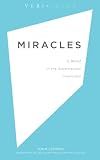
9/10 (Excellent): This short booklet is a word-for-word transcript of John Lennox’s lecture at Harvard University on the subject of miracles. As you’d expect from Lennox, it’s an expertly crafted speech, but the Q&A that follows is just as valuable. On its own, I doubt this booklet will change any minds. Nonetheless, it could be useful in beginning to help people understand the uniqueness and rationality of biblical Christianity.

Um manual para estudantes e professores. Ninguém pode se considerar realmente educado sem alguma intimidade com a Bíblia, que exerceu e ainda exerce uma enorme influência sobre o pensamento mundial.
Na Bíblia, há uma grande quantidade de poesia, e diferentes pessoas respondem à poesia de diferentes formas emocionais e imaginativas. Porém, quanto às doutrinas básicas, a Bíblia as expressa através de termos técnicos cuidadosamente escolhidos que precisam ser interpretados e show more compreendidos com precisão, como acontece com os termos técnicos em qualquer outro assunto. O objetivo original deste livro era o de ajudar os leitores com relação a essa compreensão tão precisa, sem a qual o intento básico do Novo Testamento permaneceria obscuro e indistinto. show less
Na Bíblia, há uma grande quantidade de poesia, e diferentes pessoas respondem à poesia de diferentes formas emocionais e imaginativas. Porém, quanto às doutrinas básicas, a Bíblia as expressa através de termos técnicos cuidadosamente escolhidos que precisam ser interpretados e show more compreendidos com precisão, como acontece com os termos técnicos em qualquer outro assunto. O objetivo original deste livro era o de ajudar os leitores com relação a essa compreensão tão precisa, sem a qual o intento básico do Novo Testamento permaneceria obscuro e indistinto. show less
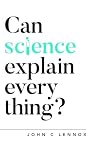
Can science explain everything - it's a tall order Professor Lennox!
MULTIPLE DIMENSIONS - General
Firstly, because of great modern sciences such as quantum mechanics, science has led to to things such as string theory and multiple dimensions. How can science map and and explain what occurs in these multiple dimensions? If we have problems mapping out and explaing what occurs in our 3D world, then what about the world of multiple dimensions?
MULTIPLE DIMENSIONS - Gravity
How can we even show more explain, to any great level of completenes, what occurs to parts of our own 3D world, when, for example, it is believed in string theory / multiple dimensions that gravity, for example, passes out of our 3D world and into other dimensions and then returns back into our 3D world, again - as proposed to exlain why gravity is so much weaker than the other main forces.
ORIGINS versus NATURE OF Time / Space / Matter
Science can do a lot about explaining the nature of time / space / matter. But it's new ball games when it comes to explaining the origins of time / space / matter. Either time / space / matter came out of absolute nothingness (?) or have existed, in some shape or form, infinetly (?)
NOMINAL VALUES OF MATHEMATICS?
Why does Maths exist? Why is pi 3.14159265 (when the pefect cicles doesn't exist in the natural world). The perfect circle is nominal.
DO YOU BELIEVE IN SPIRITUAL EXISTENCE OR NOT? If spiritual existence exists, then can science explain everything about it? Surely science can only explain time / space / matter?
FREE WILL
If we are just made of material substance, then how are we able to escape the predetermined laws of the natural world on the one hand, and the blind chaotic world of the natural world on the other to have free will?
BEAUTY IN INANIMATE NATURE?
Why do people recongize beauty in inanimate nature (i.e. the sun setting on a canyon as opposed to the beauty in a peacock's tail? - so non-functional beauty as opposed to functional beauty - the functional beauty of the peacock's tail leads to the peacock finding a mate for procreation - there is no purpose in the sun being beautiful). Sure, not all might find the sun beautiful, but there is something in inanimate nature that we all fine beautifull - and even if we don't, we can all understand the concept of beauty in inanimate nature. Why? What is this thing beauty?
LOVE / COMPASSION
Can science explain why men fall for women who tick less of the biological boxes for finding a partner and passing on the genese. For example, a man chooses woman A over woman B. Woman A has poor child-bearing hips, poor child-rearing body, weak body, dried up breasts, warts on her hands, a beard to boot! He chooses her over woman B who is, physically, perfect for bearing and bringing up children, is strong and healthy, with voluptuous breasts, and a beautiful face. But the man just prefers woman A. He is "in love" with her. He loves her personality. She is much more fun and interesting than woman B (even if woman B is more intelligent, too).
- What's going on here?
And what's going on with the strong man who passes a poor, old dying beggar in the ditch. By helping the old man, the young strong man gains nothing for himself or for his friends or family or perhaps society in general (except in a "moral" sense). He helps the man out of compassion - for "moral" reasons.
- What's going on here?
GOOD / EVIL
Compassion, as in above, is an example of goodness.
But there's, also, evil. For example, the evil of The Holocaust. What is evil? Can science give a satisfactory answer about what is evil - why it exists? As Woody Allen asks his father in Hannah and Her Sisters:
"Why are there Nazis?"
His father answers (in his strong Brooklyn accent), struggling to open a tin of something with a tin-opener
"How the heck do I know, I don't even know how this can-opener works?"
- What is conscience? How do we get a "conscience"? If we get it through purely external means (i.e. parents and society), then if you lived in Nazi Germany, and your parents were both loyal, mean Nazis, you'd be screwed, right? show less
MULTIPLE DIMENSIONS - General
Firstly, because of great modern sciences such as quantum mechanics, science has led to to things such as string theory and multiple dimensions. How can science map and and explain what occurs in these multiple dimensions? If we have problems mapping out and explaing what occurs in our 3D world, then what about the world of multiple dimensions?
MULTIPLE DIMENSIONS - Gravity
How can we even show more explain, to any great level of completenes, what occurs to parts of our own 3D world, when, for example, it is believed in string theory / multiple dimensions that gravity, for example, passes out of our 3D world and into other dimensions and then returns back into our 3D world, again - as proposed to exlain why gravity is so much weaker than the other main forces.
ORIGINS versus NATURE OF Time / Space / Matter
Science can do a lot about explaining the nature of time / space / matter. But it's new ball games when it comes to explaining the origins of time / space / matter. Either time / space / matter came out of absolute nothingness (?) or have existed, in some shape or form, infinetly (?)
NOMINAL VALUES OF MATHEMATICS?
Why does Maths exist? Why is pi 3.14159265 (when the pefect cicles doesn't exist in the natural world). The perfect circle is nominal.
DO YOU BELIEVE IN SPIRITUAL EXISTENCE OR NOT? If spiritual existence exists, then can science explain everything about it? Surely science can only explain time / space / matter?
FREE WILL
If we are just made of material substance, then how are we able to escape the predetermined laws of the natural world on the one hand, and the blind chaotic world of the natural world on the other to have free will?
BEAUTY IN INANIMATE NATURE?
Why do people recongize beauty in inanimate nature (i.e. the sun setting on a canyon as opposed to the beauty in a peacock's tail? - so non-functional beauty as opposed to functional beauty - the functional beauty of the peacock's tail leads to the peacock finding a mate for procreation - there is no purpose in the sun being beautiful). Sure, not all might find the sun beautiful, but there is something in inanimate nature that we all fine beautifull - and even if we don't, we can all understand the concept of beauty in inanimate nature. Why? What is this thing beauty?
LOVE / COMPASSION
Can science explain why men fall for women who tick less of the biological boxes for finding a partner and passing on the genese. For example, a man chooses woman A over woman B. Woman A has poor child-bearing hips, poor child-rearing body, weak body, dried up breasts, warts on her hands, a beard to boot! He chooses her over woman B who is, physically, perfect for bearing and bringing up children, is strong and healthy, with voluptuous breasts, and a beautiful face. But the man just prefers woman A. He is "in love" with her. He loves her personality. She is much more fun and interesting than woman B (even if woman B is more intelligent, too).
- What's going on here?
And what's going on with the strong man who passes a poor, old dying beggar in the ditch. By helping the old man, the young strong man gains nothing for himself or for his friends or family or perhaps society in general (except in a "moral" sense). He helps the man out of compassion - for "moral" reasons.
- What's going on here?
GOOD / EVIL
Compassion, as in above, is an example of goodness.
But there's, also, evil. For example, the evil of The Holocaust. What is evil? Can science give a satisfactory answer about what is evil - why it exists? As Woody Allen asks his father in Hannah and Her Sisters:
"Why are there Nazis?"
His father answers (in his strong Brooklyn accent), struggling to open a tin of something with a tin-opener
"How the heck do I know, I don't even know how this can-opener works?"
- What is conscience? How do we get a "conscience"? If we get it through purely external means (i.e. parents and society), then if you lived in Nazi Germany, and your parents were both loyal, mean Nazis, you'd be screwed, right? show less
(1) The nature of forgiveness (171-184)
You May Also Like
Associated Authors
Statistics
- Works
- 22
- Also by
- 1
- Members
- 489
- Popularity
- #50,497
- Rating
- 4.1
- Reviews
- 5
- ISBNs
- 50
- Languages
- 6
- Favorited
- 1