
L. Jon Wertheim
Author of Scorecasting: The Hidden Influences Behind How Sports Are Played and Games Are Won
About the Author
L. Jon Wertheim is the executive editor of Sports Illustrated and a commentator for the Tennis Channel. He is the author or co-author of several books including Scorecasting: The Hidden Influences Behind How Sports Are Played and Games Are Won and You Can't Make This Up: Miracles, Memories, and the show more Perfect Marriage of Sports and Television. (Bowker Author Biography) show less
Works by L. Jon Wertheim
Scorecasting: The Hidden Influences Behind How Sports Are Played and Games Are Won (2011) 336 copies, 10 reviews
This Is Your Brain on Sports: The Science of Underdogs, the Value of Rivalry, and What We Can Learn from the T-Shirt Cannon (2016) 79 copies, 2 reviews
Running the Table: The Legend of Kid Delicious, the Last Great American Pool Hustler (2007) 69 copies, 2 reviews
Blood in the Cage: Mixed Martial Arts, Pat Miletich, and the Furious Rise of the UFC (2009) 64 copies, 1 review
Glory Days: The Summer of 1984 and the 90 Days That Changed Sports and Culture Forever (2021) 62 copies, 2 reviews
Associated Works
Upon Further Review: The Greatest What-Ifs in Sports History (2018) — Contributor — 50 copies, 2 reviews
In the Paint: The Complete Body-Painting Collection from the SI Swimsuit Issue (2007) — Contributor — 45 copies, 1 review
Sports Illustrated | July 1-8, 2019 (Where Are They Now?/ Alex Rodriguez) (2019) — Contributor — 1 copy
Tagged
Common Knowledge
- Birthdate
- c. 1971
- Gender
- male
- Education
- Yale University
University of Pennsylvania - Occupations
- journalist
- Organizations
- Sports Illustrated
- Nationality
- USA
- Associated Place (for map)
- USA
Members
Reviews
This Is Your Brain on Sports: The Science of Underdogs, the Value of Rivalry, and What We Can Learn from the T-Shirt Cannon by L. Jon Wertheim
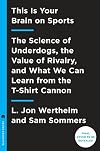
I may not be an avid sports watcher, but I'm certainly becoming an avid sports reader! I'm certainly a novice when it comes to the world of sports, I only know a little, but if you give me a good book to read or an inspiring sports movie I suddenly transform into the biggest fan. This book had me hooked, I will gladly be a little cheerleader for this book, it was utterly fascinating! From underdogs to the attractiveness of quarterbacks to professional athletes making bad coaches and the t show more shirt cannon. This book discusses the science behind so many things that we don't even really bother to think about. It's truly eye opening. I learned so much about rivalries, effort justification, hot headedness and more. Even though it's nonfiction, it reads easy and is never overwhelming. Each chapter discusses a new topic and there are plenty of charts and funny asides to get readers laughing and thinking. Loved, loved, loved this book!
I received this book for free from the Blogging for Books in return for my honest, unbiased opinion. show less
I received this book for free from the Blogging for Books in return for my honest, unbiased opinion. show less
Scorecasting: The Hidden Influences Behind How Sports Are Played and Games Are Won by Tobias J. Moskowitz
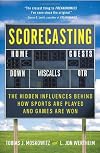
“Everyone knows” there is such a thing as the “home field advantage,” but just why does it exist? Additionally, “everyone knows” that “defense wins championships,” – we have Michael Jordan’s word for that—but does it? And of course, “everyone knows” the importance of “momentum” in sports - everyone but the authors and a handful of “quants” (quantitative analysts) from the University of Chicago. Moskowitz, Professor of Finance at Chicago, along with author show more and Senior "Sports Illustrated" writer L. John Wertheim, set out to test some universally accepted adages about various sports.
The authors applied the analytical tools of microeconomics and modern motivational psychology to the enormous amount of data that are now available. Their conclusions are sometimes startling, usually counterintuitive, and almost always interesting. Moreover, sports coaches have been paying attention to their findings. Dallas Mavericks owner Mark Cuban quipped, “if this book had been written years ago I could have just handed it to the NBA rather than getting fined all those times!” The authors have been approached by teams in both the NFL and the NBA about possible consulting relationships.
What they accomplished, along with others at the University of Chicago, came from taking new approaches to investigate old beliefs.
For example, they found that the home field advantage is easy to measure. Home teams win the majority of games in virtually all sports in the United States, Europe, Australia, and international competition. But why? The authors discovered that some of the home team advantage in professional basketball and college football could be attributed to scheduling. In the NBA, for example, teams that travel frequently must play games on consecutive days in different cities. Home teams not only are not tired from traveling, but they also get more rest between games. Nevertheless, scheduling could account for only about one third to one fourth of the advantage, and could not account for any advantage in any of the other sports studied.
The authors found that the home team advantage was very great in professional basketball and soccer, not so big in major league baseball, and very small in N.F.L. football. It turns out that the referees in basketball and soccer have the power to affect the outcomes of those games to a greater extent than the officials in football or baseball because they must make many highly judgmental decisions. The authors determined that calls like “charging” in basketball (a very judgmental call) are awarded very disproportionately to the home teams in the final minutes of close games. In soccer, the referees consistently awarded longer “extra time” at the end of close games when the home team was behind by one goal, and much shorter “extra time” when the home team was ahead by one goal.
Even in professional football, where the advantage has never been that great, the advantage has eroded since the introduction of “instant replay,” which allows spectators the ability to scrutinize the officials’ decisions.
Major league baseball presented the authors with a gold mine of statistical data. Television has allowed the leagues to determine the correctness of the calls of balls and strikes on every pitch thrown over the last decade. It turns out that umpires are very good at what they do, being correct in more that 86% of their calls. However, when they do err, they err disproportionately in favor of the home team.
Moskowitz and Wertheim measured another bias in umpiring errors in calling balls and strikes. Umpires are more likely to call a pitch a ball even though it was actually in the strike zone when the batter already has two strikes against him. Conversely, they are more likely to call an errant pitch a strike when the pitcher has already thrown three balls. Thus, by avoiding walks and called third strikes, they seem to want the hitters to determine their fate by swinging rather than passively taking the pitch.
The authors speculate that the bias they measured is not deliberate, at least not in many cases. They look to research in modern motivational psychology to see that all people have an innate desire to please and to conform. As the size of the crowd increases, the chances of the official making a “homer” call also increases.
The authors, being from Chicago, also speculated on why the Chicago Cubs have had such a long history of losing. They concluded that the Cubs have less of an economic incentive to win than any other team in baseball. The Cub fans are just plain loyal, in stark contrast to the fans of their cross-town rivals, the White Sox. Cubs’ attendance does not vary much whether they are winning or losing. The Cubs are able to charge higher ticket prices than the White Sox, no matter which team has the better record. The authors attribute this greater fan loyalty to decisions made long ago by P.K. Wrigley, then owner of the Cubs, when he decided the fans should have a pleasant experience in a beautiful ballpark, win or lose. The authors also found that the attendance at Cubs games was more influenced by the price of beer in the stadium than by any other factor they measured! In effect, Cubs games are big outdoor picnics with plenty of cheap beer; White Sox games (and those of most other major league teams) are sporting contests, the success in which greatly influences the home team’s profits. The Cubs make money (they are the third most valuable major league franchise even though they are one of the least successful on the field) as long as they don’t charge too much for beer.
In another intriguing quantitative analysis, the authors determined that defense wins only about as many championships as does offense, Michael Jordan’s assertions notwithstanding. Borrowing from the research of Amos Tversky, another business school “quant” (from Stanford), they concluded that there is no such thing as "momentum" in sports. Recent success in winning games or (in basketball) shooting baskets is not nearly as good a predictor of success as success over a longer period, such as an entire season.
They also concluded that fear of a bad result often overpowers the desire to obtain a good result. For example, football coaches nearly always punt on fourth down even though statistically, their chances of winning the game greatly improve if they “go for it.” Coaches who are more secure in their jobs, like Bill Belichick of the New England Patriots, are much more likely to gamble on fourth down than their peers.
In listening to the authors (this was an audiobook), I was reminded of my experiences in courses in economics, finance, and antitrust law at the University of Chicago. Using similar quantitative and analytical techniques, my professors demolished many preconceived notions and popularly held myths about society, the economy, and the world. However, the popular myths remain largely intact, in spite of the data. Perhaps that’s a subject for another book!
Evaluation: This collection of essays, reminiscent of Freakonomics or the entertaining writings of Malcolm Gladwell, is a pleasant read for any sports fan and a must read for any media sports pundit.
(JAB) show less
The authors applied the analytical tools of microeconomics and modern motivational psychology to the enormous amount of data that are now available. Their conclusions are sometimes startling, usually counterintuitive, and almost always interesting. Moreover, sports coaches have been paying attention to their findings. Dallas Mavericks owner Mark Cuban quipped, “if this book had been written years ago I could have just handed it to the NBA rather than getting fined all those times!” The authors have been approached by teams in both the NFL and the NBA about possible consulting relationships.
What they accomplished, along with others at the University of Chicago, came from taking new approaches to investigate old beliefs.
For example, they found that the home field advantage is easy to measure. Home teams win the majority of games in virtually all sports in the United States, Europe, Australia, and international competition. But why? The authors discovered that some of the home team advantage in professional basketball and college football could be attributed to scheduling. In the NBA, for example, teams that travel frequently must play games on consecutive days in different cities. Home teams not only are not tired from traveling, but they also get more rest between games. Nevertheless, scheduling could account for only about one third to one fourth of the advantage, and could not account for any advantage in any of the other sports studied.
The authors found that the home team advantage was very great in professional basketball and soccer, not so big in major league baseball, and very small in N.F.L. football. It turns out that the referees in basketball and soccer have the power to affect the outcomes of those games to a greater extent than the officials in football or baseball because they must make many highly judgmental decisions. The authors determined that calls like “charging” in basketball (a very judgmental call) are awarded very disproportionately to the home teams in the final minutes of close games. In soccer, the referees consistently awarded longer “extra time” at the end of close games when the home team was behind by one goal, and much shorter “extra time” when the home team was ahead by one goal.
Even in professional football, where the advantage has never been that great, the advantage has eroded since the introduction of “instant replay,” which allows spectators the ability to scrutinize the officials’ decisions.
Major league baseball presented the authors with a gold mine of statistical data. Television has allowed the leagues to determine the correctness of the calls of balls and strikes on every pitch thrown over the last decade. It turns out that umpires are very good at what they do, being correct in more that 86% of their calls. However, when they do err, they err disproportionately in favor of the home team.
Moskowitz and Wertheim measured another bias in umpiring errors in calling balls and strikes. Umpires are more likely to call a pitch a ball even though it was actually in the strike zone when the batter already has two strikes against him. Conversely, they are more likely to call an errant pitch a strike when the pitcher has already thrown three balls. Thus, by avoiding walks and called third strikes, they seem to want the hitters to determine their fate by swinging rather than passively taking the pitch.
The authors speculate that the bias they measured is not deliberate, at least not in many cases. They look to research in modern motivational psychology to see that all people have an innate desire to please and to conform. As the size of the crowd increases, the chances of the official making a “homer” call also increases.
The authors, being from Chicago, also speculated on why the Chicago Cubs have had such a long history of losing. They concluded that the Cubs have less of an economic incentive to win than any other team in baseball. The Cub fans are just plain loyal, in stark contrast to the fans of their cross-town rivals, the White Sox. Cubs’ attendance does not vary much whether they are winning or losing. The Cubs are able to charge higher ticket prices than the White Sox, no matter which team has the better record. The authors attribute this greater fan loyalty to decisions made long ago by P.K. Wrigley, then owner of the Cubs, when he decided the fans should have a pleasant experience in a beautiful ballpark, win or lose. The authors also found that the attendance at Cubs games was more influenced by the price of beer in the stadium than by any other factor they measured! In effect, Cubs games are big outdoor picnics with plenty of cheap beer; White Sox games (and those of most other major league teams) are sporting contests, the success in which greatly influences the home team’s profits. The Cubs make money (they are the third most valuable major league franchise even though they are one of the least successful on the field) as long as they don’t charge too much for beer.
In another intriguing quantitative analysis, the authors determined that defense wins only about as many championships as does offense, Michael Jordan’s assertions notwithstanding. Borrowing from the research of Amos Tversky, another business school “quant” (from Stanford), they concluded that there is no such thing as "momentum" in sports. Recent success in winning games or (in basketball) shooting baskets is not nearly as good a predictor of success as success over a longer period, such as an entire season.
They also concluded that fear of a bad result often overpowers the desire to obtain a good result. For example, football coaches nearly always punt on fourth down even though statistically, their chances of winning the game greatly improve if they “go for it.” Coaches who are more secure in their jobs, like Bill Belichick of the New England Patriots, are much more likely to gamble on fourth down than their peers.
In listening to the authors (this was an audiobook), I was reminded of my experiences in courses in economics, finance, and antitrust law at the University of Chicago. Using similar quantitative and analytical techniques, my professors demolished many preconceived notions and popularly held myths about society, the economy, and the world. However, the popular myths remain largely intact, in spite of the data. Perhaps that’s a subject for another book!
Evaluation: This collection of essays, reminiscent of Freakonomics or the entertaining writings of Malcolm Gladwell, is a pleasant read for any sports fan and a must read for any media sports pundit.
(JAB) show less
Running the Table: The Legend of Kid Delicious, the Last Great American Pool Hustler by L. Jon Wertheim

Starred Review. This new release from Sports Illustrated writer Wertheim (Venus Envy), who expertly reports a true life story reminiscent of The Hustler and The Color of Money, details the exploits of Danny Kid Delicious Basavich, who, after dropping out of high school in the 1990s, went from being a suicidal, overweight teen to a legendary pool player. Wertheim has created a new version of the American dream, one where the predictable life of white picket fences and green lawns is replaced show more by the adventures brought by the spin of a cue ball and wads of greenbacks continually changing hands. At the heart of the book is the engrossing tale of two distinct relationships. The first is about Kid's two selves—the personable, pool-playing wiz and the bedridden, depressed bundle of nerves. The other story line follows the ruckus raised by the pool-playing exploits of the fat and friendly Kid and his fit and feisty partner, Bristol Bob. Adding to the book's appeal is Wertheim's eloquent and vivid prose that so perfectly captures the squalid, sepia-toned environs of America's billiard halls that it's easy to forget that the events in this book reflect recent history and not pool's roaring 1920s heyday . (Oct.) show less
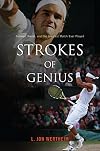
The 2008 Nadal-Federer Wimbledon tennis final was, clearly, the greatest tennis match ever played. (Well, until, arguably, this years' 2009 Roddick-Federer final, but forget about that for a moment.) OK, don't forget about it (Roddick played the match of his life and didn't deserve to lose), but consider that Nadal-Federer was less about pure power and more about compelling theater and exquisite shot making. Here were two competitors who made the other raise his game to unbelievable heights show more just to win a point.
Jon Wertheim offers an amazing commentary on the match itself, interspersed with biographical details, that itself lends tension and excitement to the book. My only gripe is I think Wertheim gives short shrift to two back-to-back shots that were the best two shots I have ever seen in a lifetime of playing tennis. (I got the video of the match from my kids for Father's Day this year, so I have watched these two shots over and over.) It was tied 7-7 in the fourth set tie-breaker. Federer runs around and hits one of his trademark inside-out forehands into the far corner. A winner against every other player in the tournament. Nadal, on a full out run, catches up to it an hits a wicked, twisting forehand down the line in the only part of the court Federer can't cover. You hear the audible scream from Federer as the ball goes dipping by him. Then, on Championship point, Nadal serves out wide for Federer's backhand, gets the short ball he expects, and whips a forehand that pulls Federer off the court on his backhand side. Federer then unleashes the best backhand down-the-line shot I believe I will ever see, into the very corner of the court. The target must have been about a foot square, on Championship point. What courage! I'm quite sure I'll see that shot to my dying day.
Anyway, if you are a tennis fan, read this book. I guarantee you will enjoy it. show less
Jon Wertheim offers an amazing commentary on the match itself, interspersed with biographical details, that itself lends tension and excitement to the book. My only gripe is I think Wertheim gives short shrift to two back-to-back shots that were the best two shots I have ever seen in a lifetime of playing tennis. (I got the video of the match from my kids for Father's Day this year, so I have watched these two shots over and over.) It was tied 7-7 in the fourth set tie-breaker. Federer runs around and hits one of his trademark inside-out forehands into the far corner. A winner against every other player in the tournament. Nadal, on a full out run, catches up to it an hits a wicked, twisting forehand down the line in the only part of the court Federer can't cover. You hear the audible scream from Federer as the ball goes dipping by him. Then, on Championship point, Nadal serves out wide for Federer's backhand, gets the short ball he expects, and whips a forehand that pulls Federer off the court on his backhand side. Federer then unleashes the best backhand down-the-line shot I believe I will ever see, into the very corner of the court. The target must have been about a foot square, on Championship point. What courage! I'm quite sure I'll see that shot to my dying day.
Anyway, if you are a tennis fan, read this book. I guarantee you will enjoy it. show less
Lists
Awards


You May Also Like


Associated Authors
Statistics
- Works
- 12
- Also by
- 6
- Members
- 977
- Popularity
- #26,369
- Rating
- 3.8
- Reviews
- 27
- ISBNs
- 58
- Favorited
- 1