
Martin Jenkins (1)
Author of The Emperor's Egg
For other authors named Martin Jenkins, see the disambiguation page.
About the Author
Image credit: via Goodreads
Series
Works by Martin Jenkins
Bird Builds a Nest: A First Science Storybook (Science Storybooks) (2018) — Author — 212 copies, 5 reviews
The Squirrels' Busy Year: A First Science Storybook (Science Storybooks) (2018) 120 copies, 2 reviews
Life: The First Four Billion Years: The Story of Life from the Big Bang to the Evolution of Humans (2019) 56 copies, 1 review
The Animal Awards: Celebrate NATURE with 50 fabulous creatures from the animal kingdom (2019) — Author — 8 copies
Animali in pericolo 1 copy
Associated Works
Animals & Men: The Journal of the Centre for Fortean Zoology - Issue 22 — Contributor — 1 copy
Tagged
Common Knowledge
- Canonical name
- Jenkins, Martin
- Gender
- male
Members
Reviews

British author/illustrator team Martin Jenkins and Vicky White profile the five great ape species in this gorgeous work of picture book natural history. From the orangutans of Borneo and Sumatra to the chimpanzees of central and west Africa, the bonobos of the Congo Basin to the gorillas of central Africa, the book describes the eating and social habits of four of these kind of animal, before tying them to their cousins in the fifth category: humans. The book closes with a map of where the show more various apes can be found worldwide, and an index...
Having greatly enjoyed this pair's subsequent picture book, Can We Save the Tiger?, which was a rare five-star book for me, I immediately sought out other titles they created, and requested Ape (their debut book together) from my local library. Although not quite as outstanding as that subsequent book, this was still an excellent read, pairing a simple but informative text with absolutely gorgeous illustrations. Done in pencil and oil, these paintings are just breathtaking—detailed, hyper-realistic, endlessly fascinating, and terribly beautiful. Although I wouldn't really recommend this one as an introduction to any one of the individual species profiled, as there isn't enough detailed information for that, it is an excellent introduction to this family of species, and I appreciated its project, in highlighting that we humans are part of that family. Sadly, the third and thus-far final book produced by Jenkins and White, A Walk Through the Rain Forest, is not held by my local library, so I will have to request it through interlibrary loan. As for this one, I'd recommend it to young animals lovers, to anyone seeking picture books about the great apes, and to those who appreciate beautiful picture book art. show less
Having greatly enjoyed this pair's subsequent picture book, Can We Save the Tiger?, which was a rare five-star book for me, I immediately sought out other titles they created, and requested Ape (their debut book together) from my local library. Although not quite as outstanding as that subsequent book, this was still an excellent read, pairing a simple but informative text with absolutely gorgeous illustrations. Done in pencil and oil, these paintings are just breathtaking—detailed, hyper-realistic, endlessly fascinating, and terribly beautiful. Although I wouldn't really recommend this one as an introduction to any one of the individual species profiled, as there isn't enough detailed information for that, it is an excellent introduction to this family of species, and I appreciated its project, in highlighting that we humans are part of that family. Sadly, the third and thus-far final book produced by Jenkins and White, A Walk Through the Rain Forest, is not held by my local library, so I will have to request it through interlibrary loan. As for this one, I'd recommend it to young animals lovers, to anyone seeking picture books about the great apes, and to those who appreciate beautiful picture book art. show less

British children's author and conservationist Martin Jenkins and former zookeeper and natural history illustrator Vicki White team up in this gorgeous, thoughtful picture book about endangered species. The conversational narrative addresses the young reader directly, discussing species which have already gone extinct—the dodo, Steller's sea cow, marsupial wolf, great auk, broad-faced potoroo—and those which are in danger of going extinct—the eponymous tiger, Asian elephant, sloth bear, show more African hunting dog, and partula snail. Species like the latter, inadvertently endangered by human actions, are also explored, including the quokka, Mariana fruit dove, West Indian ground iguana, white-rumped vulture, sawfishes, albatross, European crayfish, and golden arrow poison frog. Conservation success stories, such as the American bison, white rhinoceros, Antarctic fur seal, and vicuña are also discussed, as are those where conservation efforts are still underway, such as New Zealand's kakapo, Rodrigues flying fox, whooping crane, and Bermuda petrel. The book closes with a reference to climate change, an argument for the importance of conservation, and a list of online resources and index...
One of the first things I noticed when picking up Can We Save the Tiger? is just how astonishingly beautiful it is! The artwork from Vicki White, created using pencil and oil paint, is stunning, and both black and white and color illustrations demand attention, and will have young readers poring over them. I was not familiar with White before encountering this book, nor had I read anything by Jenkins, but I will certainly be seeking out more of their work. The second thing to strike me was the informative but conversational tone taken by Jenkins in the text, and the balance shown in his narration, between the destruction wrought by humans on the natural world, and the attention demanded (and deserved) by human need. Too often in books on conservation, there is a tendency to demonize humans, and to treat every wrong decision made, in the past or the current day, as arising from either stupidity or intentional malice. It was refreshing to see this strategy (and error, in my opinion) avoided, and to see that one of the fundamental stumbling blocks to animal conservation—the competition between animal and human need—is accurately and compassionately described. Likewise, it was heartening to see that while attention was paid to the tragedy of past extinctions and the danger of possible future ones, success stories were also included, and room was left open for hope. This kind of balance is vanishingly rare in children's books of this kind, I think, and caused me to add a star because of its great importance. Rather than simplifying and dumbing things down—everything is hell right now kids, but it would be utopia, if only people (those other people, of course!) weren't so greedy and mean—the narrative here preserves complexity, treating children as intelligent beings capable of wrestling with that complexity.
This impression of respect for the child reader was reinforced by the final passage of the book, which acknowledged that conservation is just one of many pressing issues, but made an argument for it, regardless:
"When it comes to looking after all the species that are already endangered, there's such a lot to do that sometimes it might all seem to be too much, especially when there are so many other important things to worry about. But if we stop trying, the chances are that pretty soon we'll end up with a world where there are no tigers or elephants, or sawfishes or whooping cranes, or albatrosses or ground iguanas. And I think that would be a shame, don't you?" show less
One of the first things I noticed when picking up Can We Save the Tiger? is just how astonishingly beautiful it is! The artwork from Vicki White, created using pencil and oil paint, is stunning, and both black and white and color illustrations demand attention, and will have young readers poring over them. I was not familiar with White before encountering this book, nor had I read anything by Jenkins, but I will certainly be seeking out more of their work. The second thing to strike me was the informative but conversational tone taken by Jenkins in the text, and the balance shown in his narration, between the destruction wrought by humans on the natural world, and the attention demanded (and deserved) by human need. Too often in books on conservation, there is a tendency to demonize humans, and to treat every wrong decision made, in the past or the current day, as arising from either stupidity or intentional malice. It was refreshing to see this strategy (and error, in my opinion) avoided, and to see that one of the fundamental stumbling blocks to animal conservation—the competition between animal and human need—is accurately and compassionately described. Likewise, it was heartening to see that while attention was paid to the tragedy of past extinctions and the danger of possible future ones, success stories were also included, and room was left open for hope. This kind of balance is vanishingly rare in children's books of this kind, I think, and caused me to add a star because of its great importance. Rather than simplifying and dumbing things down—everything is hell right now kids, but it would be utopia, if only people (those other people, of course!) weren't so greedy and mean—the narrative here preserves complexity, treating children as intelligent beings capable of wrestling with that complexity.
This impression of respect for the child reader was reinforced by the final passage of the book, which acknowledged that conservation is just one of many pressing issues, but made an argument for it, regardless:
"When it comes to looking after all the species that are already endangered, there's such a lot to do that sometimes it might all seem to be too much, especially when there are so many other important things to worry about. But if we stop trying, the chances are that pretty soon we'll end up with a world where there are no tigers or elephants, or sawfishes or whooping cranes, or albatrosses or ground iguanas. And I think that would be a shame, don't you?" show less
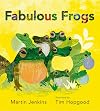
Jenkins and Hopgood are both experienced British authors who have turned out plenty of picture books and nonfiction titles, but neither of them really clicked in my mind until someone had the brilliant idea of combining them to create an absolutely fabulous book about Fabulous Frogs.
The endpapers begin the fun with deep blue water and cloudy splashes of green algae dotted with black tadpoles. A bold yellow background introduces the basics of frogs and then the information begins. Each spread show more features a different frog with a simple sentence, perfect for reading aloud. Additional information about the specific frog is included in a smaller paragraph. "This frog never leaves the water" accompanies a textured brown frog with pinkish feet. The small paragraph tells the reader it's an African clawed frog, along with a simple fact or two. The final spread shows some more pictures of frogs and gives a simple index to the previous pages.
This is the same format as Candlewick's stunning books about Australian animals, but Hopgood's illustration style is a whole different ballgame from the swirling, messy watercolors of that series. Brilliant colors, emphasizing greens, and art that appears to combine lush paint and cut paper collage explode across the page. The vibrant colors showcase the amazing variety of frogs and their unique talents perfectly.
Verdict: You can never have too many frog books and you absolutely must have this one. Perfect for storytime, kids reading on their own, or introducing kids to different kinds of frogs. Highly recommended.
ISBN: 9780763681005; Published 2016 by Candlewick; Purchased for the library show less
The endpapers begin the fun with deep blue water and cloudy splashes of green algae dotted with black tadpoles. A bold yellow background introduces the basics of frogs and then the information begins. Each spread show more features a different frog with a simple sentence, perfect for reading aloud. Additional information about the specific frog is included in a smaller paragraph. "This frog never leaves the water" accompanies a textured brown frog with pinkish feet. The small paragraph tells the reader it's an African clawed frog, along with a simple fact or two. The final spread shows some more pictures of frogs and gives a simple index to the previous pages.
This is the same format as Candlewick's stunning books about Australian animals, but Hopgood's illustration style is a whole different ballgame from the swirling, messy watercolors of that series. Brilliant colors, emphasizing greens, and art that appears to combine lush paint and cut paper collage explode across the page. The vibrant colors showcase the amazing variety of frogs and their unique talents perfectly.
Verdict: You can never have too many frog books and you absolutely must have this one. Perfect for storytime, kids reading on their own, or introducing kids to different kinds of frogs. Highly recommended.
ISBN: 9780763681005; Published 2016 by Candlewick; Purchased for the library show less
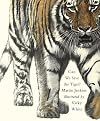
When I purchase books about endangered animals, environmental catastrophe, and other cheerful topics for children, I usually stick to a pretty firm rule: No "the world is coming to an end" nonfiction without a corresponding "how you can help" section. And I mean REAL suggestions, not just "write on both sides of paper." Sheesh.
However, this book is so gorgeous I will make an exception. This over-sized book is a tribute to the amazing animals that have become extinct - and the many endangered show more species on the verge of extinction.
Jenkins begins the book with a list of some of the animals that have become extinct, illustrated by Vicky White's pencil and oil drawings. Then we move on to the animals on the edge, starting with the beautiful tiger. Jenkins talks about the reasons the tiger is becoming extinct; loss of habitat, poaching, and hunting in a simple way that's easy to understand. He includes human - and local - perspectives as well. We see animals who are threatened for similar reasons and then a very different creature; the partula snail. This snail is threatened because of invasive species and the concept is explained clearly and graphically. We see more animals threatened by invasive species.
We also get to see success stories, starting with the American bison who was nearly extinct but saved just in time. Jenkins looks at other animals who have moved from near extinction to healthy numbers. But then we see an animal who's not so easy to save; the kakapo. We also have a look at the polar bear, who was thought to be safe but isn't anymore.
The end matter includes a list of websites devoted to conservation and containing more information on endangered and extinct animals and an index.
This book won't tell kids how they can help; but it's a beautiful and graphic depiction of the many animals that are endangered today and the variety of reasons they no longer thrive. It includes hope for the future with success stories like the American Bison, but is honest in showing the difficulties and problems of saving an animal.
Verdict: Pair this with a book on how kids can help (I have a title coming up next week with more on this). Kids and parents alike will be stunned by the beautiful illustrations; and inspired to do some research on conservation on their own. Recommended.
ISBN: 9780763649098; Published February 2011 by Candlewick; Borrowed from another library; Added to my order wishlist. show less
However, this book is so gorgeous I will make an exception. This over-sized book is a tribute to the amazing animals that have become extinct - and the many endangered show more species on the verge of extinction.
Jenkins begins the book with a list of some of the animals that have become extinct, illustrated by Vicky White's pencil and oil drawings. Then we move on to the animals on the edge, starting with the beautiful tiger. Jenkins talks about the reasons the tiger is becoming extinct; loss of habitat, poaching, and hunting in a simple way that's easy to understand. He includes human - and local - perspectives as well. We see animals who are threatened for similar reasons and then a very different creature; the partula snail. This snail is threatened because of invasive species and the concept is explained clearly and graphically. We see more animals threatened by invasive species.
We also get to see success stories, starting with the American bison who was nearly extinct but saved just in time. Jenkins looks at other animals who have moved from near extinction to healthy numbers. But then we see an animal who's not so easy to save; the kakapo. We also have a look at the polar bear, who was thought to be safe but isn't anymore.
The end matter includes a list of websites devoted to conservation and containing more information on endangered and extinct animals and an index.
This book won't tell kids how they can help; but it's a beautiful and graphic depiction of the many animals that are endangered today and the variety of reasons they no longer thrive. It includes hope for the future with success stories like the American Bison, but is honest in showing the difficulties and problems of saving an animal.
Verdict: Pair this with a book on how kids can help (I have a title coming up next week with more on this). Kids and parents alike will be stunned by the beautiful illustrations; and inspired to do some research on conservation on their own. Recommended.
ISBN: 9780763649098; Published February 2011 by Candlewick; Borrowed from another library; Added to my order wishlist. show less
Lists
Awards


You May Also Like


Associated Authors
Statistics
- Works
- 38
- Also by
- 1
- Members
- 5,367
- Popularity
- #4,640
- Rating
- 4.2
- Reviews
- 134
- ISBNs
- 253
- Languages
- 9