
Nancy Means Wright
Author of Midnight Fires: A Mystery with Mary Wollstonecraft
About the Author
Image credit: Nancy Means Wright
Series
Works by Nancy Means Wright
Associated Works
At Grandmother's Table: Women Write about Food, Life and the Enduring Bond between Grandmothers and Granddaughters (2000) — Contributor — 57 copies, 3 reviews
Tagged
Common Knowledge
- Birthdate
- 20th Century
- Gender
- female
- Education
- Vassar College
- Nationality
- USA
- Places of residence
- Middlebury, Vermont, USA
- Associated Place (for map)
- Vermont, USA
Members
Reviews
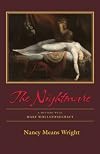
In 1781, Mary Wollstonecraft has just published her Vindications of the Rights of Women and is active with the men and women of intellectual London. This crowd includes erotic painter Henry Fuseli, with whom Mary is obsessed. When Fuseli's masterpiece, The Nightmare, is stolen, Fuseli blames minor artist Roger Peale and has him arrested. Mary doubts Peale's guilt, and Peale's fiancee turns to Mary for help, but Mary's obsession with Fuseli hampers her ability to think straight. When fellow show more intellectual and bluestocking Isobel Frothingham is murdered, her dead body arranged in The Nightmare's tableau, and found by Mary's maid, Mary wonders if there is a connection between the theft and the murder.
Wright captures the character of intellectual London brilliantly. These writers, artists and French revolutionaries are passionate idealists, but they lack common sense. With their heads in the clouds trying to unravel the grand philosophical knots plaguing mankind, they stumble into the mud puddles at their feet. Obsessed with trying to change her sexual attraction to Fuseli into an intellectual ideal, Mary hardly pays any mind to the crimes of the story, making her a bizarre yet intriguing sleuth. When she helps to solve the mystery, it is almost as an after-thought: save France from its corrupt royalty, demand equal rights for women, discover murderer and avoid being killed . . . .
Devotes to the murder mystery genre might be frustrated by the lack of focus characters show to solving the crimes, yet I found Mary's scatter-brained intellectualism charming. I appreciate Wright's ability to model her fictional Mary Wollstonecraft with the clay of the historical person, keeping her personality and foibles and not pretending that when faced with a murder she would suddenly become Sherlock Holmes. show less
Wright captures the character of intellectual London brilliantly. These writers, artists and French revolutionaries are passionate idealists, but they lack common sense. With their heads in the clouds trying to unravel the grand philosophical knots plaguing mankind, they stumble into the mud puddles at their feet. Obsessed with trying to change her sexual attraction to Fuseli into an intellectual ideal, Mary hardly pays any mind to the crimes of the story, making her a bizarre yet intriguing sleuth. When she helps to solve the mystery, it is almost as an after-thought: save France from its corrupt royalty, demand equal rights for women, discover murderer and avoid being killed . . . .
Devotes to the murder mystery genre might be frustrated by the lack of focus characters show to solving the crimes, yet I found Mary's scatter-brained intellectualism charming. I appreciate Wright's ability to model her fictional Mary Wollstonecraft with the clay of the historical person, keeping her personality and foibles and not pretending that when faced with a murder she would suddenly become Sherlock Holmes. show less
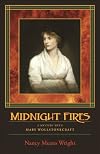
First Line: The crossing from Holyhead to Dublin had been relatively calm, but just as the Irish coast came into view, a contrary wind blew up.
Mary Wollstonecraft is on her way to Mitchelstown Castle in County Cork to be a governess to Lord Kingsborough's daughters. To her, it is humiliating-- a fate most devoutly not to be desired. But with debts to pay and a pack of siblings who constantly turn to her as a source of money, she has no other option. She wants to work out the year she show more contracted for, to avoid having anyone find out just how much she lied about her qualifications, and to keep out of castle politics by writing a novel. Mary lives to write.
She doesn't even get off the ship before something happens. A young Irish sailor who'd just given her a letter to deliver to someone falls overboard and drowns. Mary could swear that she caught a glimpse of a knife-wielding man standing by the young Irishman, but with the weather being so foul, she must be mistaken.
Life at Mitchelstown Castle is not easy. The oldest daughter can't stand Mary at first, and the unhappy, self-centered Lady Kingsborough finds the proud and stubborn Mary difficult to deal with. When two more people at the caste die, Mary believes those two deaths tie into the death of the sailor, and she won't rest until she finds justice for all three.
At first I found Mary a bit of a handful myself. She is a very passionate young female who has a tendency to eye all the available young men in her vicinity. She spends so much time on visiting the nearby cottagers as well as on her investigation that I wondered where she found the time to teach those young girls anything, but she manages to get everything done. Mary's ability to get right up the noses of those aristocrats dancing attendance on Lord and Lady Kingsborough endeared her to me.
As for solving the mystery before Mary? Not a chance! The list of suspects was so long that I just buckled up and enjoyed the journey. Wright does an excellent job of depicting the people and the era in which they live. Having known a few things about Wollstonecraft (besides the fact that she's the mother of Mary Shelley, the author of Frankenstein), I liked how the author used the facts to create a lively, engaging character that I hope will take center stage in many mysteries to come. show less
Mary Wollstonecraft is on her way to Mitchelstown Castle in County Cork to be a governess to Lord Kingsborough's daughters. To her, it is humiliating-- a fate most devoutly not to be desired. But with debts to pay and a pack of siblings who constantly turn to her as a source of money, she has no other option. She wants to work out the year she show more contracted for, to avoid having anyone find out just how much she lied about her qualifications, and to keep out of castle politics by writing a novel. Mary lives to write.
She doesn't even get off the ship before something happens. A young Irish sailor who'd just given her a letter to deliver to someone falls overboard and drowns. Mary could swear that she caught a glimpse of a knife-wielding man standing by the young Irishman, but with the weather being so foul, she must be mistaken.
Life at Mitchelstown Castle is not easy. The oldest daughter can't stand Mary at first, and the unhappy, self-centered Lady Kingsborough finds the proud and stubborn Mary difficult to deal with. When two more people at the caste die, Mary believes those two deaths tie into the death of the sailor, and she won't rest until she finds justice for all three.
At first I found Mary a bit of a handful myself. She is a very passionate young female who has a tendency to eye all the available young men in her vicinity. She spends so much time on visiting the nearby cottagers as well as on her investigation that I wondered where she found the time to teach those young girls anything, but she manages to get everything done. Mary's ability to get right up the noses of those aristocrats dancing attendance on Lord and Lady Kingsborough endeared her to me.
As for solving the mystery before Mary? Not a chance! The list of suspects was so long that I just buckled up and enjoyed the journey. Wright does an excellent job of depicting the people and the era in which they live. Having known a few things about Wollstonecraft (besides the fact that she's the mother of Mary Shelley, the author of Frankenstein), I liked how the author used the facts to create a lively, engaging character that I hope will take center stage in many mysteries to come. show less
In Midnight Fires Nancy Means Wright plunges the reader into the midst of late 18th century Ireland. The novel seethes with the tensions between the landed English aristocracy and Irish freedom fighters, not to mention the intrigue on a personal level both within and outside of the lordly castle. Mary Wollenstonecraft comes to Ireland to serve as governess to the Lord Kingsborough’s family. Just before the ship docks Mary meets an Irish sailor who thrusts a letter into her hands and show more immediately after falls from the rigging of the ship. Soon after she arrives at the castle she attends a bonfire on Samhain Eve, a pagan celebration on October 31 that celebrates the end of summer. Someone stabs an illegitimate descendent of nobility, and Mary decides to clear the chief suspect, an Irish freedom fighter named Liam Donovan. The pace Wright sets is almost breathtaking.
Wright draws Mary’s fictionalized character with enthusiasm and verve. The plot has more twists and turns than a rollercoaster with just as much excitement. Wright convincingly portrays the historical background with sensory detail. If you love historical mysteries, you will enjoy this book! show less
Wright draws Mary’s fictionalized character with enthusiasm and verve. The plot has more twists and turns than a rollercoaster with just as much excitement. Wright convincingly portrays the historical background with sensory detail. If you love historical mysteries, you will enjoy this book! show less
 This review was written for LibraryThing Early Reviewers.
I am afraid I didn't like this book very much. I've read a couple other novelizations of Mary Wollstonecraft's life, and it strikes me that she wasn't a particularly sympathetic person. In this book, I found her whiny, self-destructive, and melodramatic (when your entire family is depending on your income, active insubordination in your role as a governess comes across as less "spirited" and more "selfishly pig-headed"). The writing also didn't grab me - things happened too quickly, with too show more little description, so that I often found myself confused about how the characters got from one location to another, or exactly what the time frame was.
The idea had potential, but unlike the Stephanie Barron Jane Austen mysteries, this book has neither an appealing heroine nor a charming writing style, and as such was just mildly irritating. show less
The idea had potential, but unlike the Stephanie Barron Jane Austen mysteries, this book has neither an appealing heroine nor a charming writing style, and as such was just mildly irritating. show less
This review was written for LibraryThing Early Reviewers.Awards

You May Also Like


Associated Authors
Statistics
- Works
- 18
- Also by
- 1
- Members
- 343
- Popularity
- #69,542
- Rating
- 3.2
- Reviews
- 32
- ISBNs
- 44
- Languages
- 1

