
Lisa Yount
Author of Antoni Van Leeuwenhoek: First to See Microscopic Life (Great Minds of Science)
About the Author
Lisa Yount, a graduate of Stanford University in English and creative writing, has written educational materials for young people for more than 40 years. She has penned or edited more than 50 published books, nine of which have won awards or been included on "most recommended" lists. Among her show more books are Animal Rights, Revised Edition; Energy Supply; Patients' Rights in the Age of Managed Health Care; A to Z of Women in Science and Math, Revised Edition; and several biographical volumes in Chelsea House's Makers of Modern Science set. show less
Works by Lisa Yount
Antoni Van Leeuwenhoek: First to See Microscopic Life (Great Minds of Science) (1996) 46 copies, 1 review
Antoni Van Leeuwenhoek: Genius Discoverer of Microscopic Life (Genius Scientists and Their Genius Ideas) (2014) 7 copies
Forensic Science: From Fibers to Fingerprints (Milestones in Discovery and Invention) (2006) 6 copies
Frontier of Freedom: African Americans in the West (Library of African-American History) (1997) 6 copies
Alfred Blalock, Helen Taussig, & Vivien Thomas: Mending Children's Hearts (Trailblazers in Science and Technology) (2011) 5 copies
Rosalind Franklin: Photographing Biomolecules (Trailblazers in Science and Technology) (2011) 5 copies
William Harvey: Genius Discoverer of Blood Circulation (Genius Scientists and Their Genius Ideas) (2014) 2 copies
Tagged
Common Knowledge
- Canonical name
- Yount, Lisa
- Gender
- female
Members
Reviews
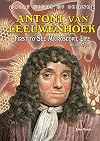
So there's this story, that my microbiology professor once told about Leeuwenhoek. He was the first real master of microscopy. Others had invented the microscope, others had used them to examine biological specimens, but then Leeuwenhoek came along and made better microscopes, made better observations, more observations, by orders of magnitude. Far surpassed any other work in the area before him and for decades after him. One of the discoveries he is most famous for is describing the show more "animalcules" living in the plaque on people's teeth.
The story that my professor told is that Leeuwenhoek was horrified to see what was living on his teeth, and after noticing that there were fewer living beasts after he drank coffee or tea, he took to drinking it hotter and hotter, until eventually the scalding liquid weakened his gums and he lost all his teeth.
It's a great story. And as we were working to land a grant for an exhibit about teeth and the mouth at Impression 5, I found myself telling the story at work. Until, as I was telling the story to two of the managers, it suddenly struck me that this story was possibly way too good to be actually true. So I started a quest to verify it. There was depressingly little on the internet, so I looked for books, and those were impossible as well! The only thing I could find an actual copy of was this, part of a series of scientist biographies that seem to be written for elementary school libraries. And no, I'm not judging. I couldn't put it down. Literally. I read most of this book on the walk to work despite the spectacle of walking around with a book clearly written for grade schoolers. And I don't care, because this book was awesome. For weeks I was insufferable, telling absolutely everyone the story of Leeuwenhoek and his microscopes. So much so that I spent some serious time considering looking harder for a "grown-up" biography, and if I couldn't find one WRITING MY OWN. Yeah. Anyone want to float me a contract on spec?
(And no, the "old toothless" story was not in this book. But this is a book for kids -- so I still consider the story neither confirmed nor denied.) show less
The story that my professor told is that Leeuwenhoek was horrified to see what was living on his teeth, and after noticing that there were fewer living beasts after he drank coffee or tea, he took to drinking it hotter and hotter, until eventually the scalding liquid weakened his gums and he lost all his teeth.
It's a great story. And as we were working to land a grant for an exhibit about teeth and the mouth at Impression 5, I found myself telling the story at work. Until, as I was telling the story to two of the managers, it suddenly struck me that this story was possibly way too good to be actually true. So I started a quest to verify it. There was depressingly little on the internet, so I looked for books, and those were impossible as well! The only thing I could find an actual copy of was this, part of a series of scientist biographies that seem to be written for elementary school libraries. And no, I'm not judging. I couldn't put it down. Literally. I read most of this book on the walk to work despite the spectacle of walking around with a book clearly written for grade schoolers. And I don't care, because this book was awesome. For weeks I was insufferable, telling absolutely everyone the story of Leeuwenhoek and his microscopes. So much so that I spent some serious time considering looking harder for a "grown-up" biography, and if I couldn't find one WRITING MY OWN. Yeah. Anyone want to float me a contract on spec?
(And no, the "old toothless" story was not in this book. But this is a book for kids -- so I still consider the story neither confirmed nor denied.) show less
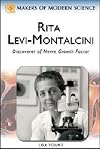
Rita Levi-Montalcini persevered under some tough working conditions to win a Nobel Prize in Medicine in 1986. Lisa Yount does a good job of explaining Levi-Montalcini's scientific career. I also appreciated the insights into Giuseppe Levi, a remarkable mentor to three Nobel Prize winners: Levi-Montalcini, Salvador Luria, and Renato Dulbecco
The next time I think I am having a tough time on a research project, I will re-read what Levi-Montalcini endured and get back to work.
The next time I think I am having a tough time on a research project, I will re-read what Levi-Montalcini endured and get back to work.
Awards

You May Also Like


Statistics
- Works
- 68
- Members
- 604
- Popularity
- #41,610
- Rating
- 3.8
- Reviews
- 3
- ISBNs
- 144