
Ève Curie (1904–2007)
Author of Madame Curie: A Biography
About the Author
Works by Ève Curie
Best Loved Books for Young Readers 01: Treasure Island / David Copperfield / The Call of the Wild / Madame Curie (-0001) — Contributor — 274 copies, 1 review
Die schönsten Bücher für junge Leser: Die Schatzinsel / David Copperfield / Madame Curie / Wenn die Natur ruft (1971) 11 copies
Biblioteca de selecciones del Reader's Digest. Cuaderno prohibido. Madame Curie. El invierno de nuestra amargura. La nave que se hundió en la luna. — Contributor — 1 copy
Vita della signora Curie 1 copy
Associated Works
Reader's Digest Condensed Books. Tree Frog • Eighth Moon • Come Back, Geordie • Madame Curie • Saturday The Rabbi Went Hungry (1967) — Contributor — 6 copies
5 World Biographies: Michelangelo, Gandhi, Marie Curie, Napoleon, Julius Caesar (1961) — Contributor — 4 copies
Tagged
Common Knowledge
- Canonical name
- Curie, Ève
- Legal name
- Curie, Ève Denise
Labouisse, Ève Denise Curie - Other names
- Labouisse, Eve Curie
- Birthdate
- 1904-12-06
- Date of death
- 2007-10-22
- Gender
- female
- Education
- Collège Sévigné
- Occupations
- concert pianist
journalist
music critic
biographer
publisher - Organizations
- Free French Army (WWII)
International Herald Tribune
NATO
UNICEF - Relationships
- Curie, Marie (mother)
Curie, Pierre (father)
Joliot-Curie, Irene (sister)
Joliot, Pierre (nephew) - Short biography
- Eve Curie was the younger daughter of Marie and Pierre Curie, co-discoverers of radium and recipients of the Nobel Prize in physics and chemistry. She originally trained as a concert pianist and as a young woman performed throughout France and Belgium. She later wrote music criticism for several French periodicals and went on to become the publisher of the French newspaper Paris-Press. After her mother's death in 1934, Eve Curie researched and wrote her biography, Madame Curie (1937), which became a bestseller and is considered a classic. It was adapted into a Hollywood film in 1943. During World War II, Eve Curie went to London to work for the Free French government in exile. She later served with the women’s division of Gen. Charles de Gaulle’s army in Europe. Later she settled in the USA. In the early 1950s, she was a special adviser to the Secretary-General of NATO. In 1954, she married Henry R. Labouisse, a diplomat and the executive director of UNICEF.
- Nationality
- France (birth)
USA (naturalized 1958) - Birthplace
- Paris, Île-de-France, France
- Place of death
- New York, New York, USA
- Associated Place (for map)
- Paris, Île-de-France, France
Members
Reviews
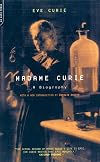
A pioneer of radioactivity and radiation therapy, Marie Curie has an assured place in scientific history. Untold numbers have benefitted from her discovery – especially cancer patients. Further accolades upon accolades follow her name: two-time winner of a Nobel Prize (jointly in physics and alone in chemistry), first female Nobel laureate, wife and daughter of two other Nobel laureates, tireless supporter of her country in World War I, first female professor at Paris’ elite Sorbonne, show more and far too many honorary degrees to list.
Some reviewers consider this book too much hagiography and not critical enough. That point is ceded because this work, written by Marie’s daughter Eve, is largely absent of criticism. However, what it lacks in criticism, it makes up for in intimacy. It does not shortchange the magnanimity of Dr. Curie’s scientific accomplishments while giving the reader a sense of her family life and personal dignity.
Students of science and of life can benefit from Dr. Curie’s detached outlook on life. Women can be inspired at all they can do despite unfriendly social structures. Eve’s presentation of Marie Curie paints a picture of a woman who tirelessly and beautifully served scientific knowledge and her family despite unfriendly life events. She lost her husband due to an unforeseen and tragic accident in the prime of their common life together. Nevertheless, she picked up herself, her sorrow, her children, her husband’s professorship, and her research to bring them to new heights.
She can also serve as an inspiration to the introverts among us. Marie’s determined strength was as hard as steel, but her manners were humble and gentle. She never forgot her native Poland and took pride in its political victories. She was never ostentatious. She gave in both financial and sweat equity to the French cause in World War I by serving at the front with much-needed X-ray technology. Eve’s portrayal certainly presents Marie as a saint… and I find it hard to believe that there exists much to criticize in Marie’s hard-working character.
This book can inspire many audiences. It has stood the test of time, still in print almost 85 years after its initial publication. Eve’s quality of writing and depth of insight is impressive. She does not bog herself down in pedantic scientific detail (despite obvious opportunity to do so) but instead captures Marie’s essential culture contributions. Young aspiring scientists, both male and female, should learn of this giant. So should cancer patients whose lives might be saved by her ingenious labors. As with much in life, scientific knowledge is neither guaranteed nor a right. Rather, as Curie’s life shows us, a combination of determination, action, intelligence, and skill alone can capture it and the future. show less
Some reviewers consider this book too much hagiography and not critical enough. That point is ceded because this work, written by Marie’s daughter Eve, is largely absent of criticism. However, what it lacks in criticism, it makes up for in intimacy. It does not shortchange the magnanimity of Dr. Curie’s scientific accomplishments while giving the reader a sense of her family life and personal dignity.
Students of science and of life can benefit from Dr. Curie’s detached outlook on life. Women can be inspired at all they can do despite unfriendly social structures. Eve’s presentation of Marie Curie paints a picture of a woman who tirelessly and beautifully served scientific knowledge and her family despite unfriendly life events. She lost her husband due to an unforeseen and tragic accident in the prime of their common life together. Nevertheless, she picked up herself, her sorrow, her children, her husband’s professorship, and her research to bring them to new heights.
She can also serve as an inspiration to the introverts among us. Marie’s determined strength was as hard as steel, but her manners were humble and gentle. She never forgot her native Poland and took pride in its political victories. She was never ostentatious. She gave in both financial and sweat equity to the French cause in World War I by serving at the front with much-needed X-ray technology. Eve’s portrayal certainly presents Marie as a saint… and I find it hard to believe that there exists much to criticize in Marie’s hard-working character.
This book can inspire many audiences. It has stood the test of time, still in print almost 85 years after its initial publication. Eve’s quality of writing and depth of insight is impressive. She does not bog herself down in pedantic scientific detail (despite obvious opportunity to do so) but instead captures Marie’s essential culture contributions. Young aspiring scientists, both male and female, should learn of this giant. So should cancer patients whose lives might be saved by her ingenious labors. As with much in life, scientific knowledge is neither guaranteed nor a right. Rather, as Curie’s life shows us, a combination of determination, action, intelligence, and skill alone can capture it and the future. show less
I didn't know much about Madam Curie and am glad to have read this book. It is clear that the author (her daughter) had a strong love for her mother. The book doesn't dwell on any negative qualities Marie may have possessed, and doesn't deal with a scandalous affair she had after her husband died.
However, the book captures the excitement of evolving science at that time. It is a story of family bonds, overcoming obstacles and reminds us of the need to respect and support pure/basic research. show more
The book has endured for over 70 years. I think it would be enhanced by an updated foreword talking about Madam Curie's enduring contribution to the study of science. show less
However, the book captures the excitement of evolving science at that time. It is a story of family bonds, overcoming obstacles and reminds us of the need to respect and support pure/basic research. show more
The book has endured for over 70 years. I think it would be enhanced by an updated foreword talking about Madam Curie's enduring contribution to the study of science. show less
This book is a memoir of Marie Curie written by her younger daughter, Eve. It covers her life from her childhood in Poland to her adult life as a ground-breaking scientist in France. I would recommend this book to people who aren’t that interested in science because there’s not a lot of confusing technical information, because Marie’s scientific discoveries had such a huge impact on society that it’s hard not to be interested in them, and because the book is really more about her as show more a person than it is about her work.
One of the things that I had to keep in mind about this book is that since it’s written by Marie’s daughter, it’s not an objective, strictly factual biography. Because of that, it’s difficult to believe that everything written is absolutely true with nothing left out or altered. I struggled with the earlier chapters a bit, but once I accepted the book for what it is, I enjoyed most of it.
The chapters about Marie’s discovery of and work with radioactivity and radium were the most interesting and enjoyable of the book for me. I was also fascinated with her work during World War I. When she realized that the military hospitals didn’t have access to the newly discovered x-ray machines, she figured out a way to make portable machines that would run off of car motors, and she traveled to wherever the wounded were to help them. However, I found the first third of the book about her childhood and college life to be somewhat boring. I also had some trouble following things when events were discussed out of chronological order. In some chapters the author would jump around in time a bit, and I really had to stay on my toes to keep up. It’s pretty obvious that Eve is not a great writer, but her passion for and knowledge of her subject nearly makes up for her bad writing style.
I really struggled to come up with a rating for this book. I’d give 3 stars to the first and last few chapters and 5 stars to the middle chapters, so I averaged it out to 4 stars. show less
One of the things that I had to keep in mind about this book is that since it’s written by Marie’s daughter, it’s not an objective, strictly factual biography. Because of that, it’s difficult to believe that everything written is absolutely true with nothing left out or altered. I struggled with the earlier chapters a bit, but once I accepted the book for what it is, I enjoyed most of it.
The chapters about Marie’s discovery of and work with radioactivity and radium were the most interesting and enjoyable of the book for me. I was also fascinated with her work during World War I. When she realized that the military hospitals didn’t have access to the newly discovered x-ray machines, she figured out a way to make portable machines that would run off of car motors, and she traveled to wherever the wounded were to help them. However, I found the first third of the book about her childhood and college life to be somewhat boring. I also had some trouble following things when events were discussed out of chronological order. In some chapters the author would jump around in time a bit, and I really had to stay on my toes to keep up. It’s pretty obvious that Eve is not a great writer, but her passion for and knowledge of her subject nearly makes up for her bad writing style.
I really struggled to come up with a rating for this book. I’d give 3 stars to the first and last few chapters and 5 stars to the middle chapters, so I averaged it out to 4 stars. show less

There are few women in history who have had as much impact upon the world of science and medicine as Marie Curie, the discoverer of radium and first female winner of two Nobel prizes for physics and chemistry. This thorough and highly readable biography of an amazing scientist traces both her personal and professional life, giving the reader an insight into the early world of research in nuclear physics. The book was written for the layman, so rest assured that the scientific discussions show more will not be overly daunting.
The author is Marie's own daughter, Eve Curie, whose intimate knowledge of the subject gives the book a personal touch. The reader, no doubt, will agree that Eve tended to lionize her mother. After learning of Marie Curie's incredible life and accomplishments, however, it is small wonder that the author was so praising of this extraordinary woman. If you are lucky enough to find a copy of this work originally published in 1937, be confident that you are in for a very satisfactory reading experience. show less
The author is Marie's own daughter, Eve Curie, whose intimate knowledge of the subject gives the book a personal touch. The reader, no doubt, will agree that Eve tended to lionize her mother. After learning of Marie Curie's incredible life and accomplishments, however, it is small wonder that the author was so praising of this extraordinary woman. If you are lucky enough to find a copy of this work originally published in 1937, be confident that you are in for a very satisfactory reading experience. show less
Lists
Best Biographies (1)
Awards


You May Also Like


Associated Authors
Statistics
- Works
- 16
- Also by
- 10
- Members
- 1,776
- Popularity
- #14,496
- Rating
- 3.9
- Reviews
- 31
- ISBNs
- 58
- Languages
- 13
- Favorited
- 4